Updated October 22, 2026
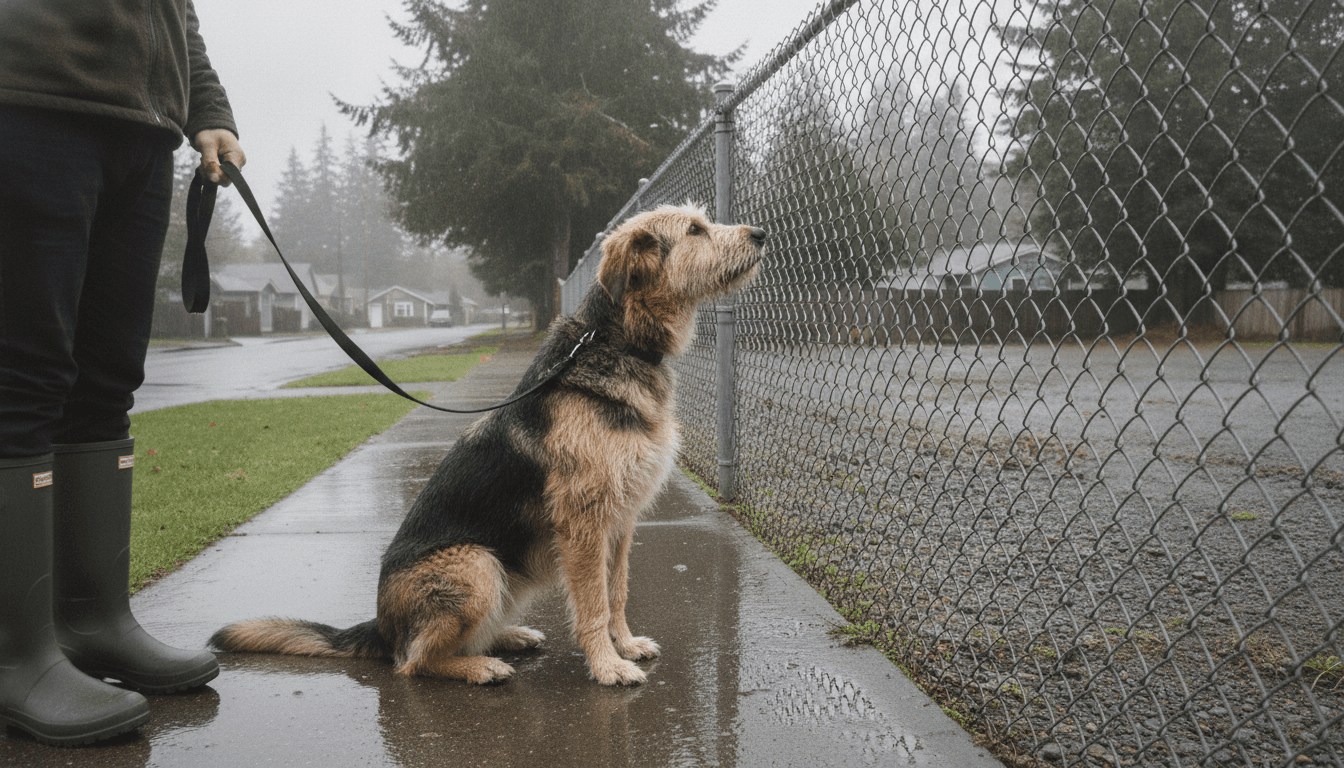
The CU Boulder South site, the 308-acre stretch of open land at Highway 36 and Table Mesa Drive where many South Boulder dog owners walk every morning, is now fenced off. The City of Boulder closed it to the public the week of Oct. 5 to build the South Boulder Creek flood mitigation project, a $76.5 million dam-and-spillway project. Construction is projected to take three to five years, and the city's own FAQ lists the schedule as 2026 to 2031. No reopening date has been set. The city says the closure is meant "to prioritize the safety of community members and their pets."
We read the city's project page, construction announcement and FAQ, along with Boulder's Open Space and Mountain Parks (OSMP) dog rules and current closure list. Here's what changed, why, and where your dog can walk instead.
The short version
- CU South is closed, trails included. The city says the full site is closed to community members, including the CU Boulder-managed trails. Chain-link construction fencing went up in October.
- For how long: The city projects three to five years. Its FAQ says construction is scheduled from 2026 to 2031. The closure area may shrink if conditions allow, but the city hasn't said when.
- Why: The project is designed to protect about 2,300 residents, 260 structures, US 36 and Foothills Parkway from South Boulder Creek floods like the one in 2013.
- Where to go instead: The city points dog owners to on-leash trails, off-leash trails in its Voice and Sight Tag program, and its four dog parks and off-leash areas. About 89% of OSMP's roughly 155 miles of trail allow leashed dogs.
- Off-leash on city open space needs a tag. A Voice and Sight tag is $13 for city residents. Renewals for 2027 get a discounted rate starting Nov. 1.
What's closed, and for how long
The city announced on Aug. 31 that it would begin construction and that the CU Boulder South site would "close fully to community access beginning the week of Oct. 5, 2026." Its project page now says the site "is now closed to community members." The city asks visitors to follow signage and stay out of fenced and construction areas.
The closure covers the whole property. The city's FAQ says that includes the CU Boulder-managed trails on the site. The city's reason is space: active work zones, equipment movement and staging leave too little room to keep the public separate from crews. The FAQ says the city will reassess the closure area as work progresses and may narrow it "if conditions allow." It doesn't give a date for that or for reopening.
Why five years and not three? The city originally planned to sell bonds to pay for the project up front, which would have allowed a roughly three-year build. The city says ongoing litigation prevents it from selling those bonds, so it is paying for construction year to year from stormwater revenues. That stretches the schedule to as long as five years and raises the cost. If the lawsuit is resolved during construction, the city says it could bond for the remaining costs and speed things up.
Why the city is building here
South Boulder Creek has flooded the neighborhoods north of US 36 several times. The city's timeline lists floods in 1938, 1969 and 2013. A mitigation plan was approved in 2015, followed by years of design work. Construction started this fall.
The main pieces, according to the city:
- an earthen flood detention dam along the north and west edges of the site,
- a concrete spillway along US 36 and an outlet tunnel under the highway,
- a groundwater management system,
- removal of the warehouse and tennis courts on the site,
- vegetation clearing and ecological restoration.
The city estimates the total cost at $76.5 million, paid by its Storm and Flood Utility in partnership with the Mile High Flood District. Concrete Express Inc. was selected in fall 2025 to build it. The city says the dam is meant to keep floodwater from overtopping US 36, which would keep that emergency route open in a major flood. About 260 properties may come out of the mapped floodplain, though the city says that won't be final until the project is done.
Not everyone wants it built this way. A group called Save South Boulder has challenged the city's use of stormwater utility fees to pay for the project, arguing that voters should decide. Denver7 reported that the group lost in the state appeals court and has asked the Colorado Supreme Court to take the case. Other residents object to the dam itself and the habitat it will disturb. "So we're not against flood mitigation at all," one resident, Marki LeCompte, told Denver7. "What we are against is a high hazard dam being built right across this property."
What it means for dog walkers
CU South was one of South Boulder's most popular places to walk a dog. For now, those walks have to move. The city's FAQ points to three kinds of places that allow dogs: on-leash trails, off-leash trails in the Voice and Sight Tag program, and dog parks.
On-leash trails. OSMP manages about 155 miles of trail, and about 89% are open to leashed dogs, according to the city. Rules vary by trail and season, and some areas bar dogs entirely, so check the posted signs and the OSMP Dog Regulations Map. Dogs must be leashed when they get out of the car and around every OSMP trailhead.
Off-leash trails. About 56% of Boulder's trails, roughly 90 miles, allow dogs under voice and sight control. That only applies if your dog wears a current Voice and Sight tag. More on that below.
City dog parks and off-leash areas. All are free and open dawn to dusk:
- East Boulder Dog Park, 5660 Sioux Dr.: about 1.5 acres for large dogs and 0.45 acres for small dogs, with limited water access to a small lake. It's the closest of the four to South Boulder.
- Valmont Dog Park, near 5300 Valmont Road in Valmont City Park: the biggest, with about 3 acres for large dogs and a quarter-acre for small dogs. Water spigot available seasonally.
- Foothills Dog Park, 800 Cherry Ave. in North Boulder: about 1.6 acres for large dogs and 0.5 acres for small dogs.
- Howard Heuston Off-leash Dog Area, 34th and Iris: about 1.25 acres of voice-and-sight area north of a partial fence. This one has different rules than a dog park. Dogs need a Voice and Sight tag, and leashes are required in the rest of the park.
Leash laws apply on the way into and out of every dog park. Owners must pick up waste and supervise their dogs, fence or no fence. Aggressive dogs aren't allowed.
Getting a Voice and Sight tag
If your dog ran off-leash at CU South and you want similar freedom on city open space, you'll need a Voice and Sight tag. Here's how the program works, from the city's program page:
- Take the free online course. It's required every five years. Wait one full business day after finishing before you register.
- Have a current rabies certificate. A vet letter can serve as an exemption if your dog can't be vaccinated for medical reasons.
- City residents need a city dog license first. Boulder requires a license for dogs four months and older. The registration system won't offer a tag until the license is in place.
- Register and pay online at boulder.docupet.com. Allow up to seven business days for tags to arrive by mail.
Fees for a new tag, or for a renewal after Jan. 31:
- City of Boulder residents: $13
- Boulder County residents outside the city: $33
- Everyone else: $75
Renewals between Nov. 1 and Jan. 31 cost less: $5 for city residents, $20 for other county residents and $30 for non-county residents. Each extra guardian in a household is $5 and each extra dog is $10. Income-qualified city households may have fees waived. All tags expire Dec. 31, so if you already have a 2026 tag, the cheaper renewal window opens Nov. 1.
The tag isn't a pass to let your dog do anything. Under the program rules, you must be able to see your dog at all times and, by voice, stop it from charging or chasing people, other dogs, wildlife or livestock. Your dog must come to you and stay "immediately" on command, "without regard to circumstances or distractions." The tag must be on the dog at all times. Commercial dog walkers also need an OSMP commercial use permit.
Seasonal rules in effect right now
Several of OSMP's seasonal dog rules change over the next six weeks. From the city's current closures page:
- Bear-season leash rule, through Dec. 1: Dogs must be leashed on parts of the Gregory Canyon, Saddle Rock, Amphitheater and Bluebell-Baird trails; Skunk Canyon up to the Mesa Trail; Shadow Canyon South from the Mesa Trail to the Shadow Canyon North junction; and Upper Doudy Draw above the Springbrook Loop.
- Burrowing owl leash rule, through Oct. 31: Dogs must be leashed on the East Boulder Trail (Boulderado access to the White Rocks junction) and on Vesper Trail.
- Bald eagle closures start Nov. 1: Several areas close Nov. 1 through July 31. Check the OSMP wildlife closure map before you go.
- Dry Creek Trail and Trailhead: Closed since Aug. 24 through November while Boulder County replaces a bridge on Baseline Road.
- Lower McClintock Trail: The lower portion is closed 8 a.m. to 5 p.m. on weekdays for tree removal, starting Oct. 19, for about three months.
The city says entering a closed area can bring a summons, with penalties of up to 90 days in jail and/or a $2,650 fine.
What's next for the land
When the work is done, the site won't look the way it did. Under the 2021 annexation agreement, the university transferred about 155 acres to the city, Denver7 reported. The city says 119 acres next to the project footprint will be restored as natural habitat and managed as new city open space. That land will go through a future planning process that decides both ecological protections and "any visitor use." The university may build recreation amenities on its part of the site later, but the city says no decisions on visitor uses have been made.
So whether dogs will be welcome on the restored land, and on what terms, is an open question. That planning process is where dog owners will want to speak up.
What you can do
- Respect the fence. Keep dogs out of fenced and signed construction areas. Heavy equipment and dewatering pumps are on site now.
- Renew your Voice and Sight tag after Nov. 1 to get the discounted rate, or take the free online course now if you're new to the program. Register at boulder.docupet.com. Questions: 303-441-3440 or [email protected].
- Check rules before each outing. Use the OSMP Dog Regulations Map and the city's closures page, or text "OSMP" to 888-777 for alerts.
- Ask about the future open space. Project questions go to [email protected]. Ask to be notified when planning starts for the 119 acres.
- Report problems. For incidents that need a ranger or animal protection on OSMP land, call 303-441-3333.
Looking further afield? Our Denver-area dog parks directory covers the metro's fenced parks and off-leash areas, and our events calendar lists dog-friendly happenings this fall.
Nearby heads-up
Westminster Hills owl zone ends Oct. 31. If CU South regulars head to the metro's big off-leash area at Westminster Hills Open Space, note that a burrowing owl protection zone around the Yucca Loop has been in place since March and is expected to stay up until Oct. 31, according to the city's newsletter. Dogs there must be under voice control at all times, leashed when entering or leaving, and spayed or neutered. The city lists a $120 fine for leash violations at the entrance and $130 for not picking up waste. The site is open sunrise to sunset, with parking at 10499 Simms St. and 11610 W. 100th Ave.
We'll update this article if the city narrows the CU South closure or announces planning for the new open space.
Sources
- City of Boulder, City of Boulder to Begin Construction of South Boulder Creek Flood Mitigation Project (Aug. 31, 2026)
- City of Boulder, South Boulder Creek Flood Mitigation project page (status updates, October 2026)
- City of Boulder, South Boulder Creek Flood Mitigation FAQ
- City of Boulder, Voice and Sight Program (fees, course, rules, trail share)
- City of Boulder, Dogs on OSMP
- City of Boulder, OSMP Closures (seasonal dog rules, Oct. 22 closure)
- City of Boulder, Dog Parks
- Denver7, Boulder's $76 million flood mitigation project will close CU South for up to 5 years
- KUNC, Two people killed after small plane crashes near Eldorado Canyon (Oct. 6, 2026)
- City of Westminster, Dog Parks & Off-Leash Areas · The Westy, Owls and Off-Leash Dogs (July 7, 2026)