A dog-proof garden gives your pup safe outdoor freedom without sacrificing your landscape design. The core formula: remove toxic plants (sago palm, azalea, lily, foxglove, oleander, daffodil bulbs, cocoa mulch), build a secure perimeter (6-foot fence with dig barrier), create dedicated dog paths and a potty zone, choose dog-safe groundcover and mulch (cedar, pine bark — never cocoa), avoid lawn chemicals labeled "keep pets off," elevate prized beds with raised borders, and offer enrichment (digging pit, shade, fresh water) so your dog stops "redesigning" yours. This 2,000-word guide walks through every step.
Why "dog-proofing" matters more than people think
Roughly 1 in 4 calls to the Pet Poison Helpline involves a plant or garden product. Common backyard staples — bulbs, mulches, fertilizers, slug bait — can land an otherwise healthy dog in the ER overnight. A dog-proof garden isn't about a sterile yard. It's about removing the small handful of items that cause the most harm, then redirecting your dog's natural urges (digging, sniffing, patrolling) somewhere acceptable.
If you've ever Googled "how to stop destructive chewing" after finding your tomato cages mangled, the same principles apply outdoors: manage the environment first, then teach.
Toxic plants to remove from a dog-friendly garden
Start with a walk-through. Pull or relocate the following. The ASPCA Animal Poison Control list is the gold standard — keep their hotline saved in your phone: (888) 426-4435.
High-risk: remove immediately
- Sago palm — every part is toxic, seeds especially. Ingestion can cause liver failure within 24 hours. Fatal in many cases even with treatment.
- Lilies (Easter, Tiger, Asiatic, Day) — mostly cat-deadly, but cause GI distress in dogs.
- Azalea & rhododendron — grayanotoxins cause vomiting, weakness, heart arrhythmia.
- Oleander — cardiac glycosides; deadly in small amounts.
- Foxglove — same family of cardiac toxins as oleander.
- Yew — taxine alkaloids cause sudden cardiac arrest.
- Castor bean — ricin source; severe GI signs, can be fatal.
- Daffodil, tulip, hyacinth bulbs — bulbs are the worst part; dogs love to dig them up.
- Autumn crocus — multi-organ damage.
Moderate risk: relocate or fence off
- Hydrangea — cyanogenic glycosides in leaves/flowers cause GI upset.
- Tomato plants — ripe fruit is fine, but green tomatoes and the plant itself contain solanine.
- Onions, garlic, chives, leeks — cause hemolytic anemia. Pull anything in the allium family from accessible beds.
- Grapes and grapevines — kidney failure risk, mechanism still unclear.
- Milkweed — important for monarchs, but plant it in a fenced section.
- Iris — GI irritation; rhizomes are the worst part.
- Wisteria — seeds and pods cause vomiting and diarrhea.
Dog-safe alternatives that still look great
- Snapdragons, zinnias, marigolds, sunflowers, petunias — full color, non-toxic.
- Roses — non-toxic (watch the thorns).
- Coneflower (Echinacea), black-eyed Susan, coreopsis — pollinator-friendly perennials.
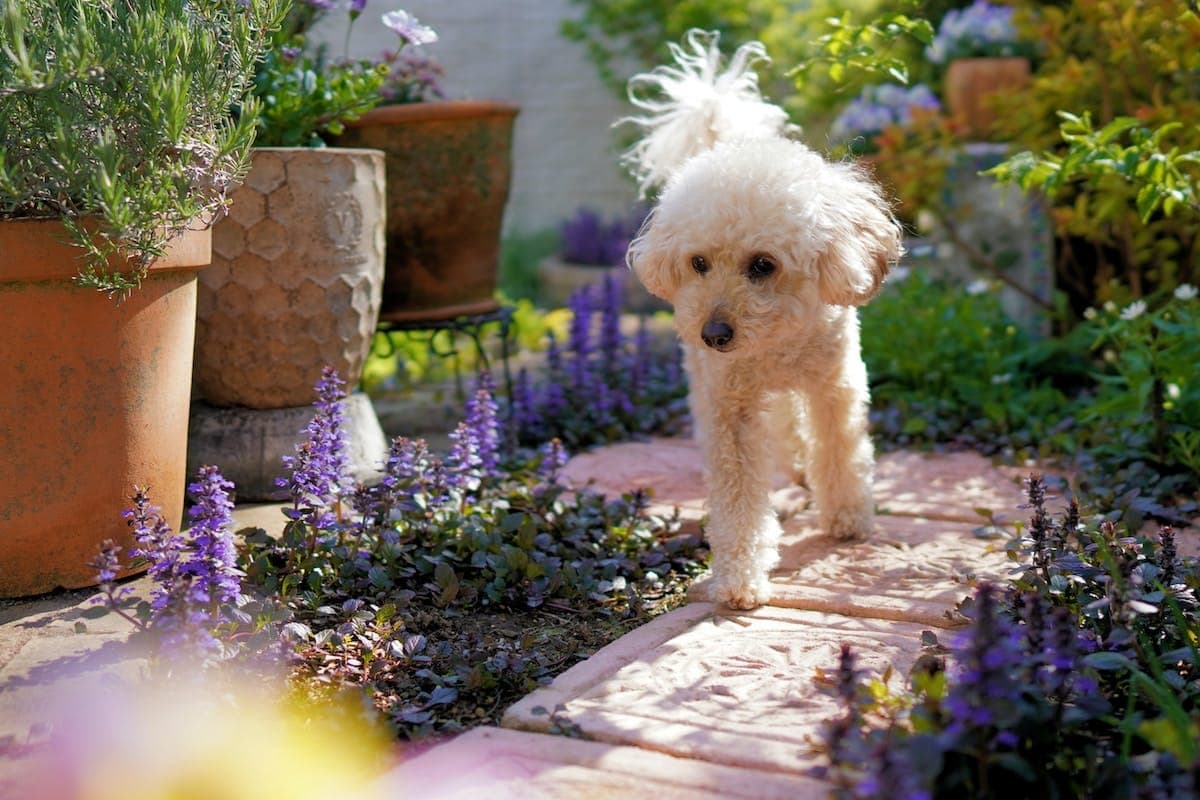
- Lavender, rosemary, basil, thyme, sage — herbs are largely dog-safe and double as scent enrichment.
- Camellia, magnolia, crepe myrtle — flowering shrubs that won't hurt your pup.
- Buffalo grass, fescue, ryegrass — durable, dog-tolerant lawn options.
For indoor companions to your outdoor plan, see our list of 7 easy and dog-safe indoor plants.
The mulch warning every dog owner needs to hear
Cocoa mulch is genuinely dangerous. Made from cacao bean shells, it contains theobromine and caffeine — the same compounds that make chocolate toxic. The smell attracts dogs. Ingestion causes vomiting, tremors, and in severe cases seizures or death.
Safer mulch choices:
- Cedar mulch — repels fleas, dog-safe, breaks down slowly.
- Pine bark or pine straw — soft underfoot, low choking risk.
- Untreated hardwood mulch — fine if your dog doesn't chew on chunks.
- Rubber mulch — avoid. Dogs sometimes eat it, and it doesn't pass.
- Cocoa mulch — never.
Fencing strategies that actually hold a determined dog
A garden is only dog-proof if the perimeter is. Match the fence to the breed:
- Most medium-to-large dogs: 6-foot solid wood or vinyl. Privacy reduces fence-running and barrier reactivity.
- Jumpers (huskies, shepherds, malinois): 6-foot minimum, with an inward-angled top (a "coyote roller" or 45-degree extension).
- Diggers (terriers, dachshunds, beagles): bury 1-foot welded wire L-footer at the base, or lay paving stones along the fence line.
- Small dogs and puppies: 4-foot picket works, but check gap widths — anything wider than 3 inches lets a determined small dog squeeze through.
For yards where a physical fence isn't possible, GPS wireless dog fences have come a long way — but they're a complement to training, not a replacement for a real barrier around toxic plants.
Raised beds: the simplest separation tool
If you want to grow vegetables, tomatoes, or anything tempting, build raised beds 18–24 inches tall. Most dogs won't bother jumping in. For tall breeds, add a low decorative fence (24 inches) inside the bed border — visual cues are often enough.
Lawn chemicals: read every label
Anything labeled "keep pets off for X hours" should be taken literally. The biggest offenders:
- Snail and slug bait with metaldehyde — highly toxic; switch to iron phosphate-based products (Sluggo, Garden Safe).
- Rodenticides — never use in a yard a dog accesses. Dogs eat the bait directly or eat poisoned mice.
- Disulfoton in rose fertilizers — causes seizures.
- 2,4-D weed killers — linked to canine lymphoma in some studies.
- Cocoa-based fertilizers — same theobromine problem as cocoa mulch.
Pet-safe alternatives: corn gluten meal as a pre-emergent, vinegar-based spot weed killers, beneficial nematodes for grub control, organic compost and worm castings for fertilizer. Always wait until any treatment is fully dry and watered in before letting your dog back on the grass.
Digging: redirect, don't punish
Many breeds dig because their DNA tells them to. Punishment usually drives the behavior somewhere worse. Instead:
- Build a dig pit. Frame a 4×4 area with timbers, fill with loose soil or play sand, and bury chew toys and dog-safe treats. Within a week or two of redirection, most dogs default to the pit.
- Identify the trigger. Cooling on a hot day? Add shade. Chasing varmints? Address the rodent issue. Boredom? More exercise and enrichment.
- Block the spot. Place flat rocks, chicken wire just under the soil, or a temporary fence over current dig holes.
If digging is paired with destruction indoors, you may be dealing with under-stimulation. See how to stop destructive chewing for a full enrichment framework.
Water features: drown-proof and algae-proof
A garden pond or fountain adds beauty — and risk. Three rules:
- Provide an exit ramp. Any water deeper than your dog's chest needs a sloped exit. Even strong swimmers panic if they can't climb out.
- Watch for blue-green algae. Cyanobacteria blooms in warm, stagnant water and can kill a dog within hours. If the water looks like spilled paint or has a thick scum, fence it off and treat.
- Skip the koi. Some dogs view koi as squeaky toys with fins.
Paths, zones, and traffic patterns
Dogs create paths whether you plan them or not. Plan them. Walk your yard and notice where your dog patrols — usually along the fence line and to favorite vantage points. Then formalize those routes with:
- Wide stepping stones or flagstone spaced for your dog's stride.
- Crushed gravel or decomposed granite — drains well, easy on paws.
- Pea gravel — okay for paths but uncomfortable for some dogs.
- Avoid black rubber pavers in full sun — they hit 140°F and burn paw pads.
Designate a potty zone early. Mulch or pea gravel in one corner, cued with consistent praise, saves your lawn from urine burns. For more lawn-saving ideas, our "no dog waste" signs explainer covers the etiquette side.
Scent deterrents that actually work
Skip the cayenne pepper — it can irritate your dog's eyes and respiratory tract. Gentler options:
- Citrus peels — most dogs dislike the smell. Refresh weekly.
- Coffee grounds — bitter taste, good for acid-loving plant beds. Caffeine is toxic in quantity, so use sparingly and where dogs can't binge.
- Vinegar spray — apply to fence bases and bed borders, not plants directly.
- Bitter apple spray — sold for chewing prevention, but works on garden borders too.
- Motion-activated sprinklers — the gold standard. Dogs learn fast.
Seasonal hazards to plan for
Spring: bulb sprouts, fertilizer applications, mulch refresh. Reapply garden boundaries.
Summer: blue-green algae in standing water, hot pavers, foxtail grasses (the seeds embed in paws and ears).
Fall: mushrooms after rain (some are deadly), acorns (GI obstruction risk), compost pile mold.
Winter: rock salt and ice melt — choose pet-safe deicers.
A simple weekend dog-proofing checklist
- Cross-reference every plant against the ASPCA toxic plant list. Remove or fence off offenders.
- Replace any cocoa mulch with cedar or pine bark.
- Walk the fence perimeter. Patch gaps, add dig barrier where needed.
- Lock garden chemicals, fertilizers, and slug bait in a sealed shed.
- Build a dig pit if your dog digs anywhere undesirable.
- Designate a potty zone and start cueing it.
- Add shade and a fresh water station.
When to call the vet immediately
Call the ASPCA Animal Poison Control Center at (888) 426-4435 or the Pet Poison Helpline at (855) 764-7661 if you see vomiting, tremors, drooling, weakness, seizures, pale gums, or know your dog ate something toxic — even if symptoms haven't started. Bring a sample of the plant or product to the ER.
Frequently Asked Questions
What is the safest mulch for a dog-friendly garden?
Cedar mulch is the top pick — it's non-toxic, repels fleas, and breaks down slowly. Pine bark and pine straw are also safe and soft underfoot. Avoid cocoa mulch (toxic), rubber mulch (dogs eat it), and any dyed product where the dye source is unverified.
Which common garden plants are most toxic to dogs?
The most dangerous backyard plants are sago palm, oleander, yew, foxglove, azalea, autumn crocus, castor bean, and lily bulbs. Even small amounts of sago palm or oleander can be fatal. Remove these entirely rather than fencing them off.
How do I stop my dog from digging up the garden?
Build a dedicated dig pit with loose soil or sand and bury toys and treats there. Block existing holes with flat rocks or chicken wire. Address the trigger — heat, boredom, prey scent — rather than punishing the behavior. Most dogs adapt within two weeks.
Is grass treated with fertilizer safe for dogs?
Most fertilizers say "keep pets off for 24–72 hours after application and watering in." Follow the label. Avoid products with disulfoton, organophosphates, or cocoa-based ingredients. Compost, worm castings, and corn gluten meal are pet-safe alternatives.
What fence height keeps a dog in the yard?
Six feet handles most medium-to-large breeds. Add an inward-angled top extension for jumpers like huskies or shepherds. Bury an L-footer of welded wire 12 inches deep for diggers. Small dogs need 4-foot fencing with pickets no more than 3 inches apart.
Can my dog drink from a backyard pond or fountain?
Provide a separate fresh water bowl outside and discourage drinking from features. Stagnant ponds can grow blue-green algae (cyanobacteria), which can kill a dog within hours. If your water ever looks like spilled paint or develops scum, fence it off until treated.
What should I do if my dog eats a toxic plant?
Call ASPCA Animal Poison Control at (888) 426-4435 or the Pet Poison Helpline at (855) 764-7661 immediately. Don't wait for symptoms. Bring a sample of the plant to the emergency vet. Do not induce vomiting unless instructed — some toxins cause more damage coming back up.
Are vegetable gardens safe to have with a dog?
Yes — with raised beds 18–24 inches tall. Watch for tomato plants (the green parts), onions, garlic, and grapes, all of which are toxic. Most herbs and most ripe vegetables are dog-safe in small quantities.
A dog-proof garden is a one-weekend project that pays off for years. Start with toxic-plant removal, lock down the perimeter, redirect digging, and give your dog their own space inside yours. Both of you get the yard you wanted.