
Yes — catnip is safe for dogs in the situations most owners worry about. The ASPCA Animal Poison Control Center classifies Nepeta cataria as toxic to cats but does not list it as toxic to dogs. The bigger risks usually aren't the herb itself — they're the cat toy your dog shredded to get to it, the essential oil at undiluted strength, or a senior dog already on sedative medication. This guide walks through the most common safety scenarios pet parents actually face, with vet-backed answers and clear "call your vet now" thresholds. For a deeper dive, check out Easter Weekend Is the #1 Time Dogs Get Chocolate Poisoning.
Quick Safety Verdict by Scenario
- Dog licked or chewed a catnip cat toy: Almost always fine. Monitor for stuffing or plastic squeaker ingestion — that's the real risk.
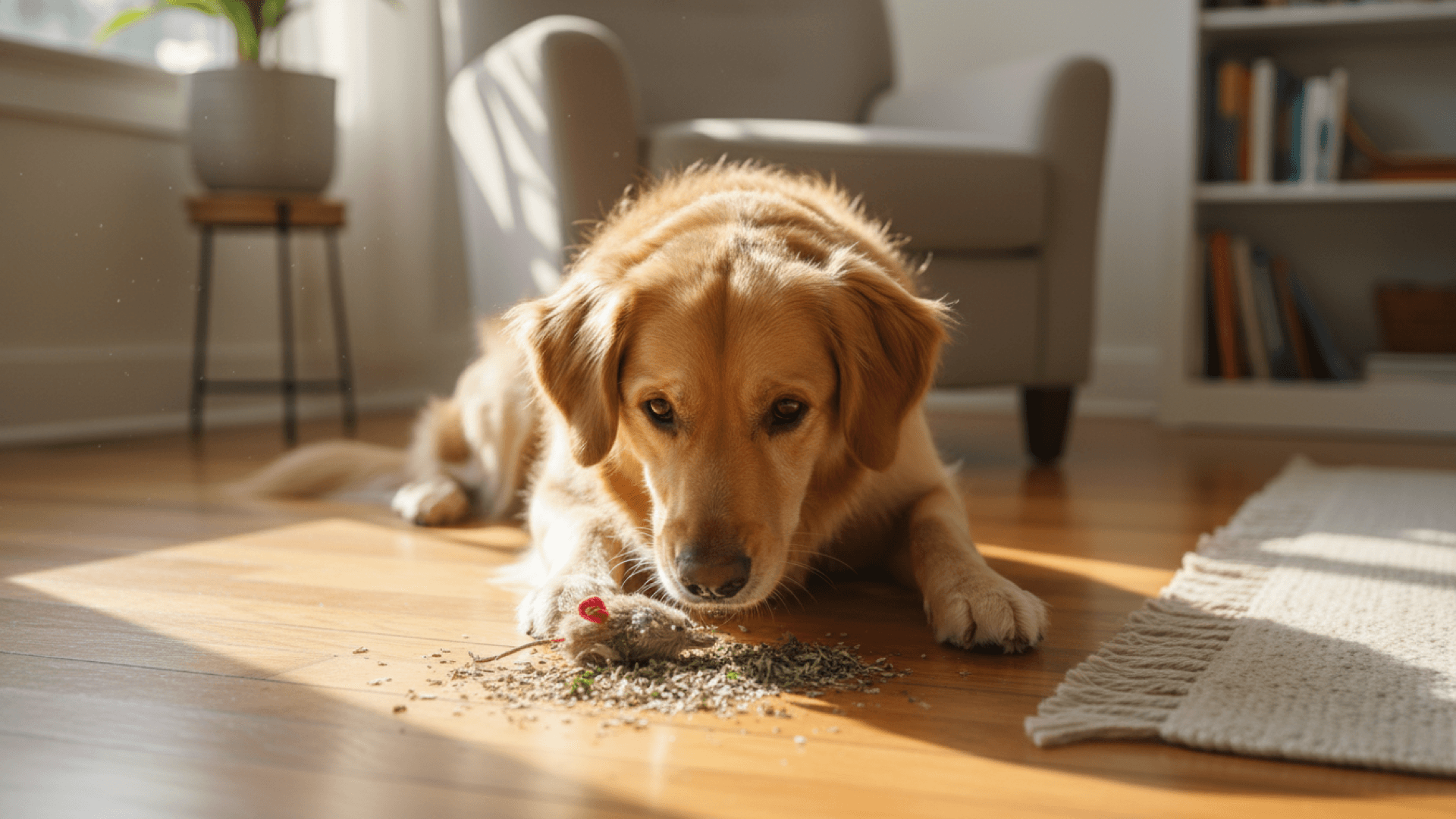
- Dog ate dried catnip (small pinch up to ~1/2 teaspoon): Safe for most healthy adult dogs. Expect either no reaction or mild calmness.
- Dog ate a large amount of fresh or dried catnip: Watch for vomiting and diarrhea over the next 24 hours. Usually self-resolving.
- Dog chewed a catnip plant in the garden: The plant itself is non-toxic, but check for pesticides, fertilizer, or mulch ingestion.
- Catnip essential oil spilled on or licked by dog: Higher risk. Essential oils are concentrated and can irritate skin, eyes, and GI tract. Wash off and call your vet.
- Catnip spray on cat furniture: Diluted formulas are generally safe by contact. Don't let your dog ingest the bottle.
- Pregnant, nursing, senior, or medicated dog ate catnip: Call your vet before assuming it's fine. Catnip has mild sedative properties that can interact with other drugs.
The rest of this guide explains why each verdict is what it is — and gives you a printable "call the vet" symptom list so you're not guessing at 2 a.m.
Why Catnip Affects Dogs Differently Than Cats
Catnip's signature compound is nepetalactone, a terpene that binds to specific olfactory receptors in cats and triggers the classic rolling, drooling, hyperactive response. PetMD notes that the catnip response is genetic — and that not every cat reacts, with roughly half the cat population showing no behavioral change at all.
Dogs don't have the same receptor wiring. When a dog sniffs or ingests a small amount of catnip, one of three things usually happens:
- Nothing at all. This is the most common outcome — dogs simply aren't built to "trip" on nepetalactone the way cats are.
- Mild calmness or drowsiness. Some dogs respond with a gentle sedative effect, which is why catnip occasionally shows up in calming-herb blends marketed for anxious dogs.
- Brief stomach upset. A large dose can act as a mild GI irritant, producing loose stool or one episode of vomiting.
The ASPCA's plant-toxicity database classifies catnip as toxic to cats (because of those large-dose vomiting and sedation responses) but does not include dogs on the warning list. Veterinary toxicologists at the ASPCA Animal Poison Control Center have repeatedly described catnip as "generally safe" for dogs in small quantities. The keyword there is quantities — the safety story changes when we talk about concentration (essential oils) or interaction (medications, pregnancy).
Scenario 1: Your Dog Got Hold of a Catnip Cat Toy
This is the most common catnip-safety call vet hotlines receive, and it's almost always a false alarm — for the catnip itself. The catnip stuffed inside a typical cat toy is dried, low-volume, and quickly dispersed once your dog rips the toy open.
The actual hazards from a chewed cat toy:
- Polyester stuffing or fiberfill ingestion. Large wads of stuffing can cause a GI obstruction. This is the most serious risk and the one to watch for.
- Plastic squeakers or rattles. If you find pieces of the squeaker missing from the toy, treat it like a foreign-body emergency.
- Sewn-in feathers, ribbons, or strings. Linear foreign bodies are surgical emergencies. Don't pull anything you see protruding from your dog's mouth or backside — call your vet.
Action plan: Take the destroyed toy away, check what's missing, and watch for vomiting, refusal to eat, lethargy, or straining to defecate over the next 24 to 48 hours. The catnip itself is rarely the problem.
Scenario 2: Your Dog Ate Catnip From the Garden
Catnip is a hardy perennial in the mint family that loves to spread. If you have catnip planted for the neighborhood cats — or for cocktail garnish — and your dog has been chewing on it, the leaves and stems themselves are non-toxic.
The risks live around the plant:
- Pesticides and herbicides. A backyard catnip patch sprayed with Roundup, organophosphates, or rodenticides is far more dangerous than the plant. If you didn't apply anything, look for footprints from a lawn service.
- Cocoa mulch. Often used in herb beds because of its smell. Cocoa mulch is toxic to dogs — same theobromine compound as chocolate.
- Slugs, bait, or snail pellets. Metaldehyde-based snail bait near herbs can cause severe neurological symptoms within hours.
- Other plants in the same bed. Cats love a "kitty herb garden" — many of which (lily, oleander, foxglove) are highly toxic to dogs. Take a quick photo of the bed and have it ready if you need to call poison control.
Action plan: If your dog only nibbled fresh catnip leaves and the bed is unsprayed and free of other toxic plants, you can monitor at home. If you're unsure what was applied to the soil, call the ASPCA Animal Poison Control Center at (888) 426-4435 — a consultation fee applies, but it's the right call.
Scenario 3: Catnip Essential Oil — Treat This Differently
This is where most "catnip is safe for dogs" articles understate the risk. Essential oils are concentrated extracts, not the same product as a sprig of fresh catnip. A 15 mL bottle of catnip essential oil contains the nepetalactone from a much larger volume of plant material, plus carrier solvents that can themselves be irritating.
Catnip essential oil shows up in homemade insect repellents (it has documented activity against mosquitoes), DIY anxiety blends, and some commercial dog products. Here's how to think about each:
- Spilled or applied to skin undiluted: Wash off with mild dog shampoo or unscented baby shampoo and lukewarm water. Watch for redness, scratching, or hot spots. Dogs can absorb essential oils through the skin.
- Licked off paws or fur: Concentrated oils can cause drooling, vomiting, and oral irritation. Rinse the dog's mouth with water and call your vet.
- Diffused in the air: Lower risk than topical, but small dogs, brachycephalic breeds (French Bulldogs, Pugs), and dogs with airway disease can react to airborne aromatics. Diffuse in a ventilated room your dog can leave.
- Used in a commercial dog product (collar, spray, treat): The manufacturer has diluted it to a dog-safe strength. Follow label directions.
For a broader look at oil safety, see our complete guide to essential oils for dogs. The same logic applies to catnip oil: dilution and exposure route matter more than the plant of origin.
Scenario 4: Catnip Spray on Cat Furniture
If your cat has a scratching post or tree refreshed with catnip spray, your dog can usually walk past, sniff, or even rub against it without issue. Commercial sprays are heavily diluted — typically water, a small percentage of catnip extract, and sometimes glycerin or alcohol as a carrier.
When to worry:
- Your dog actively licks a freshly sprayed surface and shows signs of GI upset.
- Your dog chewed the spray bottle open. (Call your vet — it's the alcohol or carrier that's the problem, not the catnip.)
- The product is a concentrate, not a ready-to-use spray. Concentrates need the same caution as essential oils.
Scenario 5: How Much Dried Catnip Is Too Much?
For healthy adult dogs, vets typically describe a safe upper limit of about 1/8 to 1/2 teaspoon of dried catnip per day, sprinkled on food. That's the dose used in anxiety-focused herbal blends. More than that, and you're more likely to see GI upset than any calming benefit.
Specific situations where you should skip catnip entirely or call your vet first:
- Pregnant or nursing dogs. Catnip is a mild uterine stimulant in larger doses. The veterinary literature is thin, but the precautionary principle applies.
- Puppies under 12 weeks. Their GI tracts are still developing, and you don't want to muddy a teething-stage dog's appetite with herbal experiments.
- Senior dogs on sedatives or anti-anxiety meds. Catnip's mild sedative effect can stack on top of trazodone, gabapentin, or other prescribed calming meds. Ask your vet before adding it.
- Dogs with a history of pancreatitis or IBD. New herbal additions can trigger a flare. Don't experiment without a vet check.
- Dogs on a strict prescription diet (kidney, liver, GI). Same rule — don't add herbal supplements without veterinary sign-off.
Signs Your Dog Is Reacting Badly
Most dogs who eat catnip show no symptoms at all. If yours does react, here's the spectrum from "monitor at home" to "call now":
Mild (monitor at home):
- One episode of vomiting
- Soft stool or one bout of diarrhea
- Mild drowsiness or unusual relaxation
- Increased thirst
Moderate (call your vet during office hours):
- Multiple episodes of vomiting in 24 hours
- Diarrhea lasting more than 24 hours
- Loss of appetite for a full day
- Persistent lethargy or wobbliness
Severe (emergency vet, now):
- Bloody vomit or stool
- Collapse, seizures, or extreme disorientation
- Difficulty breathing
- Suspected ingestion of essential oil at concentration
- Suspected ingestion of a foreign body (toy stuffing, squeaker) along with the catnip
If you can't reach your regular vet, the ASPCA Animal Poison Control Center (888-426-4435) is staffed 24/7. The Pet Poison Helpline (855-764-7661) is a similar service. Both charge a consultation fee — a small price for an actual toxicology consult.
Vet-Recommended Alternatives to Catnip for Anxious Dogs
If you reached for catnip because your dog is anxious during thunderstorms, fireworks, or vet visits, there are options with stronger evidence behind them for dogs specifically:
- Anise seed (Pimpinella anisum). Often called the dog equivalent of catnip — many dogs find the scent stimulating in a playful way. Use sparingly; large amounts can cause GI upset and CNS depression.
- L-theanine and L-tryptophan supplements. Available as vet-formulated chews. Better-studied for canine anxiety than catnip is.
- Adaptil pheromone diffusers and collars. Synthetic version of the calming pheromone mother dogs produce. Drug-free.
- Music therapy. Slow classical and harp music has been shown to lower heart rate in kenneled dogs. See our guide to using music to ease dog anxiety.
- Compression wraps (Thundershirt). Gentle constant pressure helps many storm-phobic dogs.
- Prescription anxiolytics. For dogs with diagnosed anxiety, talk to your vet about trazodone, fluoxetine, or sileo. These are dosed precisely and studied in dogs.
For a deeper read on identifying anxiety in the first place, see our guide to dog anxiety: signs and what to do.
Catnip vs. Other Cat-Specific Products: A Quick Safety Cheat Sheet
If you live in a multi-pet home, this is worth bookmarking. Not all cat-targeted products are equal in dog safety:
- Catnip toys and dried catnip: Low risk for dogs.
- Silver vine, valerian root cat toys: Generally low risk in small amounts, but valerian is a stronger sedative — same vet-check rule as catnip for medicated or pregnant dogs.
- Cat food and treats: Higher fat and protein than dog food; not toxic but not balanced for daily dog feeding. One stolen kibble is fine; a stolen bowl can cause pancreatitis in sensitive dogs.
- Cat flea/tick spot-on treatments containing permethrin: SAFE for cats at proper dose but can be applied. Permethrin is generally safe for dogs at correct dog-specific dosing — but cat-formulated permethrin products are typically labeled "for cats only" because of cat sensitivity. Always use the species-correct product.
- Litter box contents: Many dogs love to snack here. Clay-clumping litter can cause GI obstruction. This has nothing to do with catnip, but it's the most common multi-pet hazard, so we mention it.
Bottom Line on Catnip Safety
For the average dog, in the average scenario — a sniffed cat toy, a chewed-up sachet, a lick of the dried herb — catnip is safe. The ASPCA does not classify Nepeta cataria as toxic to dogs, and most dogs either ignore it or show a brief calming response.
The places where catnip stops being safe are concentration (essential oils), context (pregnancy, sedative medications, IBD), and contamination (pesticides on garden plants, foreign bodies inside toys). Treat those situations with caution, and treat the rest with a shrug. For more on what catnip actually does to dogs that do react, see our companion guide: Does catnip work on dogs? What actually happens. If you're specifically wondering whether dogs can eat catnip on purpose — as in, sprinkled in their food — our vet-backed catnip eating guide covers safe dosing.
Frequently Asked Questions
Is catnip safe for dogs to smell?
Yes. Sniffing catnip — even right out of the bag — is not harmful to dogs. Unlike cats, dogs lack the olfactory receptors that produce the dramatic catnip reaction, so most dogs sniff and move on with their day.
Can catnip kill a dog?
There are no documented cases of catnip (the plant or dried herb) causing death in a healthy dog at typical exposure levels. Catnip essential oil ingested at concentration is more dangerous and warrants a vet call, but the herb itself is not lethal at the doses dogs realistically consume from cat toys or garden plants.
My dog ate a whole bag of dried catnip. What should I do?
Remove access, offer plain water, and watch for vomiting or diarrhea over the next 24 hours. Most dogs self-resolve with mild GI symptoms at worst. Call your vet or the ASPCA Animal Poison Control Center if your dog is a puppy, senior, pregnant, on medication, or has a history of pancreatitis — and call immediately if you see multiple vomiting episodes, bloody stool, or extreme lethargy.
Can I give my dog catnip to calm them down for fireworks?
You can try a pinch (1/8 to 1/2 teaspoon of dried catnip) sprinkled on food a few hours before, but the evidence that catnip calms dogs is weak compared to options like Adaptil pheromone diffusers, prescription trazodone, or compression wraps. Talk to your vet for a real fireworks-anxiety plan if your dog struggles every year.
Is catnip essential oil safe to diffuse around dogs?
Use caution. Diffused at low concentration in a ventilated room your dog can leave, the risk is low. Small dogs, flat-faced breeds, and dogs with asthma or airway disease should not be confined to a room with any actively diffusing essential oil, including catnip. Topical or ingested essential oil at undiluted strength is a vet call.
Will catnip make my dog hyper like it makes my cat?
Almost never. Cats and dogs respond to nepetalactone through different neural pathways. The hyperactive rolling-and-drooling cat reaction is not a dog response — most dogs ignore catnip or get briefly drowsy.
Is the catnip plant toxic to dogs if they chew the leaves?
No — the ASPCA Animal Poison Control Center does not list Nepeta cataria as toxic to dogs. The risks from a garden catnip patch are usually pesticides, fertilizer, mulch (especially cocoa mulch), or other toxic plants growing nearby — not the catnip itself.
Want More Vet-Backed Dog Safety Guides?
If you found this helpful, sign up for The Daily Wag — our free newsletter sends one quick, practical dog tip to your inbox most weekdays. No spam, no upsells, just the stuff that helps you raise a happier, healthier pup.