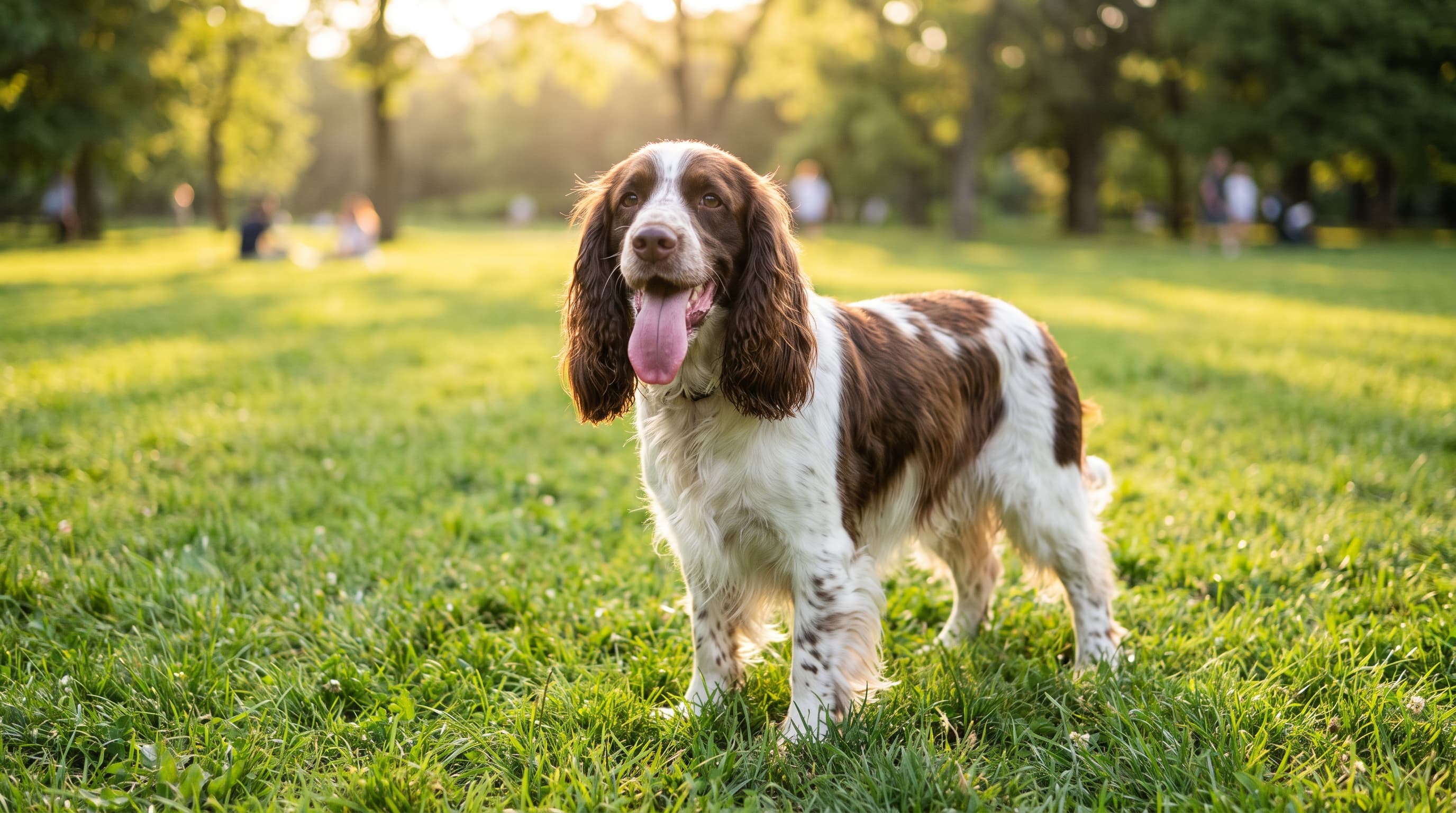

Cocker-Springer Dog: The Complete Cocker Spaniel–English Springer Spaniel Mix Guide
The Cocker-Springer is a designer crossbreed of the Cocker Spaniel and the English Springer Spaniel, sometimes called a "Sprocker." Expect a small-to-medium, 20–45 pound dog that is affectionate, highly intelligent, and bursting with energy, with a silky, feathered coat and a 12–15 year lifespan. It's a friendly family companion that needs one to two hours of daily exercise and consistent grooming.
Cocker-Springer at a Glance
- Other names: Sprocker, Sprocker Spaniel
- Parent breeds: Cocker Spaniel × English Springer Spaniel
- Size: Small to medium
- Weight: 20–45 pounds
- Height: 14–18 inches at the shoulder
- Lifespan: 12–15 years
- Coat: Medium-length, silky, and feathered; often wavy
- Colors: Black, liver, tan, white, roan, and tricolor combinations
- Temperament: Affectionate, intelligent, energetic, eager to please
- Exercise: 60–120 minutes daily
- Best for: Active families and individuals who can offer time, training, and companionship
What Is a Cocker-Springer?
A Cocker-Springer is a first-generation cross between two closely related and beloved gundog breeds: the Cocker Spaniel and the English Springer Spaniel. Both parents were bred to flush and retrieve game, so the resulting mix is athletic, birdy, and people-oriented by design. Because the two breeds share so much ancestry, Cocker-Springer puppies tend to be more predictable than many designer crosses—you can reliably expect a merry, medium-energy spaniel.
As with any mixed breed, individual puppies vary. Some lean more toward the compact, sensitive Cocker Spaniel, while others favor the taller, higher-drive English Springer. Meeting both parents, when possible, is the best way to gauge how a given litter is likely to turn out. If you love the spaniel look but want to compare related crosses, our overview of popular spaniel breeds is a helpful companion read.
Appearance and Coat
Cocker-Springers are handsome, athletic dogs that fall neatly between their two parents in size. They typically stand 14–18 inches tall and weigh 20–45 pounds, with the sturdy, balanced build of a working spaniel. The head is soft and expressive, framed by the long, feathered, pendulous ears both parent breeds are known for.
The coat is medium-length, silky, and often slightly wavy, with feathering on the ears, chest, legs, and belly. Common colors include black, liver (brown), tan, white, and combinations with roan or tricolor patterning. This is a moderate-shedding coat that needs regular brushing to stay tangle-free—more on grooming below.
Temperament and Personality
If you want a dog that wants to be with you, the Cocker-Springer delivers. These dogs are famously affectionate, sociable, and eager to please, which makes them wonderful family companions. They typically get along beautifully with children and other pets when socialized early, and their gentle, merry disposition earns them a reputation as loving housemates.
That devotion has a flip side: Cocker-Springers bond intensely and can be prone to separation anxiety if left alone too long. They thrive in homes where someone is around for much of the day and where they're treated as part of the family rather than a backyard dog. Their intelligence also means they need mental stimulation—a bored spaniel will invent its own (often noisy or destructive) entertainment.
Exercise and Energy Needs
Do not underestimate this mix's energy. With two hunting breeds in its heritage, the Cocker-Springer needs 60–120 minutes of exercise every day, split between physical activity and mental work. Long walks, off-leash runs in secure areas, fetch, swimming, and scent games all suit their instincts perfectly.
Because they were bred to work closely with people, Cocker-Springers excel at dog sports like agility, flyball, rally obedience, and scent work. Channeling their drive into structured activities keeps them fit and prevents the boredom-driven behaviors—barking, digging, chewing—that appear when a spaniel doesn't get enough to do. A tired Cocker-Springer is a well-behaved Cocker-Springer.
Training a Cocker-Springer
This is one of the more trainable designer dogs you'll find. Both parent breeds rank as highly intelligent and biddable, and the Cocker-Springer inherits an eager-to-please attitude that makes training genuinely fun. They respond best to positive, reward-based methods—praise, treats, and play—and they can be sensitive, so harsh corrections tend to backfire and undermine their confidence.
Start socialization and basic obedience early. Expose your puppy to a wide range of people, dogs, sounds, and environments during the critical first few months. Their food motivation and quick minds mean they pick up commands rapidly, and many go on to excel in advanced training and canine sports.
Grooming and Shedding
The Cocker-Springer's silky, feathered coat is beautiful but high-maintenance. Plan to brush several times a week—ideally most days—to prevent mats and tangles, especially in the feathering behind the ears, on the legs, and under the belly. Many owners schedule a professional grooming trim every 6–8 weeks to keep the coat manageable.
Ear care is non-negotiable. Those long, floppy ears trap moisture and reduce airflow, making the breed prone to ear infections. Check and gently clean the ears weekly, and dry them thoroughly after swimming or baths. Round out the routine with regular nail trims, teeth brushing, and periodic baths.
Health and Lifespan
Cocker-Springers are generally healthy dogs with a typical lifespan of 12–15 years. Like all breeds and crosses, they can inherit health conditions from their parent lines, so buying from a breeder who health-tests both parents is important. Conditions to be aware of include:
- Ear infections: Very common in spaniels due to their long, pendulous ears. Routine cleaning and drying is the best prevention.
- Hip dysplasia: A hereditary malformation of the hip joint that can lead to arthritis. Reputable breeders screen for it.
- Progressive retinal atrophy (PRA): An inherited eye disease that gradually reduces vision. Genetic testing of parents helps reduce the risk.
- Hypothyroidism: An underactive thyroid that is usually manageable with medication.
- Ear, eye, and skin issues more broadly, which spaniels can be prone to.
This section is a general overview, not veterinary advice. Any concerns about your individual dog's health should be discussed with your veterinarian, who can recommend appropriate screening and care.
Feeding and Nutrition
Feed your Cocker-Springer a high-quality, complete dog food appropriate for its age, size, and activity level. Because these are energetic dogs, an active adult may need more calories than a couch-companion of the same weight—adjust portions to keep your dog lean. Spaniels can be prone to weight gain, and carrying extra pounds worsens joint problems, so measure meals and go easy on treats. Keep treats to no more than 10% of daily calories, and always provide fresh water. Your vet can help you set a target weight and feeding plan.
Is the Cocker-Springer Right for You?
A Cocker-Springer is an excellent match if you want an affectionate, trainable, medium-sized dog and you can commit to daily exercise, regular grooming, and lots of companionship. They shine in active households and adapt reasonably well to apartments provided their exercise needs are met. They are less suited to people who are away from home for long stretches or who can't keep up with the grooming and activity demands.
If the Cocker-Springer appeals but you want to explore similar options, take a look at the purebred Cocker Spaniel and the low-shedding Springerdoodle (Springer Spaniel × Poodle), two closely related choices worth comparing.
What Does a Cocker-Springer Cost?
Cocker-Springer puppies from a reputable breeder typically range from about $800 to $2,000, depending on location, lineage, and health testing. Beyond the purchase price, budget for ongoing costs: quality food, routine and emergency veterinary care, professional grooming every couple of months, and supplies. Adopting from a spaniel rescue is another wonderful option and usually costs far less while giving a dog in need a home.
Frequently Asked Questions
What is a Cocker-Springer called?
A Cocker-Springer is a cross between a Cocker Spaniel and an English Springer Spaniel. It's commonly nicknamed a "Sprocker" or "Sprocker Spaniel."
How big does a Cocker-Springer get?
Most Cocker-Springers stand 14–18 inches tall and weigh 20–45 pounds, placing them in the small-to-medium size range. Size depends on which parent a given dog takes after.
Are Cocker-Springers good family dogs?
Yes. They are affectionate, gentle, and sociable, and they typically do very well with children and other pets when socialized early. Their loving nature makes them popular family companions, though they need company and don't like being left alone for long.
Do Cocker-Springers shed a lot?
They are moderate shedders with silky, feathered coats that require frequent brushing and regular professional grooming. They are not considered hypoallergenic.
How much exercise does a Cocker-Springer need?
Plan for 60–120 minutes of daily exercise, plus mental stimulation. With two hunting breeds in their ancestry, they are high-energy dogs that thrive on activity and dog sports.
How long do Cocker-Springers live?
Their typical lifespan is 12–15 years. Regular veterinary care, a healthy weight, and diligent ear care all support a long, comfortable life.
The Bottom Line
The Cocker-Springer blends the best of two classic spaniels into an affectionate, clever, energetic companion that fits active families beautifully. Give it plenty of exercise, consistent positive training, and a committed grooming routine—especially for those signature ears—and you'll have a devoted friend for well over a decade. If you're weighing your options among spaniels, compare our guides to the Cocker Spaniel and the Springerdoodle.
Choosing your next spaniel? Subscribe to the Daily Wag newsletter for breed guides, training tips, and grooming advice delivered straight to your inbox.