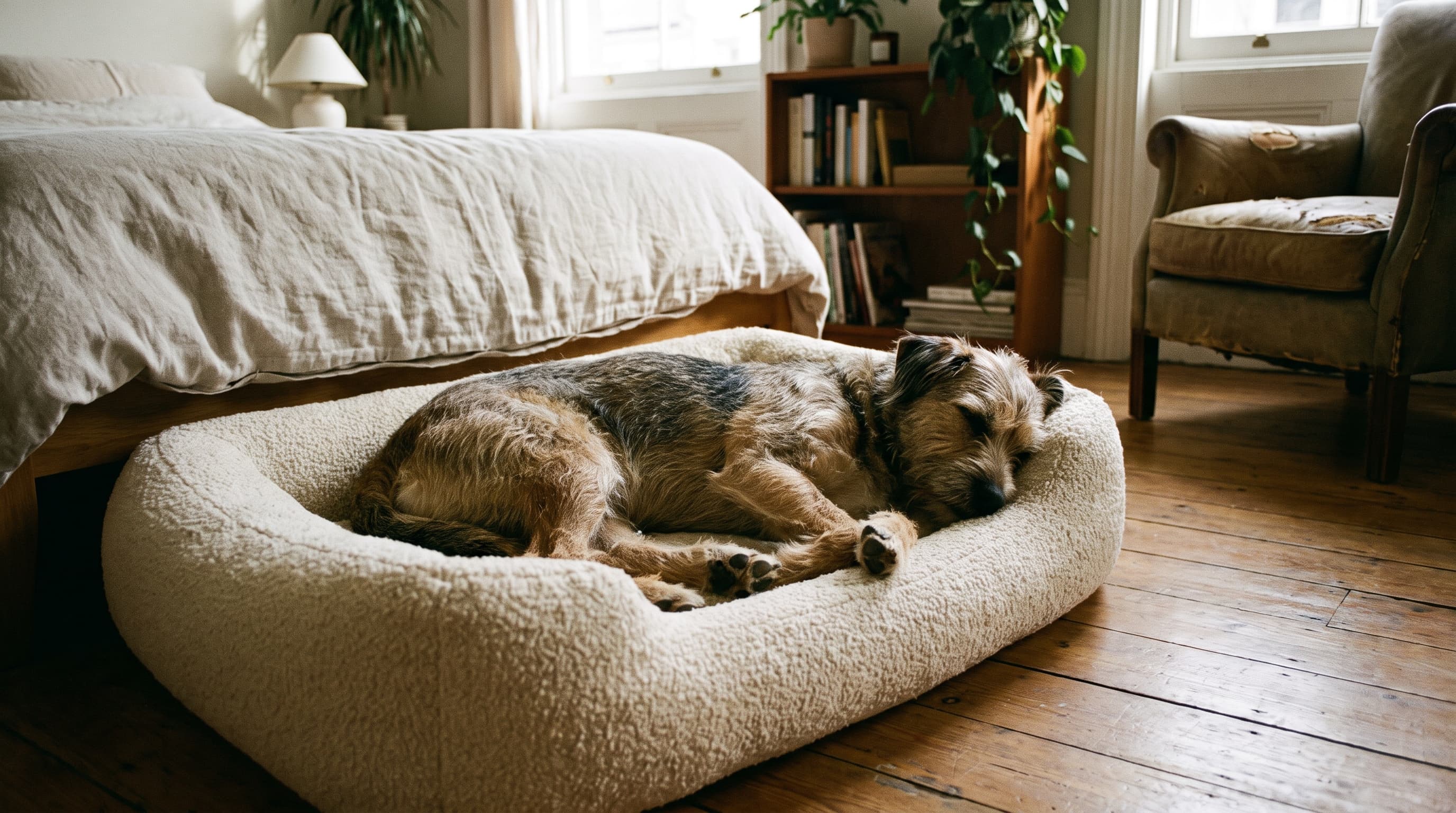
Yes, dogs can have nightmares. Dogs experience REM sleep, the dream stage of sleep, and researchers believe they can replay stressful or frightening experiences as bad dreams. Signs include whimpering, growling, twitching, and leg paddling. Most nightmares are harmless, but frequent or severe episodes can point to anxiety or a medical issue worth discussing with your veterinarian.
This article is for general educational purposes only and is not a substitute for professional veterinary advice. If you are worried about your dog's sleep, behavior, or health, please consult your veterinarian.
Do Dogs Actually Dream?
Scientists are confident that dogs dream. Like humans, dogs cycle through stages of sleep including rapid eye movement (REM) sleep, the phase most associated with vivid dreaming. The American Kennel Club explains that dogs not only dream but likely dream similarly to us, replaying moments from their day while they sleep. Structurally, the canine brain produces sleep patterns very much like our own.
Psychologist and canine researcher Stanley Coren has written that, based on brain-wave studies and behavior, dogs dream about dog-related things, such as chasing, playing, or interacting with their owners. If a dog can dream about pleasant experiences, it stands to reason it can also dream about unpleasant ones.
Can Dogs Have Nightmares?
Because dogs experience REM sleep and appear to process their daily experiences while dreaming, most experts agree they can have nightmares. A nightmare is essentially a dream with a negative emotional charge, and there is no biological reason dogs would be spared from them. Dogs that have experienced trauma, such as rescue dogs from difficult backgrounds, may be especially prone to distressing dreams that echo frightening past events.
That said, we cannot ask a dog what it dreamed about, so we interpret nightmares through behavior. When a sleeping dog suddenly whimpers, growls, or thrashes, it is reasonable to suspect an unpleasant dream, though not every twitch or noise means distress.
Signs Your Dog Is Having a Nightmare
Normal dreaming often looks peaceful: soft paw twitches, gentle leg movements, fluttering eyelids, or quiet noises. A nightmare tends to look more intense and distressed. Watch for:
- Whimpering, whining, crying, or growling
- Barking or muffled yips while asleep
- Vigorous leg paddling or thrashing
- Facial tension, bared teeth, or a snarl
- Rapid breathing or a startled, disoriented waking
As VCA Animal Hospitals notes, twitching and vocalizing during sleep are common and usually normal parts of the dream cycle. The intensity and your dog's demeanor on waking are the best clues to whether a dream was merely active or genuinely distressing.
Nightmare or Seizure? How to Tell the Difference
This distinction matters, because a seizure is a medical emergency-adjacent event while a nightmare is not. Key differences:
- Wakeability: You can usually rouse a dreaming dog by calling its name; a seizing dog cannot be woken and does not respond.
- Movement quality: Dream movements are loose and intermittent. Seizure movements are stiff, rhythmic, and uncontrolled, often with full-body rigidity.
- Body signs: Seizures may involve drooling, loss of bladder or bowel control, and jaw chomping.
- Recovery: A dog waking from a dream reorients quickly. A dog after a seizure is often confused, disoriented, or wobbly for minutes to hours.
If you cannot wake your dog, if the episode involves rigid convulsing, or if recovery is prolonged and disoriented, treat it as a possible seizure and contact your veterinarian promptly.
What Causes Nightmares in Dogs?
Nightmares are thought to stem from the same source as pleasant dreams: the brain processing the day's experiences and emotions. Contributing factors can include:
- Stressful or traumatic experiences, past or recent, especially in rescue and shelter dogs
- Daily anxiety triggers, such as loud noises, conflict, or changes in routine
- Age, with puppies and senior dogs tending to dream more
- Underlying pain or illness, which can disrupt sleep
Chronic anxiety is a frequent culprit. If your dog is generally anxious while awake, that stress can carry into sleep. Our guide to easing thunderstorm and noise anxiety offers practical ways to lower a dog's overall stress load, and the broader picture of anxiety in dogs is well documented by veterinary sources.
Which Dogs Are Most Prone to Nightmares?
Any dog can have a bad dream, but some are more likely to than others. Research on canine sleep suggests that small dogs actually dream more frequently than large dogs, though large dogs tend to have longer dreams, a quirk thought to relate to sleep-cycle length. Age plays a role too: puppies and senior dogs spend more time dreaming than healthy adults, which may make distressed sleep more noticeable in the very young and the very old.
Beyond size and age, life history matters most. Dogs that have endured neglect, abuse, abandonment, or a frightening single event, such as a car accident or a dog attack, appear more prone to nightmares that replay those experiences. Anxious dogs, dogs adjusting to a new home, and dogs experiencing pain or illness may also sleep more fitfully. Recognizing which category your dog falls into helps you respond with patience rather than alarm, and tells you whether extra stress-reduction or a veterinary conversation is warranted.
Should You Wake a Dog Having a Nightmare?
The long-standing advice, "let sleeping dogs lie," holds up here. Even a gentle, well-meaning dog can snap or bite reflexively if startled awake mid-nightmare, because it may briefly wake up disoriented and defensive. In most cases it is safest and kindest to let the dream pass on its own.
If a nightmare seems severe and you feel you must intervene, do not touch or shake your dog. Instead, wake it with your voice from a safe distance, calling its name softly and gradually increasing volume until it stirs naturally. Once awake, offer calm reassurance rather than fussing, which can accidentally reinforce anxious behavior.
How to Help a Dog That Has Frequent Nightmares
Occasional bad dreams need no treatment. But if your dog seems to have them often or wakes genuinely distressed, you can support better sleep by:
- Providing a consistent daily routine and predictable bedtime
- Offering a comfortable, quiet, secure sleeping area away from disturbances
- Ensuring plenty of physical exercise and mental enrichment during the day
- Reducing waking stressors and using calming tools such as gentle music or an anxiety wrap
- Building positive, trust-based experiences, especially for dogs with a rough past
Because a dog's sleeping patterns reflect its overall wellbeing, it can help to understand what different rest behaviors mean; our guide to decoding your dog's sleeping positions is a useful companion read.
When Nightmares Signal a Medical Problem
Sometimes disrupted, distressed sleep is a symptom rather than a harmless quirk. Talk to your veterinarian if you notice:
- A sudden increase in nighttime distress or restlessness
- Episodes you cannot distinguish from seizures
- Daytime behavior changes, anxiety, pain, or confusion (especially in seniors, where cognitive dysfunction can disrupt sleep)
- Poor sleep quality affecting appetite, energy, or mood
These can accompany other warning signs, and it is always safer to have a professional evaluate them. Our list of 12 signs your dog needs a vet visit can help you decide when to call. Never attempt to medicate your dog for sleep or anxiety without veterinary guidance.
Frequently Asked Questions
How do I know if my dog is having a nightmare?
Look for whimpering, growling, distressed vocalizing, intense leg paddling, and a startled or disoriented waking. Peaceful twitching and soft noises usually indicate ordinary, harmless dreaming.
Should I wake my dog from a nightmare?
Generally no. Startled dogs can snap reflexively. If you must intervene, wake your dog with your voice from a safe distance rather than by touching it, then offer calm reassurance.
Do puppies have nightmares?
Puppies dream more than adult dogs and can have bad dreams, sometimes tied to new or stressful experiences. Occasional distressed sleep is normal, but frequent or severe episodes warrant a vet check.
What is the difference between a dog nightmare and a seizure?
You can usually wake a dreaming dog with your voice, and it reorients quickly. A seizing dog cannot be woken, shows stiff rhythmic movements, and is often confused or wobbly afterward. Suspected seizures need veterinary attention.
Can trauma cause nightmares in dogs?
Very likely. Dogs appear to replay emotional experiences in dreams, so dogs with a history of abuse, neglect, or frightening events may be more prone to nightmares. Patience, routine, and trust-building help.
How can I help my dog sleep better?
Keep a consistent routine, provide a quiet and secure sleeping spot, ensure daily exercise and enrichment, and reduce waking stressors. If poor sleep persists or worsens, consult your veterinarian.
The Bottom Line
Dogs dream, and the evidence strongly suggests they can have nightmares too. An occasional bad dream is a normal part of canine sleep and nothing to worry about. Your job is to let sleeping dogs lie, keep waking-life stress low, and stay alert to the difference between a harmless dream and a possible seizure or medical issue. When in doubt, your veterinarian is the right person to ask. For more vet-informed dog-care insights, subscribe to the Daily Wag newsletter and never miss a guide.
Sources: American Kennel Club — Do Dogs Dream?, VCA Animal Hospitals — Do Dogs Dream?, Psychology Today — Stanley Coren, Do Dogs Dream?, VCA Animal Hospitals — Anxiety in Dogs.