
Why do Chihuahuas shake? Chihuahuas tremble far more than most dogs because their tiny bodies lose heat quickly and their fast metabolism burns energy in a hurry. Most shaking is harmless — from cold, excitement, or nerves — but it can also signal low blood sugar, pain, or illness, so sudden or severe trembling deserves a vet's attention.
If you share your life with a Chihuahua, you've almost certainly watched those little legs quiver and wondered whether it's normal or a warning sign. Usually it's the former. But because trembling can occasionally point to a genuine medical problem, it helps to know the full list of reasons — and the specific red flags that mean it's time to call your veterinarian.
Is It Normal for Chihuahuas to Shake So Much?
For this breed, yes — frequent shaking is common and usually normal. Chihuahuas are the smallest recognized breed, and the American Kennel Club describes them as tiny dogs with huge personalities. That small size is exactly why they shiver. A Chihuahua has very little body fat and a thin coat to insulate it, plus a high surface-area-to-volume ratio that sheds heat fast. Layer on a naturally revved-up metabolism and a sensitive, alert temperament, and you get a dog that trembles at the slightest chill or thrill. In other words, occasional shaking is baked into the breed. The goal isn't to eliminate it — it's to tell ordinary trembling apart from the kind that signals a problem.
The Everyday, Harmless Reasons Chihuahuas Shake
Most trembling traces back to one of these benign causes, according to veterinary and behavior experts at Adopt a Pet:
- Feeling cold: Thin coats and minimal body fat make Chihuahuas quick to chill, even indoors or on a mild day. Shivering is their way of generating warmth.
- Excitement: A wobbly, full-body shake when you grab the leash or open a treat bag is pure enthusiasm — big feelings in a small package.
- Anxiety or stress: Chihuahuas have sensitive nervous systems and can tremble at vet visits, new people, loud noises, or being left alone.
- High metabolism and energy: Their rapid calorie burn can show up as a fine, buzzy tremble, especially in young, wired dogs.
- Dreaming: Twitching and shaking during sleep is normal REM activity and nothing to worry about.
If your Chihuahua shakes in these predictable situations, warms up or calms down quickly, and otherwise eats, plays, and behaves normally, you're almost certainly looking at ordinary breed behavior.
Cold Sensitivity: Why Your Chihuahua Shivers Indoors
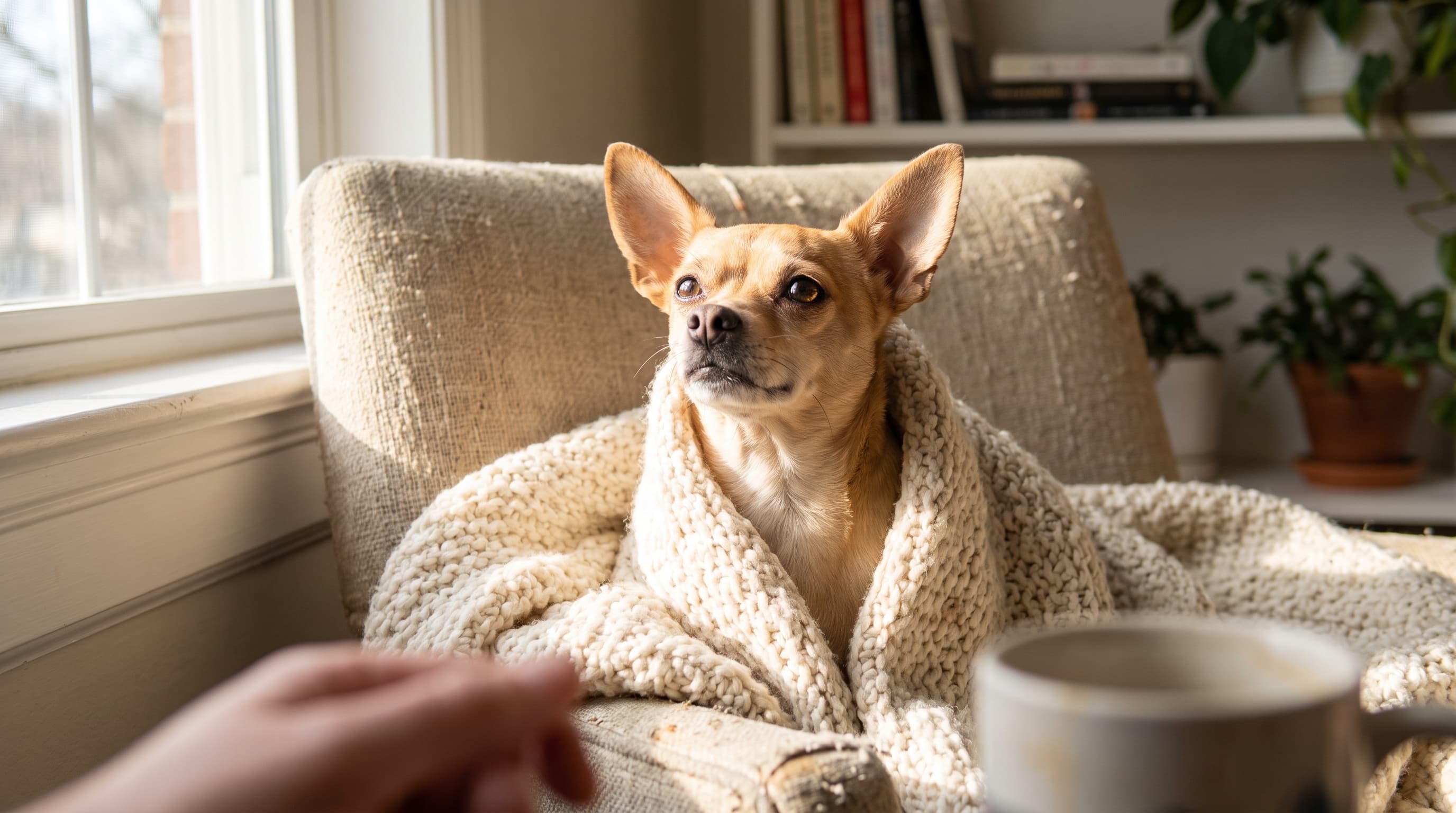
Temperature is the single most common trigger. Because they lose heat so easily, many Chihuahuas are visibly uncomfortable in air conditioning, on tile floors, or on chilly mornings. A well-fitted sweater, a warm bed away from drafts, and a cozy blanket to burrow into can dramatically reduce shivering. Our guide to keeping cold-weather-sensitive dogs comfortable covers simple ways to help small breeds stay warm. If the shaking stops the moment your dog warms up, cold was the culprit — no vet needed.
Anxiety, Stress, and Fear Trembling
Chihuahuas are famously devoted and famously sensitive, a combination that makes them prone to stress trembling. Triggers range from thunderstorms and fireworks to a stranger reaching down too fast or a change in routine. Fear-based shaking often comes with other body language: tucked tail, pinned ears, lip-licking, or trying to hide. Building confidence through gentle socialization, predictable routines, and calm reassurance helps, and our tips for easing thunderstorm and noise anxiety apply directly. For dogs whose anxiety is severe or constant, a veterinarian or a certified behaviorist can build a tailored plan.
When Shaking Is a Medical Warning Sign
Sometimes trembling is the body flagging a real problem. The medical causes worth knowing include:
Low blood sugar (hypoglycemia)
This is the big one for the breed. Small dogs — and especially Chihuahua puppies — can burn through their glucose reserves quickly. The AKC lists trembling, weakness, drowsiness, and even seizures among the signs of hypoglycemia, noting that toy-breed puppies under 12 weeks are especially at risk because of their limited fat, muscle, and immature liver. Untreated hypoglycemia can be fatal, so shaking paired with lethargy, wobbliness, or disorientation is an emergency.
Pain or illness
Trembling can be a response to pain from an injury, dental disease, or an upset stomach, or a symptom of nausea and fever. If your dog shakes and also seems "off" — hiding, limping, refusing food — pain or illness may be behind it.
Poisoning and toxins
Full-body tremors can signal exposure to a toxin, from certain human medications and foods to household chemicals. Sudden, unexplained shaking after your dog may have gotten into something is a reason to call a vet or poison control immediately.
Medication side effects and aging
New tremors after starting a medication or vaccine are worth reporting to your vet. In senior Chihuahuas, muscle weakness and normal nervous-system changes can also cause trembling, particularly in the hind legs.
Chihuahua Shaking: When to Call the Vet
Occasional trembling in predictable situations is fine to monitor at home. Contact your veterinarian promptly if you notice any of the following:
- Sudden, severe, or continuous shaking that doesn't stop
- Trembling with lethargy, weakness, vomiting, or loss of coordination
- Loss of appetite, collapse, or a "drunken" wobble (possible hypoglycemia)
- Tremors that begin after a new medication, vaccine, or possible toxin exposure
- New or worsening tremors in a senior dog, or trembling with obvious signs of pain
When in doubt, err on the side of a phone call — our roundup of the signs your dog needs a vet visit can help you decide. You know your dog's normal; a clear change from it is always worth checking.
Frequently Asked Questions
Why does my Chihuahua shake for no reason?
There's almost always a reason, even if it isn't obvious — usually cold, excitement, or mild anxiety. If the trembling is frequent, severe, or paired with other symptoms like weakness or not eating, have your veterinarian rule out a medical cause.
Do Chihuahuas shake because they're cold?
Very often, yes. Their thin coats and low body fat make them lose heat quickly, so a sweater, a warm bed, and staying out of drafts can noticeably reduce shivering.
Can shaking mean my Chihuahua's blood sugar is low?
It can, especially in puppies and very small adults. Trembling alongside weakness, wobbliness, drowsiness, or disorientation may signal hypoglycemia, which is an emergency — contact a vet right away.
Is it normal for a Chihuahua puppy to shake a lot?
Some trembling is normal, but puppies are more vulnerable to low blood sugar, so watch them closely. Frequent small meals help, and any shaking with lethargy warrants an immediate vet call.
How can I help my Chihuahua stop shaking?
Address the trigger: warm them up if they're cold, reduce stress, and keep meals regular. If shaking persists despite a warm, calm environment, or comes with other symptoms, see your veterinarian for a diagnosis.
Do older Chihuahuas shake more?
They can. Age-related muscle weakness and nervous-system changes may cause trembling, often in the legs. New tremors in a senior dog should be evaluated by a vet to rule out pain or illness.
This article is for general educational purposes and is not a substitute for professional veterinary care. It does not provide diagnosis or dosing guidance. If your Chihuahua's shaking is sudden, severe, or accompanied by other symptoms, please see your veterinarian.
Curious about the breed behind the tremble? Explore our full Chihuahua breed guide and our overview of popular Chihuahua mixes to learn more about these big-hearted little dogs.