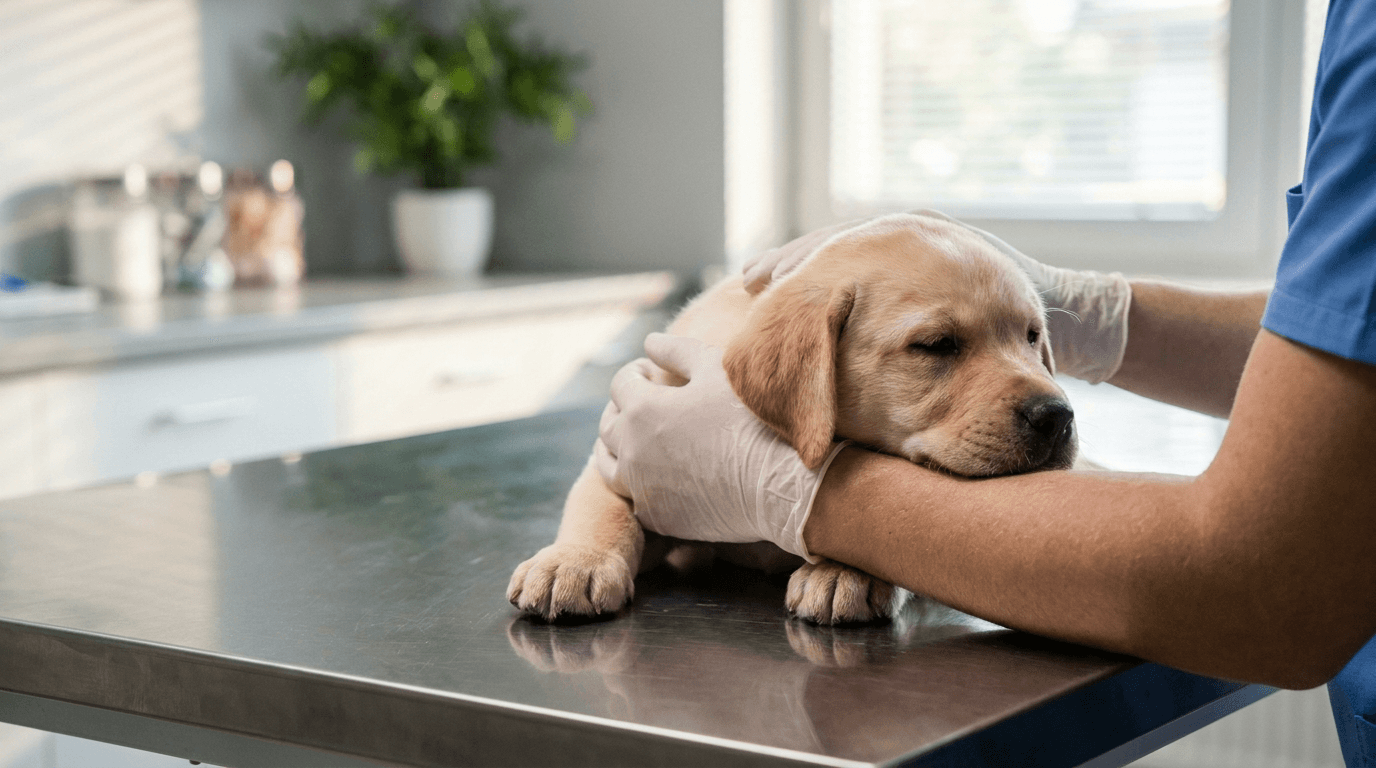

For the first time in a generation, American shelters are calling parvovirus an outbreak again — and the people running parvo wards say they know exactly why.
Cases have quadrupled in Maricopa County compared to the same period last year. In Pima County, Arizona, the public shelter is running about 20 parvo tests a day, more than double last spring's volume. The Arizona Humane Society's specialized parvo ICU treated more than 200 cases in just two months — over a third of its entire prior-year caseload, packed into the start of 2026.
The vets watching it unfold do not blame the weather, or shelter density alone, or a new strain of virus. They blame the same cultural shift that has eroded childhood immunization rates: a growing number of dog owners who are choosing not to vaccinate their puppies.
The vaccine hesitancy "spillover" is real — and measurable
In a national survey of 2,200 dog owners, researchers at Boston University's School of Public Health found that more than half expressed at least some hesitancy about canine vaccines. Roughly 40% said they believe canine vaccines are unsafe. Around 30% consider them medically unnecessary. And 37% — more than one in three — said they believe vaccinating their dog could cause autism.
There is no scientific basis for the autism claim in dogs. There is no scientific basis for it in humans either. But the belief has migrated from human medicine into the veterinary exam room, and the consequences are starting to show up in the form of sick puppies.
"The vaccine spillover effects that we document in our research underscore the importance of restoring trust in human vaccine safety and efficacy," lead author Matt Motta told the BU School of Public Health. The study, published in the journal Vaccine, was the first to quantify how skepticism toward COVID-19 shots had bled into pet care.
Three years on, vets across the country say they are watching that data become a daily reality.
Why parvo is the disease that exposes the trend first
Of all the preventable canine diseases, parvovirus is the most ruthless about finding unvaccinated dogs.
The virus is, in the words of Pima Animal Care Center's director of veterinary services Dr. Jennifer Wilcox, "really hearty." It survives on grass, concrete, food bowls, shoes, and shelter floors for months. It spreads through contact with infected feces — even microscopic traces a puppy might pick up sniffing a sidewalk. According to the American Veterinary Medical Association, the virus "can survive in the environment for long periods" and resists most household disinfectants.
Once a puppy is infected, the disease moves fast. Parvo attacks the lining of the intestines and the white blood cells that fight infection. Symptoms — lethargy, loss of appetite, severe vomiting, bloody diarrhea — typically appear within a week of exposure. Without intensive treatment, the mortality rate exceeds 90%. Most untreated puppies die of dehydration or sepsis within 48 to 72 hours.
With aggressive in-hospital care — IV fluids, antibiotics, anti-nausea drugs, sometimes plasma transfusions — survival rates jump to 80–90%. But that care is expensive. Dr. Steven Hansen, president and CEO of the Arizona Humane Society, says the average parvo treatment at a typical veterinary hospital runs about $5,000. The vaccine that prevents it costs $27, and is often free at community vaccine clinics.
"And it is that conversation of: if I'm not going to vaccinate myself, why would I vaccinate my dog," Hansen told KJZZ.
Where the surge is hitting hardest
The 2026 outbreak isn't confined to one region. It's showing up wherever a critical mass of unvaccinated puppies meets a contaminated environment:
- Pima County, Arizona: a 250% increase in parvo testing volume year over year, with cases spread across the entire county rather than clustered in one neighborhood.
- Maricopa County, Arizona: cases quadrupled in the first weeks of 2026 compared to the same window in 2025.
- Cowley County, Kansas: the Humane Society shut intake briefly in April after an in-shelter outbreak.
- Humphreys County, Tennessee: the county shelter closed dog intake entirely in February after parvo swept through the kennel.
- Yancey County, North Carolina: a confirmed outbreak in May prompted an urgent vaccination push from local rescues.
The pattern in each case is similar: a small number of unvaccinated puppies enters a shelter or boarding environment, the virus spreads to every other unvaccinated dog within reach, and a facility built to save lives is suddenly losing them.
What every dog owner can do this spring
The single most important number for any puppy parent is 16 weeks. That's the age at which the AVMA recommends the final shot in the puppy parvo series. Before that final dose lands, a puppy's immunity is incomplete — even if they have already received earlier shots. Three rules follow from that:
- Don't socialize unvaccinated puppies on shared ground. Avoid dog parks, pet store floors, sidewalks heavily trafficked by other dogs, and group puppy classes that don't require proof of vaccination, until at least one to two weeks after the 16-week shot. Carry your puppy in public spaces if you must bring them.
- Get the booster on schedule. The AVMA recommends a booster within one year of the puppy series, then every three years for life. Lapses are when adult dogs slip back into the at-risk pool.
- Use the cheapest vaccine you can find — they all work. County humane societies, low-cost clinics, and mobile vaccine events run by groups like the ASPCA frequently offer the parvo combination shot for free or near-free. The vaccine itself is the same product whether it costs $27 at a non-profit clinic or $90 at a private practice.
If you've adopted an adult dog with no vaccination history, your vet can run a titer test to check existing parvo antibodies, or simply restart the vaccine series. There is no medical downside to vaccinating a dog that may already be protected — and the upside is the difference between a $27 shot and a $5,000 ICU bill.
The bigger picture
What's happening with parvo is a preview. Distemper — a disease the AVMA notes is even harder to treat than parvo, because it attacks the nervous system — has been creeping back in the same shelters. Rabies, the only canine vaccine required by law in most states, carries a near-100% fatality rate once symptoms appear, and depends on broad community vaccination to stay rare.
Spring is parvo season for a reason: warmer weather brings out new puppies, increased shelter intake, and more dogs sharing the same patches of grass. It's also the time of year when shared environments — boarding, daycare, group walks, training classes — start to fill up. Every one of those settings depends on the same thing to stay safe: enough vaccinated dogs to keep contagion from finding a foothold.
Vets aren't asking for trust in everything. They're asking for trust in one shot, three times in puppyhood, and a booster every few years after. It is the cheapest piece of preventive medicine in the entire dog-care budget — and right now, it is the one keeping a record number of puppies out of the ICU.
At Sidewalk Dog, we're tracking the 2026 spring outbreak across every region we cover. If your local shelter has issued a parvo alert and you'd like us to help spread the word, drop us a note — and forward this story to the puppy parent in your life who's still on the fence.