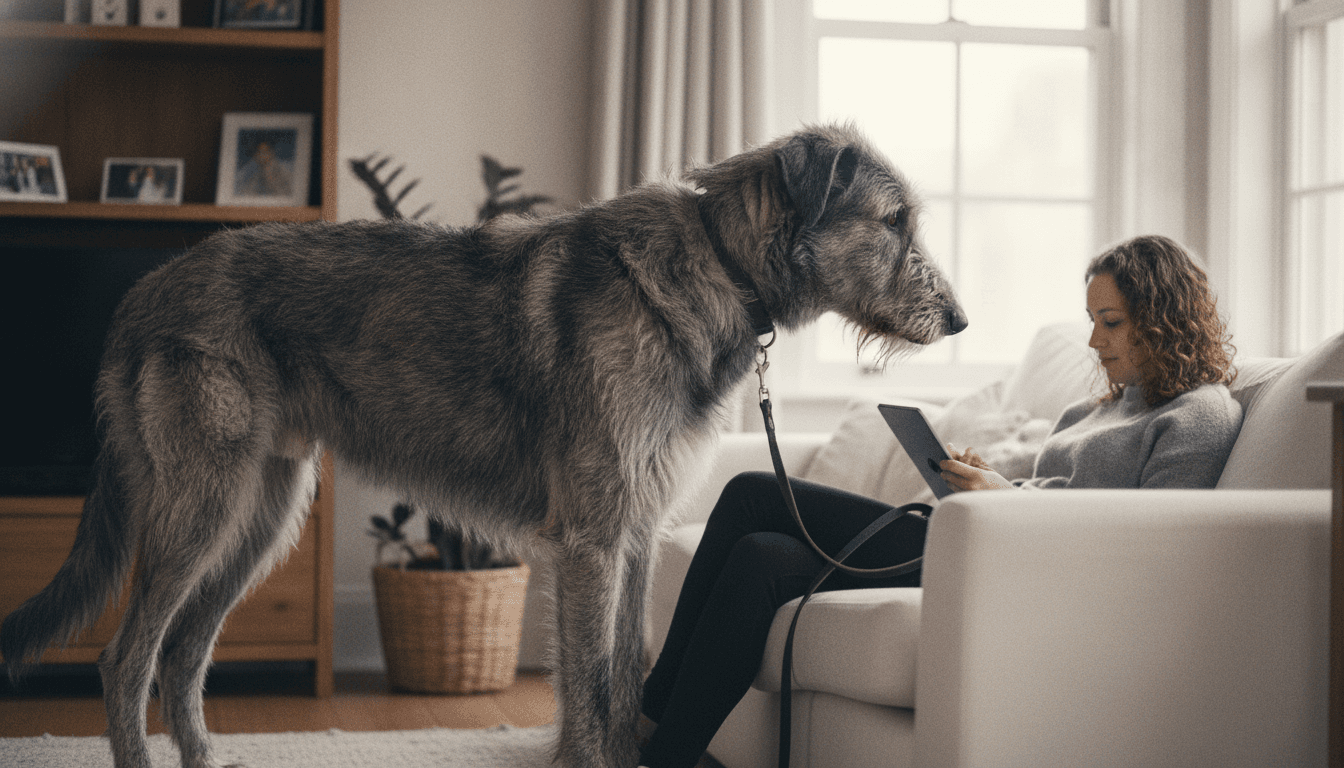
The tallest dog breeds are the gentle giants that can look you in the eye standing on all fours. The Irish Wolfhound is the tallest breed on average at 30–35 inches at the shoulder, while the Great Dane holds the record for the single tallest individual dogs ever measured. Other towering breeds include the Scottish Deerhound, English Mastiff, and Anatolian Shepherd—giant, affectionate companions that need space, budget, and big-hearted owners.
What Makes a Dog Breed "Tall"—and How Height Is Measured
Dog height is measured at the withers, the ridge between the shoulder blades—not at the top of the head. That's why a dog listed at 32 inches can easily rest its chin on a kitchen counter and tower over a standing human when it rises on its hind legs. Tall and heavy aren't the same thing, either: some of the tallest breeds, like the lean Irish Wolfhound and Borzoi, are built for height and speed, while mastiffs trade a little height for sheer mass.
As Britannica notes, the title of "tallest dog breed" comes down to two main contenders—the Irish Wolfhound and the Great Dane—with several other giants close behind. Below is our ranked height chart of the 12 tallest dog breeds, followed by everything you need to know before bringing one home.
The 12 Tallest Dog Breeds (Height Chart)
1. Irish Wolfhound — 30 to 35 inches
The Irish Wolfhound is widely recognized as the tallest dog breed in the world, with males commonly reaching 32 inches or more at the shoulder. Bred in Ireland to hunt wolves and elk, this sighthound pairs immense size with a calm, dignified, almost serene temperament. According to breed records, an adult male can stand taller than many people when on his hind legs—yet indoors he's famously a gentle, low-key companion.
2. Great Dane — 28 to 32 inches
The Great Dane is the record-setter. While slightly shorter than the Wolfhound on average, individual Danes have repeatedly claimed the title of tallest dog ever. A Great Dane named Zeus famously measured an astonishing 44 inches at the shoulder, earning a Guinness World Records title. The American Kennel Club calls the breed a "gentle giant"—friendly, patient, and devoted, though its short lifespan is the heartbreaking trade-off for that size.
3. Scottish Deerhound — 28 to 32 inches
A close cousin of the Irish Wolfhound, the Scottish Deerhound is a tall, wiry-coated sighthound bred to course red deer across the Highlands. Males reach up to 32 inches and carry themselves with quiet grace. Gentle and dignified at home, they're sprinters at heart and need room to stretch their long legs.
4. English Mastiff — 28 to 31 inches
The English Mastiff isn't the tallest, but it's arguably the most massive dog on this list, with some individuals exceeding 200 pounds. Standing around 30 inches, this ancient guardian breed is calm, courageous, and deeply loyal—a true colossus that thinks it's a lapdog.
5. Anatolian Shepherd — 27 to 29 inches
Bred in Turkey to guard livestock against wolves and bears, the Anatolian Shepherd is a powerful, independent giant standing up to 29 inches. Protective and territorial by nature, this is a working breed best suited to experienced owners with plenty of land.
6. Leonberger — 26 to 31.5 inches
The lion-like Leonberger combines towering height with a luxurious double coat and a famously sweet disposition. Males can approach 31 inches. Friendly, patient, and water-loving, Leonbergers make excellent family companions for households that can handle the shedding and the bulk.
7. Great Pyrenees — 25 to 32 inches
This majestic white mountain dog was bred to guard flocks in the Pyrenees Mountains. Calm, patient, and fiercely protective, the Great Pyrenees can reach 32 inches and pairs its size with a thick weatherproof coat and an independent, nocturnal-guardian streak.
8. Borzoi — 26 to 30+ inches
The elegant Borzoi, or Russian wolfhound, is a tall, silky-coated sighthound built for speed. Males stand at least 28 inches, often taller. Aristocratic and quiet indoors, Borzoi were once the prized hunting dogs of Russian nobility and still move with breathtaking grace.
9. Saint Bernard — 26 to 30 inches
The legendary Alpine rescue dog, the Saint Bernard, stands up to 30 inches and weighs as much as 180 pounds. Gentle, tolerant, and wonderful with children, this is the classic "nanny dog" giant—just be ready for the drool and the shedding.
10. Newfoundland — 26 to 28 inches
The Newfoundland is a sweet-natured water-rescue breed with a thick, oily double coat and webbed feet. Standing around 28 inches and weighing up to 150 pounds, "Newfies" are famous for their patience and devotion, earning their reputation as one of the gentlest giants of all.
11. Neapolitan Mastiff — 24 to 31 inches
Instantly recognizable for its loose, wrinkled skin and massive frame, the Neapolitan Mastiff is an ancient Italian guardian. Males can reach 31 inches. Loyal and protective, this dramatic-looking giant needs confident, experienced handling.
12. Tibetan Mastiff — 24 to 26+ inches
The Tibetan Mastiff rounds out the list with its lion-like mane and imposing presence. Standing 26 inches or more and bred to guard Himalayan monasteries and flocks, it's an independent, aloof, and deeply territorial breed—stunning, but not for first-time owners.
Tallest Dog Breed vs. Tallest Dog Ever
It's worth separating two titles people often confuse. The tallest breed on average is the Irish Wolfhound. The tallest individual dog ever recorded was a Great Dane—Zeus, at 44 inches. For roughly two decades, Great Danes have dominated the record books for single tallest dogs, even though Irish Wolfhounds edge them out as a breed average. Both deserve the "world's tallest" crown, just in different categories.
What It's Really Like to Own a Giant Breed
Tall dogs are spectacular, but they come with outsized responsibilities:
- Space: Giant breeds need room to move and a vehicle that can fit them. Most do poorly in tight apartments.
- Cost: Everything scales up—food, beds, crates, medication doses, and vet bills.
- Training and socialization: A poorly trained 150-pound dog is a genuine problem. Early, consistent, positive training is non-negotiable.
- Strength: These dogs can easily out-muscle their handlers, so leash manners matter from puppyhood.
Many giant breeds are wonderful with kids thanks to their patient temperaments—our guide to the best dogs for families with kids covers which gentle giants fit family life best.
Health Considerations for the Tallest Breeds
Size has health costs. The biggest concern for tall, deep-chested breeds is bloat (gastric dilatation-volvulus, or GDV), a sudden, life-threatening twisting of the stomach. VCA Animal Hospitals stresses that GDV is a true emergency—learn the warning signs (a distended belly, unproductive retching, restlessness) and ask your vet whether a preventive gastropexy is appropriate. Giant breeds are also prone to hip and elbow dysplasia, joint problems, and certain heart conditions.
The hardest truth about giant dogs is their shorter lifespan: many of the tallest breeds live just 7–10 years. Careful growth management in puppyhood (avoiding over-exercise and overfeeding), maintaining a healthy weight, and partnering closely with your veterinarian give these gentle giants their best shot at a long, comfortable life.
Budgeting for a Giant Breed
Expect to spend more across the board. A purebred giant puppy from a responsible breeder often costs $1,500–$3,000 or more, and lifetime costs run far higher than for a small dog—think large-breed food by the bag, jumbo beds and crates, higher medication doses, and pricier procedures. Pet insurance is worth serious consideration given the elevated risk of conditions like bloat and joint disease. Adoption through breed-specific rescues is also a meaningful, lower-cost path to giant-dog ownership.
Frequently Asked Questions
What is the tallest dog breed in the world?
The Irish Wolfhound is the tallest dog breed on average, with many males standing 32 inches or more at the shoulder. Great Danes are a very close second and hold the record for the tallest individual dogs ever measured.
What was the tallest dog ever recorded?
A Great Dane named Zeus, who measured 44 inches at the shoulder, holds the Guinness World Record for the tallest dog ever documented—standing well over seven feet tall on his hind legs.
Are tall dog breeds good with families?
Many are excellent. Breeds like the Saint Bernard, Newfoundland, Leonberger, and Great Dane are known for patient, gentle temperaments. They do need space, training, and supervision around small children simply because of their size.
Why do giant dog breeds have shorter lifespans?
Large dogs age faster and face higher rates of joint disease, heart problems, and certain cancers. Most of the tallest breeds live around 7–10 years, so responsible breeding, healthy weight, and good veterinary care are especially important.
Do tall dogs need more exercise?
Not always more, but appropriate exercise matters. Sighthounds like the Irish Wolfhound and Borzoi need room to run, while mastiff-type giants need moderate activity. Avoid over-exercising giant-breed puppies, whose joints are still developing.
The Bottom Line on the Tallest Dog Breeds
From the record-setting Great Dane to the towering Irish Wolfhound, the tallest dog breeds are living legends—gentle, devoted, and undeniably majestic. They reward owners with deep loyalty and an unmistakable presence, but they ask for space, money, training, and an open heart prepared for fewer years together. If you have the room and the resources, few experiences compare to sharing your home with a gentle giant.
Ready to meet some of these big-hearted breeds up close? Explore our complete guides to the heroic Saint Bernard and the sweet-natured Newfoundland—and subscribe to the Daily Wag newsletter for breed spotlights, care guides, and giant-dog tips delivered weekly.