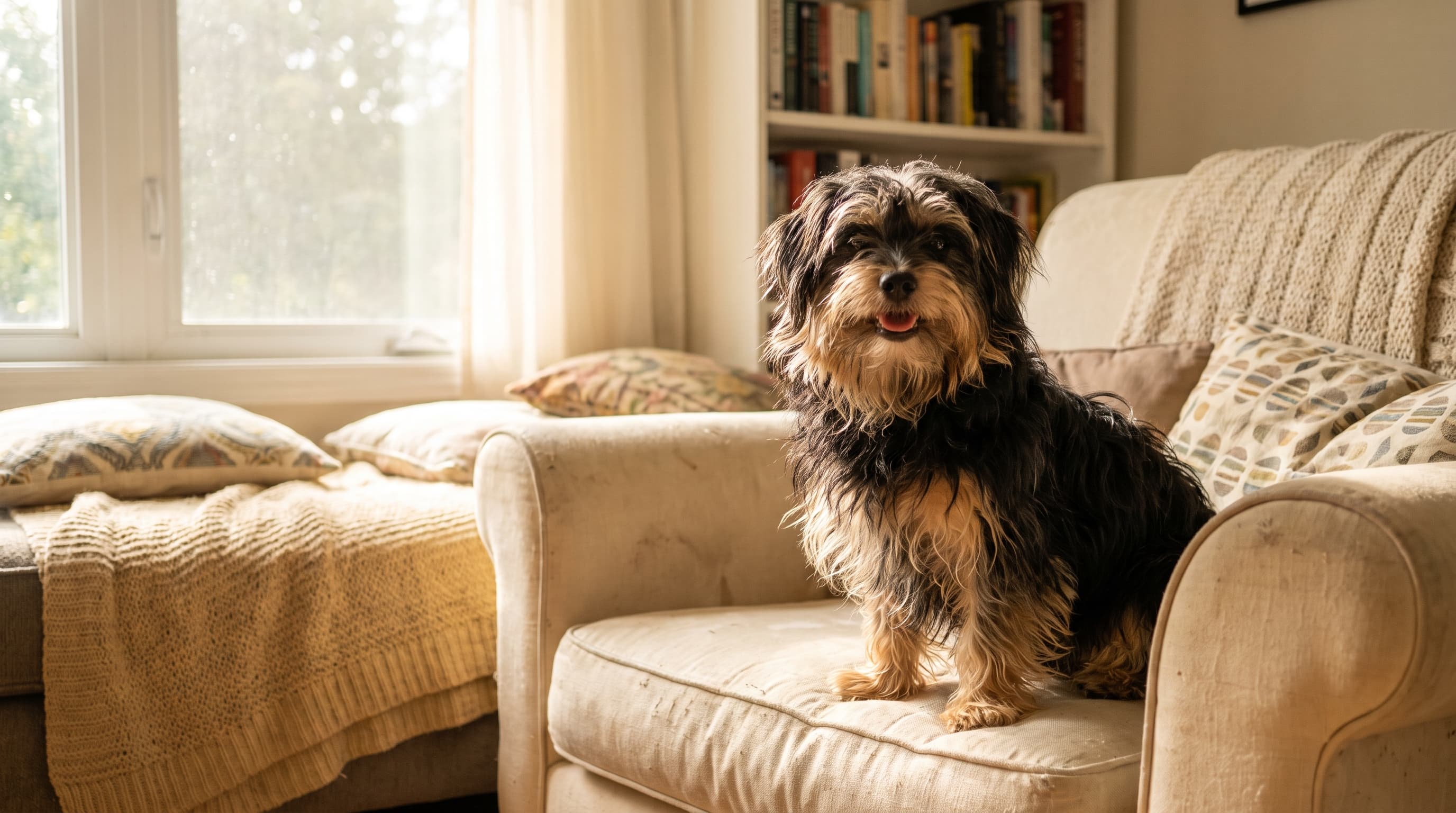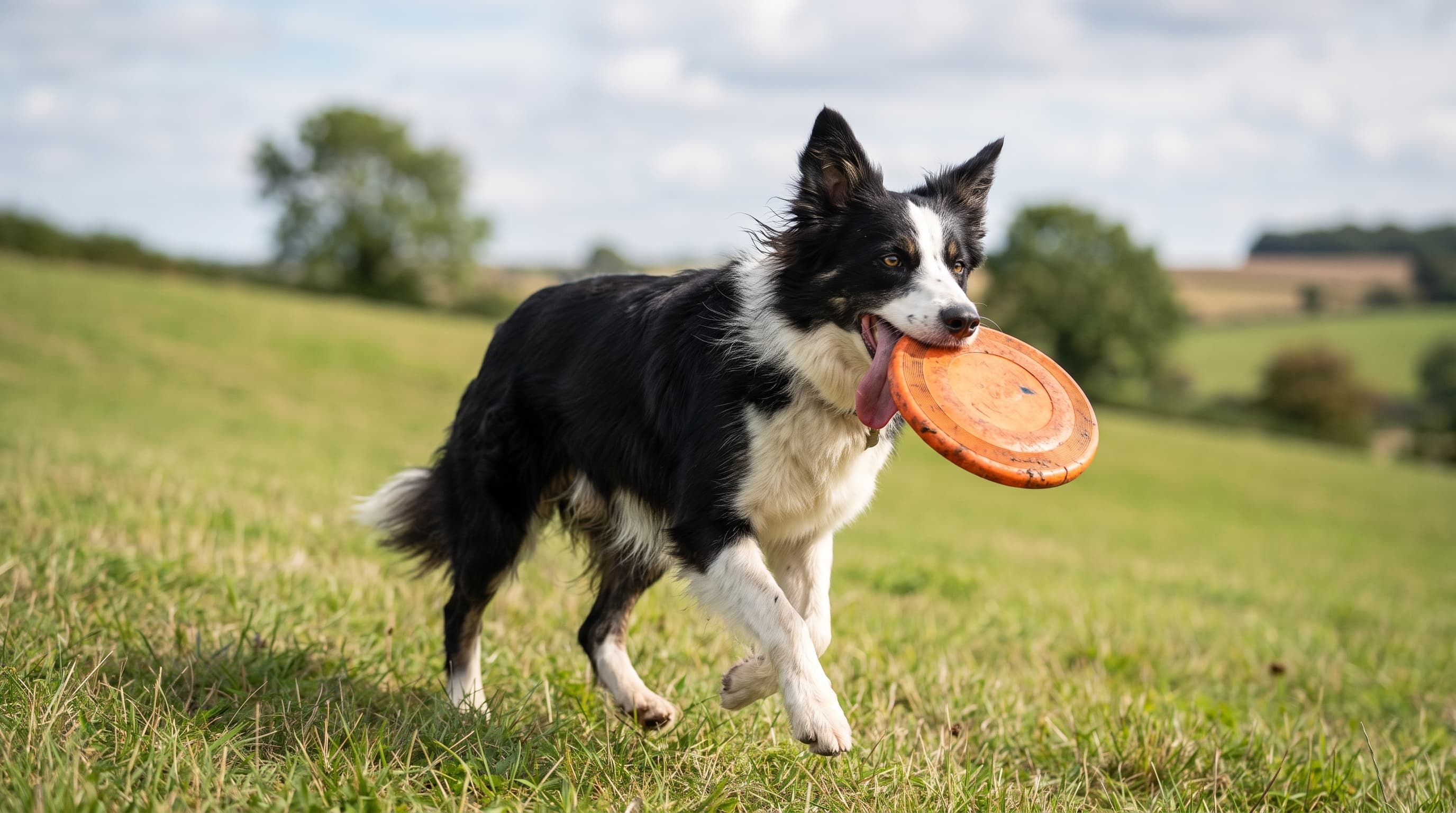

A border collie mix is a crossbreed between a Border Collie and another dog breed, blending the Border Collie's herding intelligence, intense focus, and high energy with traits from its other parent. Breeders and owners cross Border Collies to soften their intensity, diversify coat and size, or pair working drive with a calmer, more relaxed temperament.
Popular Border Collie mixes
Because Border Collies have been paired with dozens of other breeds over the years, "border collie mix" covers a wide range of looks and personalities. No two litters are identical — coat, size, and drive can vary even between littermates — but a few crosses show up again and again at shelters, in rescues, and through breeders. Here's a closer look at the most popular ones.
Borador (Border Collie × Labrador Retriever)
The Borador pairs Border Collie drive with the easygoing, food-motivated nature of a Labrador Retriever. Boradors tend to be friendly, food-motivated, and a little less obsessive about herding than a purebred Border Collie, which makes them a popular pick for active families with kids. Expect a sturdier build than a straight Border Collie, a short-to-medium coat, and a personality that's equal parts "let's work" and "let's play fetch for an hour."
Border Aussie (Border Collie × Australian Shepherd)
A Border Aussie combines two herding breeds, so expect double the intelligence and double the exercise needs. If you're deciding between the parent breeds first, our Border Collie vs. Australian Shepherd comparison breaks down how the two differ before you commit to the cross. Coats often show the merle patterning associated with the Australian Shepherd side, and this mix is known for being especially velcro — Border Aussies tend to bond tightly with one person and want to be involved in everything you do.
Bordoodle (Border Collie × Poodle)
The Bordoodle crosses a Border Collie with a Poodle, often producing a lower-shedding coat and a slightly softer temperament, while keeping the sharp trainability both parent breeds are known for. Coat type varies a lot litter to litter — some Bordoodles take after the Poodle's curly, low-shed coat, while others land closer to the Border Collie's straighter double coat — so "hypoallergenic" claims should always be taken with a grain of salt.
Border Beagle (Border Collie × Beagle)
The Border Beagle blends Border Collie focus with Beagle friendliness and a strong nose. This mix tends to be more scent-driven and vocal than other Border Collie crosses — don't be surprised if yours "sings" when it catches an interesting smell — so early training around barking and tracking instincts helps a lot. Border Beagles are usually smaller and stockier than other crosses on this list.
Border Heeler (Border Collie × Australian Cattle Dog)
A Border Heeler combines two serious working breeds, resulting in a dog with exceptional stamina, sharp problem-solving skills, and a strong herding instinct that shows up early — often in the form of heel-nipping at moving targets like kids, bikes, or other pets. This cross does best with experienced owners who can commit to daily structured exercise, a job to do, and consistent boundaries from puppyhood.
Shollie (Border Collie × German Shepherd)
The Shollie mixes Border Collie herding smarts with the size, loyalty, and protective streak of a German Shepherd. Shollies are typically larger than other Border Collie mixes (often 50-75 pounds) and can be more reserved or watchful with strangers, so early, ongoing socialization matters more with this cross than most others.
What to expect from a border collie mix
Because a mix inherits genes from two breeds, appearance and personality can vary even within the same litter — one puppy might look almost purely like a Border Collie, while its sibling favors the other parent breed entirely. That said, most border collie mixes share a few common traits: medium size (roughly 30-55 pounds depending on the other parent breed), a dense double or single-layer coat, above-average intelligence, and a strong need for a job or daily activity to feel settled and calm indoors. Herding instincts — nipping at heels, circling, staring down moving objects, or chasing anything that runs — often show up regardless of which breed the Border Collie is paired with, so it's worth planning for that instinct even if you adopt a mix that "looks" nothing like a Border Collie.
Coloring is another wildcard. Border Collies carry a wide range of coat colors and patterns, including black-and-white, red merle, blue merle, tricolor, and solid colors, and mixes can land anywhere on that spectrum depending on the other parent breed's genetics.
Temperament & intelligence
The Border Collie is widely considered one of the most intelligent dog breeds, and that trait tends to carry through in mixes. Expect a dog that picks up commands quickly, gets bored easily, and may invent its own "jobs" (like herding kids or other pets) if it isn't given one. Most border collie mixes are loyal, affectionate with their families, and eager to please, but they can also be reserved or wary of strangers depending on the other breed in the mix and how well they were socialized as puppies. Early, positive socialization — new people, dogs, sounds, and environments during the first few months of life — goes a long way toward raising a confident, well-adjusted adult.
Because these are working-breed crosses, obedience training tends to click fast. The challenge isn't teaching commands — it's staying ahead of a dog that can out-think a repetitive routine. Mixing up training games, adding new tricks, and rotating enrichment activities keeps a smart mix engaged instead of bored.
Exercise & mental stimulation needs
Border collie mixes need substantially more exercise than the average companion dog. Herding breeds evolved to work all day, and without an outlet for that energy, they can develop anxiety, destructiveness, or obsessive behaviors like excessive fence-running or shadow-chasing. Plan on at least 60-90 minutes of vigorous physical activity daily, split between walks, off-leash play, and structured exercise like fetch or agility. Mental stimulation matters just as much as physical exercise: puzzle feeders, scent work, and short daily training sessions can help tire out a smart, high-drive mix in ways a simple walk can't. Dog sports such as agility, flyball, and herding trials are a great outlet if one is available near you, and many border collie mixes genuinely thrive when given a "job," even a simple one like carrying a backpack on walks or learning an advanced trick routine.
Under-exercised border collie mixes are among the most common "problem dog" referrals trainers see — not because the dogs are difficult by nature, but because their energy and intelligence have nowhere to go. If your lifestyle can't support an hour-plus of daily activity, this may not be the right mix for your household.
Grooming & shedding
Coat type depends heavily on which breed the Border Collie is crossed with. A Borador or Border Heeler will likely have a short-to-medium double coat that sheds seasonally and needs weekly brushing, while a Bordoodle may have a longer, curlier coat that sheds less but requires more frequent brushing to prevent matting. Nearly all border collie mixes benefit from a weekly brushing routine, regular nail trims, routine ear checks, and periodic bathing. During seasonal shed ("blowing coat"), daily brushing can cut down significantly on loose hair around the house. If you're not sure what kind of coat your specific mix will grow into, ask your vet or groomer to assess it once the adult coat comes in around 6-12 months.
Health & lifespan
Most border collie mixes are relatively healthy thanks to hybrid vigor, but they can still inherit conditions common to their parent breeds. Herding breeds are prone to hip dysplasia and elbow dysplasia, and Border Collies specifically carry a risk of inherited eye conditions like collie eye anomaly, as well as epilepsy. Depending on the other parent breed, a mix may also be predisposed to conditions common in that breed — for example, a Shollie may carry a German Shepherd's elevated risk of degenerative myelopathy, while a Bordoodle may share a Poodle's risk of certain eye and endocrine conditions. Average lifespan for most border collie mixes falls between 12 and 15 years.
This is general information, not a substitute for veterinary care. Ask your vet about breed-informed screening (hips, elbows, eyes) and a wellness plan tailored to your individual dog, especially if you know both parent breeds.
Is a border collie mix right for you?
A border collie mix can be an incredible companion for the right household, but they're not a good fit for everyone. Consider one if you:
- Have an active lifestyle and can commit to 60+ minutes of exercise daily
- Enjoy training and want a dog that thrives on mental challenges
- Have a yard, access to trails, or time for dog sports like agility or fetch
- Can provide consistent structure, since these mixes get bored (and destructive) without one
- Are prepared for a herding instinct that may show up no matter what the mix "looks like"
You may want to look elsewhere if you're gone most of the day, live in a small space without nearby outdoor access, or prefer a laid-back dog that's content to nap all day. Meeting a mix's actual parents (or at least learning what breeds are in the mix) before adopting can help you set realistic expectations for energy level and size.
Want to compare crosses before you decide? Read our full guides to the Borador and Border Aussie, or subscribe to the Daily Wag newsletter for weekly breed spotlights, training tips, and adoptable dogs near you.
Frequently asked questions
How big does a border collie mix get?
Most border collie mixes weigh between 30 and 55 pounds and stand 18-23 inches tall, though size depends heavily on the other parent breed — a Border Beagle will likely be smaller than a Shollie or Border Heeler.
Are border collie mixes good with kids?
Many are, especially when raised with children and given enough exercise, but their herding instinct can show up as nipping at heels or chasing running kids. Supervision and early training help prevent this.
Do border collie mixes shed a lot?
It depends on the coat they inherit. Mixes with a double coat (like a Border Aussie or Border Heeler) shed seasonally and need regular brushing, while poodle crosses like the Bordoodle typically shed less.
How much exercise does a border collie mix need?
Plan on at least 60-90 minutes of physical activity daily plus mental stimulation like training or puzzle toys. Herding-breed mixes that don't get enough outlet for their energy often develop anxious or destructive habits.
What's the friendliest border collie mix?
Crosses with naturally social breeds — like the Borador (Labrador) or Border Beagle (Beagle) — tend to be more outgoing and less reserved with strangers than a purebred Border Collie.
How long do border collie mixes live?
Most border collie mixes live 12-15 years, similar to the purebred Border Collie, though lifespan can vary with the other parent breed and overall health.
Are border collie mixes easy to train?
Generally, yes — most border collie mixes are fast learners thanks to their herding-breed intelligence. The bigger challenge is usually keeping a smart, easily bored dog mentally engaged, not teaching the basics.