
Yes, Pomeranians shed. Despite their small size, Poms carry a thick double coat that sheds lightly all year and heavily during two seasonal "coat blows," usually in spring and fall. With weekly brushing and a proper de-shedding routine, the loose fur stays manageable and your home stays mostly fur-free.
Do Pomeranians Shed a Lot? What to Expect
For such a tiny toy breed, Pomeranians produce a surprising amount of fluff. Day to day, shedding is light to moderate — you'll notice a few tufts on the couch and a bit of fur on dark clothing rather than the tumbleweeds that larger double-coated breeds leave behind. The volume feels bigger than it is because a Pom's coat is so dense relative to its 3-to-7-pound frame.
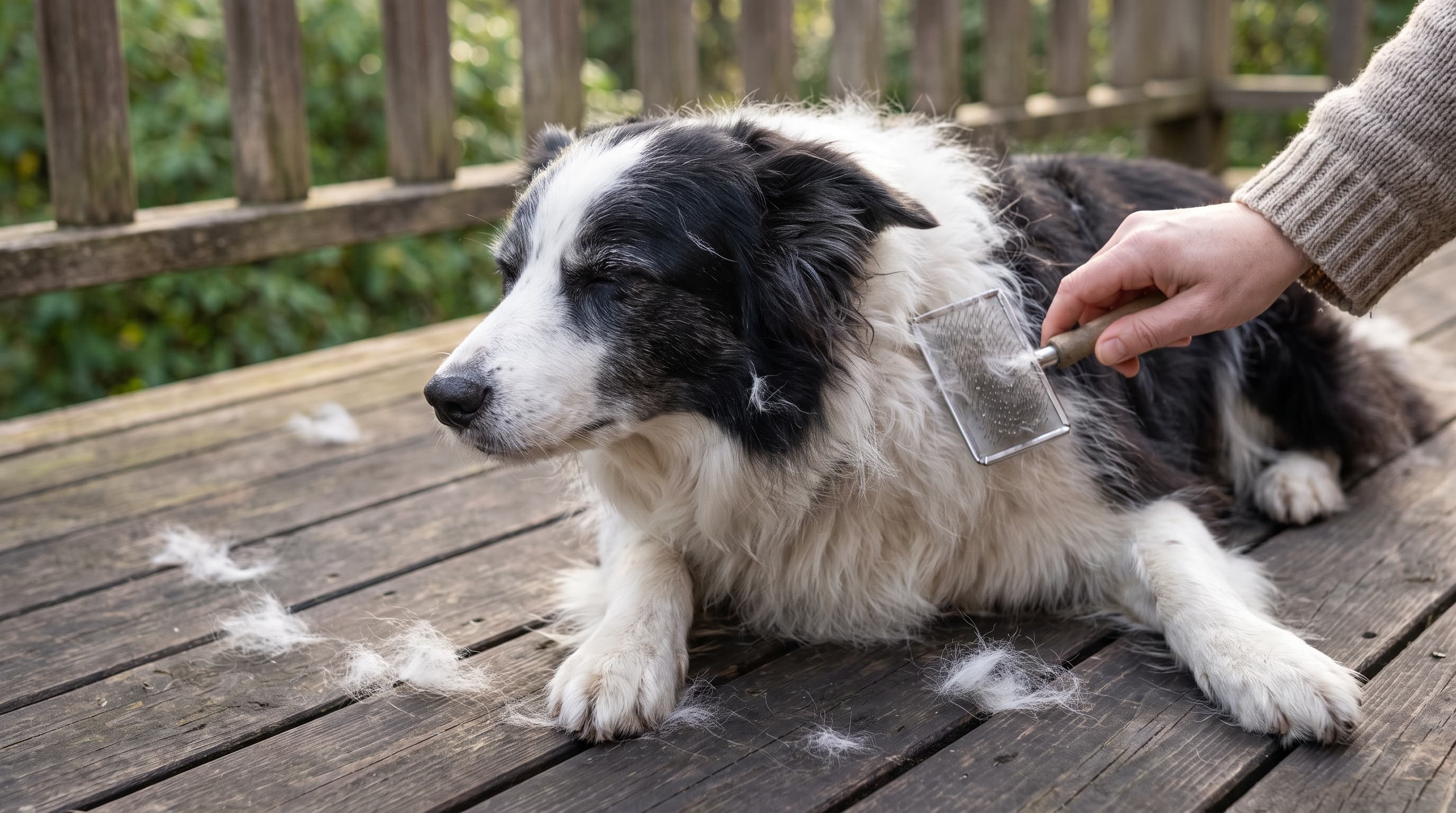
The bigger events are the twice-yearly "coat blows," when your Pomeranian sheds its undercoat in clumps over the course of a few weeks. During these periods, daily brushing is the difference between fur staying on the brush and fur drifting across your floors. According to the American Kennel Club, the Pomeranian's abundant double coat is one of the breed's defining features — and it needs consistent upkeep.
Why Pomeranians Shed: The Double Coat Explained
Pomeranians have a double coat: a soft, dense undercoat sitting beneath a longer, coarser layer of guard hairs. The undercoat insulates against both cold and heat, while the guard hairs repel dirt and moisture. Most of what you see as "shedding" is the undercoat releasing and being pushed out as new hair grows in.
This is also why you should never shave a Pomeranian to reduce shedding. Shaving a double coat can permanently damage the way the fur regrows — a condition informally called "coat funk" or post-clipping alopecia — and strips away the insulation that keeps your dog comfortable in summer. If you want to understand the mechanics further, our guide to what a double coat on a dog actually is breaks it down. The Pomeranian descends from much larger Arctic sled dogs and was bred down in size during the 19th century, according to Britannica — which is exactly why this small companion still carries a working spitz coat.
Seasonal Shedding: The Pomeranian "Coat Blow"
Twice a year, Pomeranians "blow" their coat, shedding the old undercoat to make way for a new one. This is tied to changes in daylight more than temperature, so the timing shifts slightly by climate and by dog. Most Poms blow coat in spring (March–May) as they lose the heavy winter undercoat, and again in fall (September–November) as they grow it back.
During a coat blow, brushing frequency matters more than any product. The AKC's shedding guide notes that seasonal shedding is normal and best managed by removing loose hair before it falls out on its own. A well-timed grooming schedule during these weeks keeps matting down and cuts the fur on your floors dramatically.
"Puppy Uglies": Shedding in Young Pomeranians
If your Pom puppy suddenly looks patchy, thin, or scruffy somewhere between 4 and 12 months, don't panic. Breeders call this the "puppy uglies" — the stage when the soft puppy coat sheds out and the adult double coat comes in. It can look alarming, with uneven tufts and bald-ish patches, but it's a normal developmental phase. Your dog's full, fluffy adult coat typically finishes filling in by 12 to 18 months, and sometimes as late as two years.
Regular gentle brushing during this stage helps clear the shedding puppy fur and prevents the incoming adult coat from matting. Resist the urge to trim heavily — let the adult coat establish itself first.
How to Reduce Pomeranian Shedding
You can't stop a healthy Pomeranian from shedding, but you can capture most of the loose fur before it lands on your sofa. A consistent routine is far more effective than any single tool:
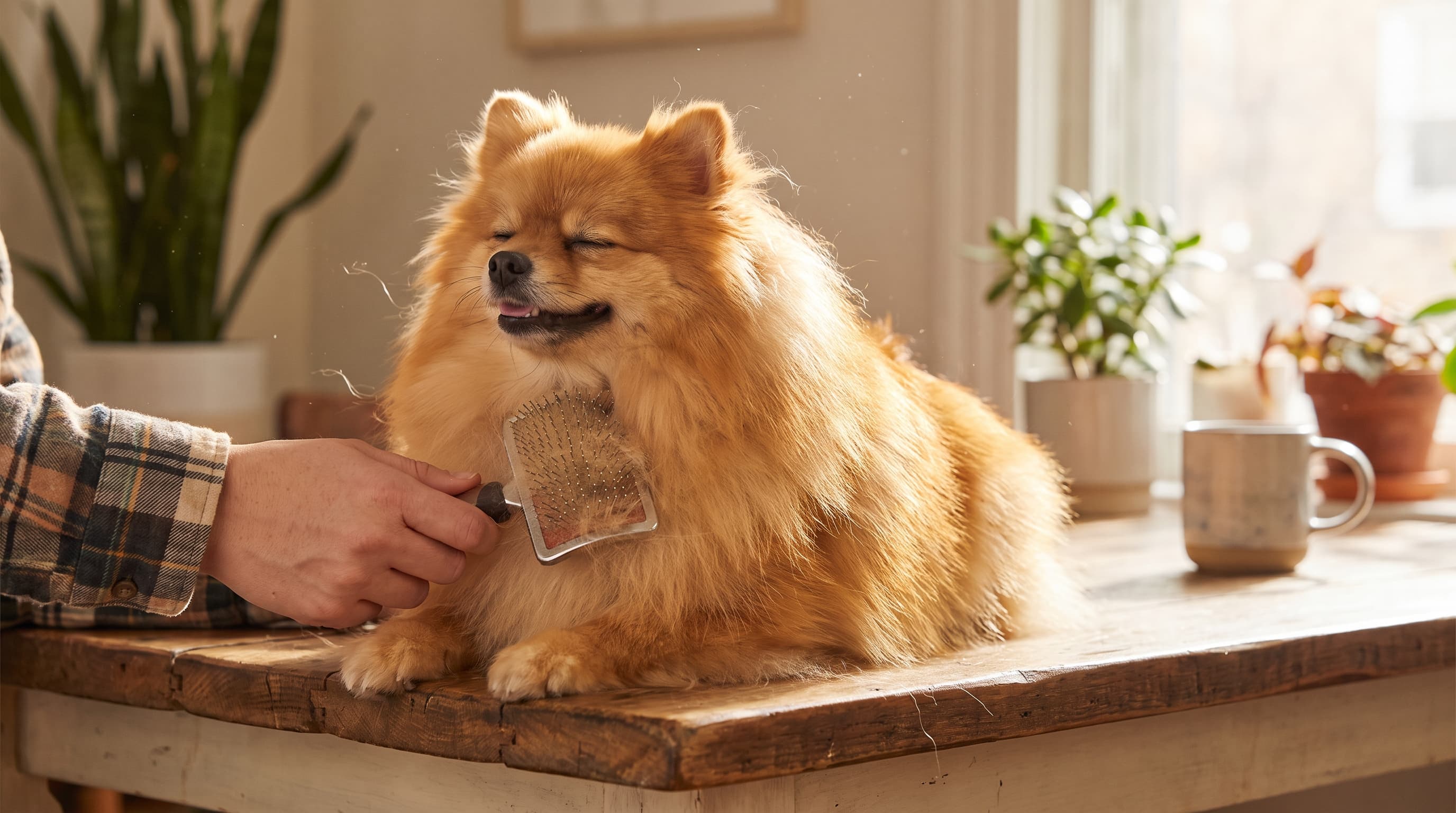
- Brush 3–4 times a week (daily during coat blows). Use a pin brush or long-pin slicker that reaches through the guard hairs into the dense undercoat, followed by a metal comb to catch tangles.
- Line-brush in sections. Part the coat and brush small sections down to the skin so you actually remove undercoat rather than just smoothing the top layer.
- Bathe about once a month. A bath with a gentle dog shampoo loosens dead undercoat; brush thoroughly once the coat is fully dry to pull it free.
- Feed a complete, quality diet. Adequate protein and omega-3 fatty acids support a healthy skin barrier and coat. General care basics are outlined by the ASPCA.
- Keep them hydrated and stress-low. Dry skin and anxiety can both increase loose hair.
For whole-home tactics that go beyond the dog itself, our guide on how to reduce dog shedding and keep a clean home covers vacuums, fabrics, and air filtration that work for double-coated breeds.
Are Pomeranians Hypoallergenic?
No — Pomeranians are not hypoallergenic. Because they shed a double coat year-round and release dander with that fur, they're generally a poor match for people with significant dog allergies. No dog is truly 100% hypoallergenic, but low-shedding, single-coated breeds tend to be easier on allergy sufferers than a Pom. If allergies are your concern, compare notes with our breakdown of whether Yorkies are hypoallergenic, another popular toy breed with a very different coat type.
When Shedding Signals a Health Problem
Normal Pomeranian shedding is even and seasonal. Shedding becomes a red flag when it's paired with bald patches, red or flaky skin, excessive scratching, a dull coat, or symmetrical hair loss. In Poms specifically, a condition sometimes called "Black Skin Disease" (Alopecia X) can cause thinning that isn't typical shedding at all.
This is general information, not veterinary advice. If your dog's shedding suddenly increases, comes with skin changes, or leaves bare patches, see your veterinarian — the underlying cause can range from allergies and parasites to thyroid or hormonal issues that need a proper diagnosis. Never attempt to treat abnormal hair loss at home without a vet's guidance.
Frequently Asked Questions
Do Pomeranians shed more than other small dogs?
Relative to their size, yes. Their dense double coat sheds more visibly than single-coated toy breeds like the Maltese or Yorkie, especially during the twice-yearly coat blows.
What months do Pomeranians shed the most?
Most Poms shed heaviest in spring (roughly March–May) and again in fall (September–November), when they blow their undercoat in response to changing daylight.
Should I shave my Pomeranian to stop shedding?
No. Shaving a double-coated dog can permanently damage coat regrowth and remove natural insulation. Manage shedding with brushing and bathing instead, not clippers.
How often should I brush my Pomeranian?
Three to four times a week is a good baseline, increasing to daily during seasonal coat blows to stay ahead of matting and loose fur.
Do teacup or mini Pomeranians shed less?
Not really — a smaller Pom still has the same double coat, just less of it overall. Learn more in our profile of the mini Pomeranian.
The Bottom Line on Pomeranian Shedding
Pomeranians shed moderately year-round and heavily twice a year, but a simple brushing-and-bathing routine keeps it under control — and never involves shaving that beautiful double coat. If you love the breed's personality and fluff, a little fur is a fair trade. Want the full picture on the breed? Read our complete Pomeranian breed guide and our profile of the mini Pomeranian, then subscribe to the Daily Wag newsletter for grooming tips, breed guides, and dog news delivered daily.