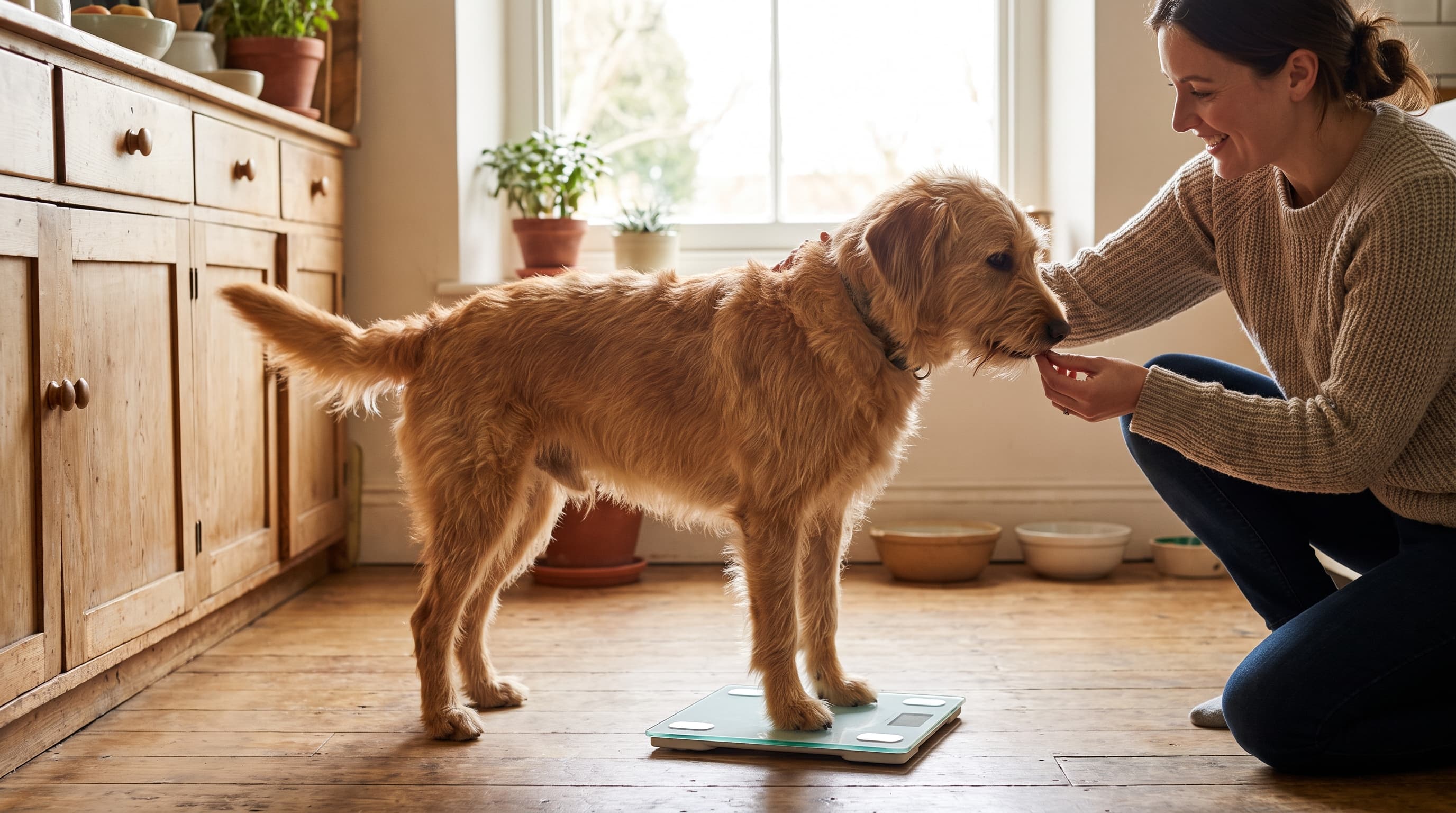

A dog scale is a flat, low-profile platform scale built to weigh a dog accurately at home, and the simplest way to use one is to coax your dog to stand still on the deck until the number settles. If you don't own one, you can weigh a dog under about 40 pounds by stepping on a bathroom scale while holding them, then subtracting your own weight.
Tracking your dog's weight at home is one of the cheapest, most powerful things you can do for their long-term health. More than half of U.S. dogs are overweight or obese, according to the Association for Pet Obesity Prevention, and the extra pounds often creep on so slowly that owners never notice until a vet points it out. A reliable weigh-in routine catches those changes early. Below, we cover when you actually need a dedicated dog scale, how to weigh your dog without one, the main scale types, and how to make sense of the number once you have it.
Why Weighing Your Dog Regularly Matters
Weight is a vital sign. A sudden drop can signal illness, dental pain, or parasites, while a steady climb raises the risk of arthritis, diabetes, heart disease, and a shortened lifespan. Because dogs are so good at hiding discomfort, the scale often notices a problem before you do.
Home weighing also helps you feed correctly. Portion charts on dog-food bags are based on body weight, so a guess of "about 50 pounds" for a dog who is really 62 can mean chronic overfeeding. And when your dog is on a supervised weight-loss plan, regular numbers tell you and your veterinarian whether the plan is working. For a deeper look at slimming a heavier dog down safely, see our guide to helping your dog lose weight.
Do You Actually Need a Dedicated Dog Scale?
Not always. Whether a dedicated dog scale is worth buying comes down to your dog's size and your goals:
- Small dogs (under ~25 lbs): A regular bathroom scale plus the "hold-and-subtract" method works fine, though a baby or pet scale gives more precise readings.
- Medium dogs (25–40 lbs): The subtract method still works if you can lift and steady them. A platform pet scale is a nice upgrade.
- Large and giant breeds (40+ lbs): This is where a dedicated dog scale earns its keep. Lifting a 90-pound dog onto a bathroom scale is impractical and unsafe, so a low, walk-on platform scale is the realistic option.
- Toy breeds and puppies: When a dog weighs under about 10 pounds, even half a pound matters, so a baby scale that reads in ounces is the most useful tool, as Great Pet Care notes.
If you visit the vet or a pet-supply store often, you may not need to buy anything at all — many clinics and stores keep a walk-on scale in the lobby and are happy to let you use it.
How to Weigh Your Dog at Home Without a Special Scale
The classic bathroom-scale method is free and surprisingly accurate for small and medium dogs. PetMD and Hepper both recommend this approach:
- Step onto the scale by yourself and record your weight.
- Pick up your dog, step back on, and hold still until the reading settles.
- Subtract your weight from the combined total. The difference is your dog's weight.
A few tips make it far more accurate: place the scale on a hard, flat floor rather than carpet, weigh at the same time of day (ideally in the morning before breakfast), and repeat the reading twice to confirm. Always write down the date and the number so you can spot trends over weeks and months rather than reacting to a single figure.
Types of Dog Scales to Consider
Baby and small-pet scales
These digital scales read in fine increments (often ounces or tenths of a pound) and usually have a curved or bordered tray to keep a squirming puppy or toy breed in place. They are ideal for anyone tracking a young puppy's growth or a small senior's slow decline.
Platform (walk-on) dog scales
A low, wide, non-slip platform is the standard choice for medium, large, and giant dogs. The dog simply steps on and stands still. Look for a deck long enough for your dog's stance, a high weight capacity, a "hold" or "tare" function that locks the reading, and a rubberized, easy-to-clean surface.
Veterinary and professional scales
Clinic-grade walk-on scales are the most accurate and durable, but they are expensive and bulky. For most households they are overkill — they matter most for breeders, kennels, and rescues that weigh many dogs a day.
What to Look for When Buying a Dog Scale
If you decide a dedicated scale is worth it, a handful of features separate a genuinely useful tool from a frustrating one:
- Weight capacity and precision: Match the capacity to your dog — a giant-breed scale should comfortably exceed your dog's adult weight, while a small-dog scale should read in fine increments so small changes show up.
- A "hold" or "lock" function: Dogs rarely stand perfectly still. A scale that captures and freezes the reading once the dog steadies is far easier to use than one whose number keeps drifting.
- A non-slip, easy-clean surface: A rubberized deck helps a nervous dog feel secure and wipes down quickly after muddy paws.
- An appropriate deck size: The platform should be long and wide enough for your dog to stand with all four feet planted naturally.
- Battery life and readability: A clear, backlit display and long battery life save headaches, especially for large scales you won't want to move often.
Tips for Weighing a Nervous or Wiggly Dog
Plenty of dogs distrust standing on an unfamiliar surface, and a stressed dog is a moving dog. A little patience makes weigh-ins painless. Let your dog sniff and explore the scale while it's switched off, and reward calm investigation with a treat. Practice a few "step on, step off" reps with praise before you ever look at a number. Keeping the scale in the same spot and using an upbeat, matter-of-fact tone helps your dog treat it as routine rather than a threat. For toy breeds and puppies, weighing them inside a lightweight bowl or carrier placed on the scale — then subtracting the container's weight — can keep them contained and still.
How Often Should You Weigh Your Dog?
For a healthy adult dog, once a month is plenty to catch gradual changes. Puppies grow quickly and can be weighed every week or two to track development. Senior dogs, dogs with chronic conditions, and dogs on a vet-directed weight plan may need weighing every one to two weeks. Any rapid or unexplained change — up or down — is worth a call to your veterinarian, and a persistent shift is one of the signs your dog needs a vet visit.
The Number Isn't Everything: Weight vs. Body Condition
A scale tells you how much your dog weighs, but not whether that weight is healthy — a lean Greyhound and a stocky Bulldog of identical weight are built completely differently. That's why veterinarians pair the scale with a body condition score (BCS), a hands-on 1–9 assessment of fat cover over the ribs, waist, and belly. The WSAVA body condition score chart is a free, widely used reference. Learning to check your dog's shape at home, alongside the number on the scale, gives you the full picture; our guide to spotting an unhealthy weight in your pet walks through what to feel for. As always, your veterinarian is the best person to set a target weight and confirm whether your dog's body condition is where it should be.
Frequently Asked Questions About Dog Scales
How accurate is weighing a dog on a bathroom scale?
For dogs you can lift and hold still, the hold-and-subtract method is usually accurate to within about a pound — good enough to track trends. For very small dogs where ounces matter, or very large dogs you can't safely lift, a dedicated pet or baby scale is more reliable.
What is the best type of dog scale for a large breed?
A low, wide walk-on platform scale with a non-slip deck and a high weight capacity is the standard choice for large and giant breeds, because the dog can simply step on rather than being lifted.
How often should I weigh my dog?
Monthly for a healthy adult, every week or two for a growing puppy, and every one to two weeks for seniors or dogs on a veterinarian-directed weight plan. Report any sudden change to your vet.
Why is my dog's weight different at the vet than at home?
Scales vary, and clinic scales are calibrated and typically more precise than home ones. What matters most is consistency: weigh on the same scale each time so you're comparing like with like when you look for trends.
Should I be worried if my dog loses weight without trying?
Unexplained weight loss can point to dental disease, parasites, or a range of medical issues and should always be checked by a veterinarian. This article is general information and is not a substitute for professional veterinary advice — if you have concerns about your dog's weight, please see your vet.
Weighing your dog is a small habit with a big payoff. Want more practical, vet-informed dog-care tips delivered to your inbox? Subscribe to the Daily Wag newsletter and never miss a guide like this one.