
Dog Cone Alternatives: 9 Comfier Options for Post-Surgery Recovery
The best dog cone alternatives are recovery suits, inflatable donut collars, soft fabric cones, and neck-brace collars. Each blocks your dog from licking a wound or incision while letting them eat, sleep, and see more comfortably than a rigid plastic "cone of shame." Recovery suits are the vet favorite for spay, neuter, and torso surgery; inflatable collars suit paw and leg wounds. Always confirm your pick with your vet first.
If your dog just came home from surgery in a stiff plastic Elizabethan collar (E-collar), you already know the routine: bonking into doorframes, flipping over the food bowl, and those heartbreaking eyes. The cone works — it stops licking that can rip out stitches or seed an infection — but it is not the only tool that does. Below are nine dog cone alternative options, when each one shines, and how to choose safely.
Why Vets Insist on Something After Surgery
An Elizabethan collar exists to interrupt one instinct: licking. A dog's tongue carries bacteria, and persistent licking or chewing reopens incisions, delays healing, and is a leading cause of post-op infections and emergency re-visits. According to VCA Animal Hospitals, a protective collar "must be worn until the wound has fully healed," which can be "as short as a few days, or as long as a few weeks" depending on the procedure.
The problem is compliance. Research summarized by Whole Dog Journal found that a large majority of owners reported the traditional cone reduced their dog's quality of life during recovery — dogs that won't eat, drink, or rest do not heal well either. That is the real case for an alternative: the goal is not zero restriction, it is the right restriction your dog will actually tolerate for the full healing window.
1. Recovery Suits and Surgical Onesies
A recovery suit is a stretchy, breathable full-body garment that covers the torso and belly, physically sealing off the incision without touching your dog's head or vision at all. Vets frequently recommend them as the first-choice cone alternative for spay, neuter, and abdominal or flank surgeries. Quality suits, as Preventive Vet notes, are "generally very comfortable and stylish" and let dogs move, rest, and potty normally.
Look for snap or fold-back openings around the genitals and anus so you never have to remove the whole suit for bathroom breaks. Suits are the wrong tool for wounds on the face, ears, or lower legs, which they do not cover.
2. Inflatable Donut Collars
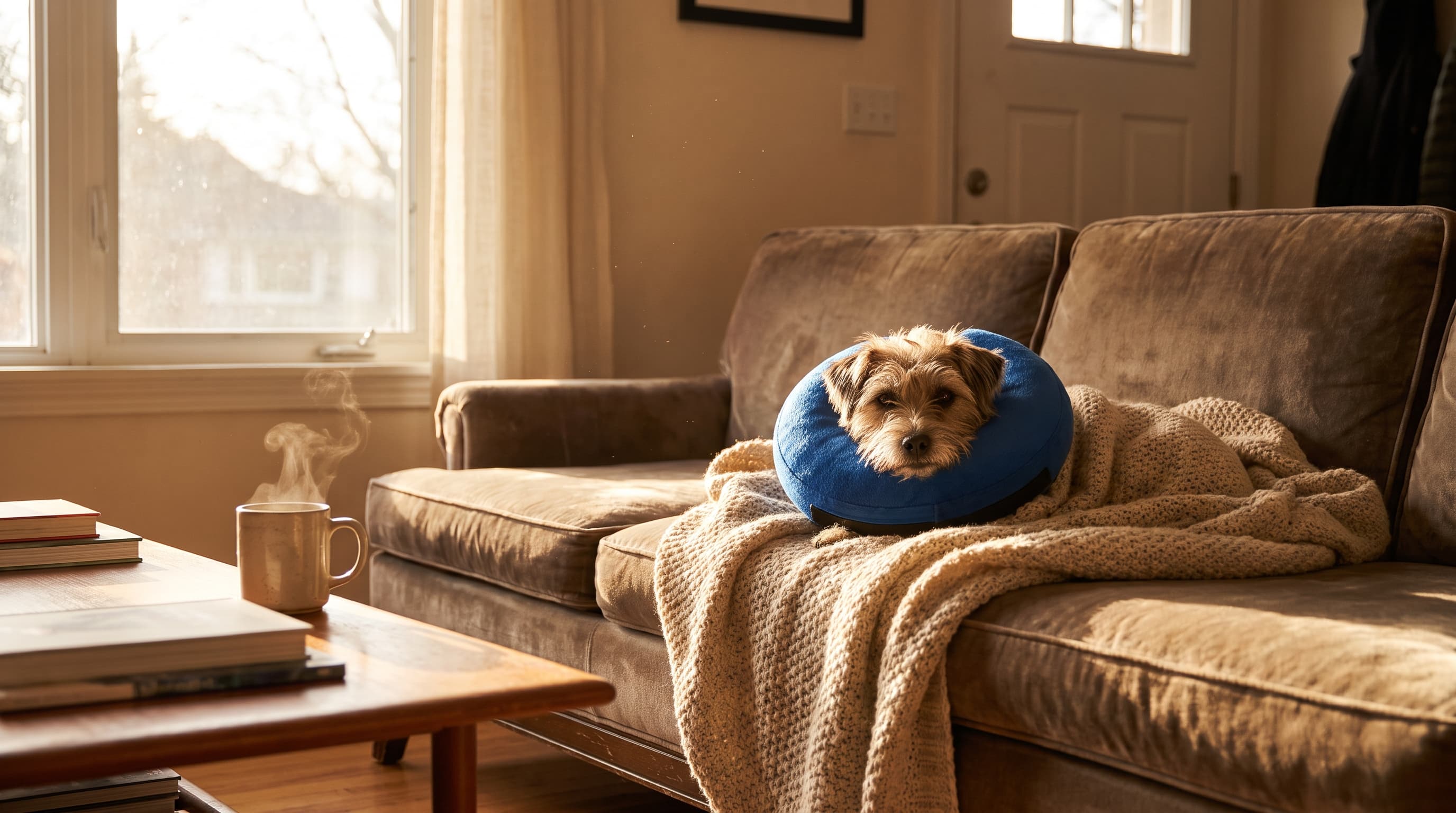
An inflatable collar looks like a travel neck pillow. It inflates in seconds, fastens to your dog's regular collar, and limits how far the neck can bend — enough to keep most dogs from reaching a torso or hindquarter wound. Because it sits low and does not extend past the face, dogs keep full peripheral vision and rarely knock into furniture. It deflates flat for storage and is washable and reusable.
The tradeoff: a determined or very flexible dog (or one with a wound near the paws) can sometimes still reach the spot, so supervise the first hour to confirm it actually blocks access.
3. Soft Fabric Cones
Soft cones keep the classic cone shape but swap rigid plastic for padded fabric. They flop rather than jab, so they are gentler on doorframes and human shins, and per Insurify they "resemble cones but provide more comfort than their hard plastic" counterparts. Many fold down at mealtime so the bowl stays upright.
They are a strong middle-ground choice for dogs who need a face-forward barrier (for eye, ear, or facial wounds) but hate the hard version. Because fabric collapses, they offer slightly less of a rigid block than plastic for the most persistent lickers.
4. Neck-Brace (Cervical) Collars
A neck brace is a padded, foam ring that restricts up-and-down and side-to-side neck motion, much like a human cervical collar. It leaves the head and vision completely free, which many anxious dogs prefer. It works best for wounds on the back half of the body and is a poor choice for paw or tail wounds a dog can still reach by other means.
5. Recovery Sleeves and Booties for Legs and Paws
When the wound is on a leg or paw, a targeted sleeve, medical sock, or bootie can protect the exact site without any cone at all. PetMD notes these cover "off-limit sites from infection and injury" on the limbs. Sizing matters: a sleeve that slips off provides zero protection, so measure and secure it, and pair it with supervision.
6. Smaller or Clear Plastic Cones
Sometimes the fix is a better cone, not a different device. A correctly sized cone — long enough to extend just past the nose, no longer — plus a clear (rather than opaque) version restores much of a dog's field of view and reduces the panicked bumping that makes owners abandon the cone entirely.
7 – 9. Budget and DIY Options
If you are between the vet clinic and the pet store at midnight, a few homemade stand-ins can bridge a few hours under close supervision:
- Rolled-towel "donut." A bath towel rolled and taped into a ring, then fastened to the collar, mimics an inflatable donut. Comfortable, but easy for strong dogs to defeat.
- Pool-noodle collar. Foam noodle segments threaded onto the collar create a bumper that limits neck bending — cheap and surprisingly effective for the right dog.
- Baby onesie. For small dogs, a snug toddler onesie works as an improvised recovery suit for belly incisions.
These are stopgaps, not overnight solutions. For a full walkthrough of safe homemade builds, see our guide to DIY dog cone alternatives, and always upgrade to a vet-approved device as soon as you can.
How to Choose the Right Alternative
Match the device to the wound, not to the cutest photo:
- Belly, spay, or neuter incision → recovery suit first, inflatable donut second.
- Back, hip, or tail-base wound → inflatable donut or neck brace.
- Face, eye, or ear → soft or clear cone (donuts won't reach).
- Leg or paw → recovery sleeve or bootie, plus supervision.
Then test it while you watch. If your dog can touch the wound with the device on, it is the wrong device — no matter how comfortable it looks. Dogs that obsessively lick even a healed-looking area may have a deeper issue; our piece on why dogs lick their paws covers when licking signals more than boredom, and if a surgical site looks worse instead of better, read what to do when a dog's wound won't heal and call your clinic.
Helping Your Dog Adjust to Any Recovery Device
Whatever you choose, the first few hours are the hardest — most dogs freeze, refuse to walk, or try frantically to back out of the device. A few things make the transition easier: introduce the collar or suit calmly and pair it with a treat so it predicts good things; raise food and water bowls slightly if a cone makes the floor hard to reach; clear low tables and tight corners so a bumping dog doesn't get discouraged; and stay nearby for reassurance during that adjustment window. Most dogs settle within a few hours once they realize the device isn't going anywhere. If your dog still can't eat, drink, or sleep after a full day, call your vet — the fit or the device type may need to change.
Frequently Asked Questions
What is the best alternative to a cone for a dog after surgery?
For most spay, neuter, and abdominal surgeries, a recovery suit is the top vet-recommended alternative because it seals the incision without limiting vision or movement. For back-half or hindquarter wounds, an inflatable donut collar is the usual runner-up. The "best" choice depends entirely on where the wound is.
Can my dog sleep in a cone alternative?
Yes — that is a major advantage over the hard cone. Recovery suits, soft cones, inflatable donuts, and neck braces are all designed to be worn 24/7, including sleep, until the wound heals. Make sure the fit is snug but not tight, and check that your dog can lie down and reposition comfortably.
How long does my dog need to wear a cone or alternative?
Typically until the incision fully heals or stitches are removed — often 10 to 14 days, though it ranges from a few days to a few weeks depending on the surgery. Follow your veterinarian's specific timeline rather than removing it early because the wound "looks fine."
Are inflatable collars strong enough after surgery?
For many dogs, yes, especially for torso and hindquarter wounds. They are less effective for very flexible dogs or wounds near the paws, where a dog may still reach the site. Always do a supervised test before trusting one overnight.
Is it OK to take the cone off when I'm watching my dog?
Only with your vet's blessing. Some vets allow supervised cone-free time during meals or short, closely watched periods, but many wounds can be reopened in seconds of unsupervised licking. When in doubt, leave the protection on.
The Bottom Line
A cone alternative can transform a miserable recovery into a manageable one — but the device is only half the job. Every dog and every surgery is different, and this article is general information, not medical advice. Before you switch from the cone your clinic sent home, talk to your veterinarian about which alternative is safe for your dog's specific procedure, and call them right away if the incision reddens, swells, opens, or discharges. When in doubt, see your vet — a comfortable dog that heals cleanly is always worth the extra phone call.