
How to Express a Dog's Anal Glands at Home (Safely)
To express a dog's anal glands, put on gloves, lift the tail, and locate the two small sacs at the 4 and 8 o'clock positions around the anus. Place a paper towel over the area and gently squeeze both sides together to release the fluid. Only do this if your dog shows signs of full glands — most dogs never need it, and you should stop and see a vet if it's painful or the fluid looks abnormal.
A note before you start: This is general educational information, not veterinary advice. Anal glands are delicate, and doing this wrong can hurt your dog or cause injury. Ask your veterinarian to show you the technique before trying it at home, and let them handle it if you're unsure.
What Are Anal Glands and Why Do They Matter?
Dogs have two small scent sacs, called anal glands or anal sacs, located just inside the anus at roughly the 4 and 8 o'clock positions. As PetMD explains, these glands produce a strong-smelling, oily fluid that's unique to each dog and helps with territorial marking and identification — it's why dogs greet each other with a sniff. Normally the sacs empty on their own each time your dog passes a firm stool, and most dogs go their whole lives without ever needing help.
Problems start when the fluid doesn't drain properly. The sacs can fill up, thicken, and become impacted, which is uncomfortable and can progress to infection or an abscess if ignored. WoofDoctor notes that healthy dogs usually empty their glands naturally through firm bowel movements, so recurring problems are often a sign that something else — like soft stools, allergies, or excess weight — needs addressing.
Signs Your Dog's Anal Glands Need Attention
Before you reach for the gloves, confirm your dog actually needs help. The classic signs of full or impacted anal glands include:
- Scooting — dragging their bottom across the floor or grass
- Excessive licking or biting at the rear end
- A strong, fishy or sour odor
- Discomfort when sitting or reluctance to sit down
- Swelling, redness, or discharge around the anus
- Straining or scooting during or after bowel movements
According to Vets4Pets, a foul smell, shuffling across the ground, and constant licking are the most common early indicators. If you see these signs, your dog's glands likely need expressing — but if there's visible swelling, blood, or obvious pain, skip the DIY approach and call your vet.
Should You Express Your Dog's Anal Glands at Home?
Here's the honest answer: many dogs never need manual expression, and doing it unnecessarily can actually cause problems. Over-expressing healthy glands can irritate the tissue and disrupt the natural cycle. Vets generally recommend only expressing the glands when your dog is showing symptoms, not on a routine "just in case" schedule.
Certain dogs are more prone to gland issues and may need periodic help — Vets4Pets notes that overweight dogs and some smaller breeds like Miniature Poodles, Chihuahuas, and Beagles are affected more often. If your dog has recurring trouble, the best first step is a conversation with your vet about why, and a demonstration of proper technique. Many clinics, including River Road Veterinary, offer in-office demonstrations so you can learn hands-on before attempting it yourself.
How to Express a Dog's Anal Glands: Step by Step
If your vet has confirmed your dog is a good candidate for at-home expression, here's the external method, which is the safest for owners to attempt. This is much easier as a two-person job.
What You'll Need
- Disposable latex or nitrile gloves
- Petroleum jelly or a water-based lubricant
- Paper towels and a warm, soapy washcloth
- An old towel to protect the surface
- Treats or a stuffed chew to distract and reward your dog
The Steps
- 1. Set up. Place a small dog on a table with a towel beneath them, or a large dog on the floor. Have a helper gently restrain and comfort your dog while you work.
- 2. Glove up and lubricate. Put on gloves and dab petroleum jelly on your thumb and forefinger.
- 3. Locate the glands. Lift the tail and find the two sacs at the 4 and 8 o'clock positions on either side of the anus. When full, they feel like small, firm grapes.
- 4. Position a paper towel. Hold a folded paper towel over the anus to catch the fluid, which can spray.
- 5. Gently squeeze. Using your thumb and index finger, apply gentle, steady pressure to both glands at once, squeezing inward and slightly upward to "milk" the fluid out. Normal secretion is thin and brownish with a strong odor.
- 6. Clean up. Wipe the area with the warm, soapy washcloth, dispose of the gloves and paper towels, launder the towels, and wash your hands thoroughly.
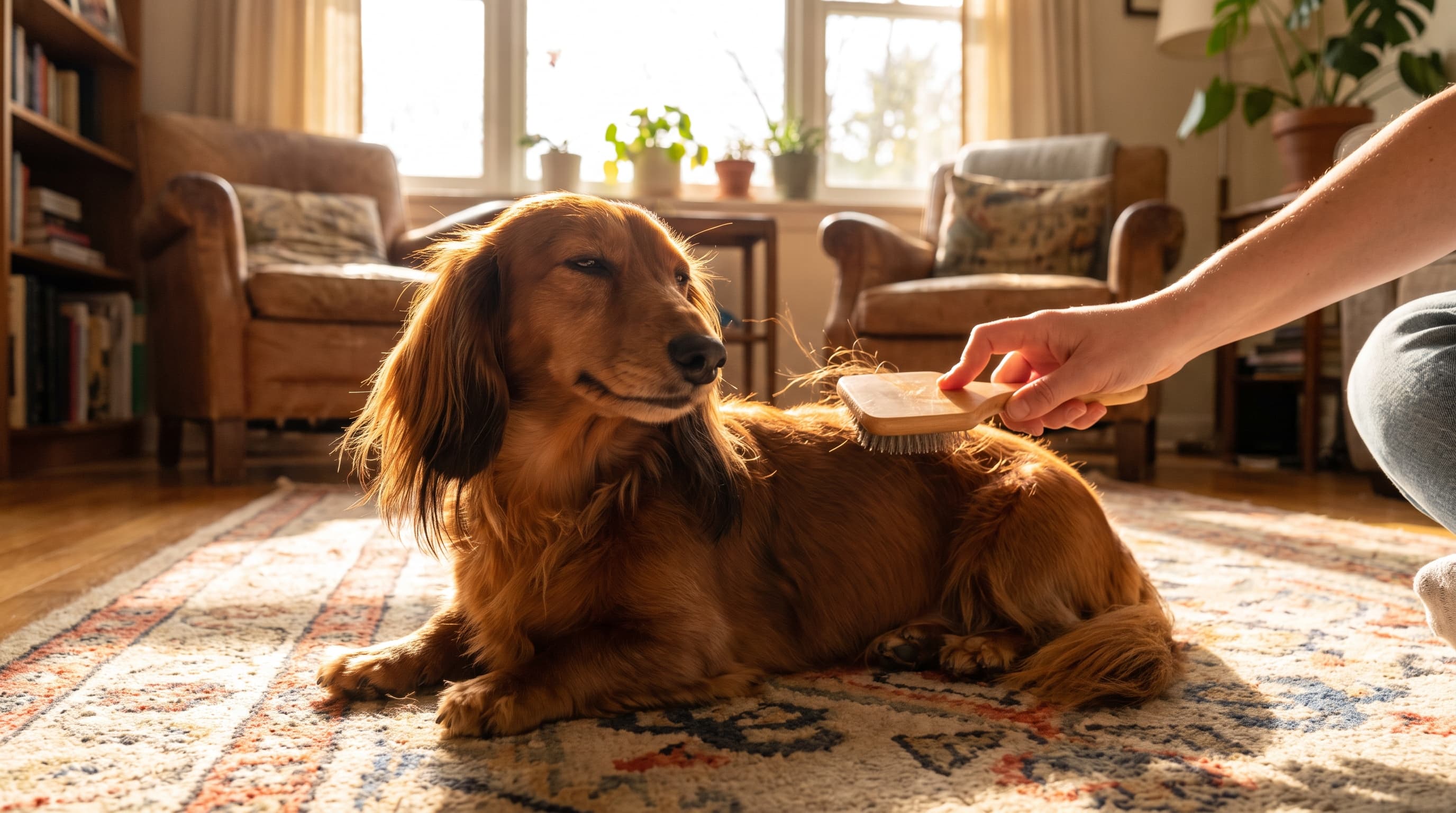
Work gently and stop if your dog reacts with pain or if nothing comes out — forcing it can cause injury. The American Kennel Club recommends distracting your dog with a chew or a treat-stuffed toy during the process, and stresses that if you can feel the glands but nothing will come out, or your dog reacts painfully, you should stop and consult your veterinarian rather than pushing harder. Patience and a calm, reassuring tone go a long way — a stressed, squirming dog makes the job harder and riskier for everyone. Grooming your dog regularly makes it easier to spot rear-end problems early; our DIY dog grooming guide covers a full at-home routine that includes checking this area.
When to See a Vet Instead
Some situations are firmly in professional territory. Stop and contact your veterinarian if you notice any of the following, which River Road Veterinary and PetMD both flag as red lines for home care:
- Fluid that is thick, chunky, or discolored — green, yellow, gray, or bloody
- Visible swelling, redness, or an open sore near the anus (a possible abscess)
- Your dog reacting with significant pain
- Glands you can feel but cannot empty
- Problems that keep coming back despite regular expression
These can signal infection, impaction, or, rarely, anal sac tumors — professional expression also gives the vet a chance to screen for these. If your dog needs frequent expressing, that's a cue to dig into the underlying cause with your vet rather than just managing the symptom.
How to Prevent Anal Gland Problems
The best fix is firmer stools, because a bulky bowel movement naturally presses the glands empty. A few strategies help:
- Add fiber. Vet-approved fiber like plain canned pumpkin or a psyllium supplement can firm up stools. Our guide to gut health, probiotics, and fiber explains how to do this safely.
- Keep your dog at a healthy weight. Overweight dogs have more gland trouble because extra fat interferes with natural emptying.
- Feed a quality diet. Consistent, high-quality nutrition supports firm, regular stools. If your dog has a sensitive stomach, our roundup of the best food for sensitive stomachs can help.
- Address allergies. Skin and food allergies can inflame the gland ducts, so managing them with your vet reduces flare-ups.
- Provide plenty of water. Good hydration keeps everything moving normally.
Frequently Asked Questions
Do all dogs need their anal glands expressed?
No. Most dogs empty their anal glands naturally during normal bowel movements and never need manual expression. You should only express them when your dog shows signs of a problem, like scooting or a fishy odor.
How often should I express my dog's anal glands?
There's no fixed schedule. Express them only as needed when symptoms appear. Some prone dogs need help every few weeks, but expressing healthy glands too often can cause irritation, so check with your vet about the right frequency for your dog.
What do healthy anal gland secretions look like?
Normal anal gland fluid is thin, brownish, and strong-smelling. Thick, chunky, or discolored fluid — green, yellow, gray, or bloody — is abnormal and means you should stop and see a vet.
Is it better to express anal glands internally or externally?
The external method is the safest for owners to try at home. Internal expression can be more effective for impacted glands but should generally be done by a vet or groomer trained in the technique to avoid injury.
Can expressing anal glands hurt my dog?
Done incorrectly or too forcefully, yes — it can cause pain or injury to the delicate tissue. Always be gentle, stop if your dog is in pain or nothing comes out, and have your vet demonstrate the technique first.
Why does my dog keep having anal gland problems?
Recurring issues are often linked to soft stools, allergies, obesity, or breed predisposition. Rather than just expressing repeatedly, work with your vet to identify and treat the underlying cause.
The Bottom Line
Expressing a dog's anal glands is a manageable task for owners whose dogs genuinely need it — but the emphasis is on "need." Watch for scooting, licking, and that unmistakable fishy smell, use gentle external pressure at the 4 and 8 o'clock positions, and know when to hand the job to a professional. A high-fiber diet and healthy weight prevent most problems in the first place. Because this is a delicate, YMYL health topic, treat this guide as a starting point and let your veterinarian confirm the approach for your individual dog.