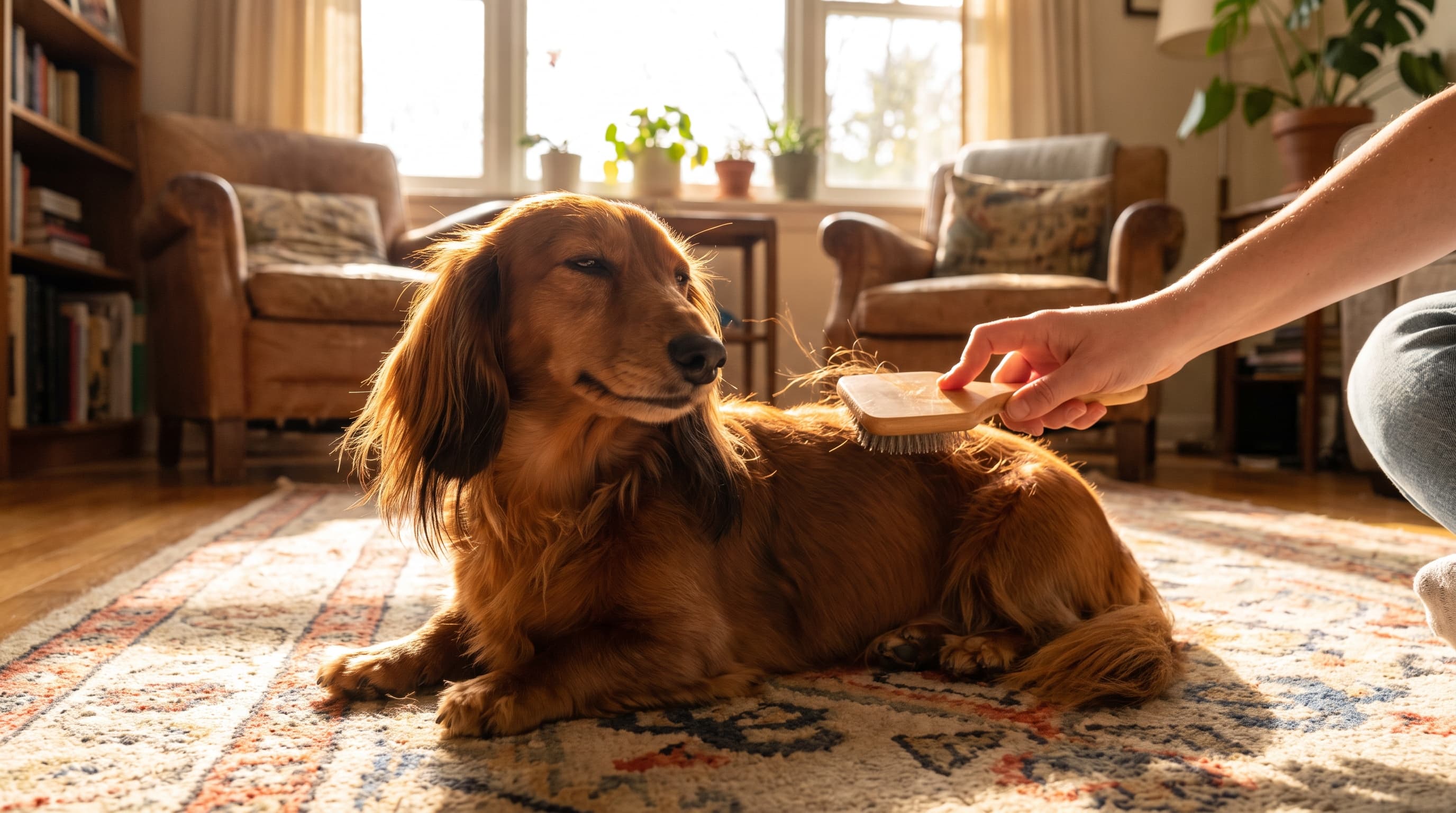

Do Long Haired Dachshunds Shed? A Groomer-Backed Guide to Their Coat
Yes, long haired dachshunds shed, but only moderately — about the same amount as smooth-coat dachshunds. Their longer fur simply makes loose hair more visible and prone to tangling. With weekly brushing and two heavier seasonal "blowouts" in spring and fall, shedding stays easily manageable and never heavy.
How Much Do Long Haired Dachshunds Really Shed?
Long haired dachshunds are moderate, year-round shedders. A common myth is that a longer coat automatically means more hair on your couch, but coat length and shedding volume are not the same thing. As the grooming educators at Native Pet explain, "longer fur doesn't necessarily equal a greater amount of shedding" — a long haired dachshund and a smooth dachshund lose a similar quantity of hair overall.
What changes is how noticeable that hair is. On a smooth dachshund, short shed hairs often disappear into fabric. On a long haired dachshund, the same hairs are longer, more visible, and more likely to catch behind the ears, on the chest, and along the tail feathering before they ever reach the floor. That is why long-coat owners sometimes feel their dog sheds "more" — the hair is simply easier to see and collect.
Why Long Haired Dachshunds Shed
Shedding is a normal, healthy process. Dogs continuously cycle hair through growth, resting, and shedding phases, releasing old or damaged hairs to make room for new growth. The American Kennel Club notes that the amount a dog sheds depends on breed, coat type, overall health, and the season.
Long haired dachshunds carry a single-layer coat in most individuals, with soft, slightly wavy fur and characteristic feathering on the ears, legs, chest, and tail. Because the coat is finer than a dense double coat, it does not "blow" in the dramatic clumps you see from a husky or golden retriever. Instead, hair is released gradually — a steady trickle rather than a flood.
Seasonal Shedding: What to Expect in Spring and Fall
Like most dogs, long haired dachshunds shed a little more heavily twice a year as the seasons turn. In spring, they lighten their coat for warmer weather; in fall, they release the summer coat to make way for a slightly thicker winter one. These transitions typically last a few weeks.
During these windows, you may notice more feathering coming loose and more hair on brushes and bedding. This is completely normal. Increasing brushing frequency during the spring and fall transitions is the single most effective way to stay ahead of the extra hair. Dogs kept mostly indoors under artificial light sometimes shed at a lower, more constant rate year-round instead of in sharp seasonal spikes.
Grooming a Long Haired Dachshund to Control Shedding
The long coat needs more maintenance than a smooth coat — not because it sheds more, but because loose hair tangles into the feathering and forms mats if it is not removed. A consistent routine keeps the coat healthy and dramatically reduces the hair that ends up around your home.
Brush Two to Three Times a Week
Native Pet recommends "daily brushing with a metal comb, slicker brush, or pin brush" for long-coat dachshunds during heavy periods, with two to three sessions a week as a healthy year-round minimum. Work gently through the feathering behind the ears, on the chest, under the belly, and along the tail — the spots most likely to mat.
Use the Right Tools
A slicker brush lifts loose undercoat and surface hair, while a fine metal comb finds tangles the brush misses. A de-shedding tool can help during seasonal blowouts, but use it lightly on a single-coat dog to avoid stripping healthy hair. For a broader routine, see our guide to reducing dog shedding and keeping a clean home.
Bathe Occasionally, Not Constantly
A bath every four to six weeks with a gentle dog shampoo loosens dead hair and keeps skin healthy. Always brush before bathing to prevent tangles from tightening into mats, and dry thoroughly, brushing as you go.
Support the Coat From the Inside
A complete diet rich in omega-3 and omega-6 fatty acids supports skin health and a stronger coat that sheds less excessively. Fresh water, parasite prevention, and regular vet checks all show up in coat quality.
Are Long Haired Dachshunds Hypoallergenic?
No — long haired dachshunds are not hypoallergenic. No dachshund coat type (smooth, long, or wirehaired) is considered hypoallergenic, because allergens live primarily in dander and saliva rather than in the hair itself. Any shedding dog spreads dander around the home.
If someone in your household has mild allergies, frequent brushing (ideally done outdoors), weekly vacuuming, washing dog bedding, and keeping the dog off pillows can reduce exposure — but no grooming routine makes a dachshund truly allergy-safe. Allergy sufferers should spend time with the breed before committing.
Long, Smooth, and Wirehaired: How the Coats Compare
Dachshunds come in three coat types, and shedding differs slightly among them:
- Smooth (short-haired): Sheds moderately and year-round. The easiest coat to maintain, needing only occasional brushing.
- Long haired: Sheds moderately, similar to smooth, but requires more frequent brushing to prevent the longer feathering from matting.
- Wirehaired: Generally the lightest shedder of the three, but the coarse coat needs periodic "hand-stripping" to stay healthy.
In other words, choosing a long haired dachshund does not commit you to a hairier home than a smooth one — it commits you to a bit more brushing. To compare the breed's other coat and color variations, browse our guides to the blonde dachshund and the silky wirehaired dachshund.
When Shedding Signals a Problem
Normal shedding is even and leaves the coat full. Contact your veterinarian if you notice bald patches, red or flaky skin, excessive scratching, a dull or brittle coat, or a sudden dramatic increase in hair loss. These can point to allergies, parasites, thyroid issues, stress, or nutritional gaps rather than routine shedding. A quick exam can identify the cause and get your dog comfortable again.
Frequently Asked Questions
Do long haired dachshunds shed a lot?
No. They are moderate shedders, comparable to smooth-coat dachshunds. The longer hair is simply more visible, which can make shedding seem heavier than it is.
How often should I brush a long haired dachshund?
Two to three times a week keeps the coat healthy and mat-free, increasing to near-daily brushing during the spring and fall seasonal sheds.
Do long haired dachshunds shed more than smooth dachshunds?
They shed roughly the same amount overall. The difference is maintenance: long coats tangle and show hair more, so they need more frequent brushing.
Are long haired dachshunds hypoallergenic?
No dachshund coat type is hypoallergenic. Allergens come from dander and saliva, and all dachshunds shed enough to spread them. Allergy sufferers should meet the breed first.
When do long haired dachshunds shed the most?
They shed a bit more heavily during the spring and fall seasonal transitions, when the coat adjusts to changing temperatures. These periods usually last a few weeks.
Does shaving reduce a long haired dachshund's shedding?
No. Shaving does not reduce how much a dog sheds and can damage the coat's ability to regulate temperature. Regular brushing is the correct way to manage the coat.
The Bottom Line on Long Haired Dachshund Shedding
Long haired dachshunds are moderate shedders whose flowing coats make loose hair more visible but not more plentiful. A simple routine — brushing two to three times a week, stepping it up during spring and fall, bathing every few weeks, and feeding a coat-supporting diet — keeps shedding under control and your dachshund's feathering silky and mat-free.
Curious about the rest of what makes this breed special? Dive into our complete dachshund breed guide and our companion piece on how much dachshunds shed overall. For more breed-care and grooming tips delivered weekly, subscribe to the Daily Wag newsletter.