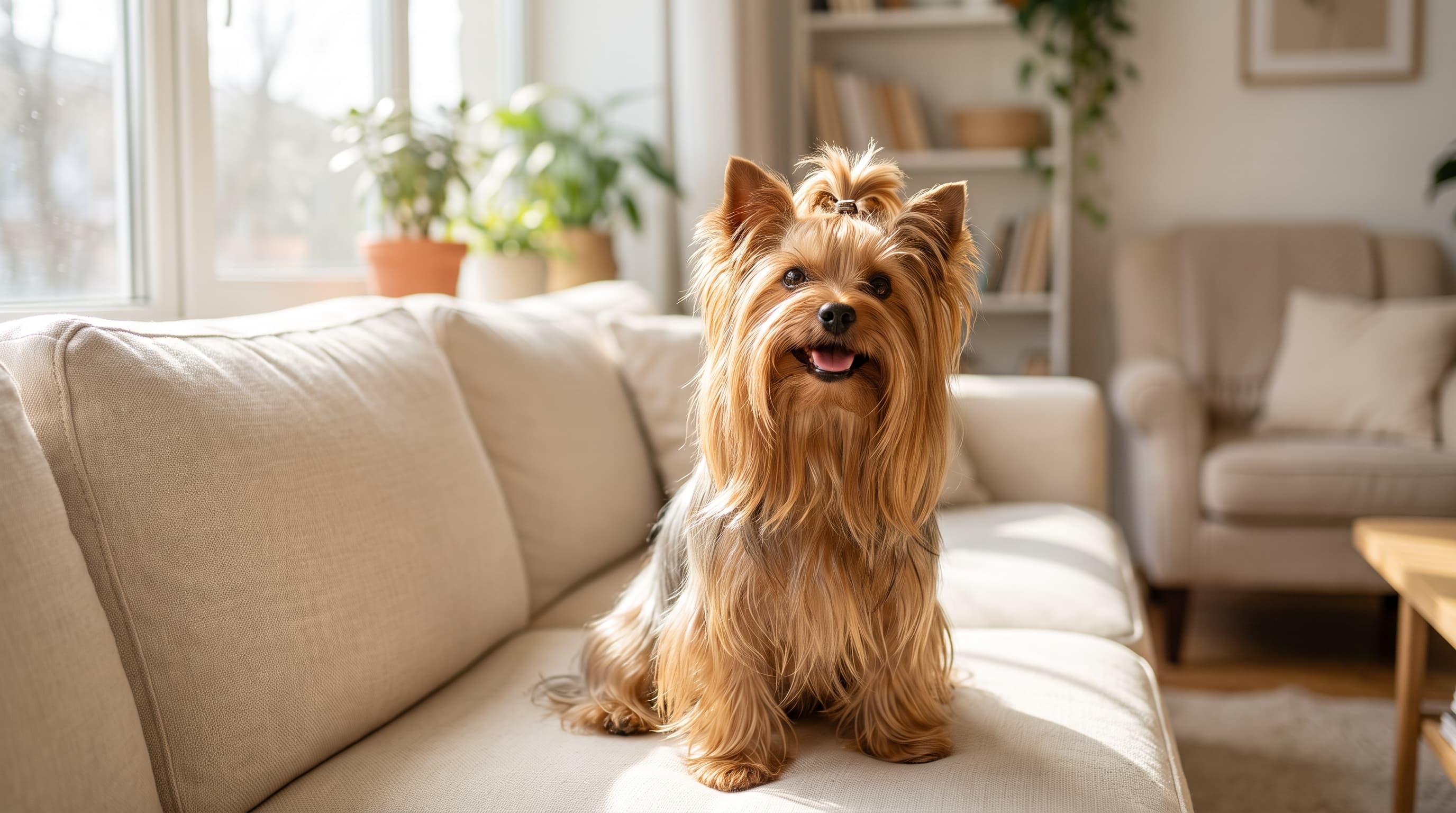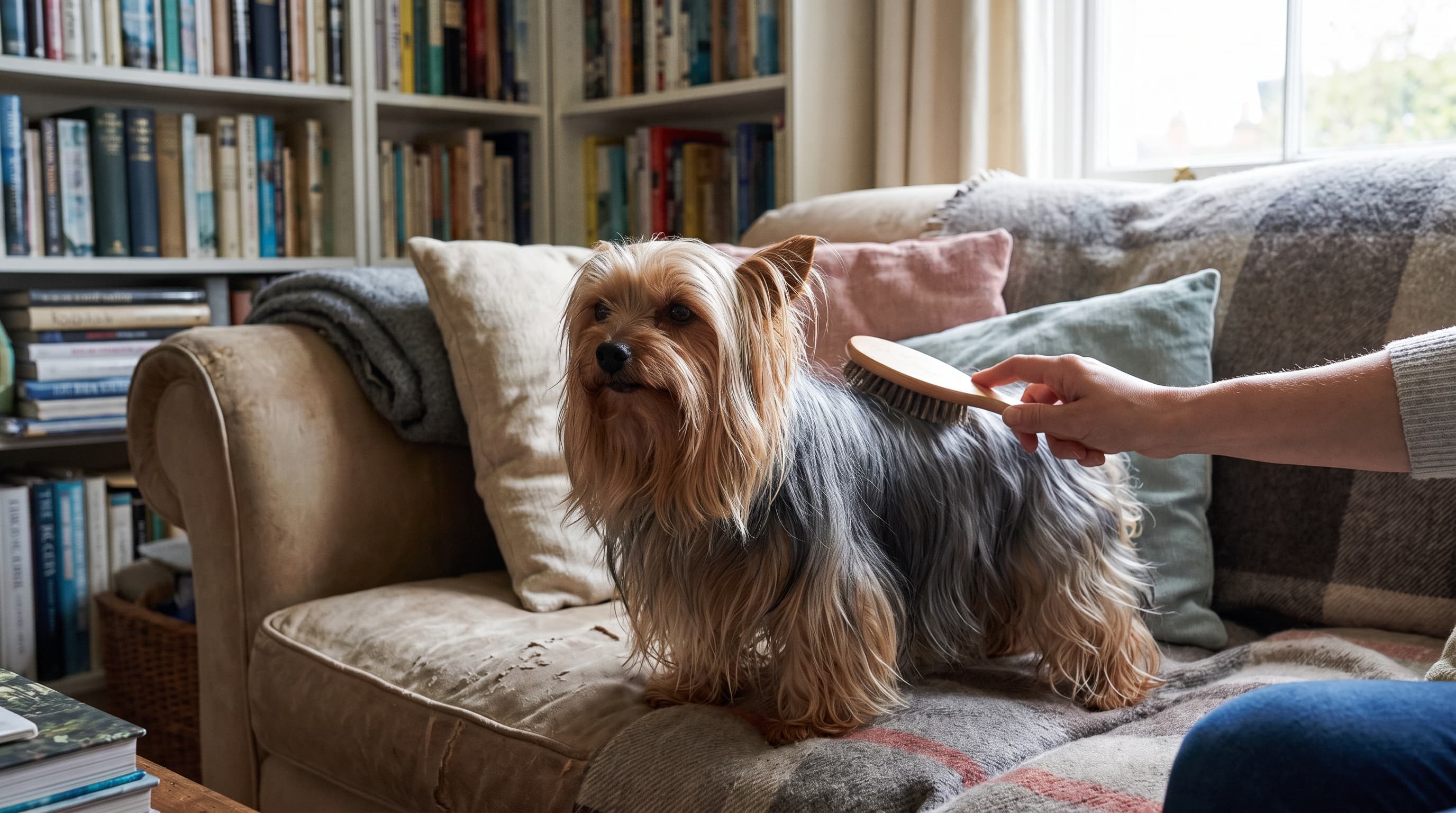

Yes, Yorkies do shed — but far less than most breeds, and in a way you'll rarely notice. Yorkshire Terriers have a single, silky coat with no undercoat, so instead of dropping fur in seasonal clumps, they lose a few strands at a time, much like human hair. That's why Yorkies are considered low-shedding and are often recommended for allergy-conscious homes.
Do Yorkies Shed a Lot?
No. On the spectrum of dog shedding, Yorkshire Terriers sit firmly at the low end — far below heavy shedders like Golden Retrievers, Huskies, or German Shepherds. Most groomers and veterinarians classify the Yorkie as a low-shedding breed, according to the American Kennel Club. If you're finding tufts of hair around your home, it's usually a sign of a grooming or health issue rather than normal Yorkie behavior.
Why Yorkies Shed So Little
The secret is in the coat. Most dogs have a double coat: a coarse outer layer and a soft undercoat that blows out heavily in spring and fall. Yorkies have only a single layer of fine, silky hair that is closer in structure to human hair than to typical dog fur. Because there's no undercoat, there's no seasonal "coat blow."
Yorkie hair also grows continuously rather than in tight cycles, so it can grow long — floor-length in show dogs — and sheds gradually. When strands do fall out, they tend to get caught in the surrounding coat instead of landing on your couch, which is why you'll see so little loose hair around the house.
Are Yorkies Hypoallergenic?
Yorkies are often called hypoallergenic, and they're one of the better breeds for allergy sufferers — but no dog is truly 100% hypoallergenic. Allergies are usually triggered by proteins in a dog's dander, saliva, and urine, not the hair itself, and the Asthma and Allergy Foundation of America notes that all dogs produce some of these allergens. What makes Yorkies friendlier for allergy-prone households is that their low shedding means less dander gets spread around your home. Spend time with a Yorkie before committing if anyone in your household has allergies. For a deeper look, see our guide to whether Yorkies are hypoallergenic.
Seasonal and Life-Stage Shedding
Even without an undercoat, Yorkies experience subtle changes in coat density. You may notice slightly more hair loss in spring and fall as their coat adjusts to temperature shifts. Puppies also go through a coat transition: the darker, softer puppy coat gradually gives way to the adult steel-blue-and-tan coat, usually between six months and two years of age, and you may see a bit more shedding during that change.
When Shedding Signals a Problem
Because Yorkies normally shed so little, a sudden increase in hair loss is worth paying attention to. Excessive or patchy shedding can be a sign of an underlying issue, such as:
- Skin allergies to food or environmental triggers, which the VCA Animal Hospitals describe as one of the most common conditions in dogs.
- Parasites like fleas or mites that cause scratching and hair loss.
- Hormonal imbalances such as thyroid issues.
- Stress, poor nutrition, or skin infections.
If you notice bald patches, red or irritated skin, constant scratching, or a dramatic uptick in shedding, check in with your veterinarian to rule out a health problem.
Grooming a Yorkie to Manage Shedding
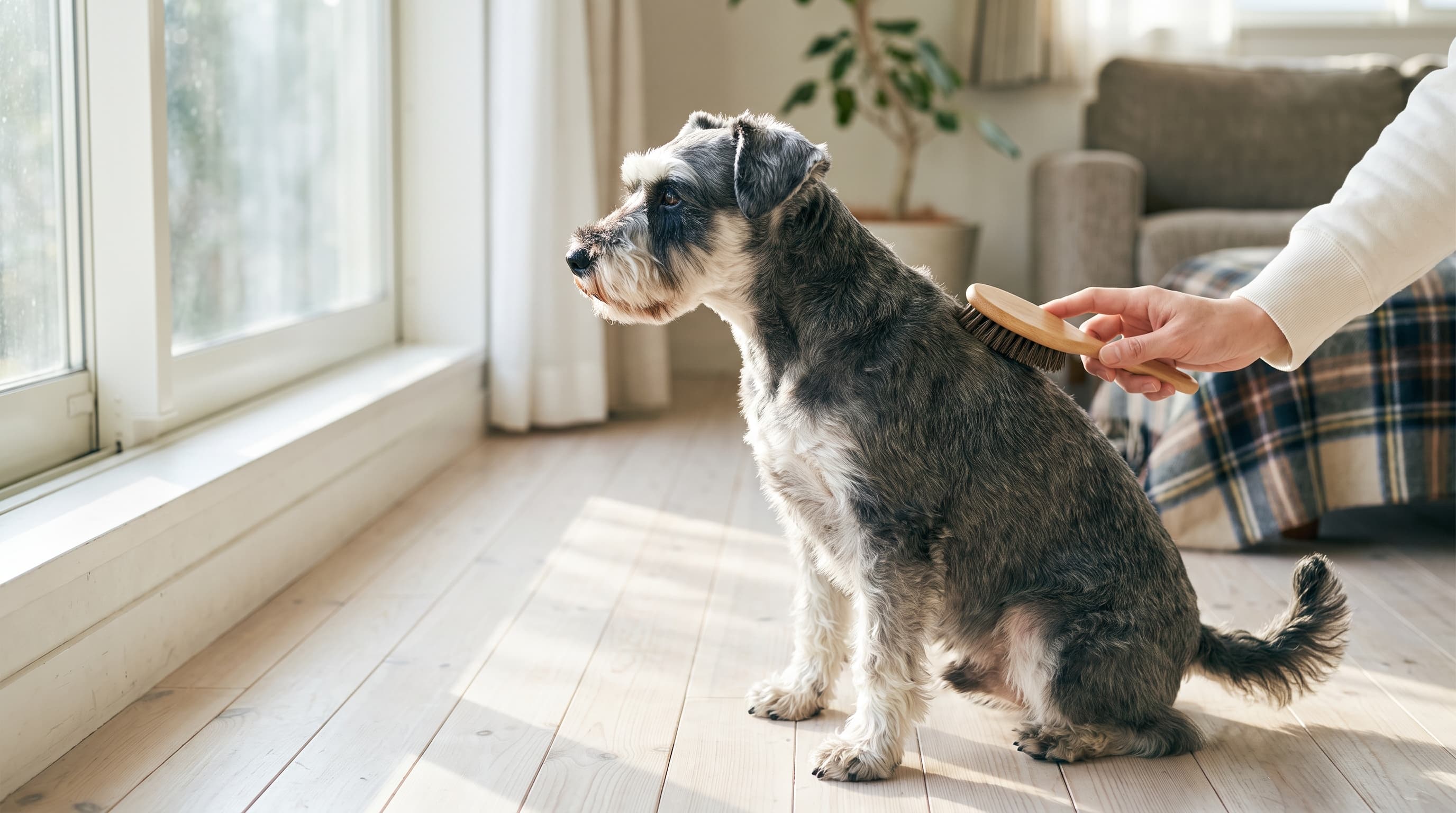
Because loose hairs stay trapped in the coat, regular brushing is what actually keeps a Yorkie's coat healthy and mat-free. A simple routine goes a long way:
- Brush 2–3 times per week (daily for long "show" coats) to remove trapped hairs and prevent matting, as recommended in the ASPCA's grooming guidance.
- Bathe every 3–4 weeks with a gentle dog shampoo to keep the coat clean and shiny.
- Consider a "puppy cut" — a shorter trim that many owners choose for easier, lower-maintenance care.
- Schedule professional grooming every 4–8 weeks for trims and tidying.
- Feed a quality diet with omega fatty acids to support skin and coat health.
The ASPCA Pet Health Insurance resource on Yorkshire Terriers emphasizes that consistent coat care is one of the biggest commitments of Yorkie ownership — not because they shed much, but because that long silky hair needs upkeep to stay healthy.
Understanding the Yorkie Coat: Hair, Not Fur
The single most useful thing to understand about Yorkie shedding is that Yorkies grow hair, not fur. The distinction matters. Fur grows to a genetically set length and then stops and sheds in cycles, which is why double-coated breeds blow their coats seasonally. Hair, by contrast, grows continuously and sheds only a little at a time, on a rolling basis. A Yorkie's coat behaves much more like the hair on your own head — it keeps growing, needs occasional trims, and drops the odd strand rather than clumps.
This is also why a Yorkie's coat can reach the floor in show dogs. Left untrimmed, the hair simply keeps growing. That continuous growth is a blessing for people who hate vacuuming up dog hair, but it's a responsibility too: a coat that never stops growing is a coat that always needs brushing and grooming to stay healthy.
Yorkie Coat Colors and the Puppy-to-Adult Transition
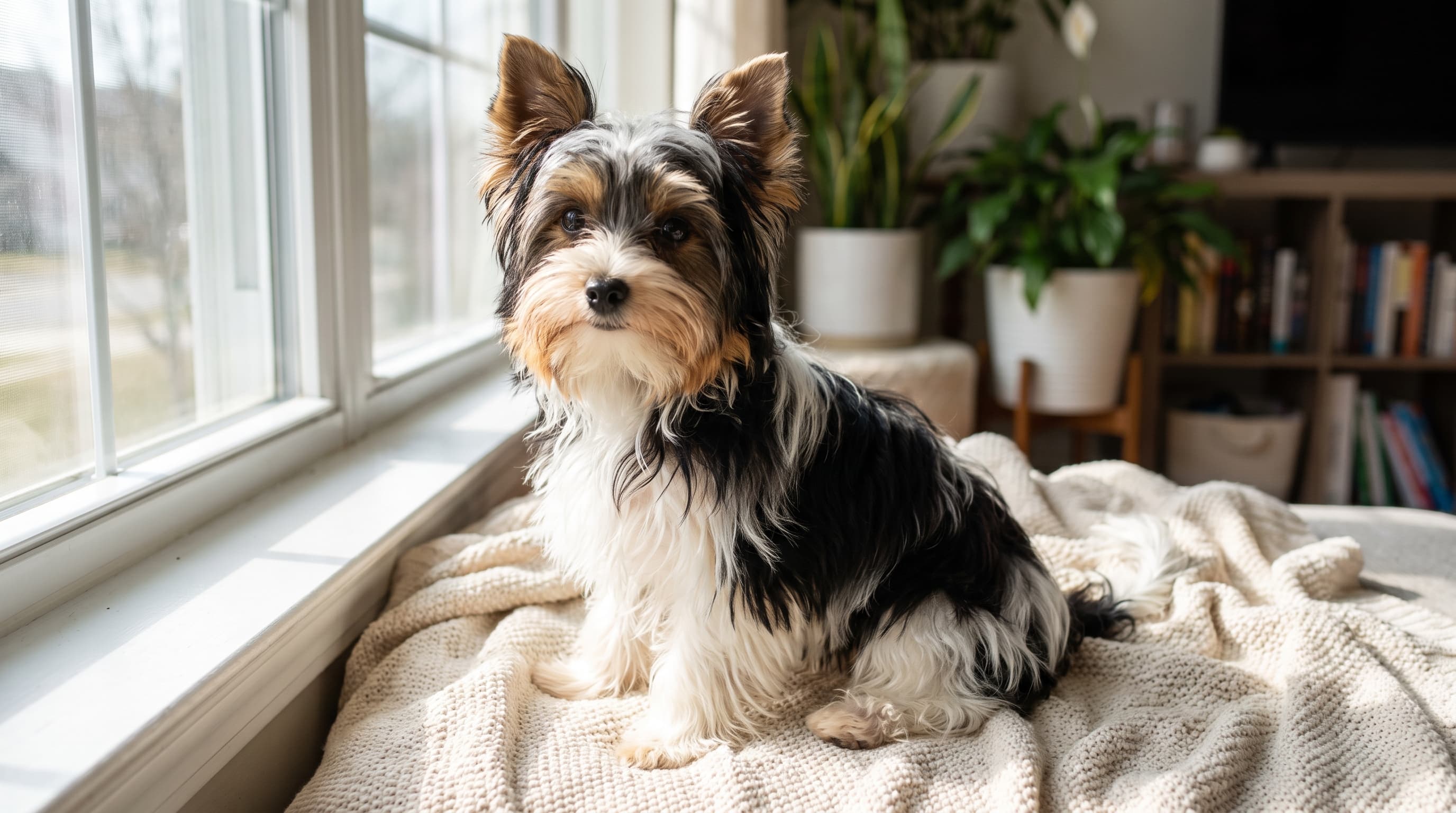
Yorkie puppies are typically born black and tan, and their adult color develops gradually. Over the first one to two years, the black lightens into the breed's signature steel-blue, and the tan points brighten. During this transition you may notice a little extra hair loss as the puppy coat gives way to the adult coat — this is completely normal and temporary. Once the adult coat settles in, shedding returns to its usual minimal level. Coat color and texture can vary between individual Yorkies, and a softer, cottony coat may mat more easily and need more frequent brushing than a classic silky one.
Diet, Supplements, and Coat Health
What goes into your Yorkie affects what comes off their coat. A complete, high-quality diet supports strong, healthy hair that's less prone to breakage and excess shedding. Omega-3 and omega-6 fatty acids, found in fish oil and quality dog foods, are particularly good for skin and coat condition. Adequate hydration and regular parasite prevention also play a role. If your Yorkie's coat looks dull, brittle, or is thinning despite good grooming, a nutritional gap or an underlying health issue could be to blame — a conversation with your veterinarian can help you figure out whether a diet change or supplement is warranted before you reach for over-the-counter products.
How Yorkie Shedding Compares to Other Small Breeds
Not all small dogs are low shedders. Double-coated small breeds like Pomeranians, Chihuahuas (especially long-haired), and Shiba Inus shed noticeably and blow their undercoats seasonally. Single-coated or hair-type breeds like the Yorkshire Terrier, Maltese, Shih Tzu, and Poodle shed much less. If low shedding is a priority for your household, the Yorkie sits comfortably among the best small-breed options — you trade the vacuuming for a brush and a comb. Many popular Yorkie mixes, like the Yorkie Poo, are also bred partly for that low-shedding appeal.
Frequently Asked Questions
Do Yorkies shed more than other small dogs?
No. Yorkies shed less than many small breeds because they lack an undercoat. Breeds like Pomeranians or Chihuahuas shed more noticeably despite their size.
Why is my Yorkie suddenly shedding a lot?
A sudden increase in shedding isn't normal for Yorkies and can point to allergies, parasites, stress, poor diet, or a hormonal issue. Have your vet examine your dog if it persists.
Does a shorter haircut reduce Yorkie shedding?
A puppy cut doesn't change how much a Yorkie sheds, but it makes the little hair they do lose less visible and much easier to manage.
Do Yorkies shed seasonally?
Only slightly. Without an undercoat, Yorkies don't have dramatic seasonal blowouts, though you may notice a small increase in spring and fall.
Are Yorkies good for people with allergies?
They're one of the better choices because low shedding means less dander in your home, but no dog is fully hypoallergenic. Meet a Yorkie in person first if allergies are a concern.
The Bottom Line on Yorkie Shedding
Yorkies do shed, but so little that most owners barely notice. Their single, silky, undercoat-free coat sheds hair gradually rather than in seasonal clumps, which is exactly why the breed is so popular in tidy homes and allergy-conscious households. The trade-off is grooming: that beautiful, ever-growing coat needs regular brushing and trims to stay healthy and mat-free. If you keep up a simple grooming routine, feed a quality diet, and watch for any sudden change in coat condition, your Yorkie's coat should stay silky, shiny, and remarkably easy to live with. And if shedding ever spikes, treat it as a signal to check in with your vet rather than a normal part of Yorkie ownership.
Love the breed? Keep exploring with our guides to the Yorkie Poo and the Parti Yorkie, or find out whether your Yorkie really needs to wear clothes. For weekly grooming tips and breed guides, subscribe to the Daily Wag newsletter.