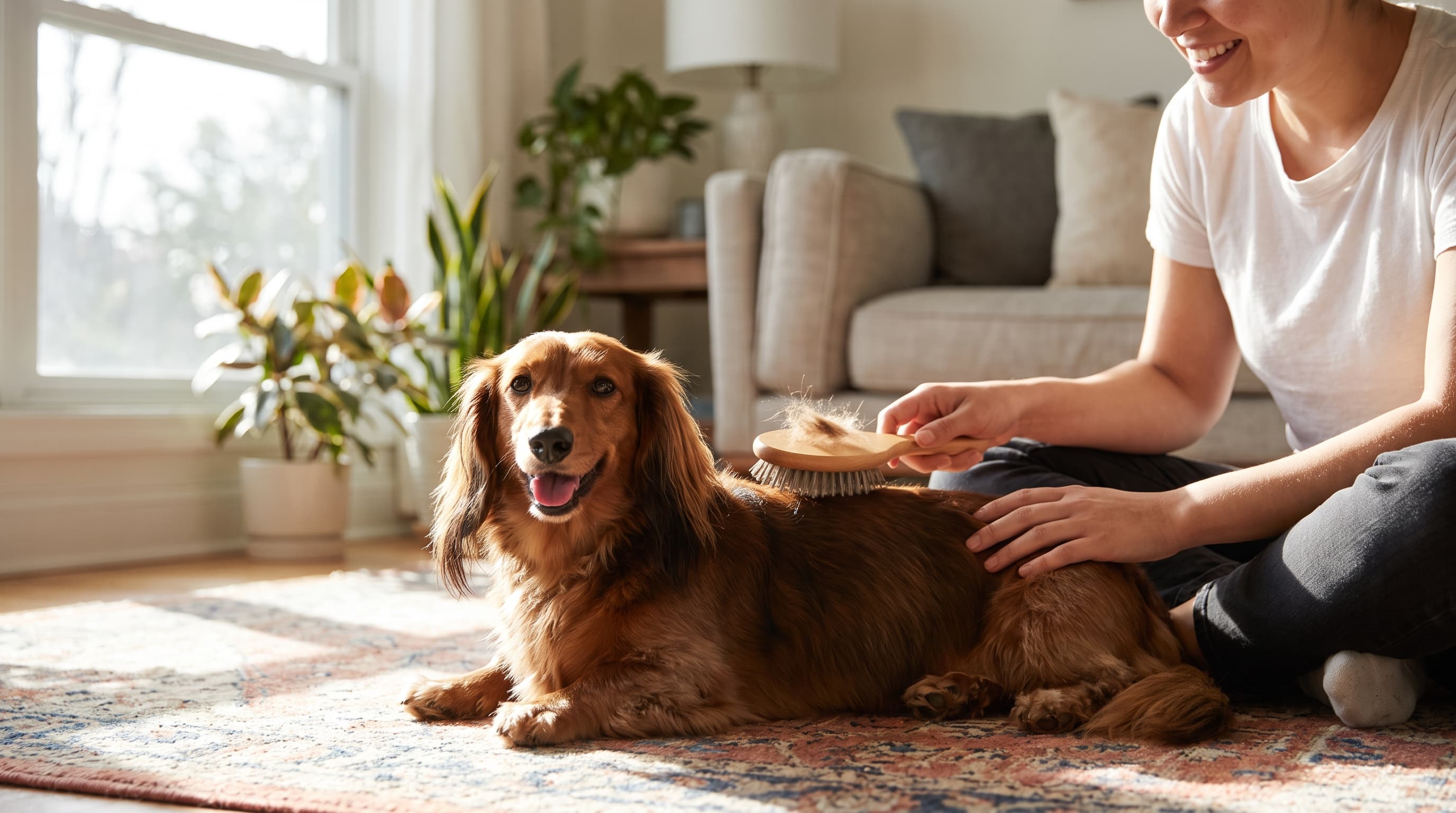

Do Dachshunds Shed? A Coat-by-Coat Guide to Wiener Dog Fur
Do dachshunds shed? Yes—all three coat types shed, but dachshunds are moderate shedders overall, far less than heavy-shedding breeds like Labradors or Huskies and more than truly low-shed dogs like Poodles. How much fur you'll actually find depends on whether your doxie is smooth, long-haired, or wire-haired, plus the season and their overall health.
Dachshunds pack a lot of personality into a low-slung frame, and their coats are just as varied. Prospective owners often hope the breed is nearly shed-free—but the reality is more nuanced. Here's exactly how much dachshunds shed by coat type, when to expect the heaviest fur, and how to keep loose hair off your couch.
Do Dachshunds Shed a Lot?
In the grand scheme of dog breeds, dachshunds land squarely in the middle. They are moderate shedders—noticeably less than the double-coated breeds that blanket your home in fur, but more than the curly-coated breeds marketed as hypoallergenic (Canine Journal). Most owners are surprised less by the volume and more by the steady, year-round consistency of the shedding. And no, coat color has nothing to do with it—only coat texture matters.
Worth noting up front: no dog is truly hypoallergenic. Dachshunds still shed dander and hair, so they aren't a guaranteed fit for severe allergy sufferers, though the wire-haired variety tends to be the most allergy-friendly of the three (Dachshund Central).
Shedding by Coat Type
The Dachshund comes in three coat varieties, each with its own shedding personality (American Kennel Club).
Smooth (Short-Haired) Dachshunds
Smooth-coated doxies shed small, fine hairs steadily throughout the year. Because the hairs are so short and thin, the shedding is easy to miss on the dog but easy to find stuck to your clothes and upholstery. Their grooming needs are minimal—a quick weekly wipe-down keeps things tidy.
Long-Haired Dachshunds
Long-haired dachshunds shed roughly the same amount as their smooth cousins, but it's far more visible because the strands are longer and silkier. They also shed more noticeably around the seasonal changes of spring and fall. Their flowing coat mats and clumps without regular brushing, so a few sessions a week are essential (Native Pet).
Wire-Haired Dachshunds
Wire-haired dachshunds are the wild card. In everyday terms they shed the least of the three, which makes them popular with tidiness-minded owners—but they "blow" their coat twice a year, typically in spring and autumn, releasing a larger burst of hair during those weeks. Their rough outer coat also benefits from occasional hand-stripping to stay healthy (Witzig).
When Do Dachshunds Shed the Most?
Like most dogs, dachshunds shed more during seasonal transitions. As daylight lengthens in spring, many dogs drop their heavier winter coat; a lighter shift can happen again in fall. Long-haired and wire-haired doxies show these seasonal peaks most dramatically, while smooth coats stay fairly constant. Indoor dogs with year-round climate control often shed a little all the time rather than in big seasonal waves, because artificial light and steady temperatures blur the natural cycle.
What Affects How Much Your Dachshund Sheds
- Diet and nutrition: A high-quality diet rich in omega-3 fatty acids supports a healthy coat and can reduce excess shedding.
- Hydration: Well-hydrated skin holds onto hair better than dry, flaky skin.
- Grooming routine: Regular brushing removes loose hair before it lands on your floor.
- Health and hormones: Allergies, parasites, thyroid issues, and stress can all spike shedding.
- Age and life stage: Puppies transitioning to adult coats and intact females around heat cycles may shed differently.
Sudden, patchy, or excessive shedding—especially with red, itchy, or bald skin—warrants a veterinary visit, since it can signal an underlying health issue rather than normal fur turnover.
How to Manage and Reduce Dachshund Shedding
- Brush regularly. A few minutes several times a week captures loose hair. Use a soft bristle or rubber curry brush for smooth coats, a pin or slicker brush for long coats, and a slicker plus occasional stripping for wire coats.
- Brush before you bathe. Loosen dead hair first, then bathe every 6–12 weeks depending on coat type. Over-bathing dries the skin and can worsen shedding.
- Feed a coat-supporting diet. Look for quality protein and omega-3s; ask your vet about supplements if the coat looks dull.
- Never shave a dachshund. Shaving disrupts natural temperature regulation and can permanently alter coat texture—especially in wire and long coats (Dachshund Central).
- Keep the house easy to clean. Washable throws on favorite lounging spots and a good vacuum go a long way with a low-riding dog whose belly hugs the floor.
Dachshund Shedding vs. Other Popular Breeds
Context helps set expectations. On a rough shedding scale from one (barely sheds) to five (fur everywhere), dachshunds sit around a two to three. Here's how they compare with breeds you might be weighing them against:
- Poodle / Bichon Frise: Very low shedding—these curly coats trap loose hair, which is why they top hypoallergenic-leaning lists. Dachshunds shed more than these.
- Dachshund: Moderate. Steady, manageable year-round shedding that responds well to routine brushing.
- Beagle / Corgi: Higher. Short but dense coats that shed noticeably and blow seasonally.
- Labrador Retriever / German Shepherd: Heavy. Double coats that shed constantly and "blow" dramatically twice a year (Canine Journal).
The takeaway: if you love the dachshund's personality but worry about fur, you're choosing a breed that's genuinely on the lower-maintenance end of the shedding spectrum—no daily vacuum marathons required.
The Best Tools for a Low-Shed Dachshund Home
Matching your tools to your doxie's coat makes shedding almost effortless to manage:
- Smooth coats: A rubber curry brush or grooming mitt lifts loose hair and doubles as a massage your dog will love.
- Long coats: A pin brush plus a fine-tooth comb prevents mats behind the ears, on the chest, and around the "feathering" on the legs and tail.
- Wire coats: A slicker brush for maintenance, plus periodic hand-stripping (or a stripping tool) to remove dead outer hairs and keep the texture crisp.
- Every coat: A quality vacuum, a lint roller by the door, and washable blankets on favorite napping spots keep the household tidy between grooming sessions (Native Pet).
A consistent five-minute routine beats an occasional deep-clean marathon every time—little and often is the secret to staying ahead of the fur.
Do Dachshunds Have a Double Coat?
This trips up a lot of new owners. Smooth and long-haired dachshunds have essentially a single coat, which is a big reason their shedding stays moderate rather than explosive—they don't carry the dense insulating undercoat that makes breeds like Huskies and Labs shed in clumps. Wire-haired dachshunds are the exception: they carry a coarser topcoat over a softer undercoat, which is what drives their twice-a-year coat "blows." Understanding your dog's coat structure tells you what to expect and which grooming approach fits. When in doubt about your specific dog's coat and skin health, your veterinarian or a professional groomer can assess it in person and recommend a routine tailored to your doxie.
Frequently Asked Questions
Are dachshunds hypoallergenic?
No. No dog breed is truly hypoallergenic, and dachshunds shed both hair and dander. Wire-haired dachshunds tend to be the most tolerable for mild allergy sufferers, but anyone with serious allergies should spend time around the specific dog first.
Which dachshund coat sheds the least?
Wire-haired dachshunds generally shed the least in day-to-day life, though they blow their coat seasonally. Smooth and long-haired doxies shed similar amounts, but long-haired hair is simply more visible.
Do miniature dachshunds shed less than standard ones?
Size doesn't change the shedding rate per square inch—coat type does. A mini simply has less total surface area, so you may notice slightly less hair overall than with a standard dachshund of the same coat type.
Why is my dachshund suddenly shedding more?
Seasonal changes are the usual culprit, but a sudden spike can also stem from stress, allergies, poor diet, parasites, or a medical condition like thyroid imbalance. If shedding comes with bald patches, redness, or itching, see your veterinarian.
How often should I brush my dachshund?
Smooth coats do well with a weekly once-over; long-haired and wire-haired dachshunds benefit from brushing several times a week to prevent mats and capture loose hair. Increase frequency during spring and fall shedding peaks.
The Bottom Line
Dachshunds shed—there's no getting around it—but as moderate shedders, they're a manageable choice for most households willing to keep up a simple grooming routine. Match your brushing to your doxie's coat type, feed a coat-friendly diet, and watch for any sudden changes, and you'll keep the fur under control while enjoying every inch of that big-dog personality in a small-dog package.
Thinking about adding a wiener dog to the family, or just love the breed? Explore more dachshund guides below, and subscribe to the Daily Wag newsletter for breed insights, grooming tips, and daily dog joy in your inbox.