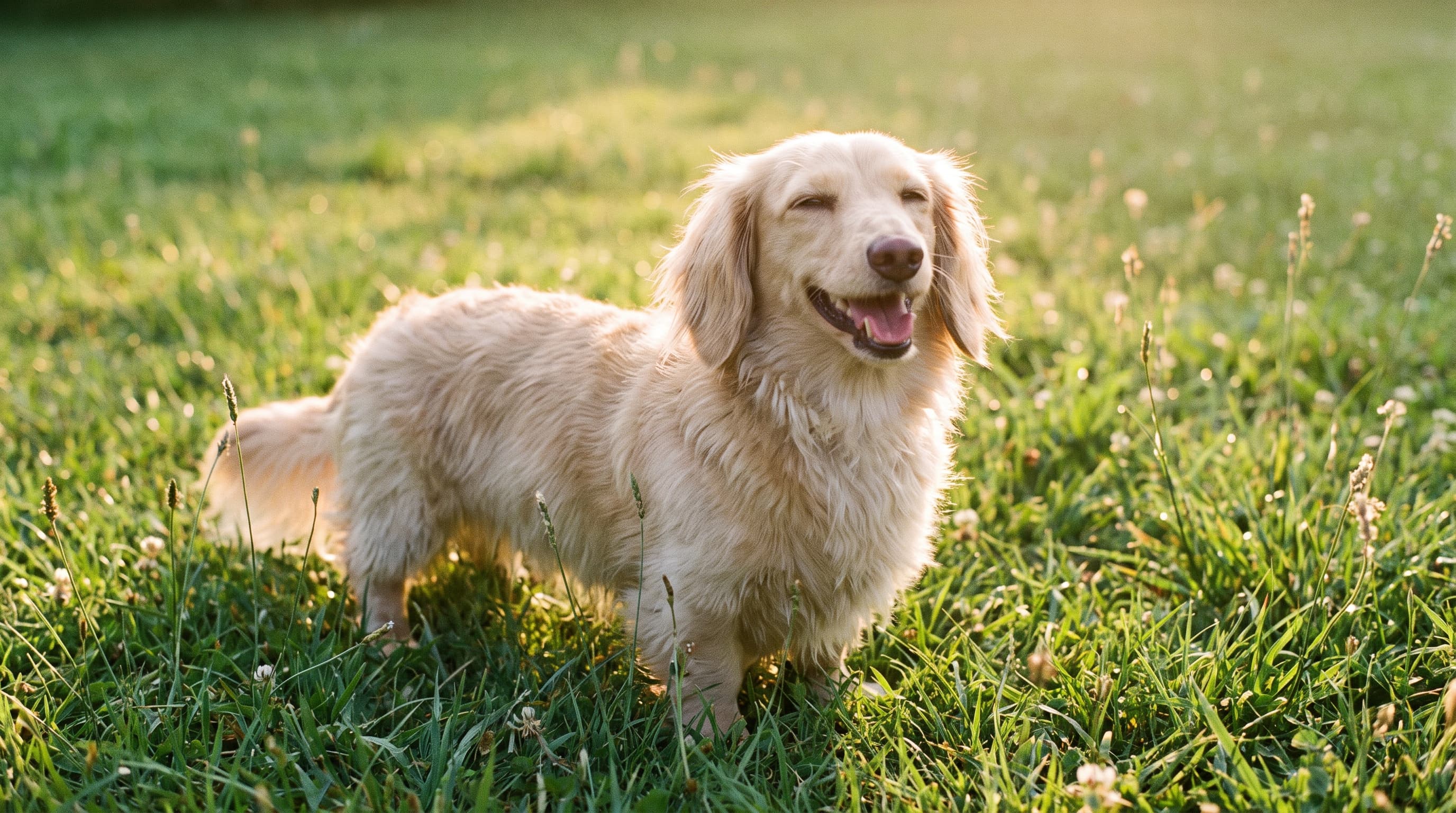

Blonde Dachshund: The Complete Guide to the Cream Sausage Dog
A blonde dachshund is a cream-coated version of the classic sausage dog, ranging from pale platinum to warm honey-gold. True "blonde" dachshunds are usually English cream or American cream dogs, and their light coloring comes from specific genes — the chinchilla gene in English creams, or a mix of red and dilution genes in American creams. In every other way they are the same long-bodied, big-hearted hound owners adore.
If you've fallen for that sunny, latte-colored coat, this guide covers everything you need: the difference between English and American creams, how the genetics actually work, what a blonde dachshund costs, grooming needs, and the health issues every dachshund owner must plan for.
What Is a Blonde Dachshund?
"Blonde dachshund" is an informal name for a dachshund with a cream or light-golden coat rather than the more common red, black-and-tan, or chocolate. According to Canine Journal, cream is one of roughly 15 standard and non-standard dachshund colors, and it appears in all three coat types in theory — though genuine, richly blonde coats show up most often in long-haired dogs.
It's worth knowing that not every pale dachshund is a true cream. Many dogs marketed as "blonde" are actually light reds or "shaded" reds. As breed-color experts explain, a dog with any reddish tint in its coat is technically a red, not a cream. True creams have no red overlay — just soft, buttery blonde from nose to tail.
English Cream vs. American Cream: The Real Difference
The single most important distinction among blonde dachshunds is English cream versus American cream, because the two get their color from completely different genetics.
English cream dachshunds inherit their blonde coat from the chinchilla gene. A defining quirk of this gene is that English cream puppies are born dark — nearly black or deep brown — and gradually lighten into pale, silvery blonde as they mature. Genuine English creams come only in miniature long-haired form, always have dark points (black noses, nails and eye rims), and descend from a small number of United Kingdom breeding lines. They are rare and typically the most expensive cream variety.
American cream dachshunds, by contrast, get their color from a combination of the dominant red gene, the recessive red gene, and the blue dilution gene rather than the chinchilla gene. American cream puppies are usually born light and may develop warmer, reddish tones as they age. They can appear in more coat types and sizes but are not considered "true" English creams by purists.
If a breeder claims to sell "English cream" puppies, ask for pedigree documentation tracing back to English lines and confirm the puppies were born dark. It's the most reliable way to tell a genuine chinchilla-gene cream from a marketing label.
Blonde Dachshund Temperament and Personality
Coat color has no effect on personality — a blonde dachshund is every bit the classic dachshund. The American Kennel Club describes the breed by its famously long, low silhouette, ever-alert expression, and bold, vivacious personality. Bred in Germany to hunt badgers, dachshunds are courageous, curious and surprisingly tenacious for their size.
Expect a clever, affectionate dog with a stubborn streak and a big bark. Dachshunds bond closely with their people, can be wary of strangers, and often appoint themselves household watchdog. Early socialization and patient, reward-based training help channel that independent hunting instinct into a well-mannered companion. They're playful with family and, like many small hounds, thrive on being included in daily life rather than left alone.
Grooming and Care for a Cream Coat
Grooming depends on coat type. Because most true blonde dachshunds are long-haired, plan on brushing several times a week to prevent tangles and mats, especially behind the ears, on the chest and along the feathering. Smooth-coated creams are wash-and-go, while wirehaired dogs need occasional hand-stripping. You can compare coat-care routines in our guide to the silky wirehaired dachshund.
A pale coat shows dirt and tear-staining more than a dark one, so gentle face wipes and regular baths keep a blonde dachshund looking its best. Don't forget the basics every dachshund needs: dental care, nail trims, and ear checks. And because their short legs sit close to the ground, dachshunds get cold quickly — see our tips on how to prevent hypothermia in dachshunds during winter walks.
Blonde Dachshund Health: Protecting That Long Back
The most important health topic for any dachshund — blonde or otherwise — is the spine. Intervertebral disc disease (IVDD) is the breed's signature risk. According to PetMD, as many as 25% of dachshunds develop IVDD in their lifetime, and without prompt treatment it can lead to permanent paralysis. The breed's long back and short legs put unusual stress on the discs between the vertebrae.
You can reduce the risk with smart everyday habits: keep your dog lean, discourage jumping on and off furniture, use ramps or pet stairs, and support the back and hindquarters when lifting. Charities like Dachshund Health UK fund research into IVDD and offer owner guidance on back care and screening. Cream lines can also carry breed eye conditions, so responsible breeders health-test their dogs. This is general information only — if your dachshund shows back pain, trembling, dragging paws or reluctance to move, treat it as an emergency and see a veterinarian right away.
How Much Does a Blonde Dachshund Cost?
Blonde dachshunds usually cost more than standard colors because cream coats are less common and heavily sought after. Prices vary widely by region and pedigree, but genuine English cream miniatures from documented UK-descended lines command the highest prices, often well above typical red or black-and-tan puppies. American creams tend to sit lower.
Be cautious of "rare color" markups and breeders who prioritize coat over health. A higher price should reflect health testing, careful IVDD-conscious breeding and pedigree documentation — not just the color. Adopting is another wonderful route; dachshunds and dachshund mixes in every shade, including cream, regularly appear in breed-specific rescues.
Frequently Asked Questions About Blonde Dachshunds
Are blonde dachshunds rare?
True cream dachshunds are less common than reds and black-and-tans, and genuine English cream miniatures are genuinely rare. Many "blonde" dogs advertised online are actually light or shaded reds rather than true creams, which adds to the perception of rarity.
What is the difference between cream and blonde dachshunds?
They're the same thing — "blonde" is a casual nickname for the cream coat color. Within creams, the meaningful distinction is English cream (colored by the chinchilla gene, born dark) versus American cream (colored by red and dilution genes, born light).
Do blonde dachshund puppies change color as they grow?
Yes, often dramatically. English cream puppies are born nearly black and lighten to pale blonde as they mature, while American cream puppies start light and may warm up with reddish tones. Ask to see a puppy's parents and pedigree to predict the adult coat.
Are cream dachshunds more expensive?
Generally yes. Their relative rarity and popularity push prices above standard colors, with documented English creams the priciest. Always confirm that a higher price reflects health testing and pedigree, not just coat color.
Are blonde dachshunds healthy?
Cream coloring itself does not cause health problems, unlike some extreme dilute or double-merle patterns in other breeds. However, all dachshunds share a high risk of intervertebral disc disease (IVDD), so weight control, back care and buying from health-testing breeders matter far more than color.
Do blonde dachshunds shed a lot?
Dachshunds are moderate shedders. Long-haired creams shed and can mat if not brushed regularly, smooth coats shed lightly year-round, and wirehaired dogs shed the least but need occasional stripping. None are hypoallergenic.
Is a Blonde Dachshund Right for You?
A blonde dachshund gives you all the bold, loving, comical personality of the classic sausage dog wrapped in a striking cream coat. Just remember that color is the least important part of the decision: prioritize a responsible breeder or rescue, plan seriously for IVDD prevention, and commit to the grooming a long, pale coat requires. Do that, and you'll have a sunny little hound that turns heads on every walk.
Curious about other eye-catching dachshund varieties? Read our guides to the merle dachshund and the dachshund breed overview, and subscribe to the Daily Wag newsletter for breed spotlights, health tips and dog-friendly adventures.
Sources: American Kennel Club — Dachshund, Canine Journal — Dachshund Colors, Dogster — English Cream Dachshund, PetMD — Dachshund, and Dachshund Health UK.