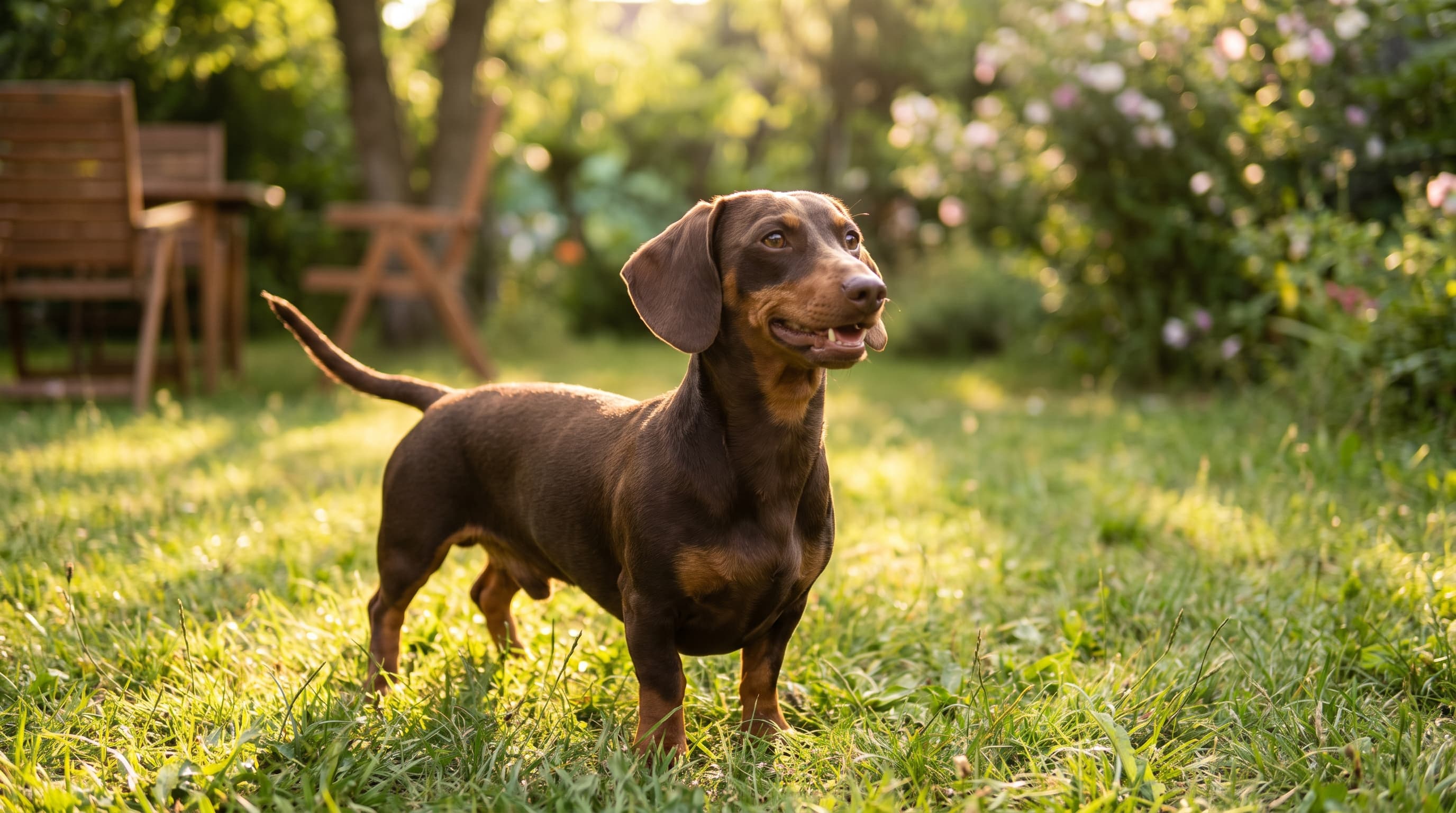

A brown dachshund is simply a dachshund carrying a chocolate (liver) coat instead of the breed's more common red or black-and-tan. The color comes from a recessive gene that dilutes black pigment to warm brown, and it shows up in standard and miniature sizes across all three coat types. Apart from coat and nose color, a brown dachshund is identical to any other doxie in personality, size, and care needs.
What Is a Brown Dachshund?
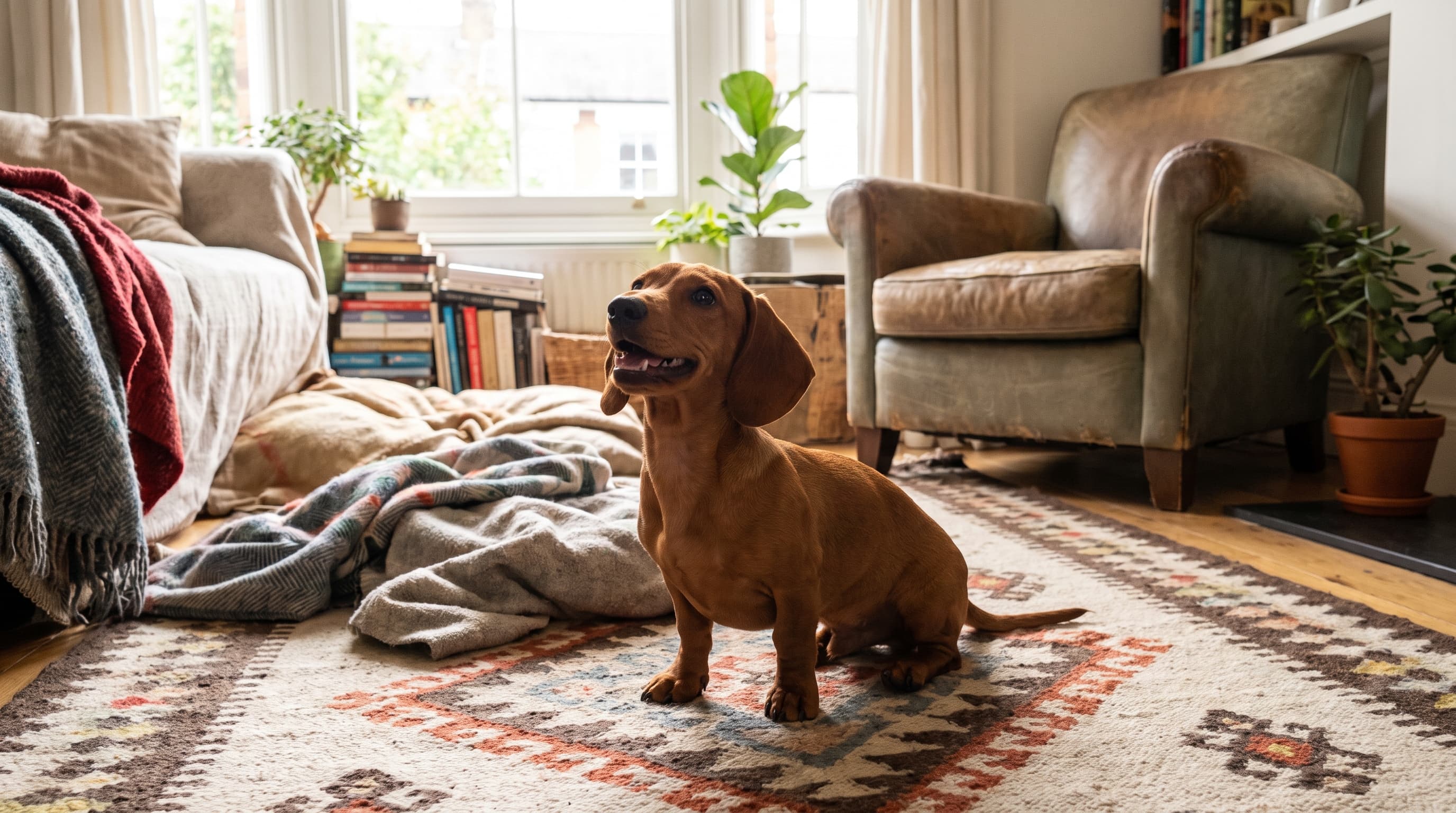
"Brown dachshund" is an everyday name for what breeders and kennel clubs usually call a chocolate or liver dachshund. The coat ranges from milk-chocolate to a deep, almost espresso brown, and it can appear as a solid shade or, far more often, paired with tan or cream points on the eyebrows, muzzle, chest, and legs. Because the same recessive gene that browns the coat also affects skin pigment, a true brown dachshund has a brown (rather than black) nose, brown paw pads, and often lighter amber, hazel, or green eyes.
The dachshund itself was developed in Germany centuries ago to hunt badgers and other burrow-dwelling animals, which is why the breed has its famously long spine, deep chest, and short, powerful legs. That build is identical whether the dog is red, black-and-tan, or brown. According to the American Kennel Club, dachshunds come in two sizes—standard (usually 16–32 lbs) and miniature (11 lbs and under)—and three coat varieties: smooth, long-haired, and wire-haired. A brown coat can occur in any of these combinations, so a "brown dachshund" might be a sleek smooth chocolate-and-tan mini or a shaggy chocolate long-haired standard.
Brown, Chocolate, and Red: Understanding Dachshund Coat Colors
Dachshund color naming trips up a lot of new owners, so it helps to separate three things people often lump together:
- Brown / chocolate / liver — a genetically brown coat with a brown nose. This is what most people mean by "brown dachshund."
- Red — a warm ginger-to-mahogany coat produced by a completely different pigment (pheomelanin). Red dachshunds usually keep a black nose, which is the quickest way to tell a dark red dog apart from a true chocolate.
- Chocolate-and-tan / chocolate-and-cream — the most common brown presentation, with lighter points over a chocolate base.
The chocolate coat is recessive, meaning a puppy must inherit the brown gene from both parents to display it. As the color-genetics guide at Canine Journal explains, brown results when the dog produces only the reduced-black pigment eumelanin at the "B locus"; too much black pigment would simply read as a standard black-based coat. That recessive inheritance is why two red or black-and-tan parents can still surprise a litter with a brown puppy if both quietly carry the gene. For a fuller photo tour of the shade and its variations, the breed profile at Dogster is a good reference.
Are Brown Dachshunds Rare, and What Do They Cost?
Brown dachshunds are less common than red or black-and-tan dogs, but they are a fully accepted standard color—not a rare "designer" mutation and not something to pay a steep premium for. Because the gene is recessive, you simply see fewer of them, which sometimes lets breeders market them as special. In practice, a healthy chocolate-and-tan dachshund from a responsible breeder typically costs about the same as any other standard-colored puppy, often in the range of roughly $1,000–$3,500 depending on region, size, coat type, and pedigree.
Be cautious of anyone charging dramatically more for "rare chocolate" dogs, and be especially wary of unusual dilutions like "isabella" (a diluted chocolate). Extreme color breeding can be linked to color dilution alopecia, a coat-thinning condition. The healthiest approach is to prioritize a breeder who screens for the breed's real health risks—discussed below—over one selling color as the headline feature. If you love the look but want to skip breeder waitlists, brown and chocolate doxies also turn up regularly in dachshund rescues.
Brown Dachshund Temperament and Personality
Coat color has no bearing on temperament, so a brown dachshund behaves exactly like the breed as a whole: bold, curious, affectionate, and famously stubborn. Bred to work independently underground, dachshunds are confident little problem-solvers who bond intensely with their people and can be wary of strangers. That watchdog streak means they bark—sometimes a lot—which is worth knowing before you bring one into an apartment building.
They're playful and genuinely funny companions, but their independence makes training a patience game. Short, upbeat, reward-based sessions work far better than repetition drills. Dachshunds also form strong attachments and can develop separation anxiety, so they suit households where someone is around fairly often. Early socialization helps temper the suspicion-of-strangers tendency and makes for a more relaxed adult dog. If you're weighing a doxie for a smaller home, our guide to the best dogs for apartments covers how to manage that barking and energy in tight quarters.
Grooming and Coat Care by Type
How much grooming a brown dachshund needs depends entirely on its coat variety, not its color:
- Smooth chocolate dachshund — the lowest-maintenance option. A weekly wipe-down and occasional bath keep the short coat glossy.
- Long-haired chocolate dachshund — needs brushing several times a week to prevent mats behind the ears, on the chest, and along the "feathering" of the legs and tail.
- Wire-haired chocolate dachshund — benefits from periodic hand-stripping or trimming to maintain the coarse jacket and distinctive beard.
All dachshunds benefit from routine nail trims, dental care, and ear checks. One color-specific note: chocolate coats can look sun-faded or slightly reddish in strong summer light, which is purely cosmetic. Because their pigment is lighter, brown dachshunds with thin coats can be a touch more sensitive to sunburn on exposed skin, so shade and timing matter for those long, low-slung midsummer walks.
Health Considerations Every Brown Dachshund Owner Should Know
The single most important health topic for any dachshund—brown or otherwise—is the spine. Their long back and short legs (a form of dwarfism called chondrodystrophy) make them highly prone to intervertebral disc disease (IVDD). Wikipedia's veterinary-sourced breed overview notes that roughly a quarter of dachshunds may be affected over their lifetime, with obesity and high-impact activity increasing the risk. You can meaningfully lower that risk by keeping your dog lean, discouraging jumping on and off furniture, using ramps, and supporting the back when you lift (never by the legs or belly alone).
Beyond IVDD, dachshunds can be prone to obesity, dental disease, patellar luxation, and, like many breeds, joint issues that a good breeder screens for. There is no evidence that the chocolate color itself causes health problems, but breeding for extreme or diluted colors can. This is general information, not medical advice—if your dog shows signs of back pain (reluctance to move, a hunched posture, crying when picked up), treat it as urgent and contact your veterinarian right away. Our overview of the signs your dog needs a vet visit can help you spot trouble early.
Is a Brown Dachshund Right for You?
A brown dachshund is a wonderful fit for someone who wants a small, big-personality companion and doesn't mind a little stubbornness and a lot of opinions. They adapt well to apartments and houses alike, love their humans fiercely, and stay playful well into their senior years. The trade-offs are the barking, the training patience required, and the lifelong commitment to protecting that famous back. Get those right, and the chocolate coat is just a beautiful bonus on top of a devoted little dog. Doxie fans who love mixing breed traits often look at the chiweenie (dachshund–chihuahua) too.
Frequently Asked Questions
Is a brown dachshund the same as a chocolate dachshund?
Yes. "Brown," "chocolate," and "liver" all describe the same genetically brown coat with a brown nose. Breeders and kennel clubs most often use "chocolate," while pet owners tend to say "brown."
Are brown dachshunds rare?
They're less common than red or black-and-tan dachshunds because the brown gene is recessive, but they're a fully recognized standard color—not a rare or exotic variety, and not something that should command a big price premium.
Do brown dachshunds have brown noses?
Yes. A true chocolate dachshund has a brown nose, brown paw pads, and often lighter eyes. A black nose usually means the dog is a dark red rather than a genetic brown.
How big do brown dachshunds get?
The same as any dachshund: standards usually weigh 16–32 lbs and stand 8–9 inches tall, while miniatures top out around 11 lbs and 5–6 inches. Color has no effect on size.
Are brown dachshunds healthy?
The chocolate color itself doesn't cause health issues, but all dachshunds are prone to back problems (IVDD), obesity, and dental disease. Keeping your dog lean and protecting its spine are the biggest things you can do. Always consult your veterinarian about individual health concerns.
Meet More Doxies and Small Companions
Fell for the long, low charm? Keep exploring the family: read our full dachshund breed guide for everything about temperament and care, then compare coat colors with our blonde dachshund profile. Love little dogs with big personalities? Subscribe to the Daily Wag newsletter for breed guides, health tips, and adoptable-dog features delivered straight to your inbox.