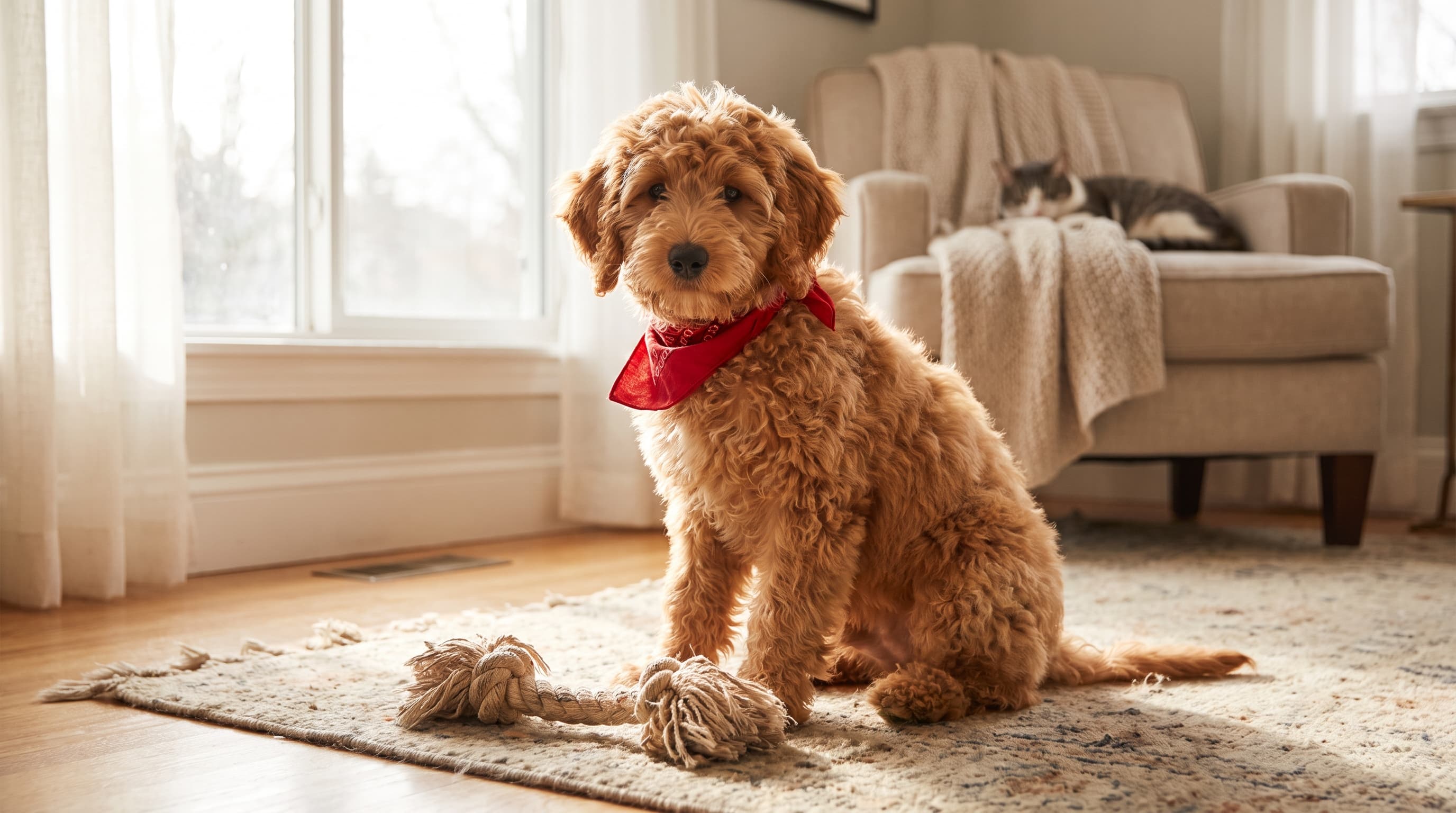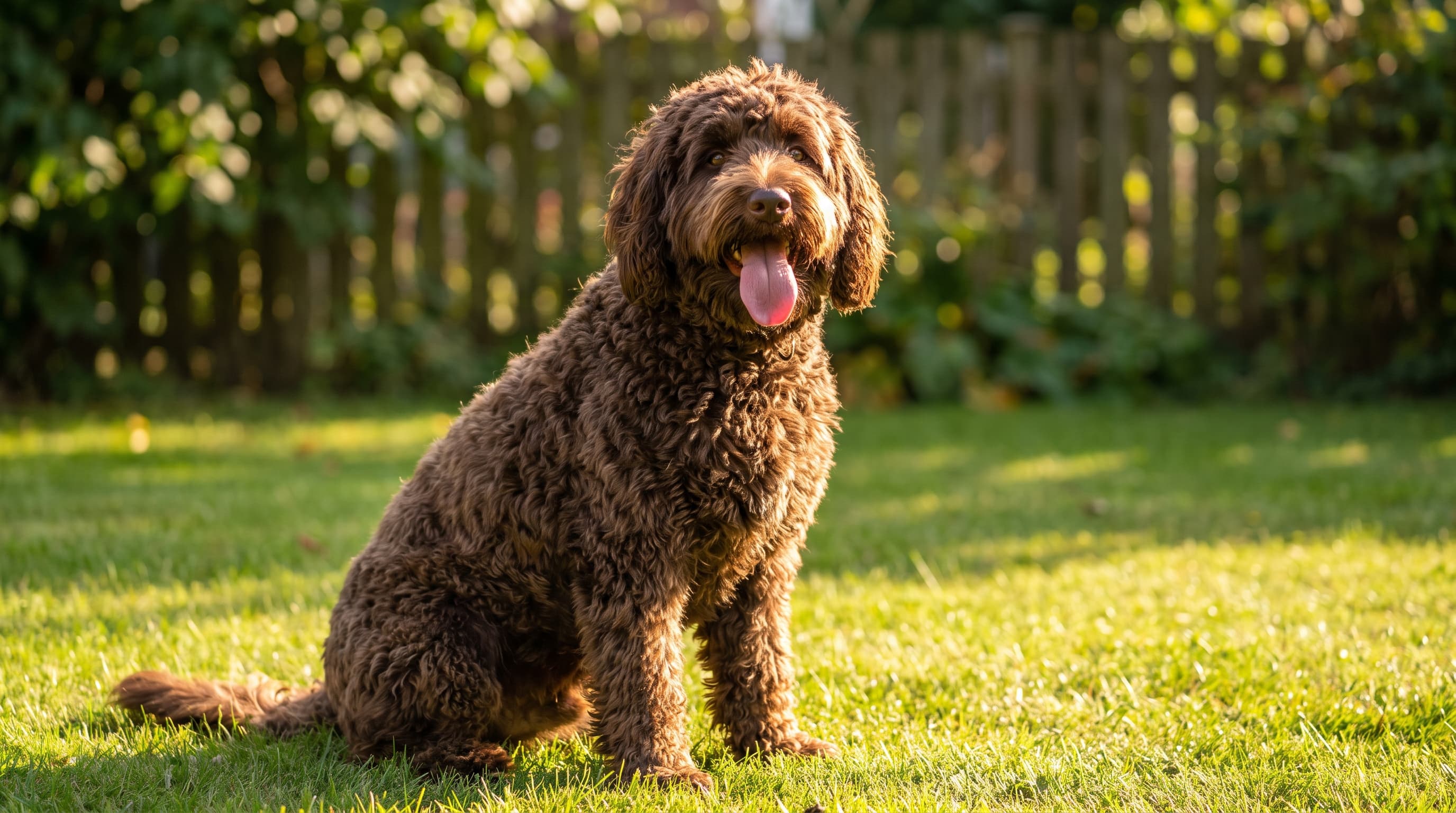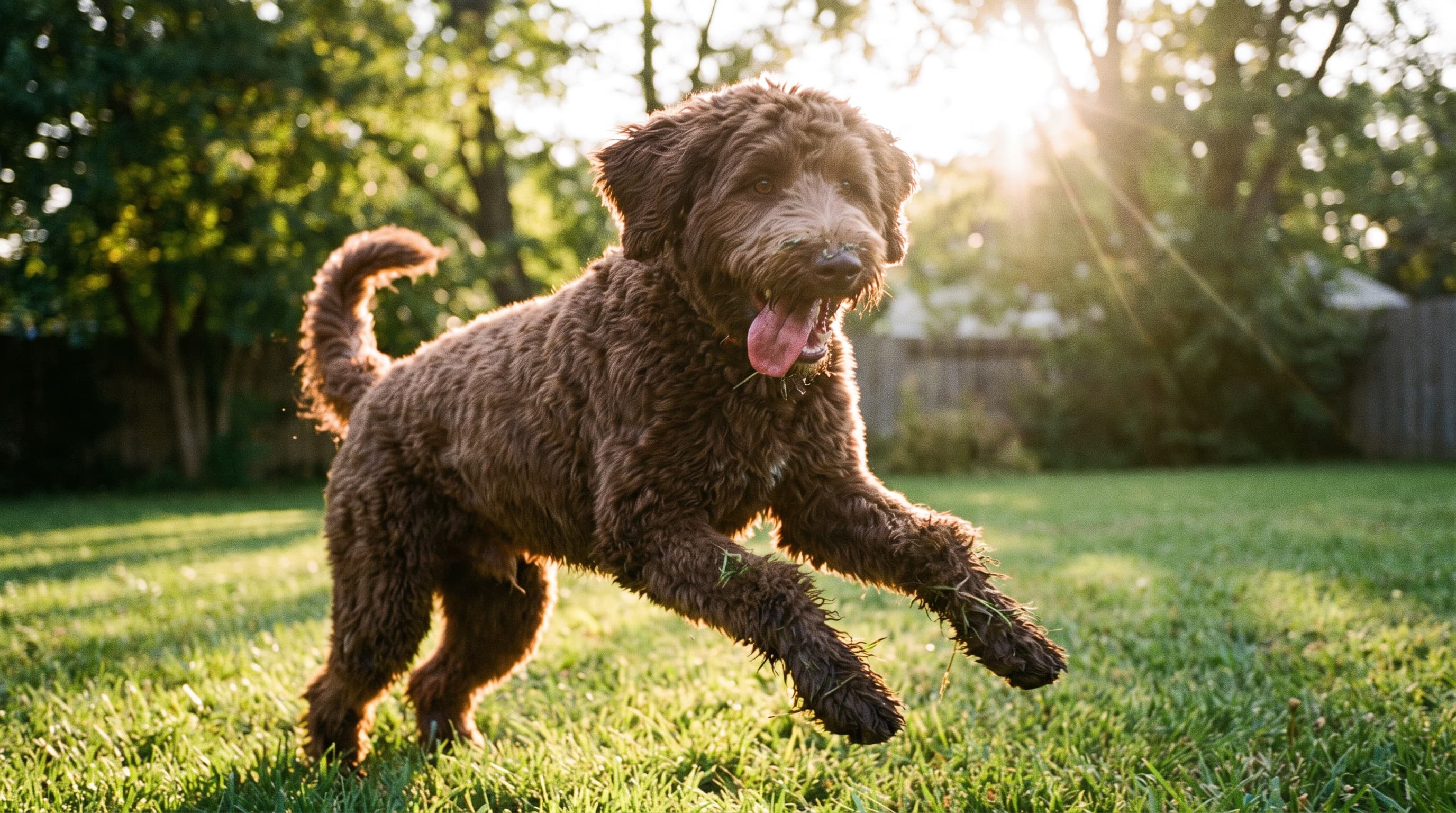

A brown Goldendoodle is a Golden Retriever–Poodle cross with a chocolate, cocoa, or caramel-toned coat instead of the classic golden shade. The brown color comes from recessive genes inherited from the Poodle side, and many brown Doodles gradually fade to lighter café-au-lait or silver-beige as they mature over their first two years.
What Is a Brown Goldendoodle?
A Goldendoodle is a hybrid between a Golden Retriever and a Poodle, prized for a friendly temperament and a low-shedding, often allergy-friendlier coat. "Brown" simply describes coat color, which ranges from deep chocolate through warm milk-chocolate to reddish caramel. Because a purebred Golden Retriever is genetically incapable of producing a true chocolate coat, the brown pigment always traces back to the Poodle parent carrying the recessive chocolate gene. That is why brown is less common than golden or apricot and why it usually requires a chocolate or parti Poodle in the lineage.
What Makes a Goldendoodle Brown? The Genetics
Coat color is controlled by pigment genes passed down from both parents. Brown appears when a Doodle inherits two copies of the recessive "brown" (chocolate) gene — one from each parent. If only one copy is present, the dog will typically be black or golden but can still carry brown and pass it to puppies. This recessive inheritance is exactly why two golden-looking parents can occasionally surprise you with a chocolate pup, and why reputable breeders use DNA testing to predict litter colors. Brown Goldendoodles come in several recognized patterns, including solid chocolate, chocolate parti (brown and white), chocolate merle, and abstract or "chocolate-and-white" markings, as color guides catalog.
Do Brown Goldendoodles Change Color? Understanding Fading
Yes — and it catches many first-time owners off guard. Brown Goldendoodles are among the most likely colors to lighten dramatically with age, a process called "fading" or "clearing." Puppies often start out a rich, dark chocolate and gradually shift toward café-au-lait, silver-beige, or a smoky "silvering" tone. The change frequently begins as early as six weeks and is usually first visible on the muzzle and between the paw pads.
The cause is a progressive-graying gene commonly carried by Poodles. Not every Doodle inherits it, which is why littermates can fade at very different rates — one stays deep chocolate while a sibling turns nearly silver. Owners have documented dramatic transformations, with some dogs going from near-black puppy coats to soft grey-and-cream adults, as widely shared owner stories show. If a consistent lifelong color matters to you, ask the breeder about the parents' adult coats and whether the line carries the fading gene.
Size, Coat, and Appearance
Brown Goldendoodles come in the same size range as any Goldendoodle, driven by the Poodle parent: mini (roughly 15–35 lbs), medium (35–50 lbs), and standard (50–90 lbs). The coat is typically wavy or curly, ranges from low- to non-shedding, and pairs beautifully with the warm brown coloring — think teddy-bear looks in cocoa tones. Eye color and nose pigment often follow the brown theme, with many chocolate Doodles sporting amber eyes and a brown (liver) nose rather than black.
Brown Goldendoodle Generations (F1, F1B, F2)
You'll see brown Goldendoodles labeled with generation codes, and they matter for coat and shedding predictability:
- F1: a purebred Golden Retriever crossed with a purebred Poodle (50/50). To be brown, the Poodle must be chocolate or carry the gene. Coats vary most in this generation.
- F1B: an F1 Goldendoodle bred back to a Poodle (about 75% Poodle). These tend to be curlier and the lowest-shedding, making them popular with allergy sufferers — and chocolate is easier to lock in with a chocolate Poodle.
- F2 and multigen: two Goldendoodles (or later generations) bred together. Color and coat can be less predictable, so DNA testing is especially useful here.
Whatever the generation, ask the breeder for coat-type and color genetics on both parents so you know what to expect as your puppy grows — and fades.
Temperament and Personality
Coat color has zero influence on personality. Brown Goldendoodles inherit the same sunny, sociable disposition that makes the hybrid so beloved: intelligent, eager to please, affectionate, and highly trainable thanks to the working-dog brains on both sides. They are typically excellent with children and other pets, thrive on human company, and can develop separation anxiety if left alone too long. Their intelligence demands mental stimulation — puzzle toys, training games, and daily exercise keep them happy and out of mischief.
Grooming a Brown Goldendoodle
That gorgeous chocolate coat is high-maintenance. Wavy and curly coats mat easily, so plan on brushing several times a week (ideally daily during coat changes) and professional grooming every six to eight weeks. Fading can make grooming even more noticeable, since freshly clipped areas may grow back a different shade than the tips. Round out care with regular ear cleaning — floppy-eared Doodles are prone to ear infections — nail trims, and dental care.
Exercise and Training
Brown Goldendoodles are athletic, working-bred dogs that need real daily activity — think 45 to 60 minutes of walking, fetch, swimming, or play, scaled to the dog's size. Their high intelligence means they learn quickly and love having a job; puzzle toys, nose work, and trick training keep their minds engaged. They excel at positive-reinforcement training and often shine in obedience, agility, and as therapy or service dogs. Skimp on stimulation and a bright Doodle will invent its own entertainment, usually at your furniture's expense.
Feeding and Nutrition
Feed a complete, balanced diet appropriate for your dog's size and life stage — puppy formulas for growing Doodles, then an adult maintenance diet. Portion by the Poodle-driven size of your individual dog and monitor body condition, since Goldendoodles can gain weight if overfed or under-exercised. Split meals into two per day, keep treats under 10% of daily calories, and always provide fresh water. Ask your veterinarian before switching foods or adding supplements.
Health and Lifespan
Brown Goldendoodles generally live about 10 to 15 years, with smaller dogs typically living longer than standards. As a hybrid of the Golden Retriever and Poodle, they can inherit health conditions common to both parent breeds, including hip and elbow dysplasia, progressive retinal atrophy, certain heart conditions, and ear infections. The brown coat color itself does not add health risk — it is purely cosmetic — unlike some dilute colors in other breeds. Buying from a breeder who health-tests both parents is the single best way to stack the odds in your dog's favor.
This is general information, not veterinary advice. Talk with your veterinarian about breed-appropriate health screening and see a vet promptly if your dog shows signs of illness.
Finding a Brown Goldendoodle
Because brown requires specific recessive genetics, expect chocolate and chocolate-parti Doodles to command a premium and sometimes a waitlist. Prioritize breeders who health-test parents, are transparent about the fading gene, and let you meet the litter — not marketplaces hyping "rare" colors at inflated prices. Rescues and Doodle-specific rescue groups are another great option; brown Doodles turn up there too, and adopting an adult means the coat color you see is the color you get.
Is a Brown Goldendoodle Right for You?
A brown Goldendoodle is a superb choice for active households that want a smart, affectionate, low-shedding companion and don't mind committing to regular grooming. They're wonderful with families, adaptable to houses or apartments with enough exercise, and often a good fit for allergy-conscious owners. Just go in knowing three things: the coat needs consistent upkeep, the dog needs daily physical and mental activity, and the rich chocolate color you fall for as a puppy may soften into café-au-lait or silver as your dog matures. If you love the dog rather than just the shade, a fading coat becomes a charming part of the journey rather than a disappointment.
Frequently Asked Questions
Why do brown Goldendoodles turn lighter as they age?
Many carry a progressive-graying gene from the Poodle side that gradually lightens the coat. Brown Doodles often fade from dark chocolate to café-au-lait or silver-beige over their first two years, usually starting on the muzzle and paws.
Are brown Goldendoodles rare?
They are less common than golden or apricot because the chocolate color is recessive and must be inherited from both parents. It typically requires a chocolate-carrying Poodle in the lineage, so brown Doodles are considered a rarer, higher-demand color.
Do brown Goldendoodles shed?
Most are low- to non-shedding thanks to the Poodle coat, though shedding varies by the individual dog and coat type. No dog is 100% hypoallergenic, but many allergy sufferers tolerate Goldendoodles well.
What is the difference between a brown and chocolate Goldendoodle?
They are the same thing — "brown" and "chocolate" both describe the recessive brown-pigment coat. Breeders may use "cocoa," "caramel," or "café-au-lait" to describe specific shades within the brown range.
How big do brown Goldendoodles get?
Size depends on the Poodle parent: minis run about 15–35 lbs, mediums 35–50 lbs, and standards 50–90 lbs. Color has no effect on size.
How long do brown Goldendoodles live?
Typically 10 to 15 years, with smaller Doodles generally living longer than standard-sized ones. Good breeding, healthy weight, and routine veterinary care all support a longer life.
Keep Exploring
Love the Doodle look? Compare shades in our black Goldendoodle guide, get the full breed rundown in our Goldendoodle profile, and see how long these dogs live in Goldendoodle lifespan. Want more breed deep-dives and grooming tips? Subscribe to the Daily Wag newsletter for fresh guides every week.