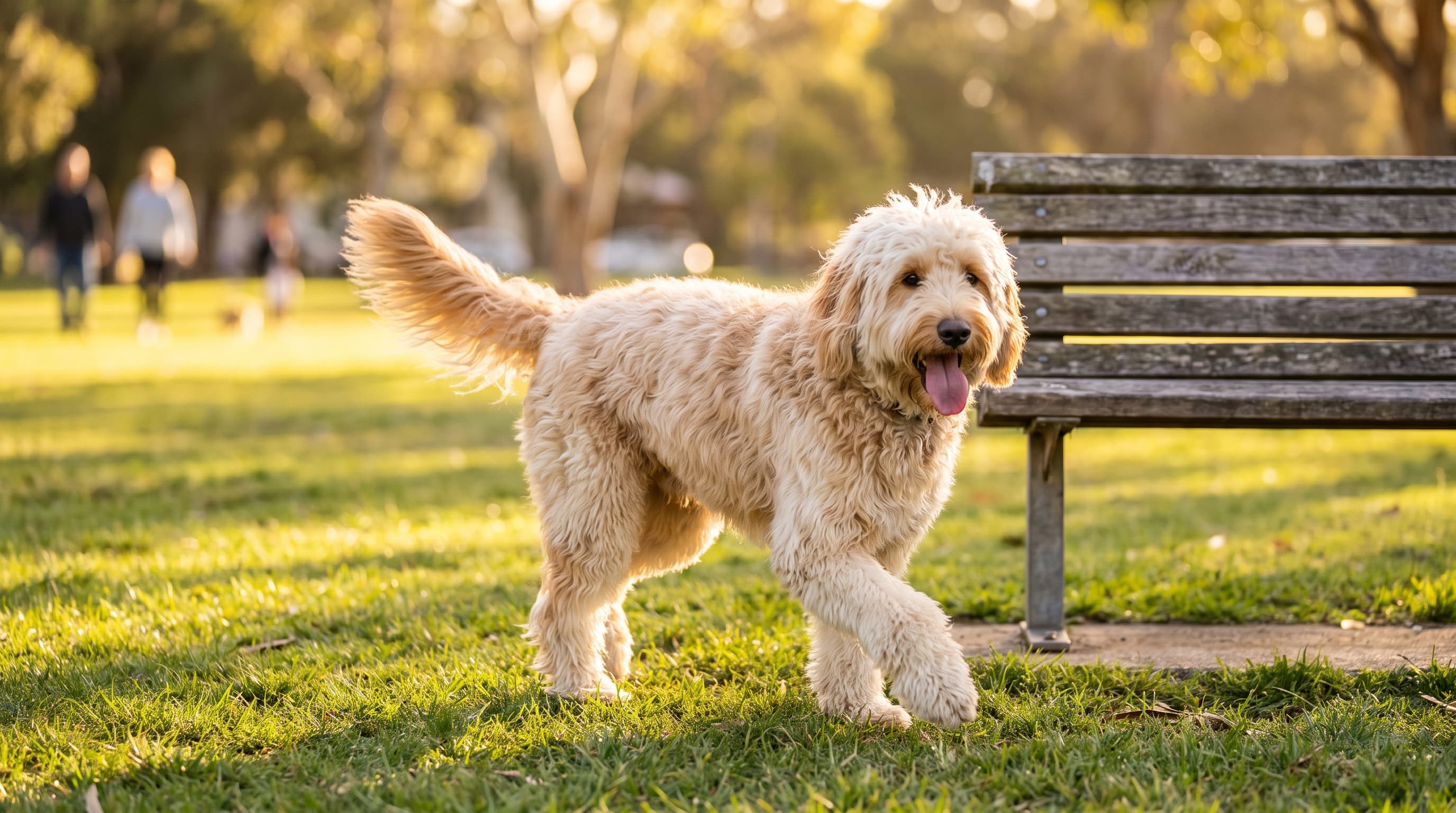

Full Grown Mini Goldendoodle: Adult Size, Weight, and Growth Guide
A full grown mini goldendoodle typically weighs 15 to 35 pounds and stands 13 to 20 inches tall at the shoulder. Most reach their adult height by 9 to 11 months and finish filling out in weight between 11 and 14 months, with the largest individuals still adding muscle until 18 to 24 months. Final size depends on generation, parent weights, and sex.
How Big Is a Full Grown Mini Goldendoodle?
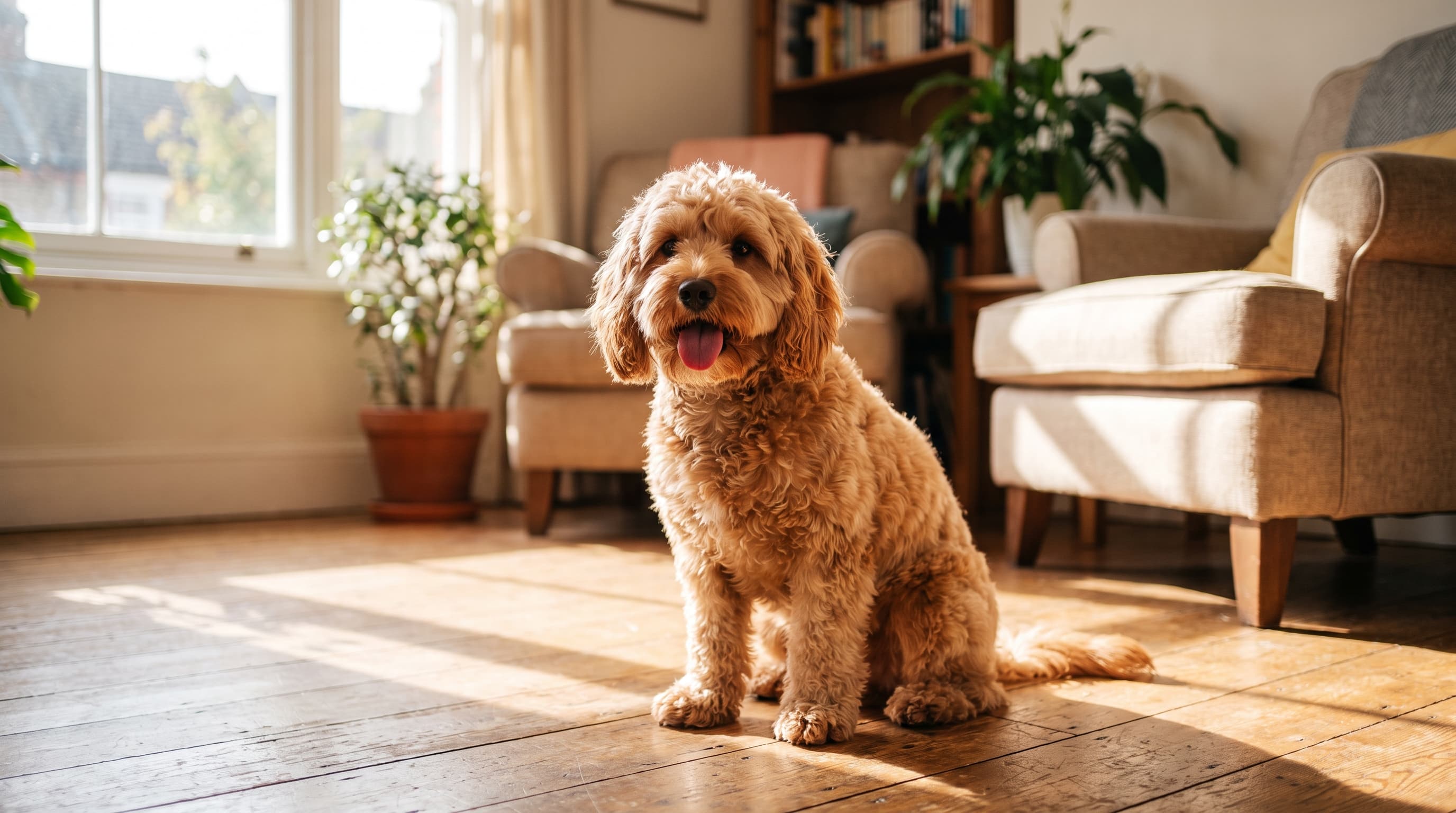
The mini goldendoodle is a cross between a Golden Retriever and a Miniature Poodle, bred specifically to land in a compact-but-sturdy size bracket. Once mature, the typical adult weighs roughly 15 to 35 pounds and measures 13 to 20 inches from the floor to the top of the shoulder (the withers). According to the A-Z Animals mini goldendoodle size chart, this range covers the vast majority of dogs in the category, though lighter "petite" lines and heavier individuals do exist at either end.
It helps to picture the breed in real-world terms: a full grown mini goldendoodle is usually about the size of a Cocker Spaniel or a small Border Collie. Big enough to keep up on a hike, small enough to scoop onto the couch or tuck under a cafe table. That middle-of-the-road build is a large part of why the cross has become one of the most popular doodle sizes in North America.
Keep in mind that "mini" describes a target range rather than a guarantee. Because the cross relies on two different purebreds, even a single litter can produce dogs that span several pounds and a couple of inches once grown. Reputable breeders will share the adult weights of both parents and the size of previous litters, which is the most honest preview of where your puppy is likely to land at maturity.
Adult Weight and Height Range (Male vs Female)
Within the overall band, sex creates a predictable split. Drawing on the growth data compiled by Dogster's mini goldendoodle growth chart, the typical breakdown looks like this:
- Males: roughly 20 to 35 pounds and about 15 to 20 inches tall.
- Females: roughly 15 to 30 pounds and about 13 to 18 inches tall.
The difference is real but modest: an adult male usually carries a few extra pounds and an inch or two of height over a female from the same litter. That said, generation and parent size routinely outweigh sex as a predictor, so a female from large parents can easily finish bigger than a male from petite lines. If your dog falls outside these ranges, that is not automatically a problem, but it is worth a quick conversation with your veterinarian about individual growth and weight concerns.
Mini Goldendoodle Growth Chart by Age
Puppies grow fastest in their first six months, then taper. Mini goldendoodles gain roughly 2 to 4 pounds per month during the peak window between 8 weeks and 6 months. The figures below are typical midpoints for a dog headed toward an adult weight near 25 pounds; scale them up or down for larger or smaller lines.
- 8 weeks: about 4 to 6 pounds.
- 3 months: about 8 to 12 pounds (often close to half of adult weight).
- 6 months: about 15 to 22 pounds, with most adult height already reached.
- 9 to 11 months: height growth essentially complete.
- 12 to 14 months: adult weight reached for most dogs.
- 18 to 24 months: final muscle and "filling out" finishes in larger individuals.
A handy rule of thumb borrowed from the Canine Journal mini goldendoodle growth chart: a mini goldendoodle is often near half its adult weight by around four months old. Double the four-month weight for a rough adult estimate, then sanity-check it against the parents.
When Do Mini Goldendoodles Stop Growing?
Most mini goldendoodles stop getting taller between 9 and 11 months, when the growth plates in the long bones close. They typically reach their adult weight between 11 and 14 months. After that, any visible change is usually muscle tone and coat volume rather than skeletal growth. The largest individuals, or those on the bigger end of the F1 spectrum, may keep adding a little muscle until 18 to 24 months. As a general guide, A-Z Animals notes that a mini goldendoodle is at or very near full size by about two years of age, with very little change afterward.
Coat development can make a fully grown dog look like it is still "growing." The fluffy adult coat that drives so many popular goldendoodle haircuts fills in over the first year and a half, which can add visual bulk long after the dog's frame has finished. Wondering how long you will enjoy that full-grown companion? See our deep dive on goldendoodle lifespan for the typical 12 to 16 year range.
F1 vs F1B Generation: Does It Change Adult Size?
Generation labels describe the genetic mix, and they nudge adult size because they change how much Poodle is in the blend.
- F1 (first generation): 50% Golden Retriever, 50% Miniature Poodle. These dogs often land toward the middle and upper end of the mini range and are the least predictable in size, since they can favor either parent.
- F1B (backcross): an F1 bred back to a Miniature (or Toy) Poodle, making the dog about 75% Poodle. F1Bs frequently finish a touch smaller and curlier, and they are the most popular choice for low-shedding households.
- F2 and multigen: sizes vary with the specific parents used, but breeders increasingly use multigen pairings to tighten size consistency.
The biggest single predictor is still the actual weight of the two parents, especially the Poodle. A mini goldendoodle bred from a 12-pound Toy-leaning Poodle will finish smaller than one from a 22-pound Miniature Poodle, regardless of the generation label. If shedding is your priority, the higher-Poodle F1B is also worth pairing with our guide on how to reduce dog shedding.
Factors That Affect Final Adult Size
Several variables push a mini goldendoodle toward the top or bottom of the range:
- Parent size: the strongest predictor. Average the parents' adult weights for a reasonable midpoint estimate.
- Generation: higher Poodle percentage (F1B) tends to trend slightly smaller and curlier.
- Sex: males average a few pounds and an inch over females.
- Nutrition: a complete, life-stage-appropriate diet supports healthy, steady growth; overfeeding adds fat, not frame.
- Spay/neuter timing: very early alteration can subtly affect growth-plate closure; ask your vet what is right for your dog.
- Genetics and luck: littermates can still finish at different sizes.
Mini vs Toy, Medium, and Standard Goldendoodles
The mini sits in the second tier of the four common goldendoodle sizes. Using the size tiers described by PremierPups' goldendoodle size guide and the categories from the Goldendoodle Association of North America, the lineup generally looks like this:
- Toy / Petite: roughly 10 to 20 pounds, under about 14 inches.
- Mini (Miniature): roughly 15 to 35 pounds, about 13 to 20 inches.
- Medium: roughly 30 to 45 pounds, about 17 to 21 inches.
- Standard: roughly 45 to 90 pounds, about 20 to 24 inches and up.
Ranges overlap at the edges because breeders use different Poodle sizes, so a large mini and a small medium can be nearly identical. If you love the doodle look but want a slightly different size or temperament profile, the closely related labradoodle comes in a comparable spread of sizes.
Frequently Asked Questions
How much does a full grown mini goldendoodle weigh?
Most full grown mini goldendoodles weigh between 15 and 35 pounds. Males typically land around 20 to 35 pounds and females around 15 to 30 pounds, with parent size and generation being the biggest factors.
How tall is a full grown mini goldendoodle?
Adults usually stand 13 to 20 inches at the shoulder. Females tend toward 13 to 18 inches and males toward 15 to 20 inches.
At what age is a mini goldendoodle full grown?
Most reach adult height by 9 to 11 months and adult weight by 11 to 14 months. Larger individuals keep filling out with muscle until 18 to 24 months, and are essentially full size by age two.
Are male or female mini goldendoodles bigger?
Males average slightly bigger, usually a few pounds heavier and an inch or two taller than females from the same line. However, parent weight and generation often matter more than sex.
Do F1B mini goldendoodles stay smaller than F1?
Often, yes, by a small margin. Because an F1B is backcrossed to a Miniature or Toy Poodle, it carries more Poodle genetics and frequently finishes a bit smaller and curlier, though the actual parent sizes still drive the final result.
How can I predict my mini goldendoodle's adult size?
Average the two parents' adult weights for a rough midpoint, or double your puppy's weight at about four months. For individual growth or weight concerns, check with your veterinarian, who can assess your specific dog.
Bring Home the Right Doodle
Now that you know what a full grown mini goldendoodle looks like, dig deeper into the breed with our complete goldendoodle breed guide, or compare it head-to-head with the equally lovable labradoodle to find your perfect match. Love practical dog content like this? Subscribe to the Daily Wag newsletter for size guides, grooming tips, and breed deep-dives delivered straight to your inbox.