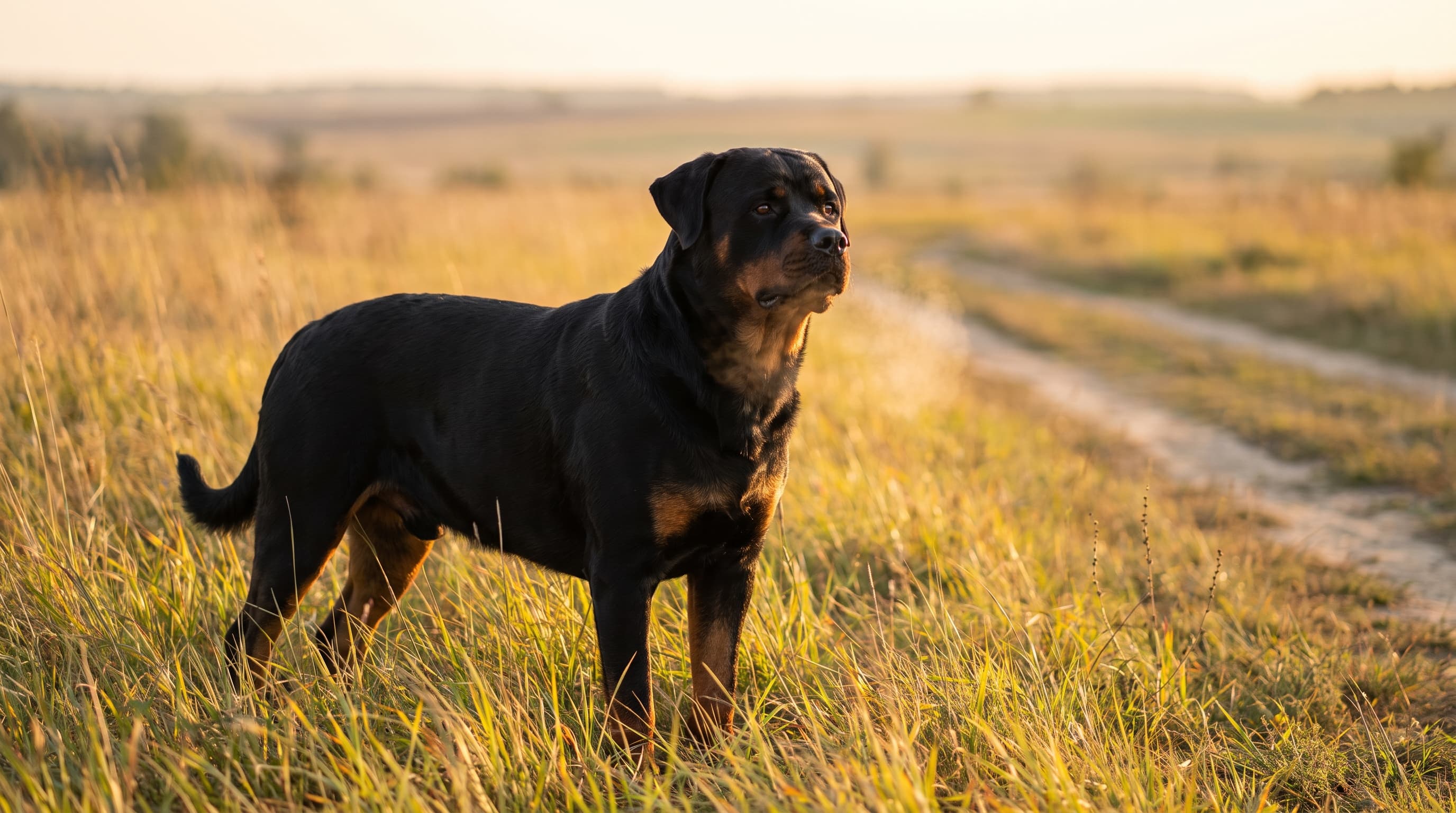

The Roman Rottweiler is an oversized, mastiff-type version of the standard Rottweiler — not a separate breed, but a larger dog bred to echo the ancient drovers that marched with the Roman legions. Males can reach 24–30 inches and 95–130 pounds, pairing an imposing, blocky frame with the calm, loyal, protective temperament Rottweiler lovers prize.
If you've searched for a bigger, more "old-world" Rottweiler, you've probably run into the Roman Rottweiler. It's one of the most misunderstood terms in the dog world — part history, part marketing, and part genuine size difference. Here's an honest, breed-savvy look at what a Roman Rottweiler actually is, how it compares to the Rottweiler you already know, and whether one belongs in your home.
What Is a Roman Rottweiler?
The Roman Rottweiler is a name given to extra-large Rottweilers bred to resemble the breed's ancient mastiff-type ancestors. Importantly, it is not a distinct breed recognized by major registries. As Dogster explains, the Roman Rottweiler is essentially an extra-large version of the Rottweiler rather than a separate line with its own standard. The American Kennel Club recognizes one Rottweiler, describing it as a robust working breed descended from the mastiffs of the Roman legions — and that shared heritage is exactly what "Roman" breeders lean into.
The name nods to history: as Roman armies moved across Europe, their cattle-driving dogs are believed to be ancestors of the modern Rottweiler. "Roman Rottweiler" breeders aim for that larger, more imposing look. The catch is that because there's no official standard, size, structure, and health can vary a lot from breeder to breeder.
Roman Rottweiler vs. German and American Rottweilers
The main difference is size. A Roman Rottweiler is bred to be taller and heavier than the breed standard calls for, with some dogs reaching 30 inches at the shoulder and well over 100 pounds. By contrast, German Rottweilers are bred to a strict standard emphasizing correct proportion and working ability, while American Rottweilers follow the AKC standard.
Think of it as a spectrum of size and type rather than three separate breeds. A "German" Rottweiler prioritizes standard conformation and temperament; a "Roman" Rottweiler prioritizes mass and a mastiff-like presence. Neither the Roman nor the oversized type is a recognized breed, and responsible breeders warn that chasing extreme size can compromise health if it's done carelessly. For comparison with other powerful guardians, our guide to the Cane Corso covers a similar large-molosser temperament and care profile.
Roman Rottweiler Size, Appearance, and Coat
Roman Rottweilers are large to giant dogs. Males commonly stand around 24–30 inches and weigh roughly 95–130 pounds, with females somewhat smaller at about 85–115 pounds. They carry the classic Rottweiler look on a bigger canvas: a broad, blocky head, muscular body, and confident carriage.
The coat is the same short, dense, straight double coat as a standard Rottweiler, in the signature black with clearly defined rust or mahogany markings over the eyes, on the cheeks, chest, and legs. Grooming is refreshingly simple — a weekly brushing keeps shedding manageable, with heavier seasonal sheds a couple of times a year. Their easy coat is one reason many big-dog lovers gravitate to the breed. If you like the color pattern but want a different build, the closely related Greater Swiss-Rottweiler mix and other Rottweiler crosses show how versatile the type can be.
Roman Rottweiler Temperament and Trainability
Despite the intimidating size, a well-bred, well-raised Roman Rottweiler is calm, confident, and deeply devoted to its family. The breed is typically described as protective, intelligent, watchful, and steady — loving and gentle with its people while remaining naturally reserved toward strangers. That guardian instinct is a feature, not a bug, but it makes early socialization and consistent training essential.
These are smart, sensitive dogs that respond best to confident, reward-based leadership. Start socialization early and keep it going: introduce your puppy to many people, dogs, sights, and sounds so that its watchfulness stays balanced. Because of their size and strength, Roman Rottweilers are best suited to owners who can commit to structure and training. Done right, they're famously affectionate — and often surprisingly good family dogs, a trait they share with other steady giants like the Bullmastiff. If you're weighing a big guardian breed for a household with children, our list of the best dogs for families with kids offers useful context on matching temperament to home life.
Roman Rottweiler Health and Lifespan
Roman Rottweilers generally live about 8–12 years, and some sources put the range at 10–14 years for well-bred individuals; giant dogs tend toward the shorter end of the scale. Because they're bred for extreme size, buyers should be especially careful about health, since pushing for mass can amplify orthopedic and other problems if breeders cut corners.
Health issues to be aware of include:
- Hip and elbow dysplasia: Large, heavy dogs are prone to joint malformation. The AKC notes hip dysplasia is especially common in large breeds and is best managed with healthy weight, appropriate exercise, and veterinary guidance.
- Bloat (gastric dilatation-volvulus): Deep-chested giants are at elevated risk for this fast-moving emergency. The AKC recommends smaller, more frequent meals and slow-feeders to help reduce the risk.
- Osteochondritis dissecans (OCD): A joint-cartilage condition seen in fast-growing young large-breed dogs.
- Heart conditions and cancer: Rottweilers as a whole have a higher-than-average incidence of certain heart problems and cancers, so regular veterinary checkups matter.
- Obesity and entropion: Weight control is critical for joint health, and entropion (an inward-rolling eyelid) can occur.
The best protection is a responsible breeder who health-tests parent dogs (hips, elbows, heart, eyes) and doesn't sacrifice soundness for size. Always consult your veterinarian about screening and preventive care for a specific dog.
Exercise, Care, and Is a Roman Rottweiler Right for You?
Giant breeds are often calmer indoors than their size suggests, and Roman Rottweilers typically do well with roughly 30–60 minutes of daily activity: walks, structured play, training games, and safe space to move. Mental work — obedience, scent games, puzzle feeders — is just as important as physical exercise for this intelligent breed. Avoid over-exercising puppies while their joints are still developing.
A Roman Rottweiler suits an experienced owner with room for a big dog, time for training and socialization, and a budget for the higher food, veterinary, and equipment costs a giant breed brings. Because they're harder to find and bred for size, purpose-bred Roman Rottweilers can be pricey; adoption through Rottweiler rescues is a worthwhile route to consider. If you can meet the commitment, you get a loyal, level-headed guardian with a heart as big as its frame.
The History Behind the "Roman" Name
The Roman label is a nod to the breed's deep roots. The Rottweiler's ancestors are widely believed to descend from the drover and guardian dogs that traveled with Roman legions, driving and protecting the cattle that fed the army on long campaigns across Europe. When those armies reached the region of what is now Rottweil, Germany, the dogs stayed and evolved into the "Rottweiler Metzgerhund," or butcher's dog — pulling carts and guarding livestock and money.
"Roman Rottweiler" breeders invoke that mastiff-heavy ancestry to justify breeding for a larger, more ancient-looking dog. It's a compelling story, and there's real history behind it. But it's worth remembering that the modern Rottweiler was refined into a standardized working breed precisely to balance size, soundness, and temperament. Chasing the biggest possible dog can drift away from that hard-won balance, which is why reputable breeders focus on health and structure first and let size fall where it may.
Feeding and Cost of a Giant Rottweiler
Feeding a 100-plus-pound dog is a real commitment. Roman Rottweilers do best on a high-quality, large- or giant-breed formula appropriate for their life stage, fed in measured portions to prevent the rapid growth and excess weight that stress developing joints. Because bloat is a concern, most experts recommend splitting the daily ration into two or more smaller meals rather than one large one, and discouraging vigorous exercise right after eating.
Beyond food, budget for larger crates, beds, and gear, plus higher doses of preventives and medications that are priced by weight. Purpose-bred Roman Rottweilers from size-focused breeders can command premium prices and are harder to find, so factor in both the upfront cost and the lifelong expense of caring for a giant-breed dog before you commit.
Frequently Asked Questions
Is a Roman Rottweiler a real breed?
No. It's a marketing and descriptive term for oversized, mastiff-type Rottweilers, not a breed recognized by the AKC or other major registries. It's still a Rottweiler — just bred larger than the standard.
How big does a Roman Rottweiler get?
Males often reach about 24–30 inches tall and 95–130 pounds, with females typically 85–115 pounds — noticeably larger than a standard Rottweiler.
Are Roman Rottweilers good family dogs?
A well-bred, well-socialized Roman Rottweiler is usually calm, loyal, and affectionate with its family. Their size and guarding instincts mean they need early socialization, training, and supervision around young children.
How long do Roman Rottweilers live?
Typically around 8–12 years, with some well-bred dogs reaching into their teens. As with most giant breeds, larger size tends to correlate with a somewhat shorter lifespan.
What health problems do Roman Rottweilers have?
Common concerns include hip and elbow dysplasia, bloat, OCD, heart conditions, cancer, and obesity. Choosing a breeder who health-tests parents and keeping your dog at a healthy weight are the best safeguards.
Are Roman Rottweilers aggressive?
Not inherently. They're protective and reserved with strangers by nature, but a stable, well-socialized Roman Rottweiler is calm and controlled. Temperament depends heavily on breeding, socialization, and training.
Love big, loyal guardian breeds? Keep exploring with our Cane Corso breed guide and our Bullmastiff profile, and subscribe to the Daily Wag newsletter for breed guides, training tips, and dog-care advice delivered to your inbox.