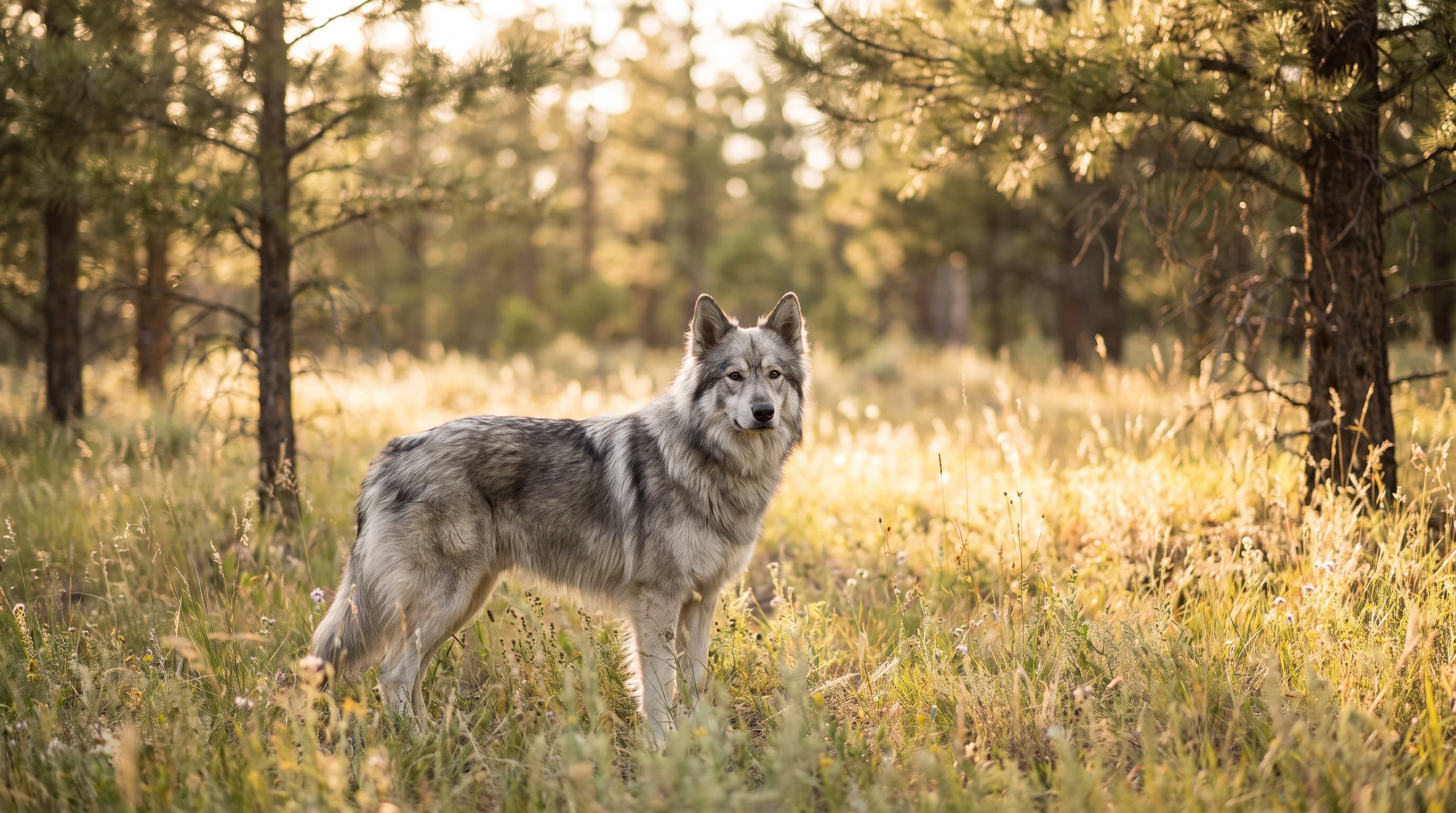

The Native American Indian Dog: A Complete Breed Guide
The native american indian dog (NAID) is a modern American breed developed in the mid-1990s to recreate the wolf-like look of pre-Columbian indigenous dogs. Large, striking, and coyote-to-wolf in appearance, it is prized for being intelligent, loyal, sensitive, and gentle with children. Despite the name, its claimed indigenous ancestry is genuinely disputed, and it is not a wolf hybrid.
Below, we cover where the breed really comes from, how big it gets, what it is like to live with, and how to decide whether one belongs in your home. We also address the ancestry controversy honestly, because it matters to the Native communities the breed is named after.
Origin and history
The Native American Indian Dog as we know it today is a recent creation, not an ancient survivor. The name was trademarked in the mid-1990s by Karen Markel of Majestic View Kennels, and the breeding program set out to recreate the appearance and versatility of the dogs kept by Native American peoples before European contact. Earlier, related preservation efforts also shaped the story: breeder Kim La Flamme spent decades traveling to reservations from Canada to Mexico, searching for dogs that most closely resembled old native dogs to build his lines.
Because the modern breed was assembled from several primitive and northern-type dogs, its exact foundation stock is not fully documented. The result is a dog designed to look like a romanticized image of an indigenous camp dog, rather than one with a proven, unbroken line back to those animals.
The disputed-ancestry question, handled honestly
This is the part of the breed's story that deserves care. Genetic research has repeatedly shown that the original dogs of the Americas were largely wiped out after European colonization. As documentation of Native American dogs makes clear, most pre-Columbian breeds are now extinct and were mostly replaced by dogs of European descent, with only a handful of Arctic and southern lineages retaining much of their ancient DNA.
That history is why many tribal dog historians and Native community members dispute the idea that any modern kennel could "recreate" an authentic indigenous breed. Even breed-reference sources note the criticism directly: skeptics argue the original dogs cannot be reconstructed and that the NAID reflects a modern, wolf-flavored fantasy of Native culture more than a documented working dog. Some Native people have objected to the use of "Native American Indian" in a trademarked breed name at all.
None of this makes the NAID a bad dog or its owners bad people. It simply means the honest framing is this: the Native American Indian Dog is a beautiful modern breed inspired by indigenous dogs, not a verified descendant of them. Buyers who care about Native communities should treat marketing claims of ancient bloodlines with healthy skepticism.
Appearance and size
The NAID's calling card is its wolf-like look: a lean, athletic frame, upright pointed ears, a thick double coat, a bushy tail, and an intense, watchful gaze. Coats commonly appear in silver, gray, black, white, tan, and cream, often in agouti or mixed shadings that heighten the wild appearance.
Size varies widely, and there is notable difference between the sexes. Breed profiles describe males standing roughly 23 to 34 inches and females considerably smaller, with weight generally ranging from about 45 to 120 pounds depending on sex and line. In practice, most NAIDs read as large dogs, and prospective owners should plan for a big, powerful animal rather than a medium one.
Temperament and personality
Under the wild exterior, the NAID is typically a soft, people-focused dog. Owners and breed profiles consistently describe them as highly intelligent, eager to please, deeply loyal, and unusually sensitive to their humans' moods. They tend to bond hard with their family, often shadowing one person around the house.
That sensitivity is a double-edged trait. NAIDs generally do well with children and other animals and are frequently called "gentle giants," but they can become anxious, vocal, or destructive if isolated or left alone for long stretches. They also tend to be reserved or watchful with strangers until properly socialized, which makes early, positive exposure important. This is a dog that wants a job and a family, not a backyard ornament.
Are Native American Indian Dogs wolf hybrids?
No. This is the single most common misconception about the breed, and the answer is important for both safety and legality. Despite the wolfish silhouette, reputable breed sources are explicit that these dogs are not wolf hybrids. They are domestic dogs selectively bred for a wild appearance, not animals crossed with wolves.
The distinction has real consequences. Wolf hybrids are restricted or banned in many jurisdictions and can carry rabies-vaccine and insurance complications; domestic dogs like the NAID generally do not face those specific legal hurdles. That said, because the modern breed was assembled from various primitive lines, buyers should still ask breeders directly about a dog's lineage and avoid any seller marketing recent wolf content.
Exercise, training, and space needs
The NAID is an intelligent, energetic working-type dog, and it needs a lifestyle to match. Plan on substantial daily exercise, long walks, hikes, running, and structured play, plus mental work such as scent games, training sessions, or dog sports. A bored NAID is an anxious, destructive NAID.
The good news is that their intelligence and desire to please make them very trainable. They respond best to calm, consistent, positive, reward-based methods and firm-but-gentle leadership; harsh corrections tend to backfire badly with such a sensitive breed. Early socialization and reliable recall training are especially valuable given their alertness and prey drive.
On space: this is not an apartment dog. NAIDs do best in a home with a securely fenced yard and room to move, ideally with an active owner or family. If you want a comparably athletic northern breed, our guides to the Alaskan Malamute and the Siberian Husky cover dogs with similar exercise and containment needs.
Health and lifespan
The NAID is often described as a relatively hardy breed with a long lifespan for its size, commonly cited in the range of roughly 14 to 19 years. As with any large, deep-chested dog, prospective owners should be aware of general concerns that affect many big breeds, including hip and joint issues, bloat (gastric torsion), and eye conditions. Responsible breeders should be transparent about the health of their lines and any screening they do.
Because the breed is not overseen by a major registry like the AKC, health-testing standards can vary a great deal from breeder to breeder, which makes doing your homework especially important. This section is general information only and is not veterinary advice; always consult a licensed veterinarian for guidance specific to your dog, and never start or change any treatment without professional input.
Grooming and shedding
The NAID carries a weather-resistant double coat, which means regular shedding and heavier seasonal "blowouts" twice a year. Weekly brushing keeps loose hair and tangles under control most of the year, stepping up to several times a week during heavy sheds. The coat is otherwise fairly low-maintenance and does not require clipping; routine care rounds out with nail trims, ear checks, and dental care. Owners who dislike dog hair should think twice, because this breed sheds.
Is this breed right for you, and where to find one
A Native American Indian Dog can be a wonderful companion for the right household: an active person or family with space, time, patience for training, and a willingness to keep a sensitive, velcro dog well-socialized and rarely alone. It is a poor fit for apartment dwellers, first-time owners looking for a low-effort pet, or anyone away from home for long workdays.
If you decide to move forward, be aware that the breed is not recognized by the American Kennel Club; recognition comes instead from smaller registries such as the dedicated NAID registry and the Continental Kennel Club. Because oversight is limited, choose breeders carefully: look for health transparency, in-person visits, contracts, and honest answers about lineage, and be skeptical of anyone selling romanticized ancestry claims. Rescue and rehoming are also worth exploring. Expect prices from roughly $1,000 to $2,500, with many breeders quoting figures in the $1,500 to $2,000 range. If you love the look but want a large, protective, primitive-type dog with more established breed infrastructure, our Akita and German Shepherd guides are good next reads.
Frequently asked questions
Is the Native American Indian Dog part wolf?
No. Despite the wolf-like appearance, the NAID is a domestic dog bred selectively for that look, not a wolf hybrid. Reputable breed sources state plainly that these dogs are not crossed with wolves, which also keeps them clear of the legal restrictions that apply to true wolfdogs in many areas.
Is the Native American Indian Dog recognized by the AKC?
No. The breed is not recognized by the American Kennel Club. It is instead recognized by smaller organizations, including a dedicated NAID registry and the Continental Kennel Club, which means breed standards and health-testing requirements are less standardized than for AKC breeds.
How big do Native American Indian Dogs get?
They are large dogs. Height commonly runs from about 23 to 34 inches and weight from roughly 45 to 120 pounds, with males typically much larger than females. Most owners should plan for a big, powerful dog rather than a medium-sized one.
Are Native American Indian Dogs good family dogs?
Generally, yes, for the right family. They are intelligent, loyal, and known for being gentle with children and other animals when well socialized. However, they are sensitive and prone to separation anxiety, so they suit active households that can give them company, exercise, and training rather than long hours alone.
How much does a Native American Indian Dog cost?
Prices typically fall between about $1,000 and $2,500, with many breeders quoting the $1,500 to $2,000 range. Because oversight is limited, focus less on price alone and more on a breeder's health transparency, honesty about lineage, and willingness to let you visit.
Do Native American Indian Dogs shed?
Yes. They have a double coat and shed year-round, with heavier seasonal sheds twice a year. Weekly brushing keeps it manageable most of the time, increasing to several times weekly during coat-blowing season. They are not a good match for owners who want a low-shedding dog.
Related reading and next steps
Want to keep exploring wolf-like and northern breeds? Compare the NAID with two related breeds in our guides to the Alaskan Malamute and the Siberian Husky. And if you love deep dives like this one, subscribe to the Daily Wag newsletter for practical, respectful breed guides delivered to your inbox.