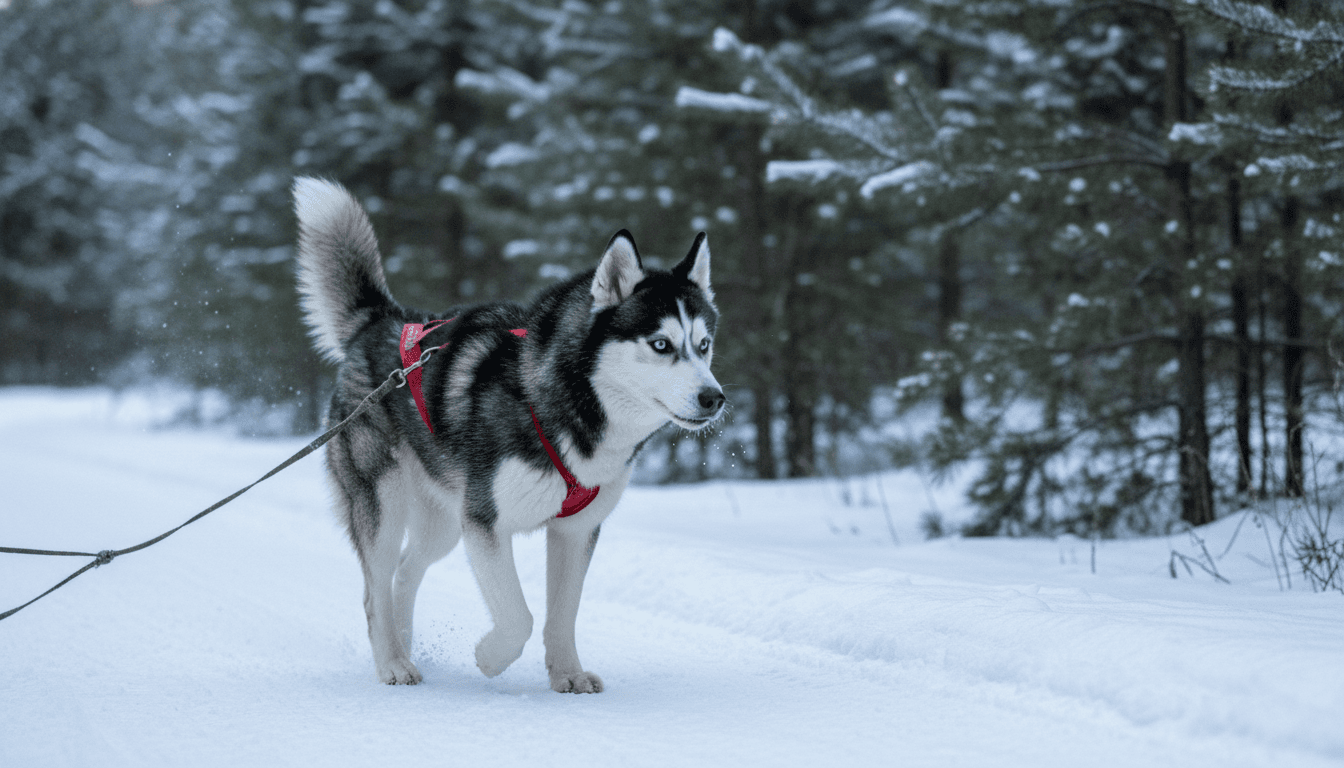

The Siberian Husky is a working dog first and a family pet second — and that distinction matters more than most breed guides admit. Developed over thousands of years by the Chukchi people of northeastern Siberia to haul light loads at speed across frozen tundra, the modern Husky weighs 35–60 pounds, stands 20–23.5 inches at the shoulder, and has a lifespan of 12–14 years. The AKC ranked the breed #30 in popularity in 2025, but the Husky's legendary escape artistry, intense daily exercise needs, and twice-yearly coat explosions make it one of the most demanding dogs in the Working Group. If you're thinking about adding one to your household, this guide covers everything from the 1925 serum run that made the breed famous to the realities of life with a dog that was genuinely built to run 100 miles a day.
Siberian Husky at a Glance
- Other names: Husky, Sibe
- Group: AKC Working Group (recognized 1930)
- Weight: Males 45–60 lbs; Females 35–50 lbs
- Height: Males 21–23.5 inches; Females 20–22 inches at the shoulder
- Lifespan: 12–14 years
- Coat: Thick double coat — dense, soft undercoat; smooth, straight guard hairs on top
- Color: All colors from black to pure white; common patterns include black-and-white, red-and-white, gray-and-white, and sable
- Eyes: Brown, blue, or one of each (heterochromia); parti-colored eyes also accepted by breed standard
- Shedding: Heavy year-round; extreme twice a year ("blowing the coat")
- Energy level: Very high — bred to run long distances, every day
- Good with kids: Yes — gentle and tolerant, but supervise due to size and energy
- Good with other pets: Generally good with dogs; high prey drive toward small animals
- Apartment-friendly: No — needs a secure yard and 1–2 hours of vigorous daily exercise
- Trainability: Intelligent but independent; strong-willed and not always food-motivated
Origin: From Siberia to the 1925 Serum Run
The Siberian Husky is one of the oldest sled dog breeds in the world. The Chukchi people of northeastern Siberia developed the breed over thousands of years, optimizing for endurance and speed over brute strength — which is the key distinction between them and heavier freighting breeds like the Alaskan Malamute. The Chukchi also kept Huskies as family companions and allowed them to sleep with children for warmth, shaping the breed's famously social, people-oriented temperament.
In 1908, Siberian Huskies were imported to Alaska for sled racing and quickly dominated the All-Alaska Sweepstakes races. The AKC formally recognized the breed in 1930.
The moment that made the Siberian Husky a cultural icon came in January 1925. A diphtheria outbreak threatened the remote town of Nome, Alaska, with the nearest antitoxin serum 674 miles away. With storms grounding aircraft, officials organized a sled dog relay across Alaska: 20 mushers and approximately 150 sled dogs covered the distance in just 5.5 days. The lead dog on the final 55-mile leg, a Husky named Balto, became an overnight celebrity — his statue still stands in New York City's Central Park.
But most historians agree the greater hero was Togo, lead dog for musher Leonhard Seppala. Togo's team ran 261 miles through the most treacherous portion of the route, including a harrowing crossing of Norton Sound on unstable sea ice. Seppala later wrote, "I resented the statue to Balto, for if any dog deserved special mention, it was Togo." The Smithsonian called Togo the most heroic animal in Alaskan history.
Temperament: Social, Vocal, and Wonderfully Chaotic
If you want a calm, quiet dog who comes when called and stays in the yard, the Siberian Husky is not your breed. If you want a joyful, high-energy companion who treats every walk like a sprint and every stranger like a long-lost friend, you're on the right track.
With family: Huskies are affectionate and playful, eager to engage with everyone in the household. They're not a one-person dog. Most adore children and are gentle enough for family life — though their size and exuberance mean young toddlers should always be supervised.
With strangers: Friendly almost to a fault. The Siberian Husky is not a guard dog. They'll greet an intruder with the same enthusiasm they show the family. If protection is a priority, consider a German Shepherd instead.
With other dogs: Generally excellent, especially when well-socialized from puppyhood. Huskies were bred to work in packs and most coexist well with other dogs. Small pets — cats, rabbits, guinea pigs — are a different matter. The breed's strong prey drive makes these relationships a genuine management challenge, not something to be assumed away with training.
Vocalization: Huskies rarely bark, but they are not quiet. They howl — long, wolfish songs that carry across the neighborhood — and they "talk" with a distinctive woo-woo sound. This is charming to some owners and a dealbreaker for others. Be honest with yourself before committing.
Independence: Unlike the Border Collie or Australian Shepherd, which are wired to watch your face for cues, the Husky was bred to make autonomous decisions in the field. That intelligence works against recall training and makes the breed notoriously difficult to contain.
Exercise Needs: This Dog Was Built to Run
No section of this guide matters more for prospective Husky owners. These dogs were refined over generations to run 100 miles a day in Arctic conditions. The modern pet Husky still carries that engine.
Adult Huskies need a minimum of 1–2 hours of vigorous exercise every day. Not a leisurely walk — vigorous exercise. Running, hiking, off-leash play in a securely fenced area, bikejoring, canicross, skijoring. A 20-minute stroll around the block will not cut it. Without adequate physical and mental stimulation, Huskies become destructive, chronically vocal, and genuinely miserable — and they will make sure you know it through howling, chewing, and creative escapes.
What counts as exercise:
- Long off-leash runs in a fully secured, fenced area
- Running or cycling at a pace that genuinely challenges them
- Hiking — Huskies thrive on varied terrain and distance
- Sled dog sports: mushing, skijoring, canicross
- Structured training sessions and puzzle feeders to satisfy the mental component
Heat precautions: The double coat is engineered for subzero temperatures. In warm weather, walk during early morning and evening hours only, ensure access to shade and fresh water, and never leave a Husky in a parked car. Counterintuitively, never shave the double coat — it insulates against heat as well as cold, and shaving it disrupts thermoregulation while causing long-term coat damage.
Training: Smart, Stubborn, and a World-Class Escape Artist
The Siberian Husky is intelligent — that's not the training challenge. The problem is that they are independent thinkers who don't view cooperation as intrinsically rewarding. A Border Collie lives to please you. A Husky lives to run.
Recall is the most important and most difficult skill to train. A Husky off-leash in an unfenced area can cover miles before you finish saying "come." The prey drive is real — a squirrel, a cat, or a jogger can all trigger a chase response that overrides training in an instant. Most experienced Husky owners keep them on leash or in a securely fenced yard at all times, without exception.
Fence requirements: Huskies are extraordinary escape artists — they dig under fences, climb over barriers, and find gaps in containment that wouldn't occur to most other breeds. The minimum effective fence height is 6 feet, and it should extend below ground to prevent digging. Bury the base with L-footers or dig guards. Training alone will not override this drive.
What works:
- Positive reinforcement with high-value rewards — find what motivates your individual dog (real meat often works when commercial treats don't)
- Short, varied sessions of 5–10 minutes, multiple times a day — long sessions cause a Husky to disengage
- Early socialization between 8 and 16 weeks: expose puppies to varied people, dogs, sounds, and environments
- Manage the prey drive; don't assume you can train it away with small household animals
Grooming: Surviving Blow Season
The Siberian Husky's double coat is beautiful, functional, and a year-round source of fur on every surface you own. Plan your grooming routine around two distinct phases.
Normal periods: Brush 2–3 times per week with an undercoat rake or wide-toothed metal comb to remove loose fur and prevent mats. The coat sheds moderately but constantly.
Blow coat season: Twice a year — typically spring and fall — Huskies shed their entire undercoat in a 3–6 week eruption. During this period, daily brushing is essential. Many owners use a high-velocity dryer to blow loose fur out of the coat before brushing, which dramatically reduces the time needed and the fur distributed around the house.
Bathing: Only twice a year, timed with the seasonal shedding. Huskies are famously clean dogs — they groom themselves like cats and rarely develop a strong odor. Overbathing strips the coat's natural oils and leads to skin issues.
Other basics: Trim nails every 3–4 weeks; check ears weekly for redness or odor; brush teeth at least 2–3 times per week.
Health: What Every Siberian Husky Owner Should Know
Siberian Huskies are generally a healthy, resilient breed — a product of their working heritage and generations of pragmatic breeding. But the breed carries several specific conditions worth knowing before you commit.
- Hereditary cataracts: The most common eye condition in the breed, estimated to affect approximately 10% of Siberian Huskies. Juvenile cataracts can begin developing in dogs as young as 6 months. They impair vision but are surgically treatable. Reputable breeders conduct annual CAER (Companion Animal Eye Registry) exams on breeding dogs.
- Progressive retinal atrophy (PRA): An inherited degenerative disease of the retina that is sex-linked in Huskies and more common in males. The first sign is typically night blindness, which can progress to full vision loss. DNA testing is available; ask breeders for results.
- Hip dysplasia: Malformation of the hip joint that causes pain, lameness, and eventual arthritis. Less prevalent in Huskies than in many large breeds, but present in the population. The OFA maintains breed-specific statistics; any responsible breeder should provide OFA hip evaluations on both parents.
- Epilepsy: Idiopathic epilepsy occurs in the breed, typically first presenting between 6 months and 5 years of age. Affected dogs can usually be managed with medication and live full lives.
- Zinc-responsive dermatosis: A breed-characteristic skin condition seen almost exclusively in Nordic breeds — Siberian Huskies and Alaskan Malamutes especially. According to VCA Animal Hospitals, it results from an inherited inability to absorb zinc properly from the GI tract, causing crusting and scaling around the eyes, muzzle, and pressure points. Treatable with zinc supplementation, often lifelong.
Average lifespan is 12–14 years. Annual CAER eye exams, maintaining a healthy weight, and choosing a breeder who health-tests their lines are the most effective investments in long-term health.
Nutrition: Feeding an Arctic Athlete
Siberian Huskies have an unusual metabolic efficiency — their bodies burn calories more economically than most dogs of comparable size, a trait refined over generations when food was scarce in the Arctic. This means they typically need less food than you'd expect for a 35–60 pound dog.
Most adults do well on 2 to 2.5 cups of high-quality dry food per day, split into two meals, with a protein content of 22–28%. Highly active dogs — those running, hiking, or participating in dog sports regularly — may need more. Adjust based on body condition: you should be able to feel ribs easily beneath a thin fat layer and see a clear waist tuck from above.
A heavy Husky puts extra strain on joints, is less able to thermoregulate effectively, and is significantly less happy. The breed's efficient metabolism means extra calories accumulate quickly; overfeeding is a common mistake, especially in sedentary households.
Is the Siberian Husky Right for You?
The Husky is a genuinely great dog — in the right situation. The wrong situation is one of the most common mismatch stories in dog ownership, because a bored, under-exercised Husky in an inadequate yard will make every member of the household regret the decision.
A Siberian Husky is a great fit if you:
- Run, hike, bike, or exercise vigorously and want a canine partner
- Have a securely fenced yard with 6-foot fencing and buried dig guards
- Have experience with independent, strong-willed dogs
- Don't mind regular vacuuming and twice-yearly fur explosions
- Are home enough to provide meaningful daily exercise and interaction
- Find howling and "talking" charming rather than maddening
A Siberian Husky is a poor fit if you:
- Want a dog you can trust off-leash in open spaces
- Have cats, rabbits, or other small pets
- Work long hours and can't provide 1–2 hours of daily vigorous exercise
- Live in an apartment or lack access to a secure outdoor space
- Have neighbors who won't tolerate occasional howling
- Need a dog that's eager to please and easy to train
Finding a Siberian Husky
Three paths exist to adding a Husky to your life.
1. Reputable breeders. The Siberian Husky Club of America (SHCA) maintains a breeder referral directory. A responsible breeder will health-test for hereditary cataracts (annual CAER exams), hip dysplasia (OFA evaluation), and PRA (DNA test), welcome you to meet the mother and see where puppies are raised, ask you as many questions as you ask them, and commit to taking the dog back at any point in its life. Expect to pay $600–$1,500 for a well-bred pet-quality puppy; show-quality dogs run higher. Wait lists of several months are normal with the best breeders.
2. Breed-specific rescue. Siberian Huskies are among the most frequently surrendered breeds — precisely because many owners underestimate their needs. Dedicated rescue organizations include the SHCA-affiliated rescue network and regional Husky rescues nationwide. Adult dogs come with known temperament histories and established house manners; adoption fees typically run $100–$400.
3. Shelters. Huskies and Husky mixes appear frequently in general shelters, especially in spring. Search Petfinder or Adopt-a-Pet for Husky mixes in your area if a pedigree isn't a priority.
Siberian Husky FAQ
How much exercise does a Siberian Husky need?
Adult Siberian Huskies need a minimum of 1–2 hours of vigorous exercise every day — not leisurely walks, but running, hiking, cycling, or active play in a securely fenced space. Without it, they become destructive, vocal, and chronically restless. This is the single most important consideration for anyone thinking about owning a Husky.
Are Siberian Huskies good family dogs?
Yes — in an active family that can meet their exercise needs. Huskies are gentle, affectionate, and excellent with children. They're not aggressive or possessive, and they do well in multi-dog households. The caution is with small pets (cats, rabbits, small dogs), where the prey drive is a genuine risk, and with very young toddlers, where size and exuberance warrant supervision.
Do Siberian Huskies shed a lot?
Yes — considerably. Huskies shed year-round and "blow" their undercoat twice a year, typically spring and fall, in a 3–6 week shedding surge that produces remarkable quantities of fur. Daily brushing is needed during blow coat season; 2–3 times per week the rest of the year. If constant vacuuming and fur on every surface is something you can't tolerate, this is not the breed.
Can Siberian Huskies live in warm climates?
Yes, with precautions. Huskies adapt to warm climates better than their Arctic reputation suggests, provided they have access to shade, fresh water, and air conditioning, and exercise is scheduled during cool morning and evening hours. Never shave the double coat — it provides insulation against heat as well as cold. Avoid walking on hot pavement, which burns paw pads.
Are Siberian Huskies easy to train?
They're intelligent but not compliant — a combination that frustrates many owners. Huskies learn quickly but don't feel a strong drive to please. Recall is the hardest skill: a Husky chasing something interesting will not reliably respond to a "come" command regardless of training level. Use positive reinforcement, keep sessions short and varied, and always use a leash or a 6-foot-fenced yard.
How long do Siberian Huskies live?
The typical lifespan is 12–14 years — on the longer end for a medium-large working dog. Annual CAER eye exams, maintaining a healthy weight, and prompt veterinary attention to any seizure activity or vision changes are the most impactful factors in longevity.
Is the Siberian Husky the same as an Alaskan Husky?
No. The Siberian Husky is a recognized AKC breed with a defined breed standard. The Alaskan Husky is a type, not a breed — a working sled dog with no formal standard, bred for pure performance by crossing Siberian Huskies with hounds and other dogs. The Alaskan Malamute is a separate AKC breed entirely — heavier and built for freight hauling rather than speed.
Why do Siberian Huskies have blue eyes?
Blue eyes in Siberian Huskies result from a genetic variant near the ALX4 gene on chromosome 18, which affects eye pigmentation independently of coat color. The AKC breed standard accepts brown, blue, or one of each (heterochromia), as well as parti-colored eyes — half blue and half brown in the same iris. Unlike in Dalmatians or some other breeds, blue eyes in Huskies are not linked to deafness.
The Bottom Line
The Siberian Husky is one of the most beautiful, historically significant, and genuinely athletic dogs in the world. The 1925 serum run that made the breed famous was proof of what these animals are capable of when their needs are met. That capability is exactly what makes them a challenging pet: a dog designed to run across frozen tundra doesn't downshift gracefully into a 20-minute walk around the block.
Own that reality going in, and a Husky is an extraordinary companion for the right household. Underestimate it, and you'll spend the next decade rebuilding fences, replacing furniture, and fielding howling complaints from the neighbors. If you're ready for the commitment, start with the Siberian Husky Club of America for breeder referrals and rescue contacts. If you're still deciding, spend a day with a friend's Husky first — the breed's personality reveals itself very quickly, and there's no substitute for that firsthand experience.