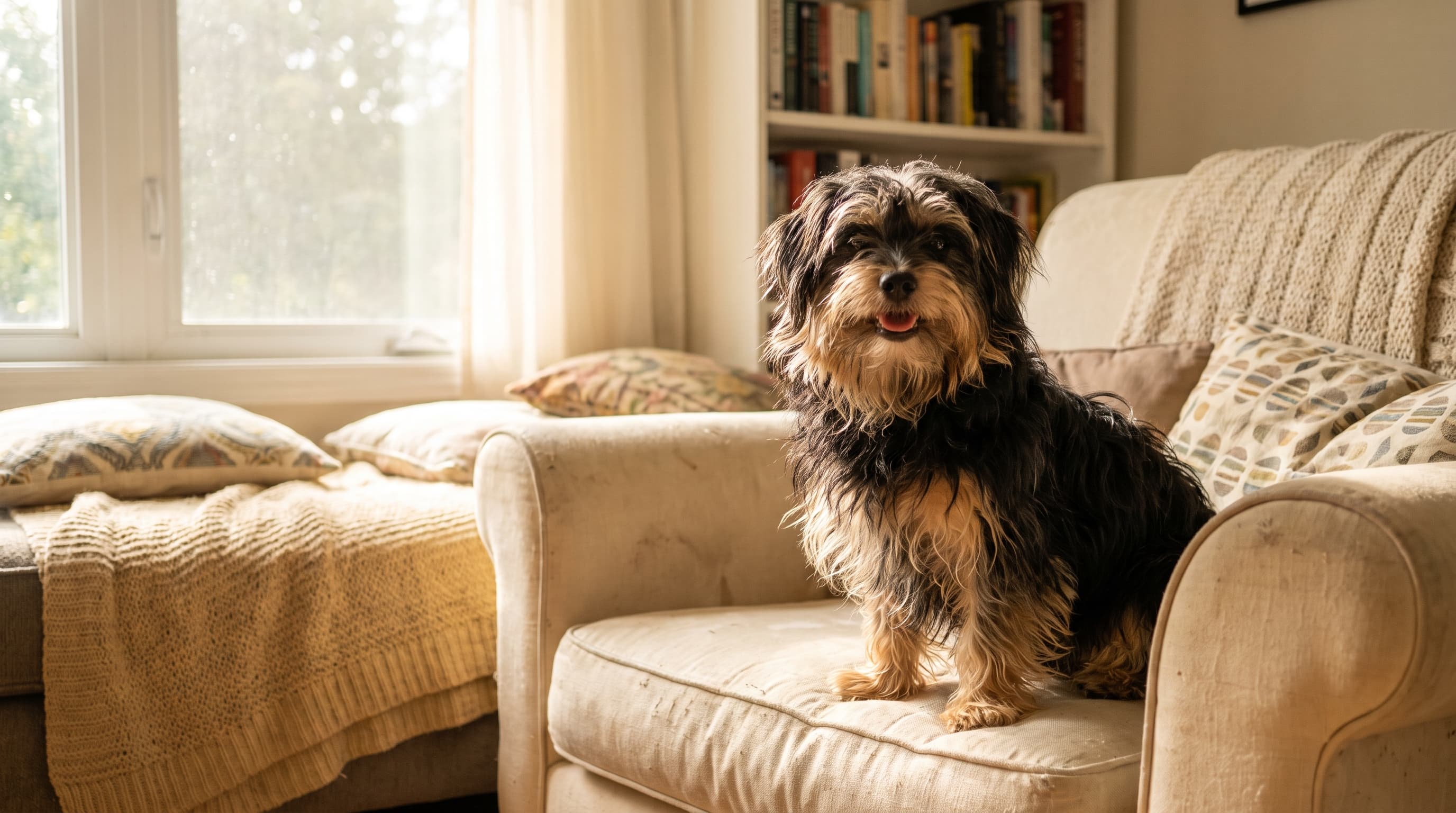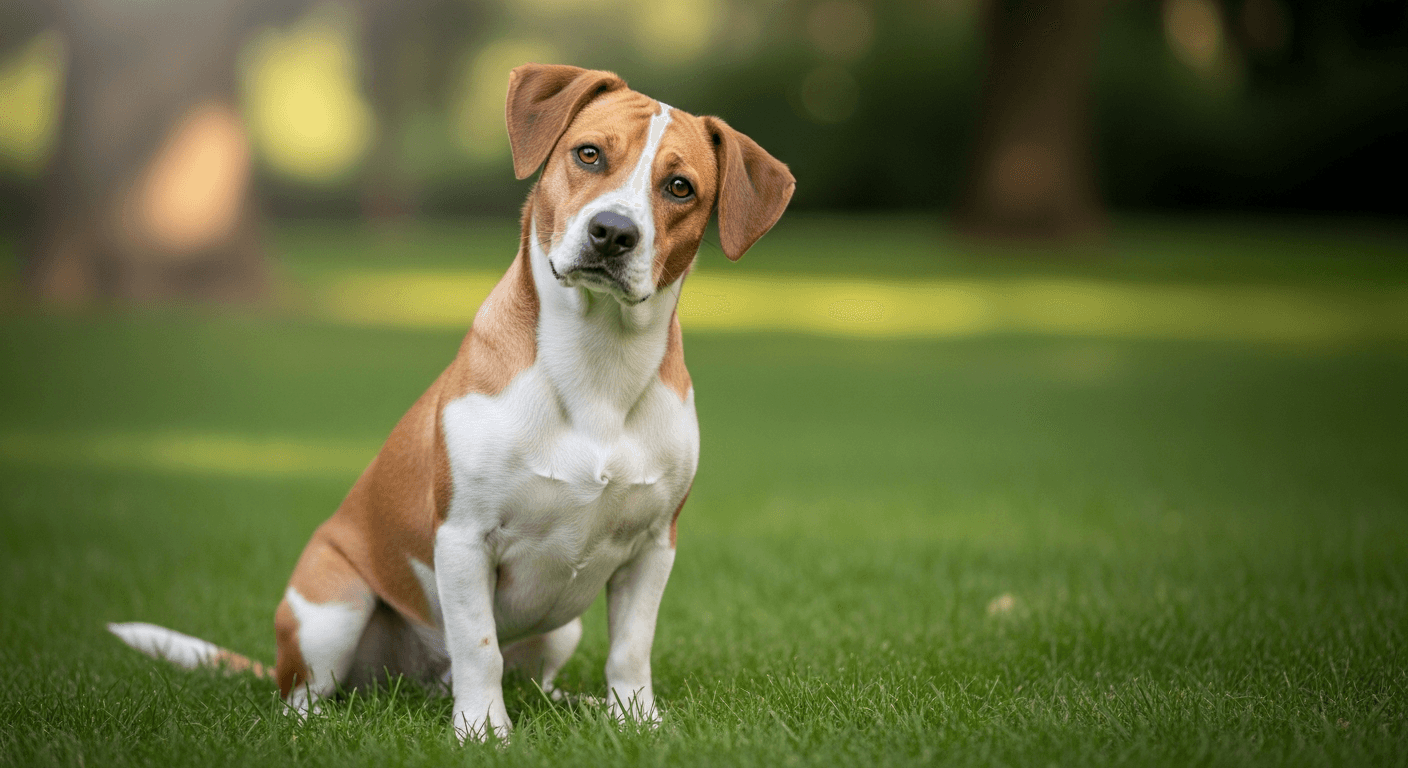

The Dorgi is a small designer crossbreed between a Dachshund and a Pembroke Welsh Corgi (or, less commonly, a Cardigan Welsh Corgi), typically weighing 15–28 pounds and standing 9–12 inches tall. Made famous by Queen Elizabeth II, who bred Dorgis at Windsor for decades, the breed combines the Corgi's herding intelligence with the Dachshund's bold, loyal personality. Dorgis are a strong fit for apartment dwellers, retirees, and small families who want a low-slung, big-personality companion with moderate exercise needs.
Dorgi at a Glance
Before going deeper, here are the essentials prospective owners ask about most:
- Other names: Dorgi, Dachsi-Corgi, Doxie-Corgi, Dorgie
- Parent breeds: Dachshund × Pembroke Welsh Corgi (or Cardigan Welsh Corgi)
- Weight: 15–28 pounds (most fall in the 18–25 lb range)
- Height: 9–12 inches at the shoulder
- Lifespan: 12–15 years
- Coat: Short to medium length, dense double coat (Corgi-leaning) or smooth/long single coat (Dachshund-leaning)
- Shedding: Moderate to heavy, with seasonal blowouts from the Corgi side
- Energy level: Medium — playful and curious, but doesn't need marathon walks
- Good with kids: Better with older, gentle children; can be possessive of food and toys
- Good with other pets: Yes, with early socialization; may herd or chase smaller pets
- Apartment-friendly: Yes — small footprint, but expect alert-barking
- Recognition: Not AKC-recognized; recognized by the American Canine Hybrid Club and Designer Breed Registry
Appearance
The Dorgi's look depends almost entirely on which parent's genes win out, and even littermates can look strikingly different. The defining trait is the elongated body and short legs both parents share — Dorgis are almost always long, low, and built closer to the ground than other small mixes.
Body: Long and low, with the Dachshund's signature elongated torso slightly broadened by the Corgi's sturdier frame. Most Dorgis weigh 15–28 pounds, with the Corgi-dominant variety pushing toward the upper end and Dachshund-dominant Dorgis staying smaller and leaner.
Head and face: Expect a fox-like or slightly elongated muzzle, expressive almond-shaped eyes, and ears that range from upright (Corgi) to floppy (Dachshund) — most Dorgis land somewhere in between, with semi-erect or tipped ears. The expression is typically alert and curious.
Coat: Two main coat types are common — a dense Corgi-style double coat that sheds heavily twice a year, or a smoother, shorter Dachshund-style coat. A small number of Dorgis inherit the long-haired Dachshund coat and end up with feathered ears, chest, and tail.
Color: Dorgis come in almost every color combination found in either parent breed — red, sable, fawn, black-and-tan, tri-color, brindle, and merle (rare, and only from Cardigan crosses). White markings on the chest, paws, and face are common.
History
The Dorgi has one of the most famous origin stories of any designer breed: Queen Elizabeth II is widely credited with popularizing the cross. According to PetMD, the first Dorgi was the result of an accidental mating between Princess Margaret's Dachshund, Pipkin, and one of the Queen's Pembroke Welsh Corgis at Windsor Castle in the 1970s. The Queen liked the resulting puppies enough that she continued the cross intentionally, keeping Dorgis at the palace for the rest of her life.
Outside of the royal family, Dorgis gained mainstream popularity in the early 2000s alongside other designer crosses as urban living and apartment-friendly dogs became cultural touchstones. The cross is now one of the more recognizable Corgi mixes in North America, though it remains less common than the standard Corgi or Dachshund.
The Dorgi isn't recognized by major kennel clubs like the AKC, but the American Canine Hybrid Club (ACHC), the Designer Breed Registry, and the Dog Registry of America all acknowledge the cross. Reputable breeders typically charge $400–$1,500 per puppy — less than rarer doodle crosses, but more than shelter mixes of similar size.
Temperament & Personality
Dorgis are best described as small dogs with oversized confidence. They inherit the Dachshund's bold, sometimes stubborn personality and the Corgi's herding intelligence and people-oriented nature, producing a dog that's affectionate at home and alert (often vocal) about the wider world.
With family: Dorgis are devoted, loyal companions that bond strongly with their household. They tend to follow their favorite person from room to room and want to be involved in whatever's happening. Many owners describe them as "shadow dogs" — quietly present rather than constantly demanding attention.
With children: Better with older, respectful kids. The Dorgi's long back makes rough handling genuinely dangerous, and the Dachshund side can show resource guarding around food, toys, or favorite resting spots. Households with toddlers should think carefully before adding a Dorgi.
With other pets: Generally good with dogs they've grown up with, especially other small breeds. The Corgi herding instinct can show up as nipping at heels or trying to "round up" cats and small animals — manageable with training, but worth knowing about up front.
Alone time: Dorgis don't love being left alone for long stretches and can develop separation anxiety, especially the Corgi-dominant ones. Most adults can handle 4–6 hours alone if properly exercised. Longer days need a dog walker, daycare, or a companion pet.
Watchdog ability: Excellent — almost to a fault. Both parent breeds were bred to bark at intruders (or in the Dachshund's case, badgers), and Dorgis will alert-bark at every doorbell, delivery driver, and squirrel. Great for owners who want a small early-warning system; tough on apartment neighbors with thin walls.
Health
Dorgis benefit from hybrid vigor in some areas but inherit risks from both parent lines — and the most serious of those, IVDD, is something every Dorgi owner needs to understand before bringing a puppy home. Reputable breeders screen for the most serious conditions; rescue or backyard-bred dogs may carry undetected issues. Common conditions to watch for include:
- Intervertebral disc disease (IVDD): The single biggest health concern in Dorgis. Both Dachshunds and Corgis are predisposed to spinal disc problems because of their long backs and short legs, and Dorgis inherit the risk from both sides. Symptoms include reluctance to jump, hunched posture, dragging back legs, or sudden paralysis. The AKC's IVDD overview covers warning signs in detail.
- Patellar luxation: Kneecap displacement, common in small breeds. Symptoms include intermittent skipping or holding up a back leg. Mild cases can be managed; severe cases may need surgery.
- Hip dysplasia: Less common in small breeds but possible, especially in Corgi-dominant Dorgis. Reputable breeders OFA-test parents.
- Obesity: Dorgis gain weight extremely easily, and every extra pound increases IVDD risk. Strict portion control isn't optional with this breed.
- Eye conditions: Progressive retinal atrophy, cataracts, and dry eye occur in both parent breeds.
- Degenerative myelopathy (DM): Inherited from the Corgi side — a progressive nerve disease that can cause hind-end weakness in middle age. Genetic testing is available.
- Von Willebrand's disease: A bleeding disorder seen in both parent breeds. Reputable breeders test for it.
- Dental disease: Both parent breeds have crowded teeth. Daily brushing and annual professional cleanings extend lifespan.
The Dorgi's typical lifespan of 12–15 years assumes good preventive care, including annual vet checkups, dental cleanings, weight management, and parasite prevention. Owners should also dog-proof against jumping — no couches, no stairs without a ramp, no being picked up under the front legs — to protect the spine throughout the dog's life.
Exercise Needs
Despite their small size, Dorgis are working-breed crosses with moderate energy levels. Plan for 30–45 minutes of activity per day, broken into multiple shorter sessions. They thrive on a mix of:
- Two daily walks (15–20 minutes each) at a brisk but not punishing pace
- Indoor play with toys, fetch, or scent games — apartment-friendly outlets
- Mental enrichment via puzzle feeders, snuffle mats, or short training sessions
- Sniff walks where the dog leads and explores at its own pace
The exercise rules every Dorgi owner should follow:
- No jumping off furniture, beds, or out of cars — provide ramps or stairs
- Use a harness, not a collar, to avoid stress on the neck and spine
- Avoid high-impact activities like agility jumps, repeated stair climbing, or running on hard surfaces for extended periods
- Skip the dog park if your Dorgi is the smallest dog there — one bad collision can cause spinal injury
Dorgis make good apartment dogs precisely because their exercise needs can be met largely indoors and on neighborhood walks, but skipping the daily walk leads to barking, weight gain, and destructive chewing.
Training
Dorgis are intelligent but inherit a stubborn streak from both parent breeds. The Corgi side is eager to please and quick to learn; the Dachshund side has the independent thinking of a working scenthound. Training results vary wildly by owner consistency.
What works: Short (5–10 minute) positive-reinforcement sessions multiple times a day, high-value treats, and patience. Dorgis respond well to clicker training and are quick to learn simple cues like sit, down, and come when motivated. Both parent breeds rank among the more food-motivated breeds, so treats go a long way.
What doesn't: Harsh corrections, yelling, or physical punishment — Dorgis shut down or become defensive. The Dachshund side has a long memory for unfair treatment.
Common training challenges:
- House training: Often the hardest part. The Dachshund side has a reputation as one of the trickier breeds to potty train, and Dorgis inherit it. Plan for 4–6 months of consistent crate training, frequent outside trips, and patience.
- Excessive barking: Address early with "quiet" commands and rewarding calm behavior, not after the habit cements at 6+ months.
- Resource guarding: The Dachshund side can be possessive of food, toys, and resting spots. Trade-up games (offering a better treat in exchange for the guarded item) work better than confrontation.
- Heel-nipping: The Corgi herding instinct can show up as nipping at ankles, especially with running children. Redirect to a toy and reward calm behavior around fast-moving feet.
Early socialization (8–16 weeks) is critical. Expose the puppy to varied people, dogs of different sizes, sounds, surfaces, and environments to avoid the timid-and-snappy adult dog that some Dorgis become without it.
Grooming
Grooming requirements depend heavily on coat type. Corgi-dominant Dorgis with a dense double coat need significantly more brushing than smooth-coated Dachshund-dominant ones.
Double coat (Corgi-dominant):
- Brush 3–4 times per week with a slicker brush and undercoat rake
- Daily brushing during spring and fall shedding seasons — the "blowout" lasts 2–4 weeks
- Bathe every 6–8 weeks; over-bathing strips the protective oils
- Professional grooming is optional but a deshedding service can save your furniture during heavy shedding
Smooth coat (Dachshund-dominant):
- Brush weekly with a soft bristle brush or grooming mitt
- Bathe every 6–8 weeks
- Watch for dry skin in winter
Long coat (long-haired Dachshund-dominant):
- Brush 3–4 times per week to prevent mats around ears, chest, and tail feathering
- Bathe every 4–6 weeks
- Trim around the paws and sanitary areas as needed
All Dorgis:
- Daily teeth brushing (or as close as you can manage) with dog-safe toothpaste — both parent breeds have a high dental disease rate
- Weekly ear checks and cleaning, especially for floppy-eared dogs prone to moisture buildup
- Nail trims every 3–4 weeks — long nails change the dog's gait and put extra stress on the spine
- Anal gland expression as needed
Nutrition
Dorgis do best on high-quality small-to-medium-breed kibble formulated for their size and metabolism. Look for foods with:
- Real animal protein as the first ingredient (chicken, turkey, lamb, fish)
- Limited fillers like corn, wheat, and soy
- Joint-supporting ingredients like glucosamine and chondroitin (especially important for back health)
- Appropriate caloric density for activity level — Dorgis gain weight easily
Portion guide: A typical adult Dorgi (18–25 lbs) eats roughly ¾ to 1½ cups of dry food per day, split into two meals. Adjust based on weight, activity, and treats. Puppies under 6 months need 3–4 smaller meals to support steady growth.
Foods to avoid: Grapes, raisins, chocolate, onions, garlic, xylitol (in many human foods including peanut butter), macadamia nuts, and cooked bones.
Weight management is non-negotiable. Every extra pound on a Dorgi increases IVDD risk dramatically. Use a kitchen scale to portion food, limit treats to 10% of daily calories, and run a hand along the dog's ribs weekly — you should feel them with light pressure. An overweight Dorgi isn't just unhealthy in the abstract; it's a back injury waiting to happen.
Is the Dorgi Right for You?
The Dorgi is a great fit if you:
- Live in an apartment or smaller home with no stairs (or can install pet ramps)
- Are home most of the day or can arrange company for the dog
- Want a small dog with a big personality and watchdog instincts
- Don't mind moderate to heavy shedding (Corgi-dominant) or weekly brushing
- Have older children or no children at home
- Can commit to strict weight management to protect the dog's back
The Dorgi is probably not for you if:
- You have toddlers or very young children
- Your home has multiple flights of stairs and you can't gate them off
- You want a calm, quiet dog with no barking
- You can't commit to lifting the dog onto furniture and providing ramps
- You're gone 8+ hours a day with no plan for company
- You want a hypoallergenic or low-shedding breed
Finding a Dorgi
Reputable breeders: Look for breeders who health-test both parents (IVDD risk, OFA hip and elbow scores, eye exams, DM genetic testing for the Corgi side), raise puppies in their home (not a kennel), let you meet at least the mother, and provide a written health guarantee. Avoid breeders who have multiple breeds available, ship puppies sight-unseen, or sell exclusively through pet stores. Related reading: A Judge Just Dismissed PETA's Lawsuit Against the AKC.
Rescue: Dorgis and similar Corgi/Dachshund mixes do show up in shelters and breed-specific rescues. Search Petfinder for "Corgi mix" and "Dachshund mix" in your area, and check breed-specific rescues like Dachshund Rescue of North America and Corgi Connection — they often take in the crosses too.
Red flags to avoid: Suspiciously low prices, sellers who pressure you to "decide today," breeders who can't answer questions about IVDD prevention, multiple litters available at once, or anyone advertising "mini" or "teacup" Dorgis as a premium product. A truly tiny Dorgi is often a runt or has been bred from undersized parents — both lead to serious long-term health problems.
Cost of Ownership
Initial costs:
- Puppy from a reputable breeder: $400–$1,500
- Rescue adoption: $100–$400
- Initial vet visit + vaccinations: $200–$400
- Spay/neuter: $200–$500
- Supplies (crate, bed, bowls, harness, leash, toys, pet ramp): $300–$500
Annual ongoing costs:
- Food: $300–$500
- Routine vet care: $300–$500
- Grooming (mostly DIY for short coats): $0–$300
- Pet insurance: $300–$600 (strongly recommended given IVDD risk)
- Treats, toys, miscellaneous: $200–$400
Plan for roughly $1,500–$2,500 in year one and $1,200–$2,300 per year ongoing. Emergency IVDD surgery can run $4,000–$10,000+ in a single incident — pet insurance is genuinely worth pricing out for this breed.
Frequently Asked Questions
How long does a Dorgi live?
Dorgis typically live 12–15 years. Good preventive care — annual checkups, dental cleanings, strict weight management, and IVDD prevention (no jumping, use a harness) — can push that toward the upper end of the range.
Are Dorgis good apartment dogs?
Yes, with caveats. Dorgis are small enough for apartment living and their exercise needs can be met with two daily walks and indoor play. The main drawback is alert-barking — both parent breeds were bred to vocalize, and Dorgis will announce every doorbell and footstep in the hallway.
How big do Dorgis get?
Adult Dorgis typically weigh 15–28 pounds and stand 9–12 inches tall at the shoulder. Dachshund-dominant Dorgis stay smaller and leaner; Corgi-dominant Dorgis push toward the upper end with a sturdier, more muscular build.
Did Queen Elizabeth II really have Dorgis?
Yes. The Queen kept Dorgis at Windsor for decades, and they're widely credited with popularizing the breed. The first litter is said to have come from an unplanned mating between Princess Margaret's Dachshund and one of the Queen's Pembroke Welsh Corgis in the 1970s.
Are Dorgis prone to back problems?
Yes. Both Dachshunds and Corgis are predisposed to intervertebral disc disease (IVDD), and Dorgis inherit the risk from both sides. Owners should prevent jumping off furniture, use a harness instead of a collar, keep the dog at a healthy weight, and provide ramps for couches and beds.
Do Dorgis bark a lot?
Yes — Dorgis inherit alert-barking tendencies from both parent breeds. They make excellent watchdogs but can be a problem in apartments with thin walls. Early training on a "quiet" cue, plenty of mental stimulation, and not rewarding the barking helps manage it.
How much does a Dorgi puppy cost?
Expect $400–$1,500 from a reputable breeder, or $100–$400 through rescue. Annual ongoing costs run roughly $1,200–$2,300 including food, vet care, and supplies — and pet insurance is strongly recommended given the breed's IVDD risk.
Are Dorgis hypoallergenic?
No. Dorgis are moderate to heavy shedders, especially the Corgi-dominant variety with a dense double coat. They're not a good choice for allergy-prone households. People with mild allergies should spend time with the specific dog before committing.
If the Dorgi isn't quite the right fit, you might also consider the Corgidor (Corgi-Labrador mix), the Aussie Corgi, or browse the Dachshund breed profile for a similar size and personality with a longer track record. Owners specifically worried about cold weather should also read our guide to preventing hypothermia in Dachshunds — the advice applies directly to short-coated Dorgis.