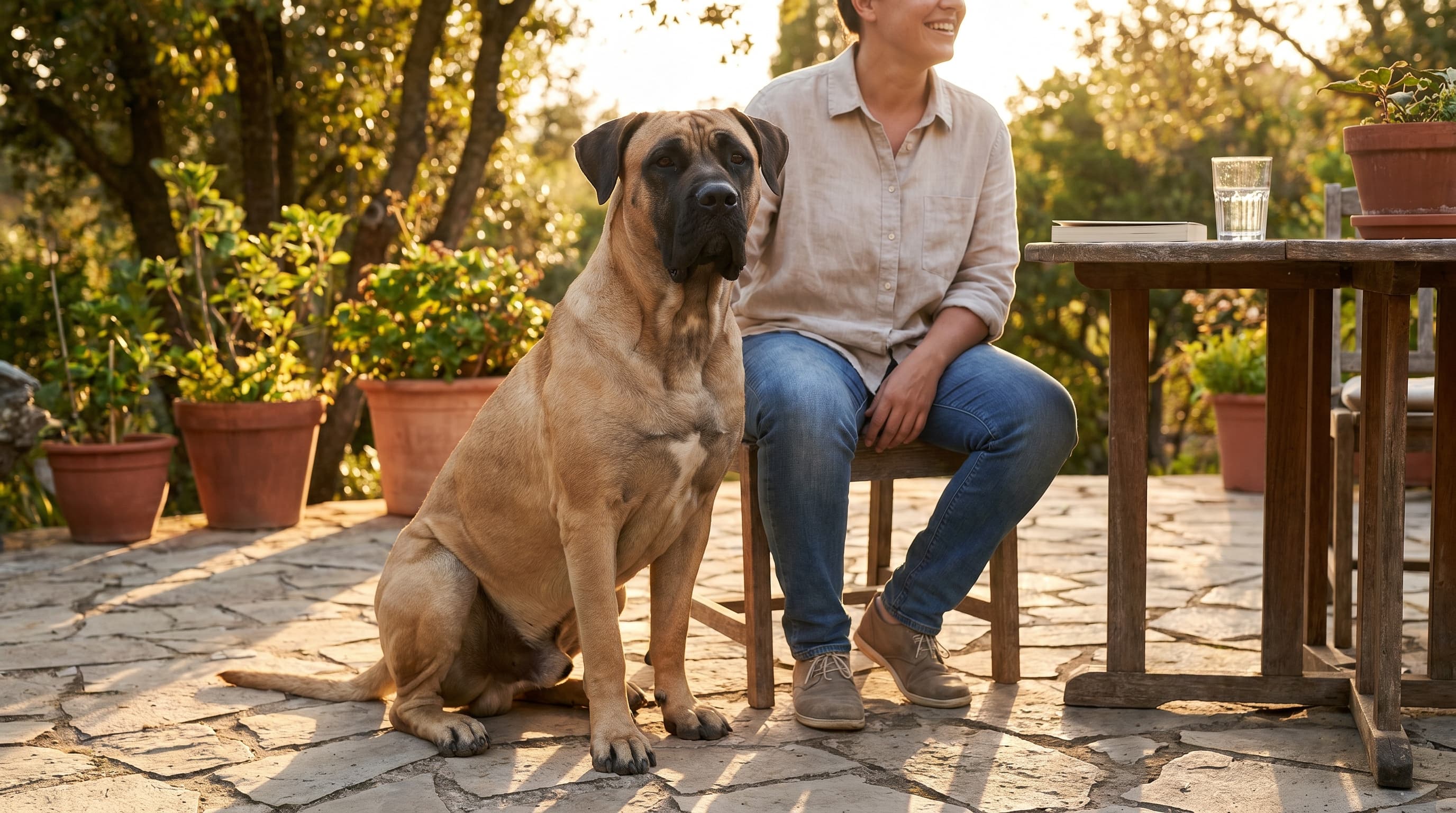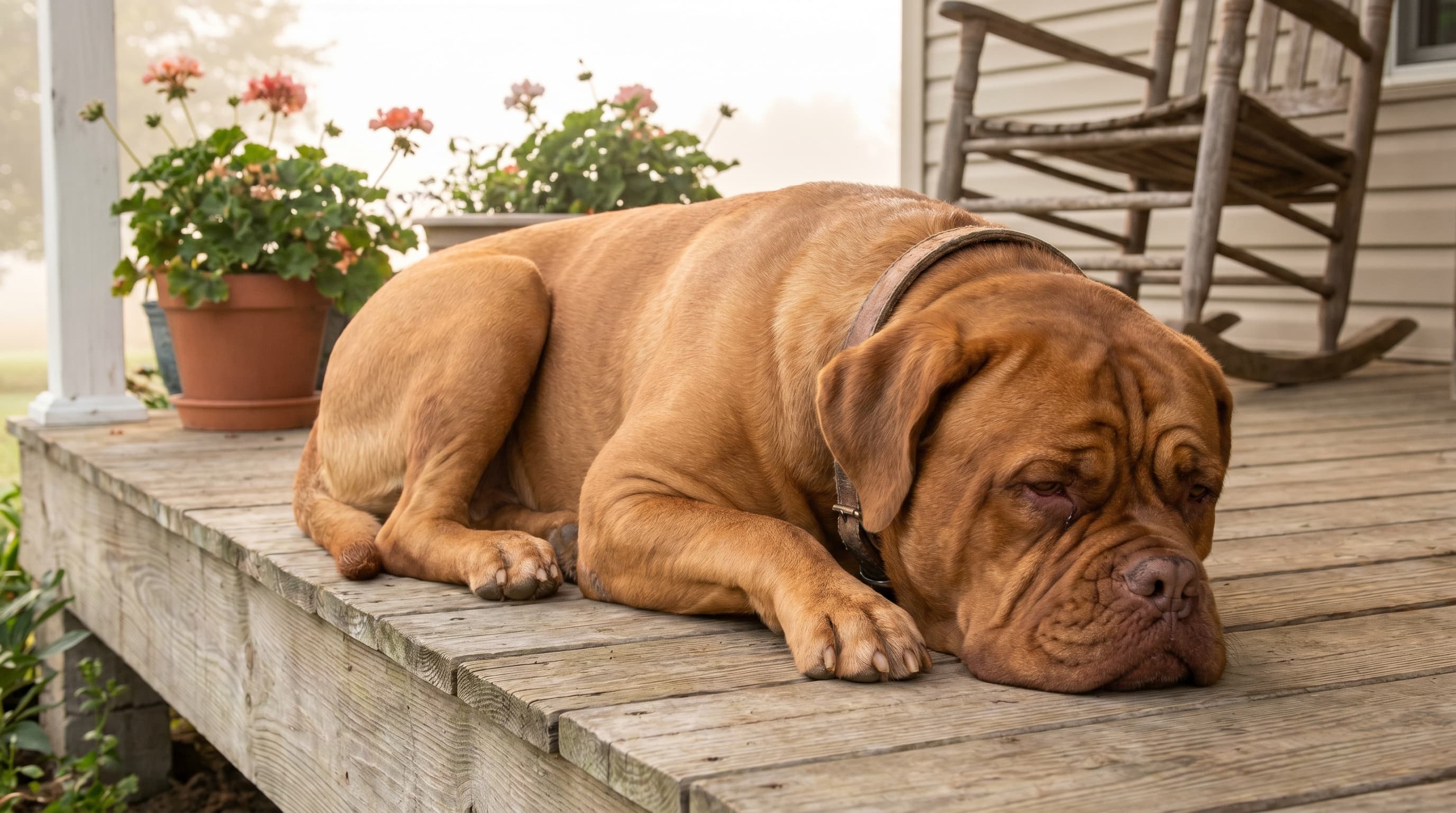

The French Mastiff, known officially as the Dogue de Bordeaux, is a giant French guardian breed weighing 99–150 pounds with a massive wrinkled head, a fawn-to-mahogany coat, and a calm, deeply loyal temperament. Bred to guard estates and haul carts, it is gentle and devoted with family but wary of strangers, and it lives a notably short 5–8 years.
What is a French Mastiff?
"French Mastiff" is the common English name for the Dogue de Bordeaux, one of the oldest French breeds, with roots stretching back centuries. It is a brachycephalic (short-faced) molossus-type guardian famous for its enormous, deeply wrinkled head, said to be one of the largest heads relative to body size of any dog. Many people first met the breed as Hooch in the 1989 film Turner & Hooch. As Rover's breed profile notes, beneath the imposing exterior is a sensitive, affectionate companion that bonds intensely with its people.
French Mastiff history and origins
The Dogue de Bordeaux developed in the Bordeaux region of France, where powerful molosser dogs were used to guard estates and livestock, pull heavy carts, and historically to hunt and bait large game such as boar. The breed nearly vanished after the upheavals of the 19th and 20th centuries, including both World Wars, before dedicated French breeders revived it. It was relatively unknown in the United States until Turner & Hooch brought it into the spotlight, and the American Kennel Club granted full recognition in 2008, as documented by Tryfi's breed guide.
Size and appearance
This is a true giant breed. Males stand about 23–27 inches at the shoulder and weigh 110–150 pounds; females run 23–26 inches and 99–130 pounds. The breed is stocky, broad, and muscular, with that signature wrinkled, jowly head and an undershot jaw. The short, soft coat comes in shades of fawn, red, and mahogany, often with a black or brown mask. PetMD's breed overview highlights the powerful, low-slung build that made the breed such an effective cart-puller and guardian.
French Mastiff temperament and personality
Despite the intimidating looks, the French Mastiff is typically calm, patient, and devoted at home. These dogs are profoundly loyal and form deep attachments to their families, often following their favorite person from room to room. They are natural guardians, confident and territorial, and tend to be reserved or watchful around strangers, which makes early, thorough socialization essential. They can be stubborn and strong-willed, so they need a confident, consistent owner. BorrowMyDoggy describes them as affectionate "gentle giants" that nonetheless require firm, patient guidance. If you are drawn to powerful mastiff-type guardians, compare notes with our Bullmastiff guide and the Cane Corso guide.
Are French Mastiffs good family dogs?
Yes, in the right home. French Mastiffs are usually gentle and protective with the children in their family, and their mellow indoor energy makes them surprisingly easygoing housemates. However, their sheer size means a wag or a lean can knock over a small child, so supervision is a must, and they are best suited to families with older kids and plenty of space. Their guardian instincts also mean careful management around visiting children and unfamiliar dogs. For broader options, see our roundup of the best dogs for families with kids.
Exercise, training, and grooming
French Mastiffs are not high-energy dogs. A couple of moderate daily walks plus some yard time usually satisfy them, and over-exercising a growing puppy can damage developing joints. Because they are brachycephalic, they overheat easily and should never be pushed hard in summer heat or humidity. Training should start early and lean on patient, positive, reward-based methods; this is a sensitive breed that shuts down under harsh handling but responds well to consistency. Grooming is simple, weekly brushing and routine cleaning of the facial wrinkles to prevent skin infections, but be prepared for drooling and seasonal shedding.
French Mastiff health and lifespan
This is the hardest part of owning the breed: the Dogue de Bordeaux has one of the shortest average lifespans of any dog, commonly cited at just 5–8 years. They are prone to hip and elbow dysplasia, heart conditions such as dilated cardiomyopathy and aortic stenosis, bloat (gastric dilatation-volvulus), brachycephalic airway issues, and certain cancers. Responsible breeders screen breeding stock for hip, heart, and other hereditary problems. This is general information, not veterinary advice; talk with your veterinarian about screening and preventive care, and learn the signs that warrant a vet visit.
How much does a French Mastiff cost?
A French Mastiff puppy from a reputable, health-testing breeder typically costs around $1,500 to $3,500, with show-quality or champion lines running higher. The bigger expense is lifetime care: giant breeds eat a lot, need larger doses of medication and preventatives, and can rack up significant veterinary bills for the breed's known health issues. Pet insurance and a healthy emergency fund are wise investments before bringing one home.
Is a French Mastiff right for you?
A French Mastiff suits an experienced owner with space, time for socialization and training, and the emotional readiness to accept a short lifespan with a giant, drool-prone, deeply devoted dog. They are not ideal for first-time owners, very small apartments, or anyone who cannot commit to early socialization. For those who can, few breeds return loyalty quite like this one.
Feeding a French Mastiff
Feeding a giant breed is its own discipline. French Mastiff puppies grow fast and must not grow too fast: an over-rich diet or excess calories can accelerate bone growth and worsen the risk of joint disease, so most experts recommend a large- or giant-breed puppy formula with carefully controlled calcium and calories. Adults typically eat several cups of high-quality food per day, split into two or more meals to reduce the risk of bloat, a life-threatening emergency this breed is prone to. Avoid heavy exercise right before and after meals, consider a slow-feeder bowl, and ask your veterinarian whether a preventive stomach-tacking procedure (gastropexy) makes sense. Keep your Dogue lean throughout life; every extra pound is a burden on joints and a heart that already faces breed-specific risks.
Living with a French Mastiff: space and climate
French Mastiffs are calm and even lazy indoors, which makes them more adaptable than their size suggests, but they still do best with room to move and a securely fenced yard. What they truly cannot tolerate is heat. As a flat-faced brachycephalic breed, they are highly susceptible to heatstroke and labored breathing in hot, humid weather, so summer walks belong in the cool of early morning or evening, with constant access to shade and water. In any climate, they want to be indoors with their family rather than left alone in a yard, since isolation feeds anxiety and destructive behavior in such a people-bonded breed. Plan for slobber on your walls and furniture, a dog bed built for a heavyweight, and a vehicle that can accommodate 130-plus pounds of devoted companion.
French Mastiff vs. other mastiffs
Shoppers often weigh the Dogue de Bordeaux against other giant guardians. Compared with the English Mastiff, the French Mastiff is shorter, more compact, and more agile, with a redder coat and that distinctive wrinkled face. Next to the Bullmastiff, it tends to be more drooly and a touch more stubborn, while the athletic Cane Corso is leaner, more energetic, and more demanding of exercise and a job. All of these breeds share strong protective instincts and need committed socialization, but the Dogue stands out for its mellow indoor temperament and, sadly, its shorter lifespan. Choosing among them comes down to how much activity, drool, and dog you are prepared for.
Frequently asked questions
Is a French Mastiff the same as a Dogue de Bordeaux?
Yes. "French Mastiff" is the common English name for the Dogue de Bordeaux. They are one and the same breed, sometimes also called the Bordeaux Mastiff or Bordeauxdog.
How big do French Mastiffs get?
Males typically reach 110–150 pounds and 23–27 inches tall; females run about 99–130 pounds and 23–26 inches. They are a giant, heavily muscled breed with an exceptionally large head.
How long do French Mastiffs live?
Unfortunately, the breed has one of the shortest average lifespans among dogs, commonly cited at 5–8 years. Good breeding, weight management, and proactive veterinary care give individuals the best chance at the longer end.
Do French Mastiffs drool a lot?
Yes. Like most mastiffs, the Dogue de Bordeaux drools, especially after eating, drinking, or exercise. Their loose jowls also tend to fling slobber when they shake their heads, so keep a towel handy.
Are French Mastiffs aggressive?
They are not inherently aggressive, but they are protective guardians that can be wary of strangers. Early, consistent socialization and training are essential to channel those instincts into stable, confident behavior.
Are French Mastiffs good for first-time owners?
Generally no. Their size, strength, stubbornness, guardian instincts, and health needs make them better suited to experienced owners who can provide firm, patient training and proper socialization.
The bottom line
The French Mastiff is a gentle giant wrapped in a guardian's body, fiercely loyal, calm at home, and unforgettable in looks. The trade-offs are real: drool, stubbornness, big bills, and a heartbreakingly short life. If that devotion still calls to you, explore two more powerful guardians in our Bullmastiff guide and Cane Corso guide, and subscribe to the Daily Wag newsletter for more breed deep-dives.