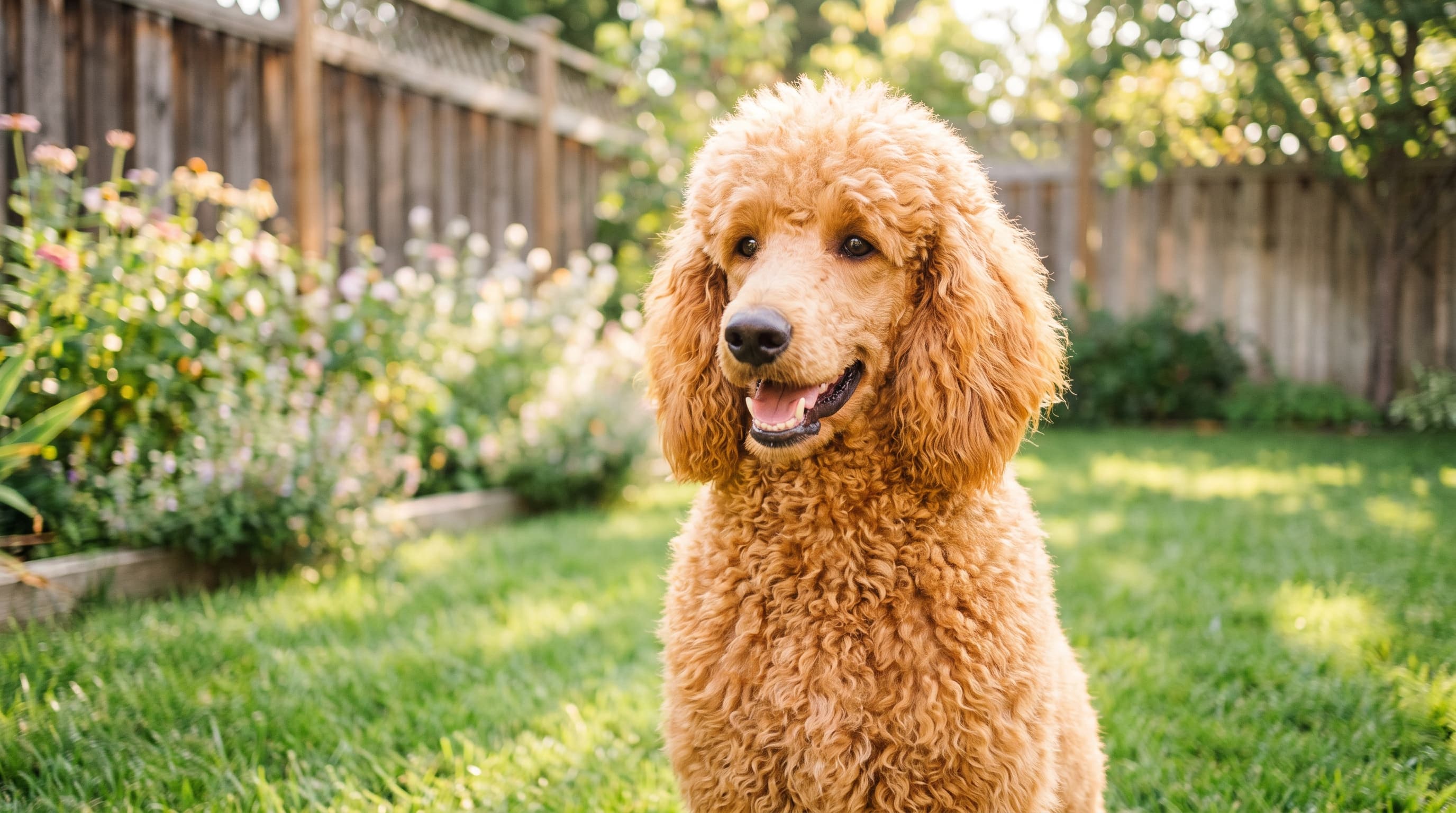

An apricot poodle is a purebred Poodle with a warm, golden-orange coat produced by the recessive "red" gene family. Apricots come in all three Poodle sizes — Toy, Miniature, and Standard — and share the breed's signature intelligence, low-shedding curls, and people-focused personality. Their coat often lightens or deepens with age, so shade can shift over a lifetime.
What Is an Apricot Poodle?
The apricot poodle is not a separate breed or a designer crossbreed — it is simply a Poodle that carries an apricot-colored coat. Apricot is one of the solid colors recognized in the breed standard by the American Kennel Club, sitting on the spectrum between cream and red. Because the coat is the only thing that changes, every temperament, health, and grooming trait that applies to Poodles in general applies equally to apricots.
Apricot was one of the last colors to appear in the breed, and dedicated breeders spent decades stabilizing it. The Poodle Club of America and international registries all accept apricot as a standard solid color, provided the dog shows the correct dark points — dark eyes, black or self-colored nose, and dark eye rims.
Apricot Poodle Colors and Coat Genetics
Apricot sits within the "red" pigment range that is governed largely by recessive genes. When a Poodle inherits two copies of the relevant recessive alleles, the coat expresses in the cream-to-red band; apricot is the middle intensity of that band. This is why a litter can contain cream, apricot, and red puppies from the same parents.
One quirk that surprises many new owners is color instability. A puppy born a deep red can fade to apricot as it matures, and an apricot puppy can darken toward red. Sun exposure, age, hormones, and even the season can shift the visible shade. If a rich, consistent color matters to you, ask the breeder about the puppy's parents and grandparents, since coat depth tends to run in lines.
Apricot vs. Red vs. Cream
The three warm Poodle colors are easy to confuse. Cream is the palest, a soft off-white with warm undertones. Apricot is a clear golden-orange. Red is a deep mahogany or Irish-setter tone. Because these colors fade and shift, a single dog can drift between categories across its life, which is part of why registration paperwork sometimes lists a different color than the coat you see today.
Apricot Poodle Sizes: Standard, Miniature, and Toy
Apricot appears in all three official Poodle sizes, so buyers can choose the build that fits their home. A Toy Poodle stands up to 10 inches and weighs roughly 4 to 6 pounds. A Miniature Poodle stands 10 to 15 inches and weighs 10 to 15 pounds. A Standard Poodle stands over 15 inches — often 22 inches or more at the shoulder — and weighs 40 to 70 pounds. Aside from scale, all three sizes carry the same coat and character.
Size drives many lifestyle decisions: Toy and Miniature apricots are apartment-friendly and easy to travel with, while Standard apricots want more room and a job to do. If you love the color but live in a small space, a Toy or Miniature is usually the more practical match.
Apricot Poodle Temperament and Personality
Coat color has no effect on personality, so an apricot Poodle behaves like any other well-bred Poodle. According to breed profiles, Poodles rank among the most intelligent of all dog breeds, second only to the Border Collie in many trainability rankings. That intelligence makes them eager, quick learners who thrive on interaction and mental challenge.
Apricot Poodles are affectionate, sensitive, and closely bonded to their people. They tend to be playful into adulthood, get along well with children and other dogs when socialized early, and dislike being left alone for long stretches. Because they are so smart, an under-stimulated Poodle can invent its own entertainment — often in the form of nuisance barking or mischief — so daily engagement matters.
Grooming an Apricot Poodle
The Poodle's dense, curly, single-layer coat barely sheds, which is why the breed is often called a good fit for allergy-conscious homes. No dog is truly hypoallergenic, but low-shedding coats release less dander into the environment. The trade-off is high maintenance: that same coat mats quickly and needs consistent care.
Plan on brushing several times a week — ideally daily — and professional grooming every four to six weeks. Neglected curls form tight mats that pull at the skin and can cause painful hot spots or infection. Many owners keep their apricot in a shorter, practical clip between show-style trims. For a full routine, see our Poodle grooming guide and our overview of popular Poodle haircuts. One color-specific note: apricot coats can lighten with heavy sun exposure, so shaded outdoor time helps preserve depth.
Apricot Poodle Health and Lifespan
Poodles are generally long-lived, with Toys and Miniatures often reaching 14 to 18 years and Standards typically living 12 to 15 years. Like all purebreds, they carry some breed-associated health risks, including hip dysplasia, progressive retinal atrophy, epilepsy, and (in Standards) gastric dilatation-volvulus, or bloat. Responsible breeders screen their stock for these conditions.
There is no evidence that apricot coloring itself carries extra health risk — unlike some pattern genes in other breeds, the apricot color is not linked to deafness or vision problems. Routine veterinary care, a quality diet, dental hygiene, and weight management do far more for longevity than coat color ever will. Always talk to your veterinarian about a screening and vaccination schedule tailored to your dog.
Apricot Poodle Price and Where to Find One
Apricot Poodle puppies from reputable breeders generally range from about $1,000 to $3,000, with show-quality lines and popular sizes sometimes costing more. Because apricot is a sought-after color, some breeders charge a premium, but color alone should never outweigh health testing and temperament. Beyond the purchase price, budget for grooming every few weeks, quality food, and routine veterinary care — ongoing costs the ASPCA notes can add up over a dog's life.
Rescue is another route. Breed-specific Poodle rescues and doodle rescues regularly place apricot dogs, often at a fraction of breeder pricing. If you want a specific size and age, a rescue coordinator can put you on a waitlist.
Is an Apricot Poodle Right for You?
An apricot Poodle suits owners who want a smart, affectionate, low-shedding companion and are willing to commit to regular grooming and daily mental stimulation. If you travel, a Toy or Miniature is easy to bring along; if you want a hiking or swimming partner, a Standard has the athleticism for it. What you should not expect is a wash-and-go dog — the coat that makes Poodles special is also the coat that demands upkeep.
Frequently Asked Questions
Are apricot Poodles rare?
Apricot is less common than black or white but far from rare today. It was one of the last colors to be established in the breed, and because the color can fade or darken with age, truly stable, deep apricots take careful breeding to produce.
Do apricot Poodles change color as they age?
Yes. Many apricot puppies lighten toward cream or darken toward red as they mature, and sun exposure can bleach the coat over time. A puppy's final adult shade is hard to guarantee, though looking at the parents' coats gives a reasonable clue.
Are apricot Poodles hypoallergenic?
No dog is completely hypoallergenic, but Poodles of every color shed very little and release less dander than many breeds, which is why they are often recommended for allergy-conscious households. Regular grooming further reduces loose hair and dander.
How big does an apricot Poodle get?
It depends on the size variety. Toy apricots stay under about 6 pounds, Miniatures reach 10 to 15 pounds, and Standards can weigh 40 to 70 pounds. The color is identical across all three sizes.
How much do apricot Poodle puppies cost?
Expect roughly $1,000 to $3,000 from a reputable breeder, sometimes more for show lines or in-demand sizes. Prioritize health testing and temperament over color, and remember to budget for lifelong grooming and veterinary care.
What is the difference between an apricot and a red Poodle?
They fall on the same warm color spectrum. Apricot is a lighter golden-orange, while red is a deeper mahogany tone. Because the colors shift with age and sun, some dogs blur the line between the two.
Bring Home the Right Poodle
Whether you fall for the color or the character, the apricot Poodle offers one of the smartest, most devoted companions in the dog world — as long as you can meet its grooming and enrichment needs. Explore more Poodle guides to find your ideal match, including our deep dives on the Toy Poodle and the Miniature Poodle, and see how apricot compares to eye-catching patterns like the parti Poodle.
Love learning about dog breeds and colors? Subscribe to the Daily Wag newsletter for fresh breed guides, care tips, and dog-friendly finds delivered straight to your inbox.