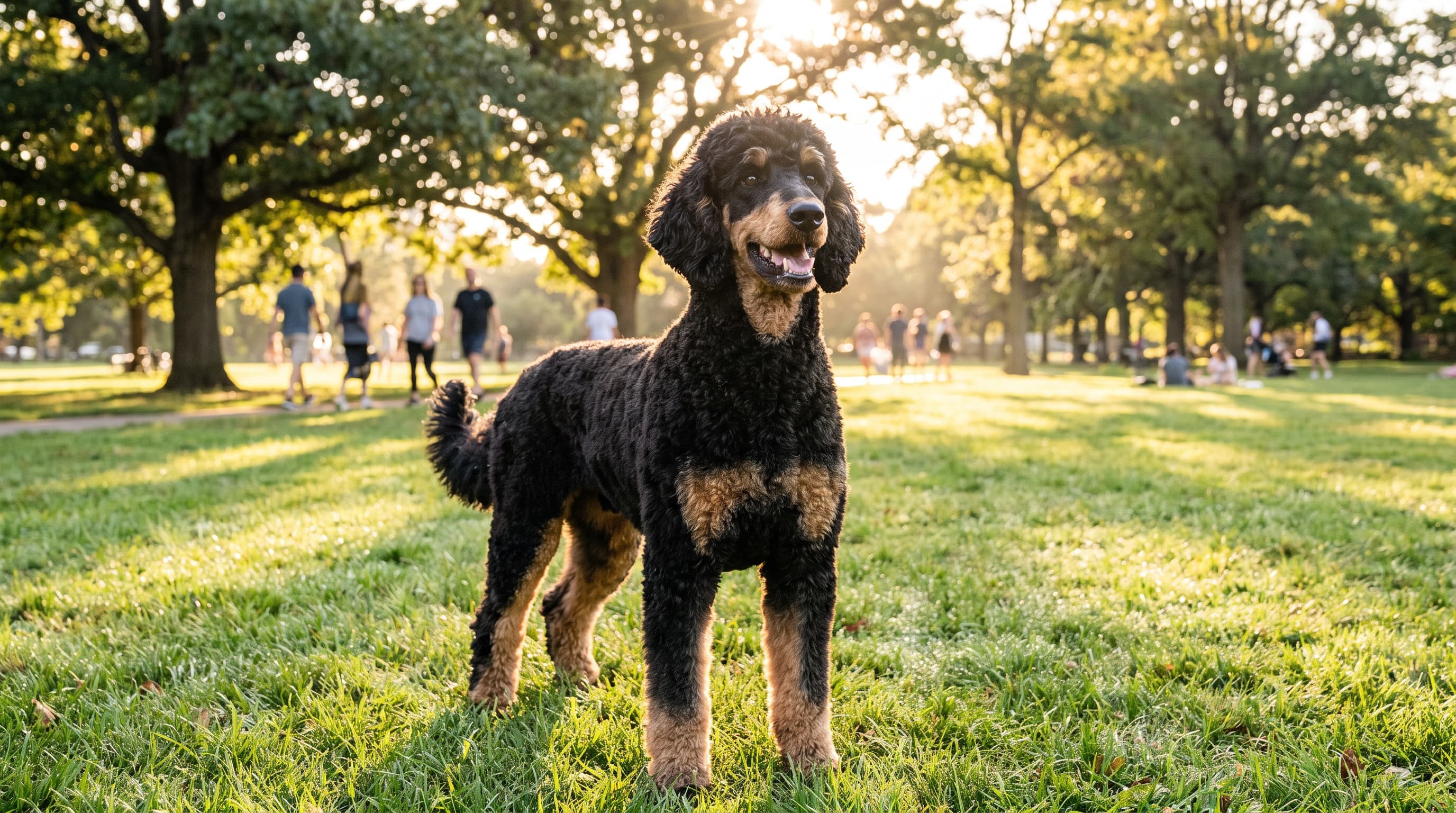

A phantom poodle is not a separate breed — it's a Poodle with a specific two-color coat pattern. Phantom Poodles have a solid base color plus lighter, sharply defined markings in fixed spots: above the eyes, on the muzzle and cheeks, across the chest, and down the legs. The look mirrors the tan points of a Doberman, which is why fans call them "Dobie markings."
What Is a Phantom Poodle?
The word "phantom" describes coloration, not a breed, a size, or a temperament. Underneath the striking coat, a phantom is simply a Poodle — Standard, Miniature, or Toy — with all the intelligence, athleticism, and low-shedding coat the breed is famous for. As the Poodle Information Center explains, phantom refers to a single-colored coat with bits of a secondary color appearing in very specific, predictable places.
Those markings are what separate a phantom from other multi-colored Poodles. In a phantom, the secondary color always appears in the same locations, creating a clean, symmetrical "eyebrows, cheeks, chest, and legs" pattern rather than random patches.
Phantom Poodle Colors and Markings
Phantom Poodles come in many color combinations. The base is the dominant color and the markings are the secondary color. Common pairings include:
- Black and tan — the classic, most recognizable phantom.
- Black and red (or apricot)
- Black and silver
- Chocolate/brown and tan
- Silver and cream
According to Rocky Kanaka, the defining feature is placement: lighter markings above the eyes, on the sides of the muzzle, on the chest, and on the lower legs. A true phantom shows these points clearly and consistently — a puppy with only faint or partial markings may not develop into a full phantom.
Phantom vs. Parti, Brindle, and Sable Poodles
Phantom is often confused with other Poodle patterns, but the differences are clear once you know what to look for:
- Phantom: solid base with tan-point-style markings in fixed locations (eyebrows, muzzle, chest, legs).
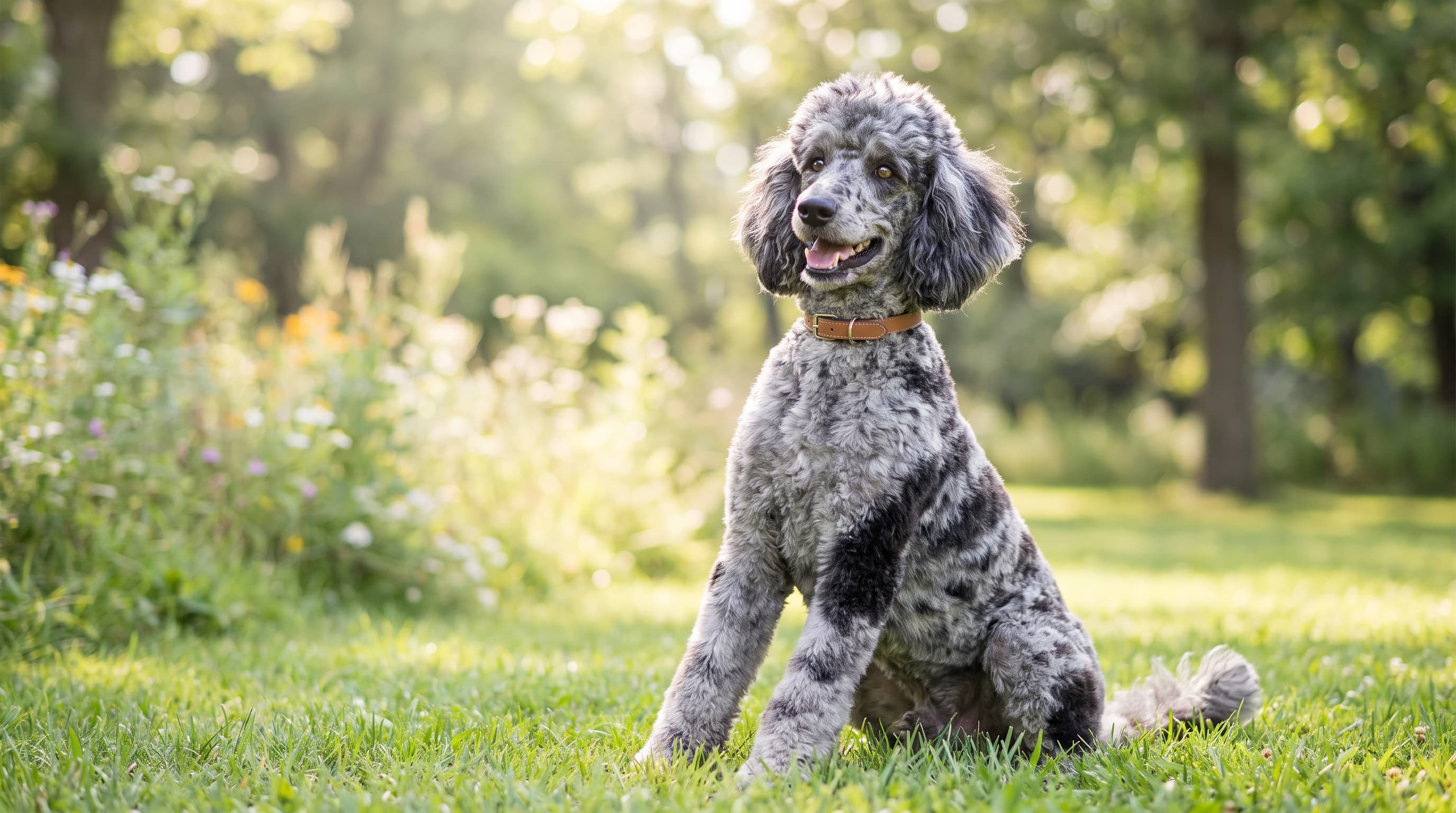
- Parti: at least 50% white with large patches of a second color, distributed randomly. Compare with our guide to the Parti Poodle.
- Brindle: a tiger-stripe pattern of layered color.
- Sable: hairs tipped in black over a lighter base.
The pattern is genetic. Phantom markings are governed by the same "tan point" gene that produces the pattern seen in breeds like the Doberman and Rottweiler, which is why the placement is so predictable.
Are Phantom Poodles AKC-Recognized?
Yes and no. Phantom Poodles are purebred Poodles and can be registered with the American Kennel Club, but the phantom coloring is not accepted in the conformation show ring, where solid colors are the standard. Phantoms can still compete in AKC agility, obedience, rally, and other performance events, where color has no bearing on eligibility. For pet owners, the show-ring rule makes no practical difference.
Temperament, Intelligence, and Care
Because a phantom is a standard Poodle in coat only, it shares the breed's celebrated personality. Poodles are consistently ranked among the most intelligent dog breeds, are highly trainable, and are affectionate, people-oriented companions that thrive on mental stimulation and exercise. They are active dogs that do best with daily activity and enrichment — bored Poodles can become anxious or mischievous.
Grooming is the biggest commitment. The Poodle's dense, curly, low-shedding coat needs brushing several times a week and professional clipping every four to six weeks to prevent matting, in line with the ASPCA's grooming guidance. Explore breed-specific styles in our guide to Poodle grooming.
On health, Poodles are generally long-lived but can be prone to hip dysplasia, progressive retinal atrophy, bloat, and, in smaller varieties, dental disease — the VCA Animal Hospitals report that over 80% of dogs over age three have some dental disease, so routine dental care matters for Toy and Miniature phantoms in particular.
How Much Does a Phantom Poodle Cost?
Phantom coloring is relatively rare and in demand, so it usually commands a premium. A phantom Standard Poodle can cost $2,500 or more from a reputable breeder — often roughly double the price of a solid-colored Poodle. Prices vary with size, lineage, breeder reputation, and region. Always choose a breeder who performs health testing on the parents rather than one selling on color alone, and consider Poodle-specific rescues, where phantoms occasionally appear.
The Genetics Behind Phantom Markings
Phantom coloring comes from a specific genetic pattern rather than random chance. The markings are produced by the "tan point" gene at the agouti (A) locus — the same gene responsible for the classic points seen on Dobermans, Rottweilers, and many other breeds. When a Poodle inherits the right combination of these genes, the result is a solid base color with lighter points in the fixed, predictable locations that define a phantom.
Because the pattern is inherited, breeders can plan for phantom litters by pairing dogs that carry the tan-point gene. However, phantom is recessive in expression relative to solid coloring in many pairings, which is part of why phantoms are rarer than solid Poodles. It also means that not every puppy in a litter with phantom parents will be a phantom, and the intensity of the markings can vary from puppy to puppy. DNA color testing is increasingly used by responsible breeders to predict coat outcomes and avoid surprises.
Phantom Poodle Sizes: Toy, Miniature, and Standard
Because phantom is a color pattern and not a size, it can appear in all three Poodle varieties recognized by the AKC:
- Toy Poodle: up to 10 inches tall and roughly 4–6 pounds — an ideal apartment companion.
- Miniature Poodle: 10–15 inches and about 10–15 pounds — a versatile middle size.
- Standard Poodle: over 15 inches (often 22+) and 40–70 pounds — an athletic, family-sized dog.
All three share the same intelligence and low-shedding coat; they differ mainly in space, exercise needs, and cost. A phantom Standard tends to be the most expensive because of its size and the relative rarity of the pattern.
Finding a Reputable Phantom Poodle Breeder
Because phantoms command premium prices, they attract breeders who prioritize color over health — exactly the ones to avoid. A responsible breeder health-tests both parents for the conditions Poodles are prone to, including hip dysplasia, progressive retinal atrophy, and von Willebrand's disease, and can show you the results. They'll let you meet the parents, keep puppies in a clean home environment, and ask you plenty of questions in return. Be wary of anyone marketing "rare" phantoms at a steep markup with no health documentation, or breeders who won't discuss the genetics of their lines. Phantom Poodles also occasionally turn up in breed-specific rescues, which is a wonderful option if you're open to an adult dog.
Is a Phantom Poodle Right for You?
A phantom Poodle suits owners who want a smart, active, affectionate dog and are prepared for serious grooming. These are working-smart dogs that need daily exercise and mental stimulation to stay happy — puzzle toys, training games, and regular walks are non-negotiable. The low-shedding coat is a plus for tidy homes and allergy-conscious families, but it demands brushing several times a week and professional clipping every four to six weeks. If you can commit to the grooming and the mental enrichment, the phantom's striking looks come attached to one of the most trainable, devoted companions in the dog world.
Frequently Asked Questions
Is a phantom poodle a different breed?
No. It's a purebred Poodle with a specific two-tone coat pattern. Phantom describes color and markings only — not size, temperament, or breed.
How can I tell if my poodle is a true phantom?
Look for lighter markings in fixed spots: above the eyes, on the muzzle and cheeks, on the chest, and on the lower legs. The markings should be clear and symmetrical, resembling a Doberman's tan points.
Do phantom markings change as a puppy grows?
They can. Some puppies are born with faint markings that darken or clarify with age, while others fade. A puppy with strong, defined points is more likely to keep a bold phantom pattern.
Can phantom poodles be shown in AKC events?
They can compete in performance events like agility and obedience, but the phantom color is not accepted in AKC conformation (breed) shows, which favor solid colors.
Do phantom poodles shed?
Very little. Like all Poodles, they have a low-shedding, curly coat that's often considered a good fit for allergy-conscious households — though regular grooming is essential.
The Bottom Line on Phantom Poodles
A phantom Poodle gives you the best of both worlds: the eye-catching, Doberman-style markings of a rare coat pattern wrapped around the brains, athleticism, and low-shedding coat of a purebred Poodle. Remember that "phantom" describes only the color — everything else about the dog is standard Poodle, from the high intelligence to the demanding grooming schedule. Expect to pay a premium, choose a breeder who tests for health rather than just chasing color, and be ready to invest in daily enrichment and regular professional grooming. Do that, and you'll have a strikingly beautiful, deeply devoted companion that turns heads at the park and shines at home.
Fascinated by Poodle variety? Read up on the Standard Poodle and the Parti Poodle next. And for weekly breed spotlights and grooming tips, subscribe to the Daily Wag newsletter.