
Parti Poodle: Colors, Genetics, and Care for the Two-Toned Poodle
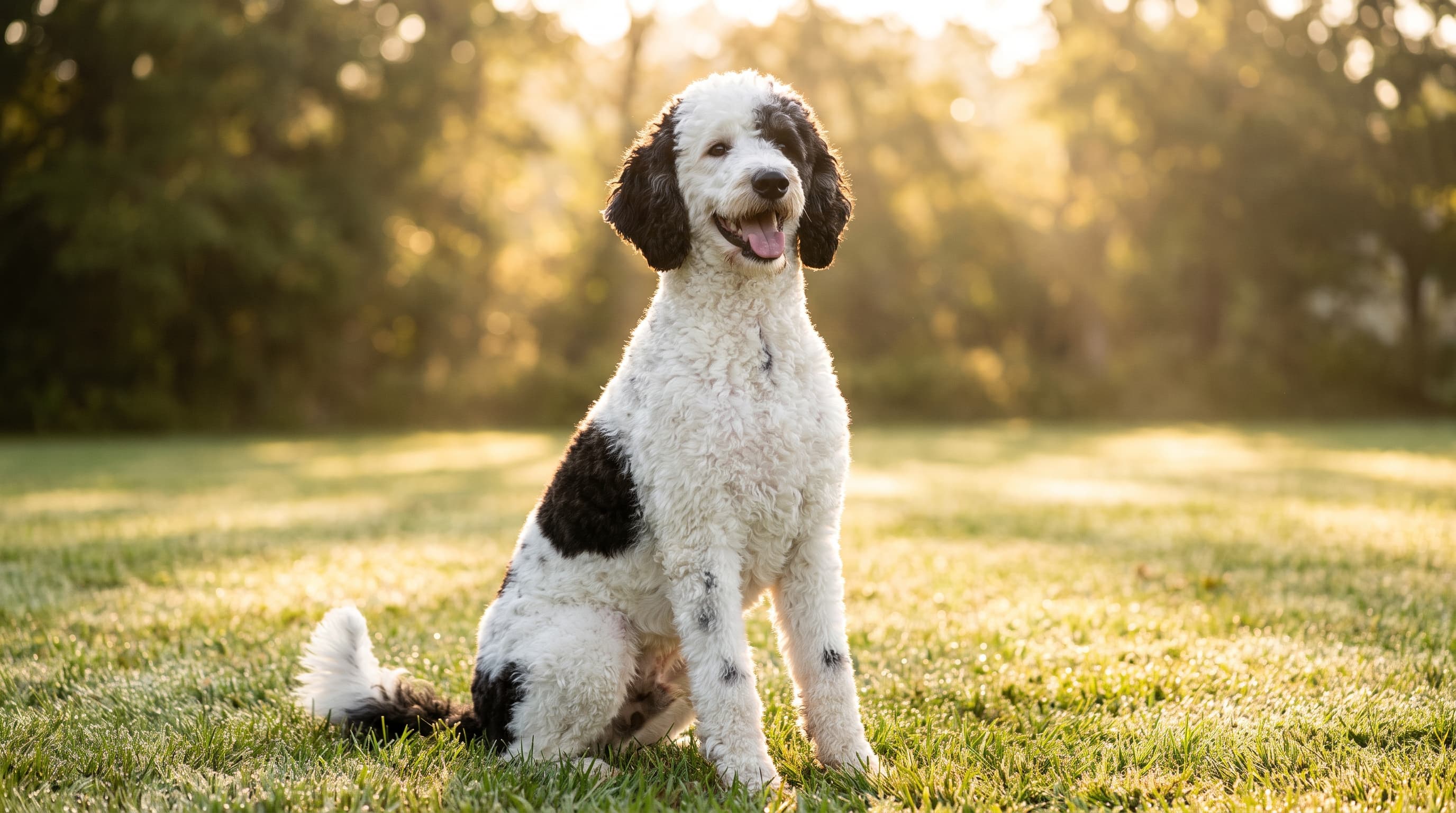
A parti poodle is a purebred poodle with a coat that is at least 50% white broken up by patches of a second solid color, such as black, apricot, red, silver, or brown. Parti is a natural, historic coat pattern caused by a recessive gene. These dogs are AKC-registerable and identical in temperament and health to solid poodles.
If you have fallen for a poodle sporting bold white-and-color patches, you are looking at one of the breed's oldest and most eye-catching looks. Below we cover exactly what makes a poodle "parti," how the genetics work, what to expect from grooming and health, and how to find a responsible breeder — so you can decide whether a two-toned poodle belongs in your home.
What Exactly Is a Parti Poodle?
The word "parti" is short for "particolored." To be considered parti, a poodle needs a base coat that is more than 50% white with well-defined patches of one additional color spread across the body. That second color can be any of the shades the breed already carries: black, blue, silver, gray, cafe-au-lait, brown, red, apricot, or cream. Because the patching is random, every parti poodle is genuinely one of a kind — no two share the exact same map of spots.
Partis come in every poodle size. You will find them as standard poodles, as mid-sized miniature poodles, and as pint-sized toy poodles. Aside from color, a parti poodle is exactly the same dog as any other well-bred poodle: the same square build, the same dense curly coat, and the same famously clever brain. According to the American Kennel Club's poodle breed standard, the poodle is one breed shown in three size varieties, and coat pattern does not change that underlying blueprint.
Parti Poodle Colors and Patterns
Not every white-marked poodle is a true parti, and breeders use specific terms to describe the patterns you will encounter:
- Classic parti: A white base with large, irregular patches of a single second color — the textbook definition.
- Tuxedo: A mostly solid-colored dog with a white chest, belly, and often white paws, resembling a formal tuxedo. Some registries treat this as a distinct "abstract" marking rather than a full parti.
- Phantom parti: A dog carrying both the phantom (tan-point) pattern and parti markings, producing three visible colors.
- Sable and ticked partis: Ticking refers to small flecks of color that appear in the white areas as the puppy matures, so a crisp white patch at birth may fill in with freckling over the first year.
The breed-specialist resource All Poodle Info notes that abstract, tuxedo, and true parti coats all fall on a spectrum of white-plus-color, and the exact label often depends on how much white the dog carries and where it sits.
The Genetics Behind the Parti Coat
Parti is produced by a recessive gene at the S (spotting) locus, sometimes written as "sp." Because it is recessive, a puppy must inherit the parti gene from both parents to display the pattern. Two solid-colored poodles can each quietly carry one copy and produce parti puppies, which is one reason the look sometimes seems to appear "out of nowhere" in a litter.
Modern DNA panels make this predictable. Testing labs such as Embark screen for the spotting variants that create parti coats, so a conscientious breeder can tell you in advance whether a pairing is likely to produce parti, solid, or carrier puppies. This same recessive inheritance is why parti was historically easy for show breeders to breed away from — a few generations of selecting solid mates buries the pattern.
A Surprisingly Old Look: Parti Poodle History
Far from being a modern designer fad, parti is one of the poodle's original coat patterns. Paintings and engravings from the 1600s and 1700s frequently show poodles with brown-and-white or black-and-white coats, and multi-colored poodles were common working water dogs long before the breed became a show-ring fixture. As formal conformation showing grew in the 20th century, solid colors became the fashionable ideal and parti fell out of favor.
That history matters for buyers today. Because the AKC breed standard for the show ring calls for an even, solid color, parti poodles cannot compete in conformation. They remain fully AKC-registerable, however, and are eligible for obedience, agility, rally, and other performance events — so a parti coat closes only one specific door, not the whole house.
Temperament: The Same Brilliant Poodle
Coat color has no bearing on personality, and parti poodles bring the full poodle package. Poodles rank among the most trainable of all breeds, pairing high intelligence with a genuine eagerness to please. Expect a dog that learns commands quickly, thrives on mental challenges, and can grow bored and mischievous without a job to do. They are affectionate, people-oriented, and generally excellent with children and other dogs when socialized early — traits we cover in depth in our guide to why poodles suit families with kids.
Size shapes lifestyle fit. Toy and miniature partis adapt beautifully to smaller homes and rank among the best dogs for apartments when their exercise and enrichment needs are met, while standard partis want more room to run and a solid daily workout.
Grooming and Coat Care
A parti poodle needs exactly the same coat maintenance as any other poodle — the patches simply make that maintenance more visible. Poodle hair grows continuously and sheds minimally, which is wonderful for allergy-conscious households but means the coat mats without regular attention. Plan on brushing several times a week and a professional groom every four to six weeks to keep the coat healthy and the pattern crisp. Our complete poodle grooming guide walks through clip styles, at-home tools, and how often to bathe. One bonus of a light-colored parti coat: tear staining and dirt show more readily, so many owners keep the face and feet trimmed short for easy upkeep. Owners drawn to a striking solid alternative may also enjoy our profile of the black poodle.
Health and Lifespan
Parti poodles are as healthy as their solid counterparts; the spotting gene is not linked to any medical problem. They share the same breed-wide health considerations covered by veterinary references like PetMD's poodle breed overview — including hip dysplasia, progressive retinal atrophy, epilepsy, Addison's disease, and bloat in the standard variety. Toy and toy-sized poodles can also be prone to luxating patellas and dental crowding. Responsible breeders screen breeding stock for eye, hip, and genetic conditions, and well-bred poodles are long-lived: toys and minis often reach 14 to 16 years, with standards typically living 12 to 15. This is general information only and is not a substitute for veterinary care — always consult your veterinarian about your individual dog's health and screening needs.
Finding a Responsible Parti Poodle Breeder
Because parti was long considered a "fault," a few breeders market these dogs as rare and charge steep premiums. A striking coat should never cost you health testing. Look for a breeder who health-tests both parents, raises puppies in the home, welcomes questions, and provides registration paperwork. Be wary of anyone who prices purely on color, refuses to show health clearances, or pressures a quick sale. A genuine parti coat is beautiful, but temperament and health always matter more than markings.
Frequently Asked Questions
Are parti poodles purebred?
Yes. A parti poodle is a 100% purebred poodle displaying a natural, historic coat pattern. It is not a mix or a "designer" cross. Parti poodles are eligible for AKC registration.
Can parti poodles be shown in AKC conformation?
No. The AKC poodle breed standard requires a solid, even color in the conformation ring, so parti poodles are disqualified from that specific competition. They can, however, be registered and can compete in obedience, agility, rally, and other AKC performance events.
Are parti poodles more expensive?
Sometimes. Some breeders market parti coats as rare and charge more, but color alone should not raise the price of a well-bred puppy. Prioritize health testing and temperament over the coat pattern, and treat a large "color premium" as a red flag.
Do parti poodles shed?
No more than any other poodle — which is to say very little. The poodle's curly, continuously growing coat sheds minimally and is often described as allergy-friendly, though no dog is truly hypoallergenic. Regular grooming is required regardless of color.
Will a parti poodle's markings change as it grows?
They can. Puppies born with clean white patches sometimes develop "ticking" — small flecks of color in the white areas — over their first year. The overall pattern stays the same, but the white may look slightly speckled as the adult coat comes in.
Are parti poodles hypoallergenic?
Parti poodles carry the same low-shedding, low-dander coat as all poodles, which is why the breed is popular with allergy sufferers. No dog is 100% hypoallergenic, but poodles of any color are among the better choices for sensitive households.
The Bottom Line
A parti poodle offers everything that makes poodles beloved — brains, trainability, a low-shedding coat, and long life — wrapped in a coat pattern that is as old as the breed itself. If you love the look and choose a health-focused breeder, you get a genuinely one-of-a-kind companion with no trade-off in health or temperament.
Curious about other poodle varieties? Explore our full profiles of the standard poodle and the elegant black poodle to compare sizes and looks. And for weekly breed spotlights, care tips, and dog-friendly finds, subscribe to the Daily Wag newsletter — it is free and made for people who love their dogs a little too much.