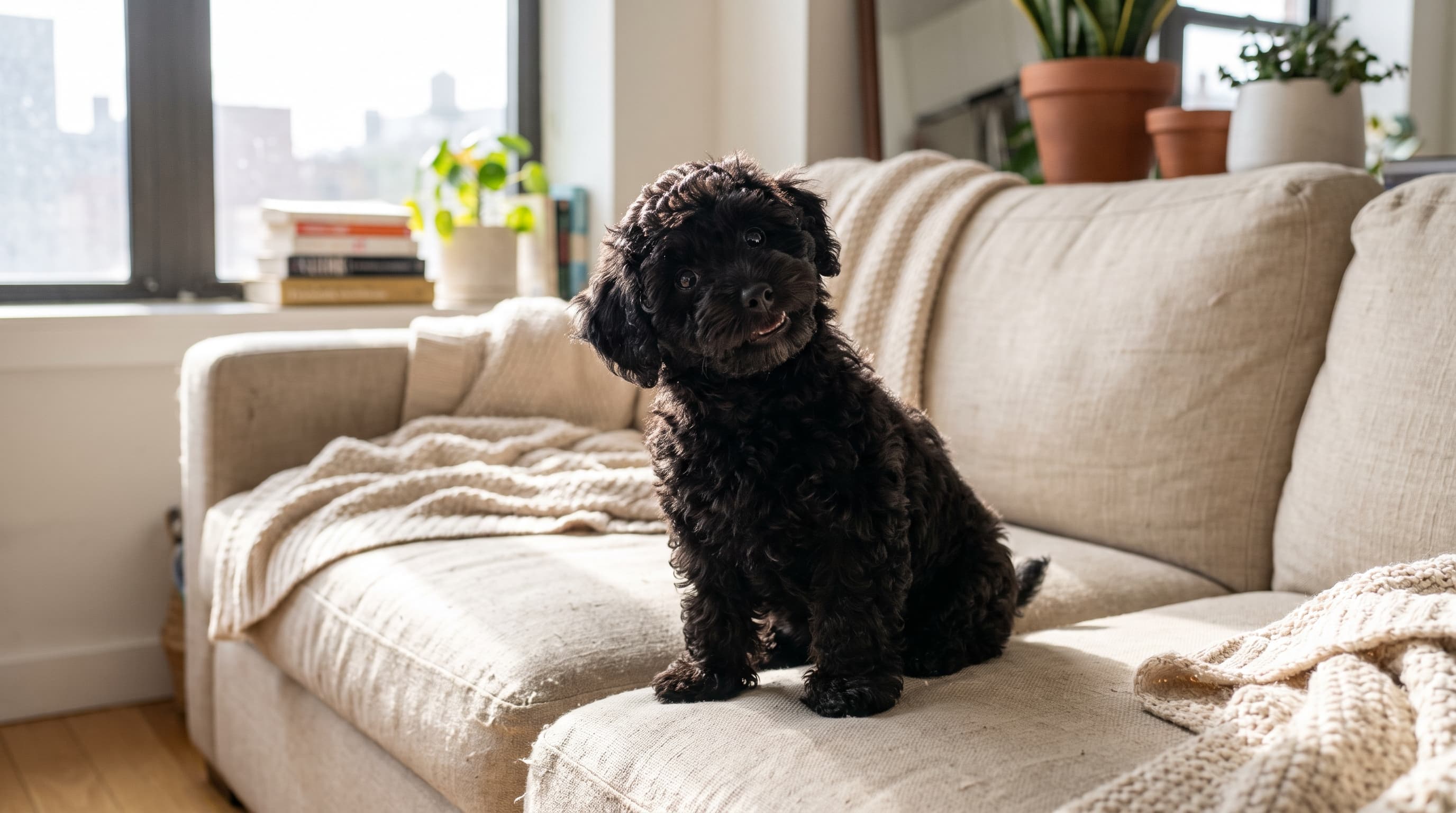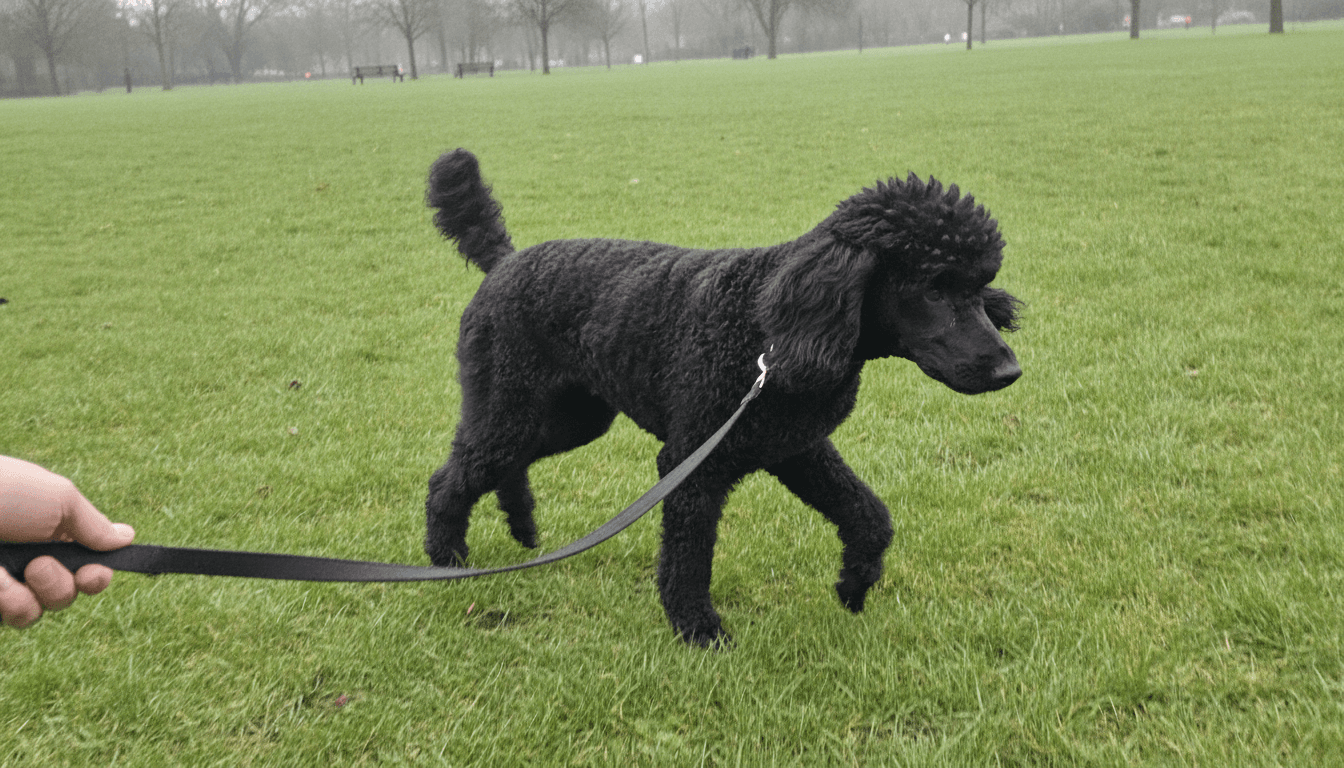

A black poodle isn't a separate breed but a solid-black coat color that appears in Toy, Miniature, and Standard Poodles. Black is the most common Poodle color because it's genetically dominant, producing dogs with jet-black fur, black skin pigment, dark eyes, and black noses, lips, and nails. True blacks stay deep and rich rather than fading to silver or blue.
Is a Black Poodle a Separate Breed?
No. The Poodle is a single breed recognized in three size varieties, and black is simply one of its many accepted coat colors. The American Kennel Club registers the Standard, Miniature, and Toy Poodle as the same breed, judged by the same standard apart from height. That means a black Standard Poodle, a black Miniature Poodle, and a black Toy Poodle share temperament, intelligence, and grooming needs — they just differ in size.
Black is also the original Poodle color. The breed descends from German water retrievers (the name comes from pudel, "to splash"), later refined in France, where dark, water-resistant coats were prized in working retrievers, according to historical breed records. Solid black remains one of the most photogenic and popular choices today.
Why Black Is the Most Common Poodle Color
Coat color in dogs is controlled by genetics, and black is a dominant trait. A Poodle only needs one copy of the dominant black allele to display a black coat, so black puppies regularly appear even when the parents are different colors. As breed color guides explain, this dominance is exactly why solid black shows up so often across all three size varieties.
A genuinely black Poodle has uniform jet-black fur from root to tip with no brown, silver, or blue cast in natural light. The dog should also have fully black "points" — black nose, lips, eye rims, paw pads, and nails. Patches of white on the chest or toes are considered a mismatched or "parti" marking rather than solid black, as detailed in dedicated Poodle color resources.
Do Black Poodles Fade or Turn Gray?
Some do. A subset of black Poodles carry the progressive graying gene, which gradually lightens a black puppy into a silver or blue adult over the first one to two years. This is the same mechanism that produces silver and blue Poodles, so a "fading" black is usually genetically a graying dog rather than a true stable black. Lines bred specifically for non-fading black tend to hold their deep color for life.
Environmental factors can also dull a coat temporarily. Sun exposure, nutritional gaps, and oxidation from saliva or hard water can give black fur a reddish or rusty tinge. A balanced diet, omega-3 supplementation under veterinary guidance, and limiting harsh sun usually keep a true black looking glossy.
Grooming a Black Poodle
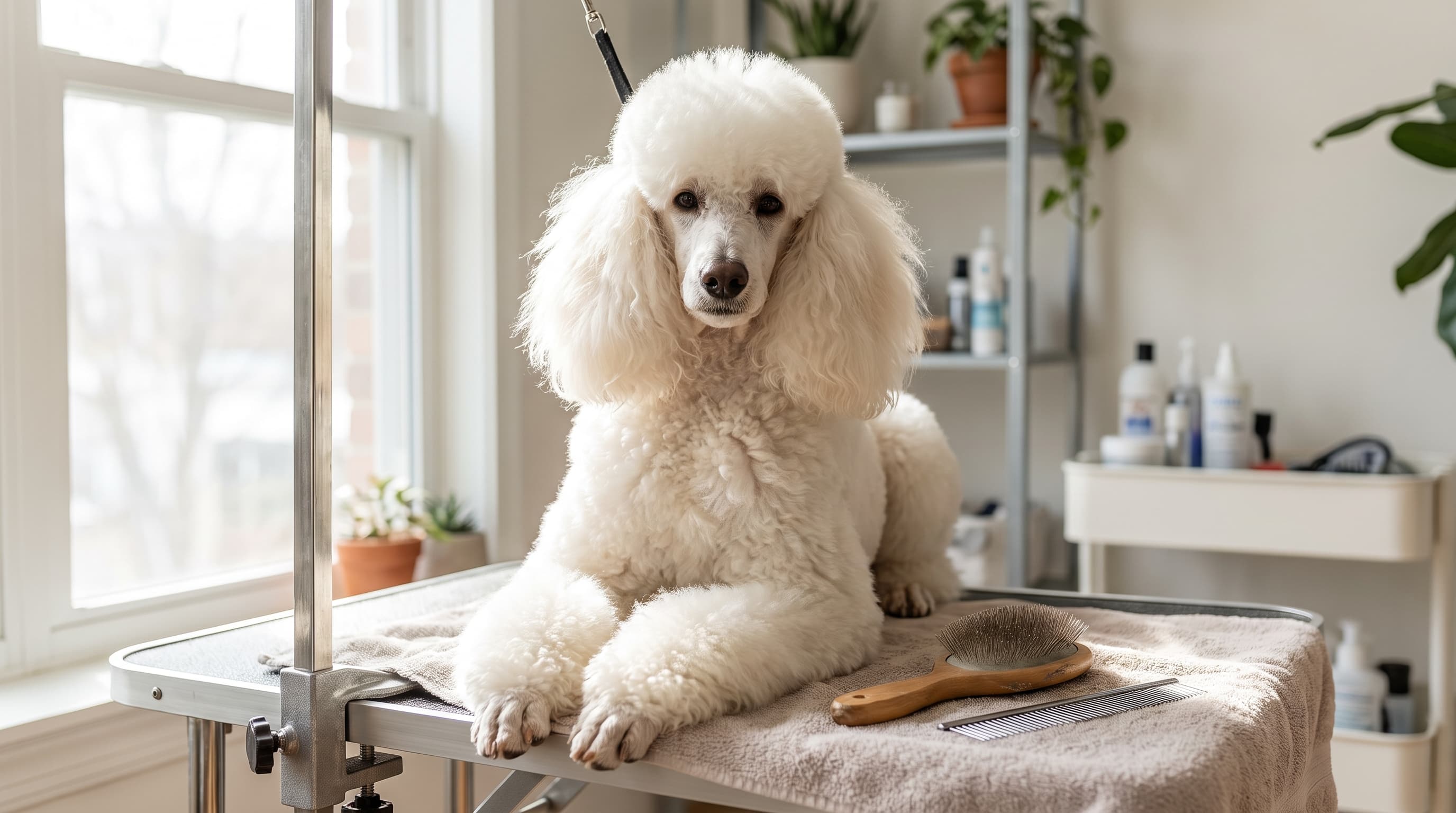
Like all Poodles, black Poodles have a dense, curly, continuously growing single coat that sheds very little but mats easily. Plan on brushing several times a week and a professional clip every four to six weeks. Popular styles — from the practical sporting clip to the show-ring continental — work beautifully on black coats, which show off sculpted lines especially well. Our guide to Poodle haircuts breaks down the most popular cuts.
Black coats have one quirk: they can look dusty or "ashy" if product residue builds up. Use a shampoo formulated for dark coats, rinse thoroughly, and dry completely to avoid that washed-out look. Because the coat keeps growing, neglected grooming quickly leads to painful matting near the skin.
Temperament, Intelligence, and Family Life
Color has no effect on personality. Black Poodles are exactly as bright, trainable, and people-oriented as Poodles of any color. The breed is consistently ranked among the most intelligent dogs in the world, which makes them quick to learn obedience, tricks, agility, and service tasks. They thrive on mental stimulation and can become bored or anxious if left alone too long, a trait highlighted across breed behavior overviews.
Poodles are also famously good family dogs — affectionate, playful, and gentle with respectful children. If you're weighing a Poodle for a household with kids, our piece on why Poodles suit families is a useful starting point. As with any breed, supervise interactions between dogs and young children.
Health and Lifespan
Black Poodles share the same health profile as the rest of the breed. Standard Poodles typically live 10–13 years, while Toy and Miniature Poodles often reach 14–16. Conditions seen across the breed include hip dysplasia, progressive retinal atrophy, epilepsy, and (in Standards) bloat and Addison's disease, per breed health summaries. Reputable breeders screen breeding dogs for these issues.
This article is general information, not veterinary advice. For health concerns specific to your dog, consult your veterinarian, who can recommend appropriate screening and care.
Black Poodle Sizes Compared
Because black appears across every Poodle variety, the same color can come in dramatically different packages. The Standard Poodle is the original and largest, standing over 15 inches and weighing roughly 40–70 pounds — an athletic, eager working dog that excels at swimming, agility, and active family life. A black Standard cuts an especially elegant figure in the show ring thanks to the way dark fur defines a sculpted clip.
The Miniature Poodle, at 10–15 inches and 10–15 pounds, offers nearly all of the Standard's brains and trainability in a more apartment-friendly size, making black Minis a favorite for families who want a clever dog without a giant footprint. The Toy Poodle, under 10 inches and just 4–6 pounds, is the lap-sized option; black Toys pack the breed's signature intelligence and devotion into a tiny, portable companion. Whichever size you choose, the black coat care, temperament, and health screening priorities stay the same.
Exercise and Mental Stimulation Needs
Poodles were bred to work, and that drive doesn't disappear because a dog is small or kept as a pet. Black Poodles of every size need both physical exercise and mental challenges to stay happy. Standards thrive on long walks, swimming, fetch, and dog sports; Miniatures and Toys do well with brisk daily walks plus indoor play and training games. A bored Poodle is an inventive Poodle, often channeling unused energy into barking, chewing, or anxious behaviors.
The good news is that their off-the-charts intelligence makes enrichment easy and fun. Puzzle feeders, scent games, trick training, and rotating toys all give a black Poodle the mental workout it craves. Many owners find that fifteen minutes of focused training tires a Poodle more effectively than a long walk, because thinking is hard work for these problem-solvers.
Feeding and Coat-Care Diet
A glossy black coat starts from the inside. Feed a complete, balanced diet matched to your Poodle's size and life stage, and keep portions in check — Toy and Miniature Poodles in particular gain weight easily, which stresses their joints. Some owners notice that adequate healthy fats help maintain a deep, shiny black, though any supplement plan should be cleared with your veterinarian first. Fresh water, dental care, and consistent feeding times round out the basics. Avoid overfeeding treats during the heavy training sessions these smart dogs love; use part of the daily food allowance as training rewards instead.
Black Poodle Mixes and Doodles
The Poodle's dominant black gene and low-shedding coat have made it one of the most popular parents in the world of designer crossbreeds. Black is a frequent outcome in Poodle mixes, from black Goldendoodles and Labradoodles to Bernedoodles and Cockapoos, because the trait passes readily to puppies. That said, a mix is never guaranteed to inherit a purebred Poodle's coat or temperament — crossbred dogs can vary widely litter to litter, and a "doodle" may shed more than expected if it takes after its non-Poodle parent.
If your heart is set on the genuine Poodle combination of brains, low shedding, and that signature curly black coat, a purebred from a health-testing breeder is the most predictable path. If you're open to a mix, research both parent breeds carefully and ask about the coat and temperament of previous litters. Either way, the black coloring itself doesn't change grooming or care requirements — what matters is the underlying coat type the dog actually inherits.
Frequently Asked Questions
Are black Poodles rare?
No — black is actually the most common Poodle color because the black gene is dominant. Rarer colors include true reds, apricots, and patterned parti-Poodles.
Do black Poodles change color as they age?
Some do. Black Poodles carrying the progressive graying gene lighten into silver or blue over their first one to two years. Poodles from non-fading black lines usually keep their deep black for life.
Are black Poodles hypoallergenic?
Poodles of every color are considered among the most allergy-friendly breeds because they shed very little dander-laden hair. No dog is 100% hypoallergenic, but many allergy sufferers tolerate Poodles well.
How big does a black Poodle get?
It depends on the variety. Toy Poodles stand under 10 inches and weigh 4–6 lbs, Miniatures are 10–15 inches and 10–15 lbs, and Standards are over 15 inches and 40–70 lbs.
How much does a black Poodle cost?
From a reputable breeder, Poodles generally run about $1,000–$3,000 depending on variety, lineage, and region, with adoption from rescue typically far less.
Is a Black Poodle Right for You?
If you want a striking, brilliant, low-shedding companion and you're prepared for regular grooming and plenty of mental engagement, a black Poodle is a fantastic choice in any size. Explore more breed guides like the Standard Poodle and the Toy Poodle to decide which size fits your home — and subscribe to the Daily Wag newsletter for breed deep-dives, grooming tips, and dog news delivered straight to your inbox.