
Golden Dox: The Complete Guide to the Golden Retriever Dachshund Mix
The Golden Dox is a hybrid dog that crosses the Golden Retriever with the Dachshund, producing an affectionate, medium-energy companion that usually weighs 30–50 pounds and stands under 20 inches tall. Expect a long-bodied, short-legged dog with a friendly, family-oriented temperament, a moderate-shedding coat, and a lifespan of roughly 10–14 years. It suits owners who want a Golden's warmth in a smaller, quirkier package.
What Is a Golden Dox?
The Golden Dox — also called the Golden Weiner Dog, Golden Dachshund, or Golden Doxie — is a designer crossbreed created by mating a Golden Retriever with a Dachshund. Like most designer crossbreeds, it is not recognized by the American Kennel Club, and because the breed is still relatively new there is no fixed standard. That means two Golden Dox puppies from the same litter can look strikingly different depending on which parent's genes dominate.
What unites them is temperament: both parent breeds were originally bred to hunt, so the Golden Dox tends to be alert, curious, and eager to be involved in whatever the family is doing. If you already love smaller mixes, you may also enjoy our guides to the Doxiepoo and the Bo-Dach, two other Dachshund crosses with big personalities.
Golden Dox Size, Appearance, and Coat
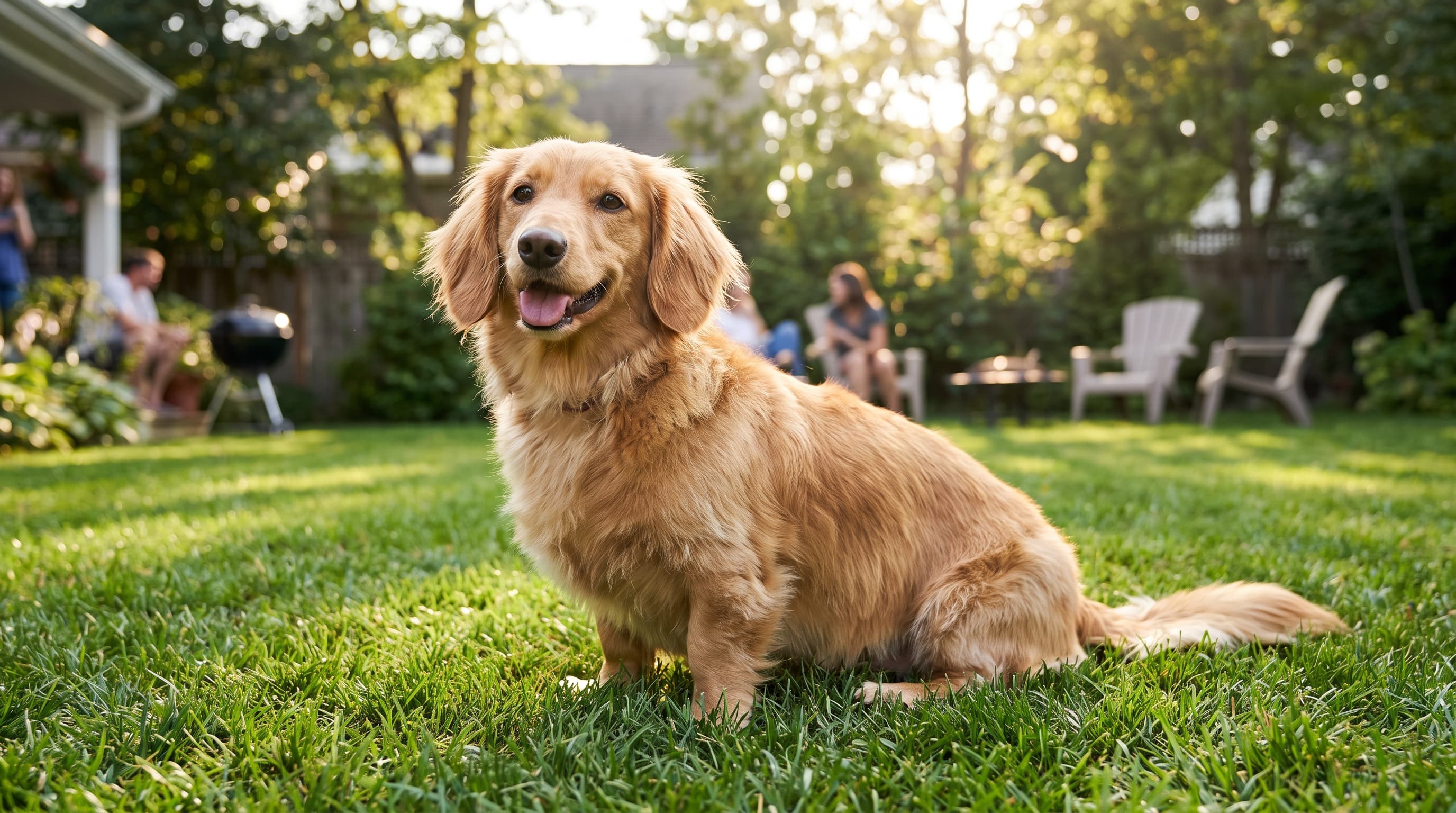
Size is the single most unpredictable trait in this mix. A Golden Retriever typically weighs 55–75 pounds, while a standard Dachshund usually weighs 16–32 pounds. The result is a dog that most often lands in the 30–50 pound range and rarely exceeds 20 inches at the shoulder, frequently with the Dachshund's signature elongated back and shorter legs paired with the Golden's broader head and soft, floppy ears.
Coats are usually short to medium in length, dense, and either straight or slightly wavy. Common colors include golden, red, cream, tan, brown, and occasionally black. Because the Dachshund comes in smooth, long-haired, and wire-haired varieties, coat texture can vary noticeably from one Golden Dox to the next.
Golden Dox Temperament and Personality
The Golden Dox is prized for being people-oriented and gentle. Golden Retrievers are famous for their patient, biddable nature, and that softness usually tempers the Dachshund's bold, sometimes headstrong streak. Most Golden Doxes are happy, affectionate, and playful, and they generally get along well with children and other dogs when socialized early.
That said, a few inherit the Dachshund's stubbornness and strong prey drive, which can show up as digging, chasing squirrels, or selective hearing during training. This is a companion dog that does not like being left alone for long stretches and may develop separation anxiety or nuisance barking if under-stimulated.
Exercise and Enrichment Needs
Both parent breeds are working hunters, so the Golden Dox needs real daily activity — plan on at least 45 to 60 minutes of exercise split across walks, play, and sniff-driven enrichment. A securely fenced yard is a bonus, but be aware the Dachshund side loves to dig. Late-summer hikes, backyard fetch, and puzzle feeders all help burn energy and prevent boredom-based mischief.
Because of the long-backed body many Golden Doxes inherit, avoid high-impact activities like repeated stair climbing or jumping from furniture, which can strain the spine. Ramps and controlled, low-impact play protect the back over the long term.
Training a Golden Dox
Training success depends on which parent your dog favors. The Golden Retriever influence makes many Golden Doxes eager to please and quick to learn, while the Dachshund influence can add a mischievous, independent edge. Short, upbeat, reward-based sessions work best; harsh corrections tend to backfire with sensitive, intelligent mixes like this one.
Prioritize early socialization, recall (to counter the prey drive), and crate training to ease separation anxiety. Consistency from every family member matters — a Golden Dox will happily exploit a household where the rules keep changing.
Grooming and Shedding
Grooming needs are moderate. Most Golden Doxes shed a fair amount year-round with seasonal peaks, so brushing two to three times a week keeps loose hair and matting under control. Bathe only as needed, check and clean the ears regularly (floppy ears trap moisture), and keep nails trimmed.
Small-jawed parents like the Dachshund make dental care especially important. According to VCA Animal Hospitals, small breeds are more prone to periodontal disease because of tooth crowding, so regular brushing and vet dental checks should be part of the routine.
Golden Dox Health and Lifespan
Most Golden Doxes live around 10–14 years. Hybrids can benefit from added genetic diversity, but they can still inherit conditions common to either parent. Watch for intervertebral disc disease (IVDD) linked to the long Dachshund back, hip and elbow issues from the Golden side, ear infections, eye conditions, and a tendency toward weight gain that further stresses the spine.
This is general information, not veterinary advice. Choose a breeder who screens both parents for known issues, keep your Golden Dox at a healthy weight, and consult your veterinarian for any health concerns or a personalized wellness plan.
Is the Golden Dox Right for You?
A Golden Dox tends to thrive with active families, first-time owners who can commit to training and companionship, and homes where someone is around for much of the day. They can adapt to apartments if exercised well, but the barking and separation anxiety potential means they are best for people who want a genuine sidekick rather than a low-maintenance, hands-off pet.
Frequently Asked Questions
How big does a Golden Dox get?
Most Golden Doxes weigh 30–50 pounds and stand under 20 inches tall, though size varies widely depending on whether the puppy takes after the Golden Retriever or the Dachshund parent.
Do Golden Dox dogs shed a lot?
They are moderate to heavy shedders. Brushing two to three times a week helps manage loose hair, and coat type can vary because Dachshunds come in smooth, long-haired, and wire-haired varieties.
Are Golden Dox dogs good with kids?
Generally yes. The Golden Retriever's gentle nature usually makes them patient and affectionate with children, especially when socialized early. Supervise interactions with very young kids given the dog's long, injury-prone back.
How much does a Golden Dox cost?
Prices typically range from about $400 to $1,500 from a breeder, depending on lineage and location. Adoption through a rescue is often less expensive and gives a mixed-breed dog a home.
How long do Golden Dox dogs live?
The Golden Dox generally has a lifespan of about 10–14 years with good nutrition, regular veterinary care, and healthy weight management.
Are Golden Dox dogs hypoallergenic?
No. The Golden Dox is not considered hypoallergenic, as both parent breeds shed and produce dander. Allergy sufferers should spend time with the breed before committing.
Meet More Mixed Breeds
If the Golden Dox has your heart, explore two more crosses that blend big personalities into smaller frames: the Golden Lab for retriever lovers and the Blonde Dachshund for fans of the long-and-low look. Love this kind of breed deep-dive? Subscribe to the Daily Wag newsletter for fresh guides, health tips, and dog stories delivered straight to your inbox.