
Imagine you're standing in the kitchen, chatting with your partner about a new toy you ordered for the dog. You're not addressing the dog. The dog is across the room, half-asleep, ears barely twitching. Most dogs would walk away from that conversation with nothing.
A rare few would walk away knowing the toy's name.
That's the finding of a study published January 8, 2026, in the journal Science, from the team behind the Genius Dog Challenge at Eötvös Loránd University in Budapest. The researchers showed that a small set of "Gifted Word Learner" (GWL) dogs can pick up new object names not by being trained on them, not by being addressed, but simply by listening in on their owners' conversations — a level of language learning previously documented only in human children around 18 months old.
Inside the Eavesdropping Experiment
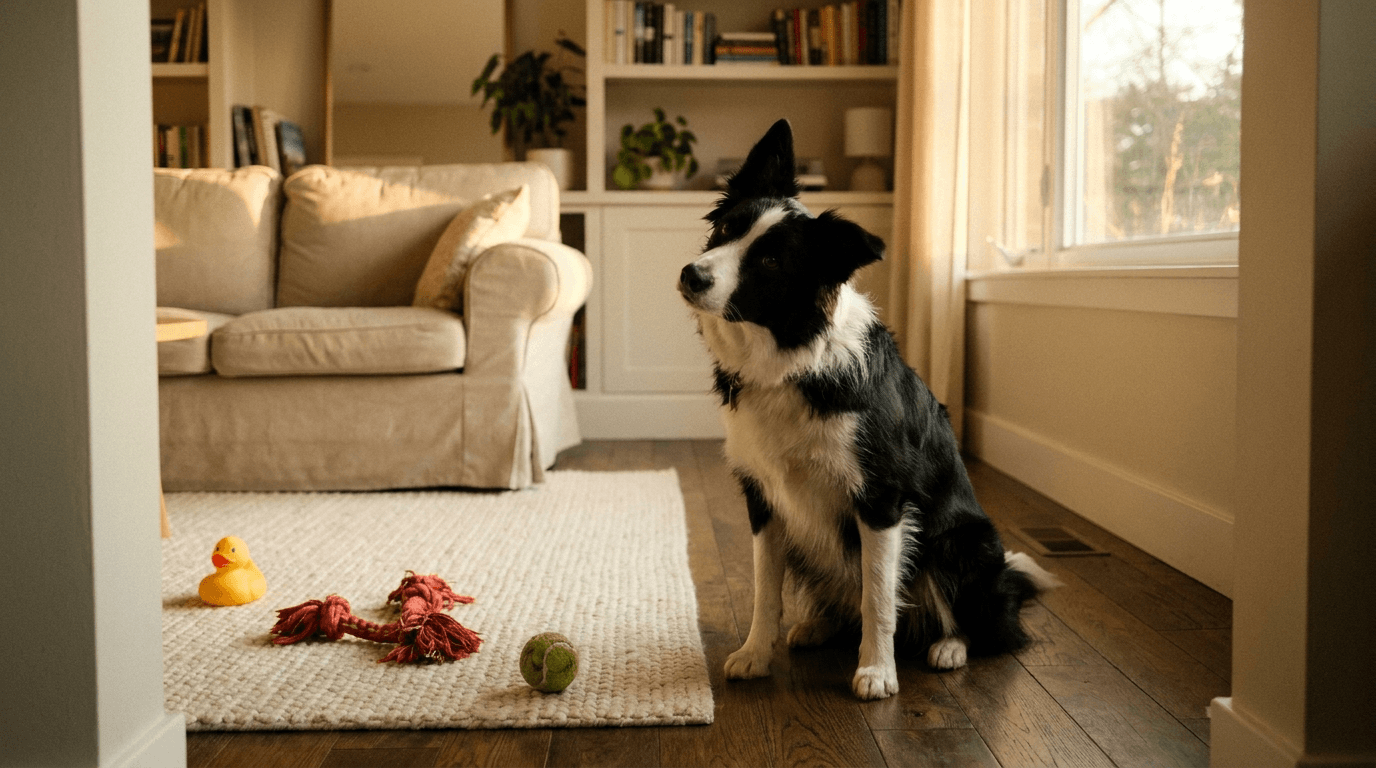
The study tested 10 dogs: seven border collies, one Labrador retriever, one miniature Australian shepherd, and one Australian shepherd–blue heeler mix. Each had already proven, in earlier work, that they could memorize the names of dozens — sometimes hundreds — of toys.
In the first experiment, owners introduced two new toys in one of two ways:
- The addressed condition: the owner spoke directly to the dog, naming the toy and inviting interaction with it.
- The overheard condition: two people talked about the toy in the dog's presence, deliberately not engaging the dog at all.
Each toy name was heard for a total of about eight minutes, spread across short sessions over multiple days. Then the dogs were taken to a different room and asked to fetch the toy by name from a pile that mixed nine familiar items in with the two new ones.
According to the official press release from Eötvös Loránd University, seven of the ten dogs picked up the new labels in both conditions. They scored 80% accuracy when the toys were introduced directly to them — and 100% accuracy when they had only overheard the names.
A second experiment added a wrinkle: the toys were shown, then hidden inside a bucket, and only then named out of sight. The temporal separation between seeing the toy and hearing its label didn't throw the dogs off. Most still learned.
Why This Lines Up With How 18-Month-Olds Learn
Until recently, the ability to bind a sound to a meaning without direct instruction was considered a hallmark of human language acquisition. Linguists call it "fast mapping," and it's the same mechanism a child uses when they hear a parent say "broccoli" at dinner once and recognize it the next day in a picture book.
"Our findings show that the socio-cognitive processes enabling word learning from overheard speech are not uniquely human," said Shany Dror, the study's lead author, in a statement released alongside the paper.
Coverage from Smithsonian Magazine highlights just how clean the parallel is: research on toddlers around 18 months has consistently shown they learn equally well from being addressed and from overhearing — the exact pattern these dogs displayed.
But Dror is careful not to overclaim. As she told Gizmodo, "even though some behaviors look similar across species, the cognitive mechanisms that underlie these behaviors are different." The dogs aren't doing what toddlers are doing in a neurological sense. They're just arriving at the same answer.
The Catch: Most Dogs Cannot Do This
There's a major caveat tucked inside the headline finding. Most dogs cannot learn this way. Not even close.
Researchers tested typical family dogs in the same setup, and their performance was no better than chance. The dogs that succeeded were drawn from the Genius Dog Challenge, a global registry the Eötvös Loránd team has been building since 2018 to find these rare canine prodigies.
How rare? In an earlier hunt for word-learning dogs, the team identified only six worldwide. The current pool of 41 confirmed GWLs — half of whom know more than 100 toy names — is the largest ever assembled. A six-year-old border collie named Miso, profiled by Popular Science, knows the names of around 200.
What makes a dog a GWL is still unsettled science. The Genius Dog Challenge team writes that the ability "likely reflects a combination of nature and nurture" — genetics, breed predisposition (border collies are massively overrepresented), individual personality, and the unusual amount of toy-naming play these dogs tend to get from their owners.
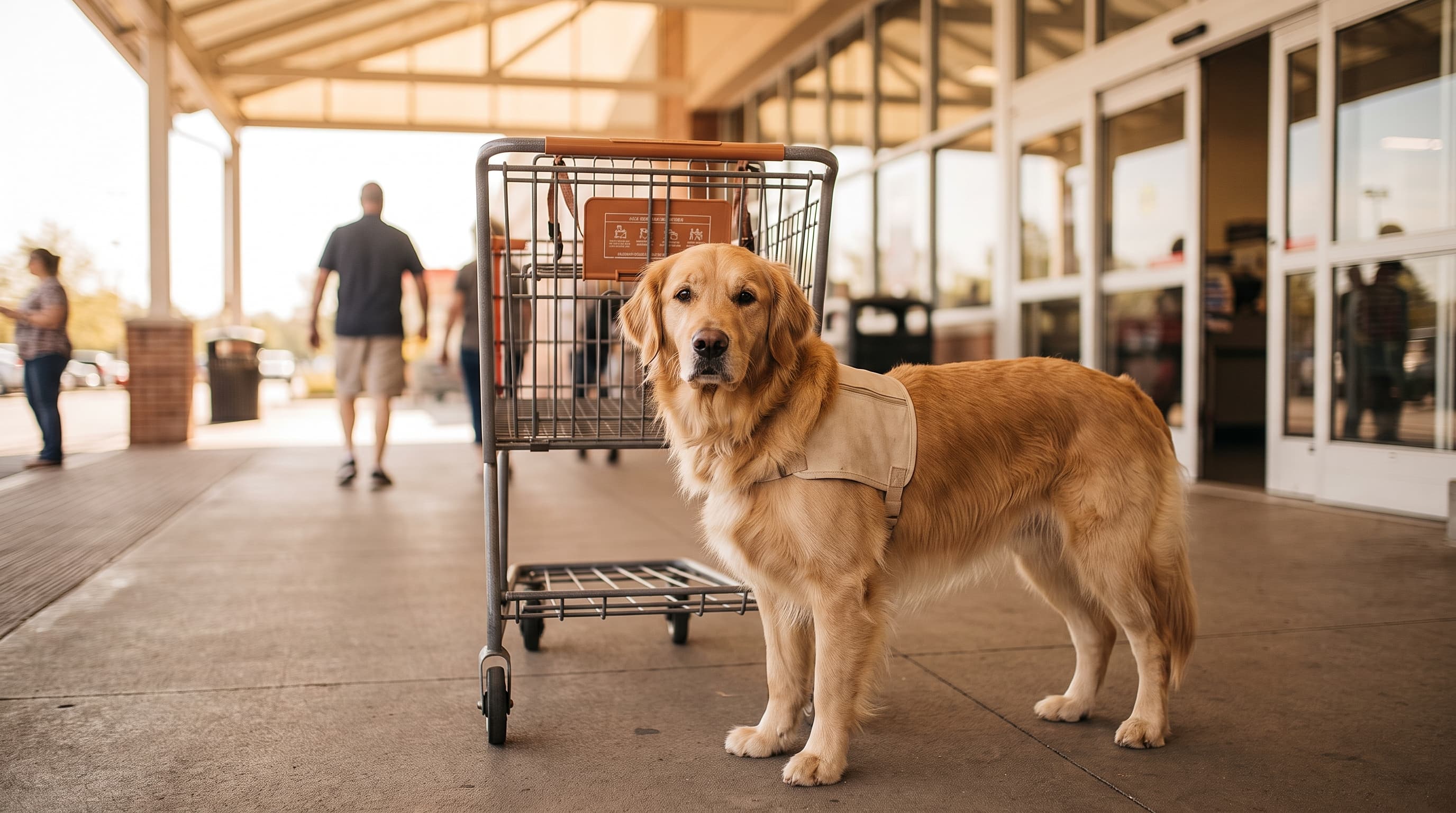
So if your golden retriever can't tell a Kong from a tennis ball by name, that's normal. It's the 200-toy border collies that are the outliers.
What This Changes for Regular Dog Owners
Even if your dog will never be flown to Budapest for testing, the study has practical takeaways for life on the couch.
The first is that the dogs in the study weren't drilled. Their owners didn't run flashcard sessions; they had natural conversations and used toy names organically during play. That's a meaningful shift from how dog training is usually framed — as a one-way exchange of commands and treats.
"The current findings highlight the huge potential social cues have as a means of communicating with our dogs," Dror said in the same Gizmodo interview. In other words: dogs may be picking up more from the texture of your everyday conversation than the standard training literature gives them credit for.
The second is that this finding is one more data point in a long-running thaw between dog cognition science and the felt experience of dog owners. Anyone who lives with a dog has the nagging sense that the dog understands more than they "should." The Eötvös Loránd team — and the broader field, including Cornell research showing dogs' olfactory and visual processing areas are wired together in ways no human brain is — keeps steadily showing that the gap between "felt" and "proven" is narrower than skeptics claimed.
How to Tell If Your Dog Might Be One of Them
If you suspect your dog is a covert GWL, the Genius Dog Challenge team is still accepting submissions through their lab's website, Facebook, and Instagram. Their threshold is high: a dog needs to reliably retrieve at least 10 named objects before the team will even start the conversation.
For everyone else, the lower-stakes takeaway is just to talk to your dog more, and to use the actual names of things — the toys, the rooms, the people. The dog probably won't end up with a 200-word vocabulary. But the cognitive shorthand researchers are uncovering, including findings from the Dog Aging Project and recent work on canine genetics, keeps pointing in the same direction: dogs are tracking us much more carefully than we're tracking them.
The next time you're chatting in the living room about that new squeaky duck you ordered, watch where your dog is looking. There's a chance — small, but real — that the word is already filed away.
At Sidewalk Dog, we cover the science of being a better human to your dog — without pretending every dog is a prodigy. Our reporting is built for the regular dog asleep on your couch, the one who probably can't name 200 toys but is paying closer attention than you think.