
The German Shorthaired Pointerpoodle: A Complete Breed Guide
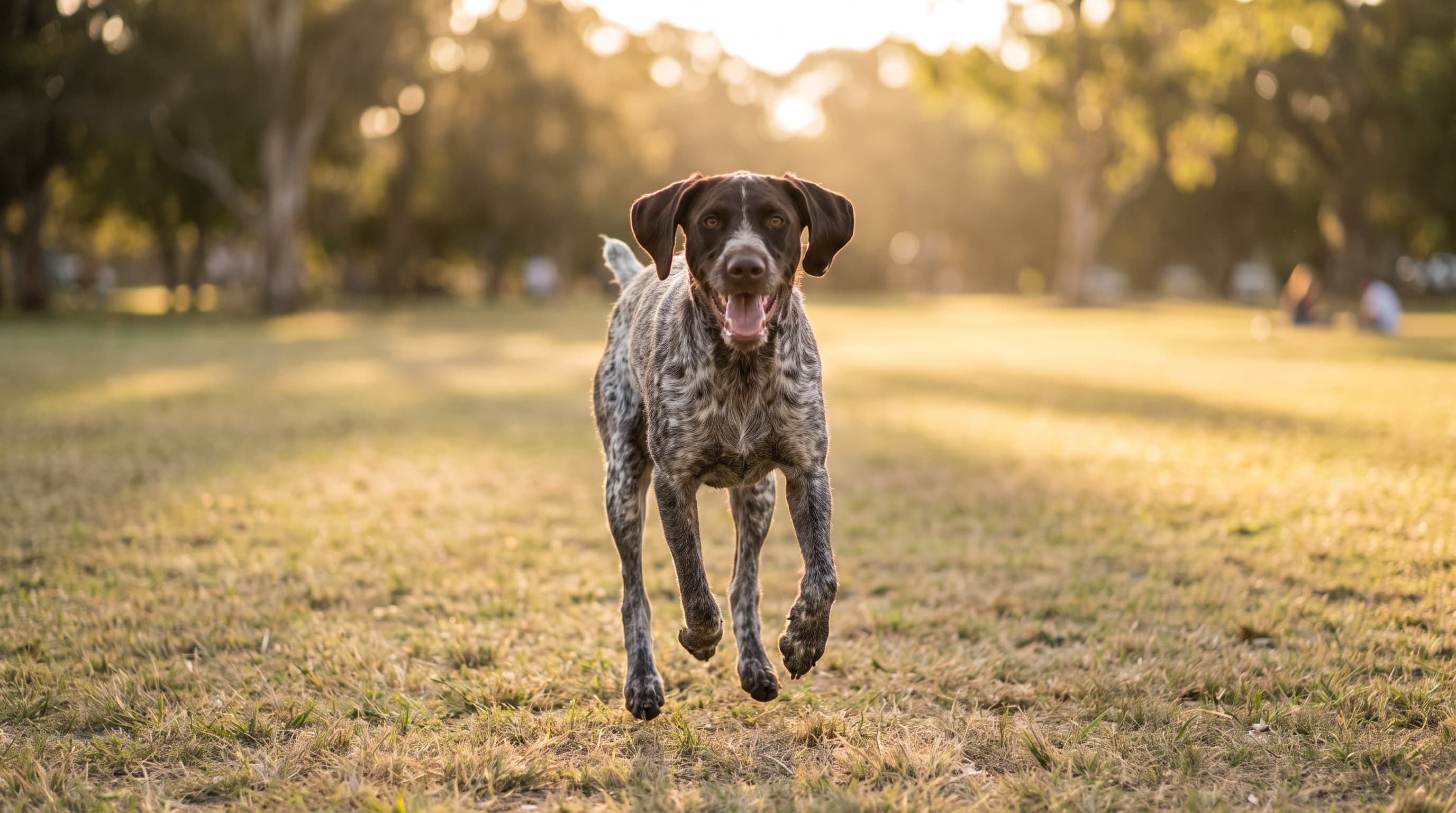
The german shorthaired pointerpoodle is a designer crossbreed between the German Shorthaired Pointer and the Poodle, also called a Pointerdoodle or Pointerpoo. It is a large, athletic, highly intelligent dog standing 20-25 inches, weighing 45-70 pounds, and living 10-14 years. Friendly and tireless, it suits active owners and homes with room to run.
Appearance and Size
The German Shorthaired Pointerpoodle is a large, lean, square-built dog that inherits the GSP's deep chest and the Poodle's elegant, well-sprung frame. Most adults stand 20 to 25 inches at the shoulder and weigh 45 to 70 pounds, with males typically at the top of that range and females a touch smaller. Because this is a first- or multi-generation cross rather than a standardized breed, two puppies from the same litter can look noticeably different.
The biggest variable is the coat. It can range from the short, dense, weather-resistant coat of the German Shorthaired Pointer to the dense, curly, low-shedding coat of the Standard Poodle - with many dogs landing somewhere in between as a wavy, "broken," or fleece-type coat. Common colors include liver (brown), black, white, and combinations of these, often with ticking, roan patterning, or patches carried over from the pointer side.
How coat type affects daily life
Coat type is the single most important thing to ask a breeder about, because it dictates grooming, shedding, and how the dog handles weather. A short-coated Pointerpoodle will shed more and feel the cold faster; a curlier, Poodle-dominant coat sheds less but mats and needs professional trims. You usually cannot tell exactly which coat a puppy will keep until it matures, so plan for the more demanding scenario.
Temperament and Who It Suits
Both parent breeds are smart, people-oriented, and built to work all day, so the Pointerpoodle is typically friendly, affectionate, biddable, and intensely energetic. These dogs bond hard with their families, are usually excellent with children and other dogs when well socialized, and thrive on having a "job," whether that is fetch, scent games, dock diving, hiking, or canine sports.
The flip side of that intelligence and drive is that a bored Pointerpoodle becomes a destructive one. Under-exercised dogs of this type are prone to chewing, digging, counter-surfing, and nuisance barking, and the GSP heritage means many are sensitive to being left alone for long stretches and can develop separation-related behaviors.
This crossbreed is a great match for runners, hikers, hunters, and active families who want a velcro companion and have time for daily training and exercise. It is a poor match for very sedentary households, people who are away ten-plus hours a day, or first-time owners who underestimate how much dog this is.
Exercise and Energy Needs
Plan on a minimum of 60 to 120 minutes of vigorous exercise every day, and treat that as a floor, not a ceiling. A short leash walk does not come close to satisfying a dog bred from two tireless working lines. Good outlets include running, off-leash play in a secure area, fetch, swimming, biking alongside (once mature), and dog sports such as agility, rally, flyball, and scent work.
Mental work matters just as much as physical. Puzzle feeders, nose games, trick training, and structured obedience sessions tire these dogs in a way that pure cardio cannot. A useful rule of thumb: a Pointerpoodle that gets both a real workout and a daily "thinking" task is calm indoors; one that gets neither will reorganize your house.
Climate and apartment suitability
This is not a natural apartment dog. It can live in an apartment if the owner is genuinely committed to multiple daily outings and sports, but it is far happier with a securely fenced yard. Short-coated individuals tolerate heat reasonably well but get cold quickly and benefit from a coat in winter; curlier-coated dogs insulate better against cold but can overheat, so watch any dog hard during hot, humid weather and always provide shade and water.
Grooming and Shedding
Grooming depends entirely on which coat your dog inherits. Short, pointer-type coats are wash-and-go: a weekly once-over with a rubber curry or hound mitt controls shedding, plus baths as needed. Wavy and curly, poodle-type coats are higher maintenance - they shed less but trap loose hair, so they need brushing several times a week down to the skin and a professional groom every six to eight weeks to prevent painful matting.
Regardless of coat, build in a routine that covers the basics: check and gently clean the ears weekly (both parent breeds have drop ears prone to moisture and infection, especially after swimming), brush the teeth several times a week, and trim nails every few weeks. If you have ever owned a doodle-type dog such as a Labradoodle, the curly-coat care routine will feel familiar.
Health and Lifespan
A well-bred German Shorthaired Pointerpoodle typically lives 10 to 14 years. Crossbreeding can broaden the gene pool, but it does not erase conditions shared by both parent breeds, so responsible health testing of the parents matters enormously. The conditions below are the ones worth understanding before you buy.
- Hip and elbow dysplasia: malformed joints that can lead to arthritis and pain. Reputable breeders screen breeding dogs through programs such as OFA or PennHIP - see the Cornell University overview of canine hip dysplasia and the AKC breeder guide to hip dysplasia genetics.
- Bloat (gastric dilatation-volvulus, GDV): a sudden, life-threatening twisting of the stomach that disproportionately affects large, deep-chested dogs like both parents. Learn the warning signs and prevention options, including prophylactic gastropexy, from the American College of Veterinary Surgeons and VCA Animal Hospitals. GDV is an emergency - if you see a distended abdomen, unproductive retching, and restlessness, go to a vet immediately.
- Progressive retinal atrophy (PRA): an inherited eye disease that causes gradual vision loss and is well documented in Poodles. A DNA test on the parents can identify carriers; the Cornell PRA resource explains how it progresses.
- Ear infections and skin conditions: drop ears plus a love of water make routine ear care important, and some poodle-line dogs are prone to skin issues such as sebaceous adenitis.
None of this is a reason to avoid the crossbreed - it is a reason to buy carefully. Ask any breeder to show written health-test results (hips, eyes, and relevant DNA panels) for both parents, see the parent breeds' official profiles from the AKC German Shorthaired Pointer page and the AKC Poodle page, and partner with a veterinarian for routine preventive care, vaccinations, parasite control, and weight management. This guide is general information, not veterinary advice - your vet should make the call on any specific health concern.
Training
The good news: this is one of the more trainable mixes you will find. Both parents rank among the smartest, most cooperative breeds, and the Pointerpoodle generally learns fast and loves to work with its person. The catch is that all that intelligence needs direction, or the dog will invent its own (usually unwelcome) hobbies.
Use reward-based, positive-reinforcement methods, keep sessions short and upbeat, and start early socialization in puppyhood - lots of calm, positive exposure to people, dogs, surfaces, and sounds. Prioritize a rock-solid recall and impulse control early, because the GSP's prey drive can send an untrained dog after birds, squirrels, or joggers. Channeling that drive into sports and scent work is far more effective than trying to suppress it.
Cost and Finding One
Expect to pay roughly $800 to $2,500 for a puppy from a responsible breeder who health-tests both parents, with prices toward the high end for well-bred, low-shedding, poodle-coat litters. Be skeptical of unusually cheap puppies or "rare" color upcharges; the real value is in documented health testing, not novelty.
Budget beyond the purchase price, too. Quality food, routine veterinary care, grooming (potentially $60-$100 every couple of months for curly coats), training, gear, and pet insurance add up to a meaningful annual cost for a large, active dog. Because this is a designer cross, you may also find Pointerpoodles and similar pointer or poodle mixes through breed-specific and all-breed rescues - a great option for owners open to an adult dog.
Frequently Asked Questions
Is the German Shorthaired Pointerpoodle hypoallergenic?
There is no truly hypoallergenic dog, but Pointerpoodles that inherit the Poodle's curly, low-shedding coat tend to be more tolerable for some allergy sufferers. Because coat type is unpredictable in a cross, never assume a low-allergen coat - spend time with the specific dog first.
How much exercise does a Pointerpoodle really need?
At least 60 to 120 minutes of vigorous activity daily, plus mental enrichment. These dogs were bred from two working lines and do not settle without real physical and mental outlets.
Are they good family dogs?
Yes, for active families. They are typically affectionate, playful, and good with children and other dogs when socialized early. They can be too bouncy for homes with very young toddlers or for people who cannot meet their exercise needs.
How big do they get?
Most stand 20-25 inches tall and weigh 45-70 pounds, putting them firmly in the large-dog category, though size varies with which parent a given dog favors.
Do German Shorthaired Pointerpoodles shed a lot?
It depends on the coat. Short, pointer-type coats shed moderately year-round; curly, poodle-type coats shed very little but need regular brushing and professional grooming to avoid matting.
How long do they live?
Typically 10 to 14 years with good nutrition, regular exercise, routine veterinary care, and responsibly health-tested parents.
Is the Pointerpoodle Right for You?
The German Shorthaired Pointerpoodle rewards the right owner with a brilliant, devoted, endlessly fun companion - and frustrates the wrong one with energy and smarts it cannot contain. If you live an active life, want a dog that hikes, runs, swims, and learns with you, and you are ready to commit to daily exercise, training, and coat care, few crossbreeds are more rewarding.
Want to dig deeper into where this mix comes from? Read our full guides to the German Shorthaired Pointer and the Standard Poodle to understand the parent breeds behind the cross. And if you found this helpful, subscribe to the Daily Wag newsletter for breed deep-dives, training tips, and pet-friendly travel picks delivered straight to your inbox.