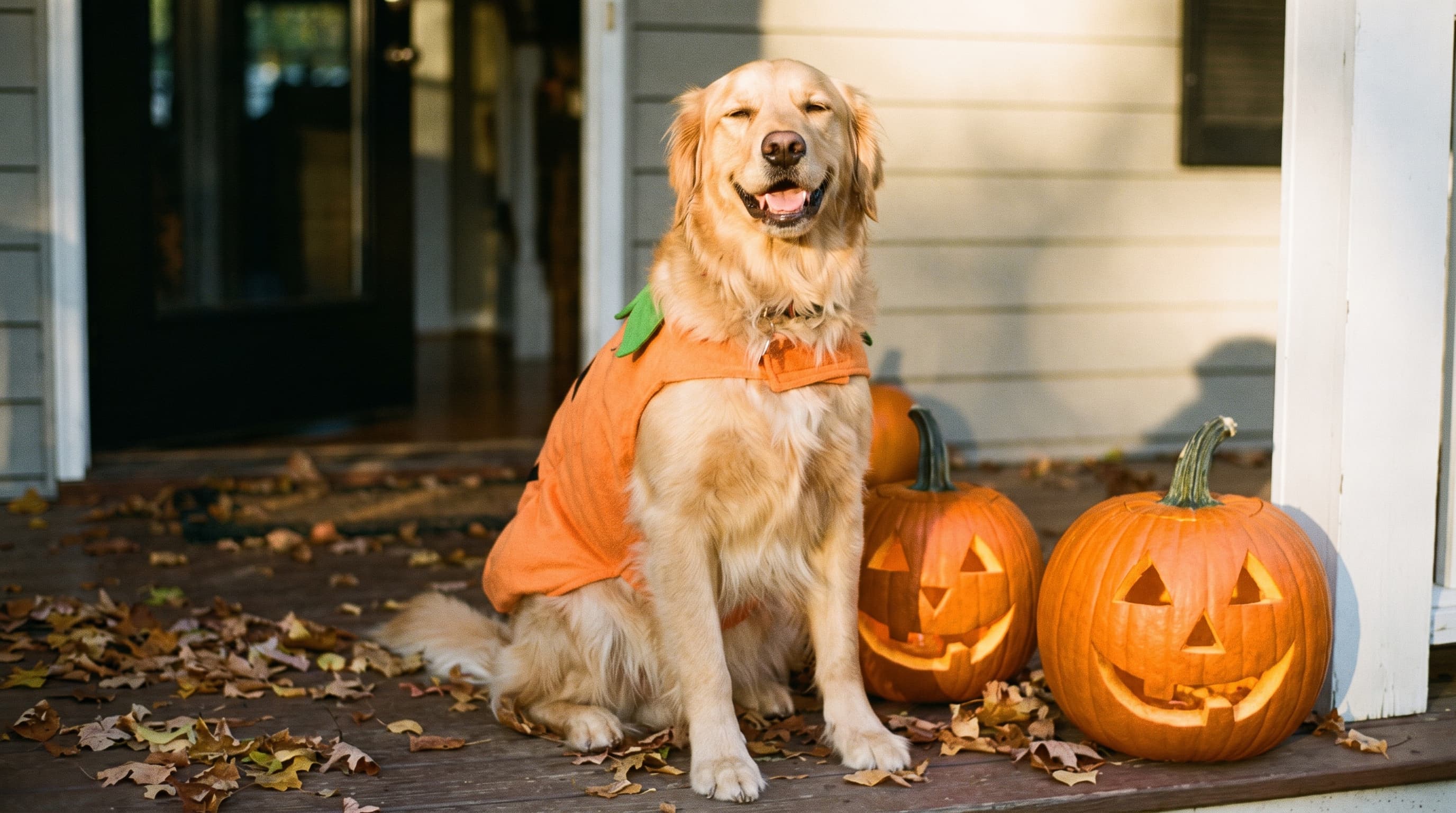

Halloween has quietly become one of the biggest spending holidays on the American calendar. The National Retail Federation projects that shoppers will pour a record $13.1 billion into Halloween in 2025, and a growing slice of that total isn't for kids at all — it's for the four-legged member of the household. If a bumblebee costume, a tiny hot-dog bun, or a full pumpkin ensemble is already sitting in your online cart, you're in very good company. You're also about to make a handful of decisions that determine whether October 31 is a delight for your dog or a fast track to the emergency vet.
Here's the good news: dressing your dog up can be genuinely fun for both of you. But "fun" and "safe" aren't automatic — they depend on the costume you choose, how you introduce it, and what you do with the candy bowl once the doorbell starts ringing. Let's walk through it the way a level-headed vet tech would.
Pet Costumes Went From Novelty to Multi-Billion-Dollar Habit
Dressing up pets used to be a fringe activity. Not anymore. More than a decade ago, Americans were already spending an estimated $330 million a year on pet costumes, according to NRF data — and that was before the pandemic-era pet boom supercharged how much we spend on our animals. The broader pet-apparel market was valued at roughly $5.7 billion by 2021, with dog owners driving the majority of sales.
That spending tracks a bigger cultural shift. We increasingly treat dogs like full family members — a trend researchers literally call "pet humanization." Consider that a record 6.4 million pets were insured in the United States in 2024, a 20.7% jump in a single year. When your dog has a health-insurance policy, buying them a superhero cape for Halloween starts to feel perfectly normal. The instinct is sweet. It just needs a few guardrails.
First Question: Does Your Dog Actually Want to Wear a Costume?
Before you worry about which costume, ask whether your dog wants one at all. Plenty of dogs tolerate outfits happily; plenty of others freeze, flatten their ears, or turn into a statue the moment fabric touches their back. The ASPCA's guidance is refreshingly blunt: if your pet "seems distressed or shows abnormal behavior," let them celebrate in their "birthday suit" instead. No costume is worth a genuinely miserable dog.
The 30-Second Comfort Check
Watch your dog's body language, not your camera roll. Signs a costume is stressing them out include a tucked tail, pinned-back ears, lip licking, yawning, whale eye (whites of the eyes showing), or freezing in place and refusing to walk. A dog who tries to back out of the outfit or paws at it is telling you something. If you see those signals, the costume comes off — no negotiation. A festive bandana or a themed collar is a perfectly dignified compromise for a dog who hates the full look.
7 Rules for a Costume That Won't Land You at the Emergency Vet
If your dog is a willing model, a few simple rules keep the outfit safe:
- Fit is everything. The costume should let your dog move, see, hear, breathe, bark, and go to the bathroom without restriction. If it's snug enough to twist or bunch, size up or skip it.
- Ban dangling parts. The ASPCA specifically warns against small, dangling accessories — buttons, bells, ribbons, felt eyeballs — that a bored dog will happily chew off and swallow. Foreign-body surgery is a brutal way to end a holiday.
- No blocked vision or airways. Skip masks and anything that covers the eyes, nose, or mouth. A dog who can't see approaching strangers is a dog who might panic or snap.
- Watch for overheating. Thick-coated breeds bake fast inside a full-body costume. Keep dress-up sessions short and indoors, and never leave a costumed dog unsupervised.
- Keep the ID visible. Make sure tags and a properly fitted collar stay accessible over or under the outfit — the ASPCA calls a good pet ID a "lifesaver" if a spooked dog bolts through an open door.
- Do a full-dress rehearsal. Don't let Halloween night be the debut. Try the costume days ahead, in short sessions paired with treats, so it becomes a positive association rather than an ambush.
- Reflect and light up. If your dog will be outside after dark, add reflective elements or a small clip-on light so drivers and trick-or-treaters can see them.
The Real Halloween Danger Isn't the Costume — It's the Candy Bowl
Costume mishaps make for funny photos. The candy bowl makes for genuine emergencies. A single unattended pillowcase of trick-or-treat loot is a buffet of things that can seriously hurt a dog.
Chocolate: Do the Math Before You Panic
Chocolate is dangerous because of theobromine, which dogs metabolize far more slowly than people do — it has a biological half-life of about 17.5 hours in dogs, so it lingers and builds up. Not all chocolate is equal, though. Dark and unsweetened baking chocolate are the real villains, packing more than 400 milligrams of theobromine per ounce, while milk chocolate carries only about a quarter as much. Veterinary references note that roughly 1.3 grams of baking chocolate per kilogram of a dog's body weight is enough to trigger symptoms — trembling, a racing or irregular heart, and in severe cases seizures that can persist for up to 72 hours. If your dog raids the stash, don't wait for symptoms: call your vet or an animal poison control line with the type and amount eaten.
Xylitol and the Sneaky Extras
Chocolate gets the headlines, but sugar-free candy and gum can be worse. The ASPCA flags xylitol, the sweetener in many sugar-free treats, as a serious hazard — even small amounts can cause a dangerous blood-sugar crash and liver damage in dogs. Add raisins, macadamia nuts, and candy wrappers or lollipop sticks (which cause intestinal blockages), and the message is simple: keep every bowl, bag, and bucket completely out of nose-and-counter reach. If you want a safe way to include your dog in the sugar rush, stick to dog-safe snacks rather than people food.
Keeping an Anxious Dog Calm When the Doorbell Won't Quit
Even a costume-loving dog can find Halloween night overwhelming. The doorbell rings every ninety seconds, the door keeps opening, and a parade of small ghouls appears on the porch. For many dogs, that's a recipe for barking, bolting, or a stress response you'll be cleaning up later — anxiety can even cause a normally housetrained dog to have accidents indoors.
Set your dog up to succeed. The ASPCA recommends confining anxious pets to a separate room, away from the front door, during peak trick-or-treating hours. Give them a long-lasting chew or a stuffed food-puzzle toy to work on, turn on some white noise or a TV to muffle the doorbell, and check in between waves of visitors. If your dog does go outside, keep them leashed — a startled dog in an unfamiliar costume near a busy street is exactly the scenario ID tags and microchips are built for.
Make It Fun, Not Stressful
The record-breaking spending numbers prove one thing: Americans genuinely love celebrating with their dogs. That impulse is wonderful — it just deserves a little planning. Choose a costume that fits and breathes, introduce it early with treats, read your dog's body language honestly, and treat the candy bowl like the biohazard it is. Do that, and you'll get the adorable photos and a dog who had an easy, happy night.
Want more seasonal, vet-smart advice for every holiday on the calendar? Keep it locked to Sidewalk Dog — we fetch the research so you can get back to the fun stuff, like arguing over whether your dog is a better pumpkin or a better hot dog.