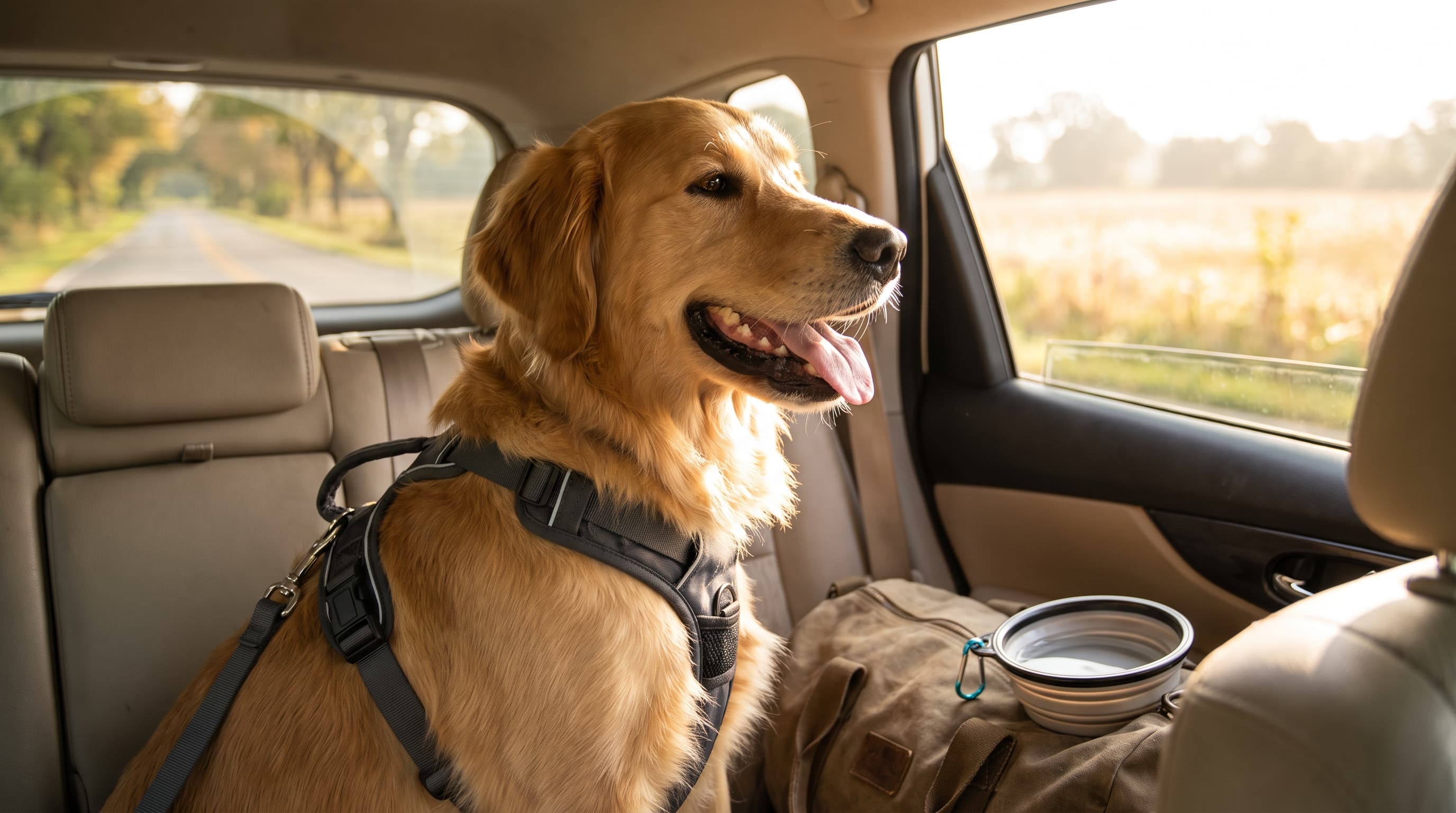

The last big road-trip weekend of the summer is almost here — and for a record number of American dogs, it will start with an open window and end with a very unsafe secret. As families load up for Labor Day, AAA has a blunt warning: roughly one in three dog owners lets their pet ride completely unrestrained, and the holiday weekend is exactly when that gamble is most likely to go wrong.
With dog-friendly vacation bookings up more than 260% year over year, more pups are riding shotgun than ever. That makes the back-seat buckle the most overlooked piece of travel gear you own — and the cheapest life insurance you can buy your dog before Friday.
Why AAA is sounding the alarm right now
The timing isn't random. AAA released fresh state-by-state survey data on August 26, 2026, days before Labor Day weekend — which the auto club officially clocks as September 3–7, 2026. It's the season's final long-weekend surge, with national parks like Rocky Mountain, Zion, Arches, and the Grand Canyon among the most popular domestic destinations, and Friday, September 4 shaping up as the single busiest travel day.
More cars, more miles, and more dogs add up to more risk. In Tennessee, AAA found that 46% of dog owners said their dog's behavior has already affected their driving, and nearly one in three take their dog in the car at least once a week. In Illinois, the numbers were just as sobering: 31% of dog owners let dogs ride loose even though 88% say restraints are important. That gap — knowing better but not doing it — is precisely what AAA is trying to close before the holiday.
The reasons owners give (and why they don't hold up)
AAA's surveys asked owners why they skip a restraint, and the answers were remarkably consistent across states. In Illinois, half of owners said they let their dog ride loose so it can stick its head out the window; about a quarter simply don't own a proper restraint, and one in five feel guilty crating their dog.
Those instincts are understandable — dogs genuinely love car rides — but they trade a few seconds of joy for a serious safety risk. A head out the window exposes your dog to road debris, ear damage, and the temptation to leap. And "my dog is well-behaved" doesn't help in a crash, when physics, not manners, decides what happens next.
The 30x rule: what an unrestrained dog becomes in a crash
Here's the number that should change your mind. According to pet-safety group Buckle Up Your Pet, in a 30 mph crash an unrestrained pet becomes a projectile that hits whatever is in its path with more than 30 times its body weight. For a 60-pound Labrador, that's the equivalent of roughly a ton of force launched toward the seatback, the windshield — or the child in the row ahead.
And that's at neighborhood speeds. On the interstate stretches most Labor Day travelers will drive, the forces climb far higher. An unrestrained dog isn't just at risk of being hurt; it becomes a hazard to every human in the vehicle, too.
There's a quieter danger as well: distraction. AAA notes that even the best-behaved dog can pull a driver's focus with a sudden bark or a nudge toward the front seat. Buckle Up Your Pet's data shows roughly 65% of drivers admit to petting their dog while driving and about 29% report being distracted by a pet — the kind of split-second lapse that causes crashes in the first place.
How to actually restrain your dog (the right way)
The good news: fixing this is cheap and fast. AAA and safety testers agree on the basics.
Choose crash-tested gear, not a walking harness
A regular clip-on walking harness is not a car restraint. Look specifically for crash-tested products — harnesses, carriers, or crates designed and rated for vehicle use. AAA spokesperson Megan Cooper put it plainly: "In a sudden stop or crash, an unrestrained dog can be thrown across the vehicle, seriously injured, or even ejected."
Put your dog in the back seat
Just like children, dogs belong in the back, away from front airbags, which can seriously injure a pet when they deploy. A back-seat harness tethered to a seatbelt anchor, or a secured crate in the cargo area of an SUV, are the two safest setups.
Match the tool to the dog
- Small dogs: a hard-sided, crash-tested carrier strapped down so it can't slide or tip.
- Medium and large dogs: a crash-tested harness clipped to a seatbelt, or a rated crate anchored in the back.
- Anxious or first-time travelers: practice with short trips this week so the restraint feels normal before the long haul.
Pack the rest of the travel kit
Bring more water than you think you'll need, a collapsible bowl, current ID tags, and a copy of vaccination records if you're crossing state lines or checking into a hotel. Never leave your dog alone in a parked car — even a short stop can turn deadly fast on a warm September afternoon.
Planning the destination, too
A safe ride is only half the trip. If your Labor Day plans include one of those wildly popular national parks, check the rules before you go: the National Park Service welcomes leashed pets in developed areas and on many trails through programs like its B.A.R.K. Ranger initiative, but backcountry trails are often off-limits to protect wildlife. A five-minute check can save you from turning around at a trailhead with a disappointed dog.
For hotels, confirm the pet policy and any fees when you book — the surge in dog travelers means more properties are pet-friendly than ever, but "pet-friendly" can mean anything from a welcome treat to a strict weight limit. When in doubt, call ahead.
The bottom line before you hit the road
This Labor Day, millions of dogs will ride along for the last hurrah of summer — and the data says a third of them will do it unbuckled. It takes one crash-tested harness, one back-seat clip, and about thirty seconds to move your dog out of the projectile column and into the protected one. Your pup gets the adventure; you get the peace of mind.
Planning a getaway with your pup? Sidewalk Dog is your co-pilot for dog-friendly travel guides, gear picks, and road-trip tips all season long — because the best trips are the ones where everyone, four legs included, makes it home safe.