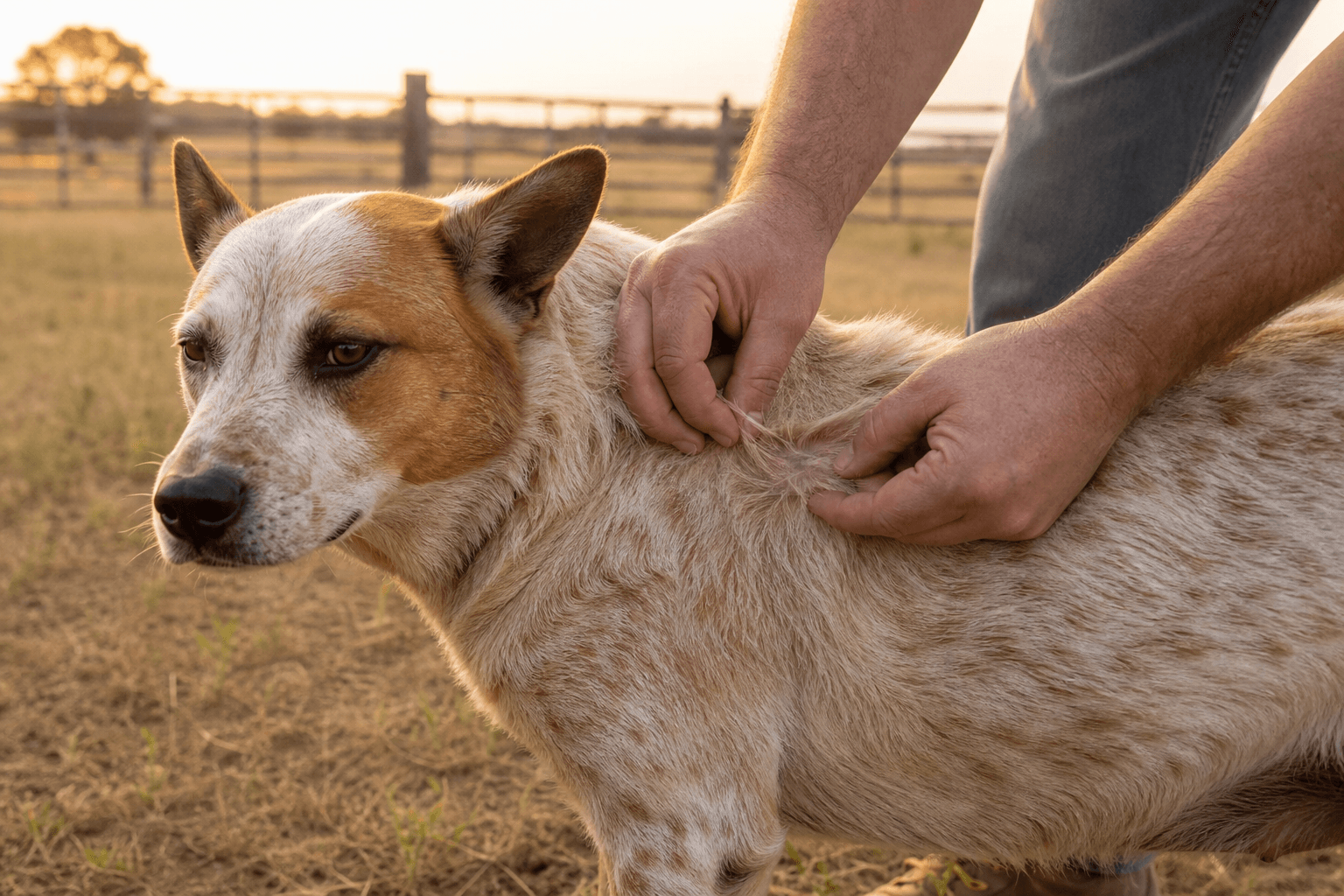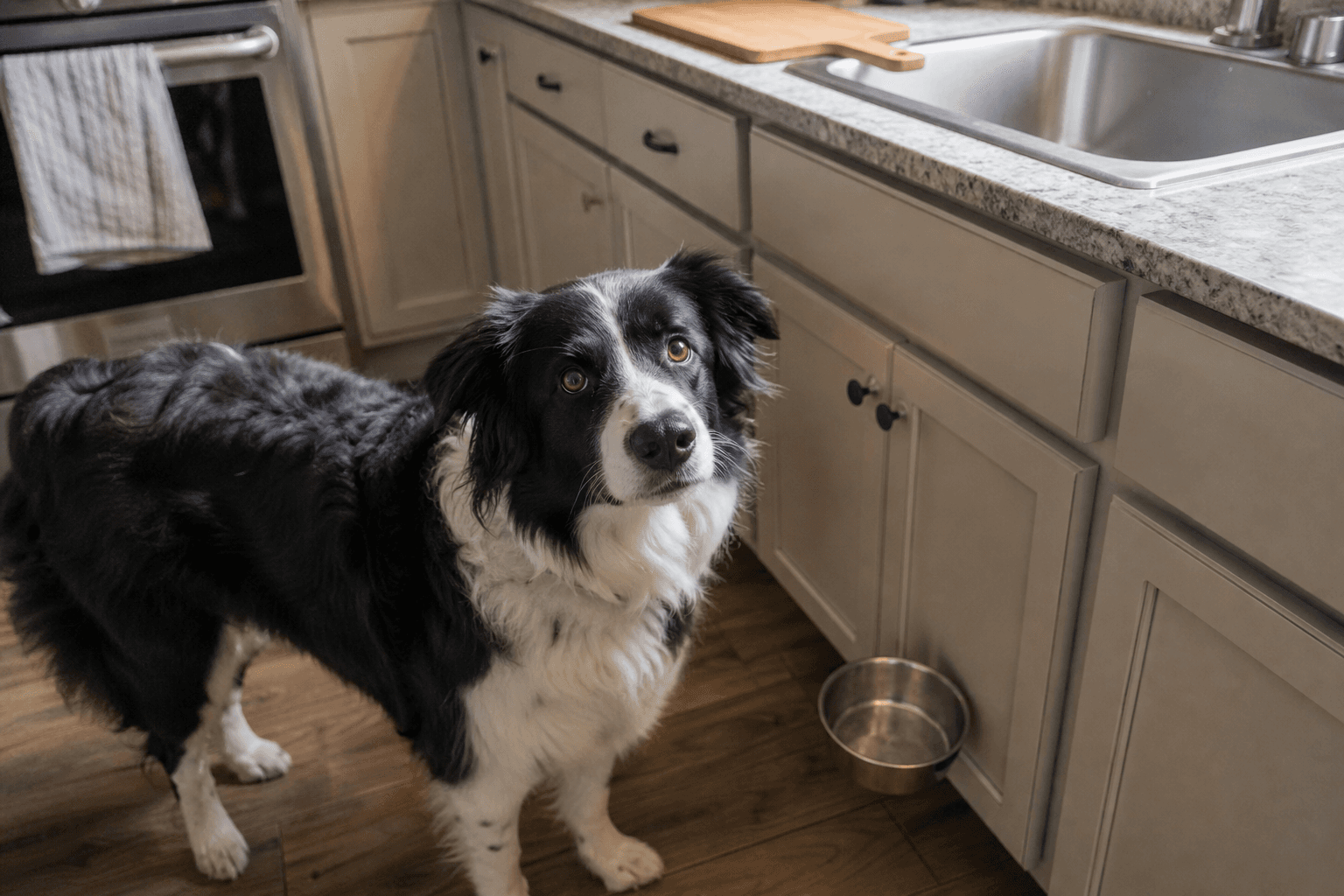

Daniel Naillieux had only had Ellie Rose since February. On Wednesday night, she gave him back the rest of his life.
The Wahoo, Nebraska man told WOWT he'd come home late and gone straight to bed, with Ellie Rose following him upstairs. Near midnight, he woke to a sound he had never heard his dog make. "It was like she was terrified of something," he said. When he opened his bedroom door, black smoke was pouring in.
He grabbed Ellie Rose, climbed out his bedroom window onto the roof on the far side of the house from the flames, and called 911 on the way out. A police officer arrived within three minutes. Naillieux dropped Ellie Rose into the officer's arms, then climbed down a ladder. The house was a total loss — he told reporters he now owns one pair of clothes and a pair of boots.
"I've never been more thankful to have a dog in my life," he said. "Because I am telling you, if she wouldn't have barked, I would not have woke up."
Stories like this one go viral roughly every few weeks, and they're genuinely lovely. But they also quietly teach dog owners the wrong lesson — that the dog is the alarm. Fire professionals will tell you the opposite: your dog is the one who needs the plan, not the one who provides it.
What the fire data actually says about pets and house fires
If you've read a pet fire safety article before, you've seen two numbers: that pets start about 1,000 home fires a year, and that around 500,000 pets are affected by fires annually. Both get repeated constantly. Both deserve an asterisk.
The 1,000-fires figure traces to a National Fire Protection Association estimate cited by the American Red Cross, which puts it at "nearly 1,000 home fires each year accidentally started by the homeowners' pets." NFPA's own animal-related tally is narrower still: pets and wild animals combined have a part in roughly 750 U.S. home fires a year. The federal fire-incident reporting system fire departments use doesn't even have an "animal" ignition-cause code, which is why every number in this space is an estimate rather than a count.
Animal deaths are fuzzier. A peer-reviewed review of pet smoke-inhalation care published in the Australian Journal of Emergency Management notes that between 40,000 and 150,000 animals are estimated to die each year in U.S. residential fires, mostly from smoke inhalation — and the authors are explicit that the true figure is unknown and likely under-reported, because nobody systematically records it.
So here's the honest version: nobody knows exactly how many dogs die in house fires, the range is wide, and smoke — not flame — is the main killer. That last part is the one worth building around, because smoke is also the part your dog cannot escape on her own.
Why smoke is the real threat to dogs
The Merck Veterinary Manual is blunt about smoke inhalation injury: the first treatment priority is maintaining the airway and administering 100% oxygen, and carbon monoxide poisoning is "ubiquitous after smoke inhalation." Carbon monoxide binds to hemoglobin, forming carboxyhemoglobin that can't carry oxygen, which starves tissue even in a dog with no visible burns. Merck also flags that enclosed-space exposure, prolonged entrapment, sooty discharge from the nose or eyes, and altered consciousness all point to more serious lung damage.
That has two practical consequences. First, a dog pulled from a smoky house can look fine and deteriorate hours later — delayed neurological signs after smoke inhalation are documented in the veterinary literature. Any dog who was in a burning building needs to be seen by a vet, not just hosed off and hugged. Second, oxygen delivered fast matters enormously, which is why fire departments increasingly carry pet-specific gear.
Austin's fire crews, for example, carry animal oxygen kits on every apparatus: three mask sizes that seal around a snout from bird to large dog, tubing that connects to the same oxygen supply used for human patients, a kennel lead for restraining a panicked animal, and instructions for handing off to a veterinarian. Many companies add carriers, blankets, cooling towels, and muzzles. Not every department has them. It is entirely reasonable to email your local fire station and ask whether they do — and to point them toward the donation programs that supply them if they don't.
The seven-step pet fire plan
Most pet fire safety advice is a list of 19 things, which means nobody does any of them. Here's the short version, ordered by how much it actually changes your dog's odds.
1. Assume your dog is home alone when it happens
A battery smoke alarm screaming into an empty house does nothing for a crated dog. This is the single biggest gap in most homes, and the fix is a monitored smoke and carbon monoxide detector — one connected to a monitoring center that can dispatch responders when nobody's home to hear it. AKC Reunite and the Red Cross both recommend this specifically for pet households. Budget tier: a basic monitored plan runs a few dollars a month on top of most existing security systems; a standalone smart alarm that pushes alerts to your phone is a cheaper middle option, though it depends on you seeing the notification.
2. Put the crate near an exit
If your dog is confined while you're out — crate, pen, baby gate — put that setup near an entrance rather than in a back bedroom, and keep the leash and carrier there too. Firefighters entering a smoke-filled house work in near-zero visibility. Seconds spent finding your dog are seconds she doesn't have.
3. Use a pet alert window cling, and keep the number current
A cling by the front door with the number of animals inside tells a crew what to look for. The failure mode is real: clings that say "2 dogs" for a household that now has one, or one that has three. Update it when your household changes.
4. Remove or cover your stove knobs
According to NFPA data cited by AKC Reunite, a stove or cooktop is the number one piece of equipment involved in pets starting fires. Knob covers cost a few dollars. Big dogs counter-surfing toward a smell they like is how that happens.
5. Kill the open flames
Flameless candles instead of lit ones, screened fireplaces, no unattended fire pits. And a genuinely obscure one worth knowing: don't leave a glass water bowl on a wooden deck. Sunlight refracting through the glass and water can scorch and ignite the boards underneath. Stainless steel or ceramic solves it.
6. Make sure your dog is identifiable if she bolts
Dogs who escape a fire scene run. Collar tags with a current number and a microchip registered to your current address and phone are what turn "a loose dog near the fire" into your dog coming home. Check your chip registration today — a chip pointing at a phone number from two moves ago is a chip that doesn't work.
7. Practice the drill with the dog in it
Run your household escape plan twice a year, and include the dog. Know who grabs her, which exit, where you meet. Practice a fast leash-on. And decide in advance the hardest rule in fire safety: you do not go back inside for a pet. Tell the arriving crew how many animals are inside and where — they have the gear, the training, and the air supply. You don't.
What Ellie Rose's story is actually good for
Not every dog barks. Some hide under the bed. Some sleep through it. Dogs are not smoke detectors, and treating a viral rescue story as a safety strategy is how households end up with a plan that only works if the dog happens to behave heroically.
What the story is good for is the nudge. Naillieux got out with his dog and the clothes he slept in. The window clings, the knob covers, the chip update, the crate by the door — that's an afternoon of work and maybe $40, and it's the version of this story where the dog doesn't have to be a hero.
If you want more practical, no-panic guidance for the stuff that actually happens to dogs — seasonal safety, health research worth knowing, and where to take them once everyone's fine — that's what we do all week at Sidewalk Dog. And when you're ready for a good day out, our city guides will find you a patio that's happy to see both of you.