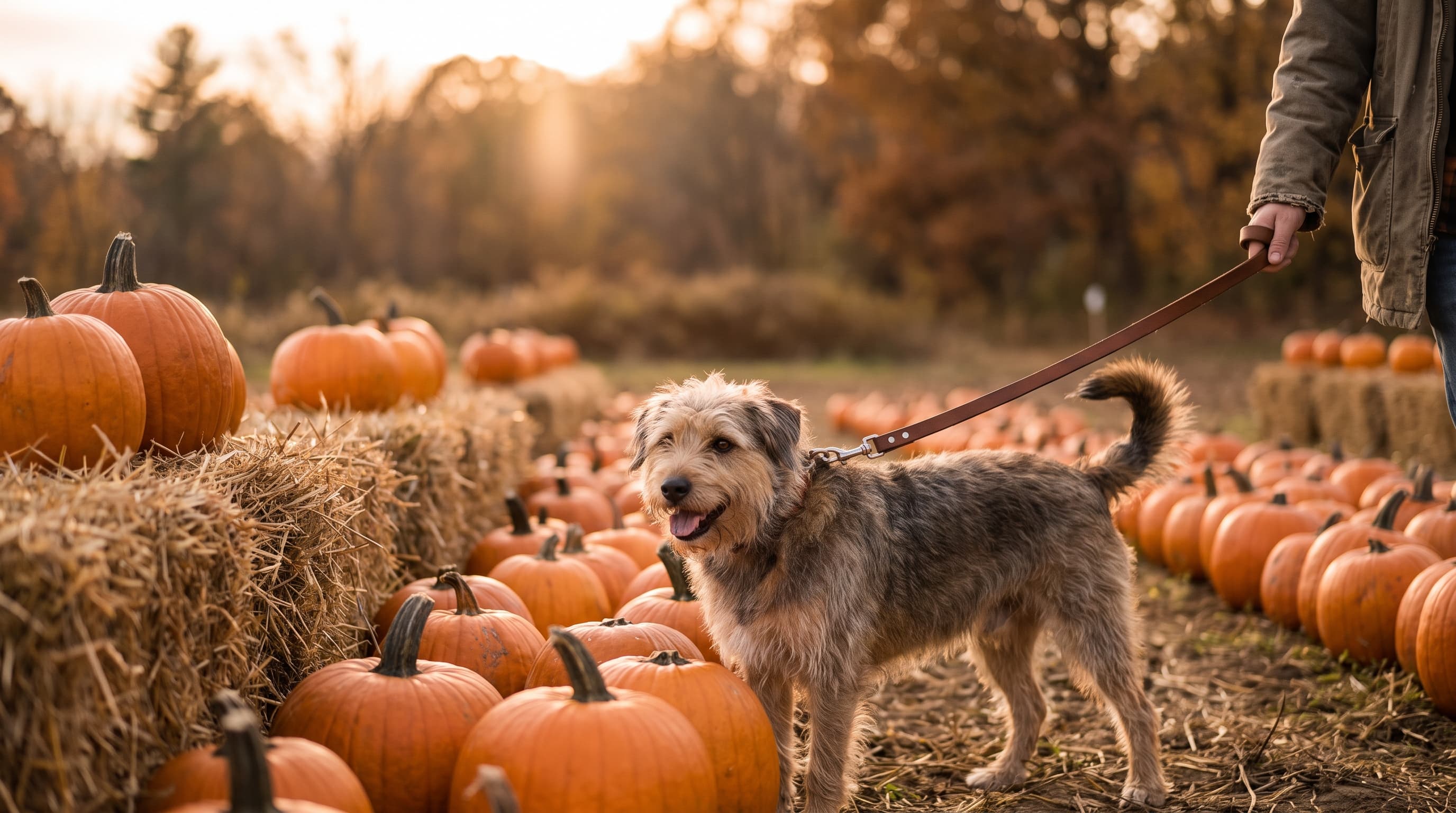

The first cool mornings are here, the pumpkins are stacked in wobbly orange pyramids, and somewhere near you a farm has just flung open its gates for the season. For a lot of dog owners, a pumpkin patch or apple orchard is the perfect fall outing — fresh air, a long walk on packed dirt, and a hundred new smells for your pup to catalog. It is also, quietly, one of the busier stretches of the year for emergency vets, who see a predictable autumn spike in calls about mushrooms, moldy scraps, and mystery things dogs ate off the ground.
The good news: almost none of it is bad luck. A few minutes of prep and a little on-leash vigilance keep the day firmly in the "adorable photos" column. Here are the vet-smart rules to run through before you load the car this fall.
Why the pumpkin patch is the outing dogs are begging for
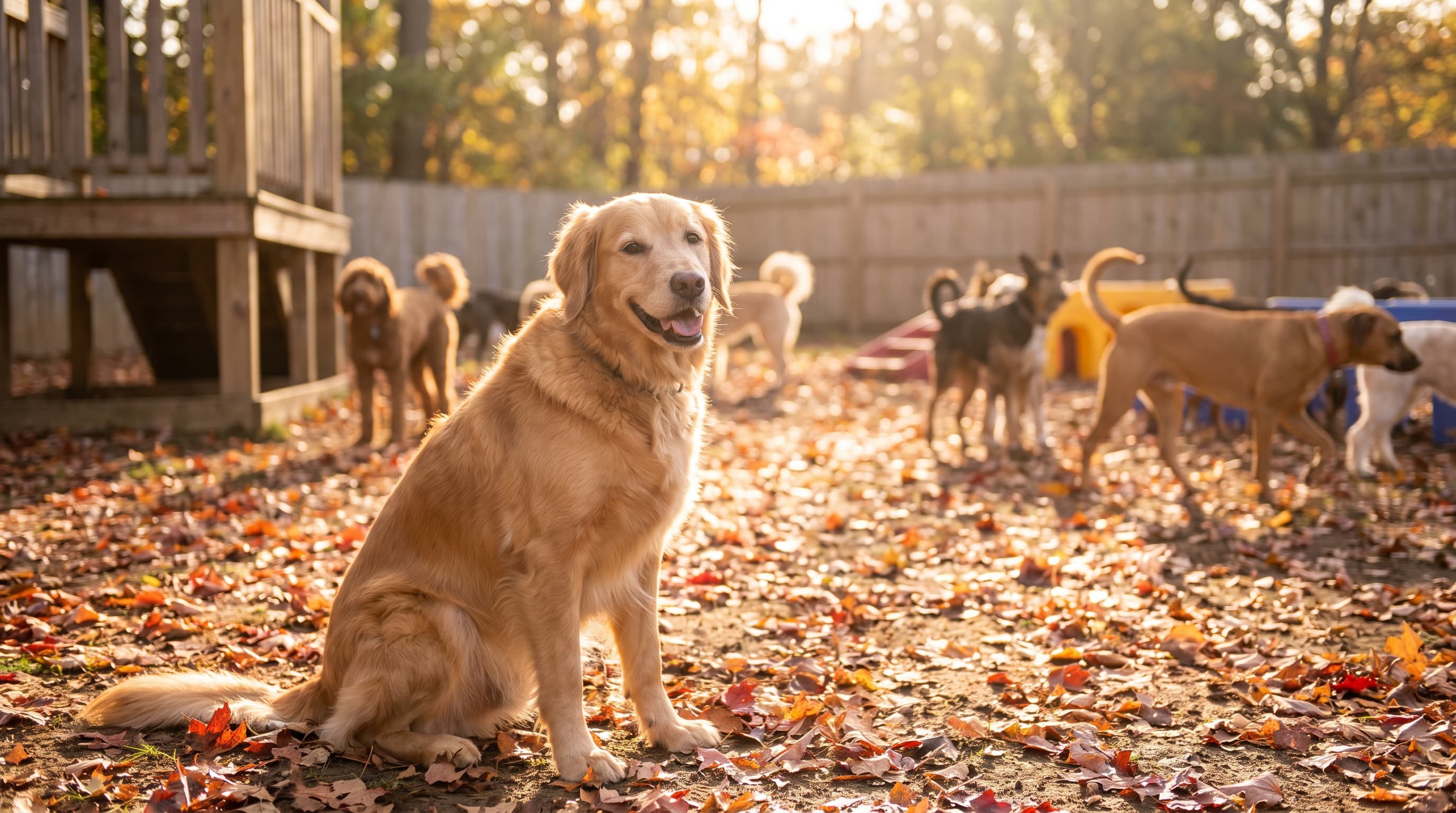
Fall is arguably the best season to be a dog in America. The heat that made summer walks miserable has broken, the ground is cool underfoot, and the sensory buffet of a working farm — hay, animals, fallen fruit, other dogs — is exactly the kind of enrichment behaviorists wish more pets got. Sniffing is genuine mental work for dogs, and a slow, curious wander through an orchard does more for a nervous or high-energy pup than a lap around the same old block.
Farms have noticed. A growing number of pumpkin patches and orchards now market themselves as dog-friendly, and seasonal roundups like CityDog Magazine's national pumpkin-patch guide exist specifically to help owners find the welcoming ones. Some even host pet costume contests and "pups in the patch" days. But "dog-friendly" is not a universal standard, which is exactly why the first rule matters most.
Rule 1: Check the pet policy before you go
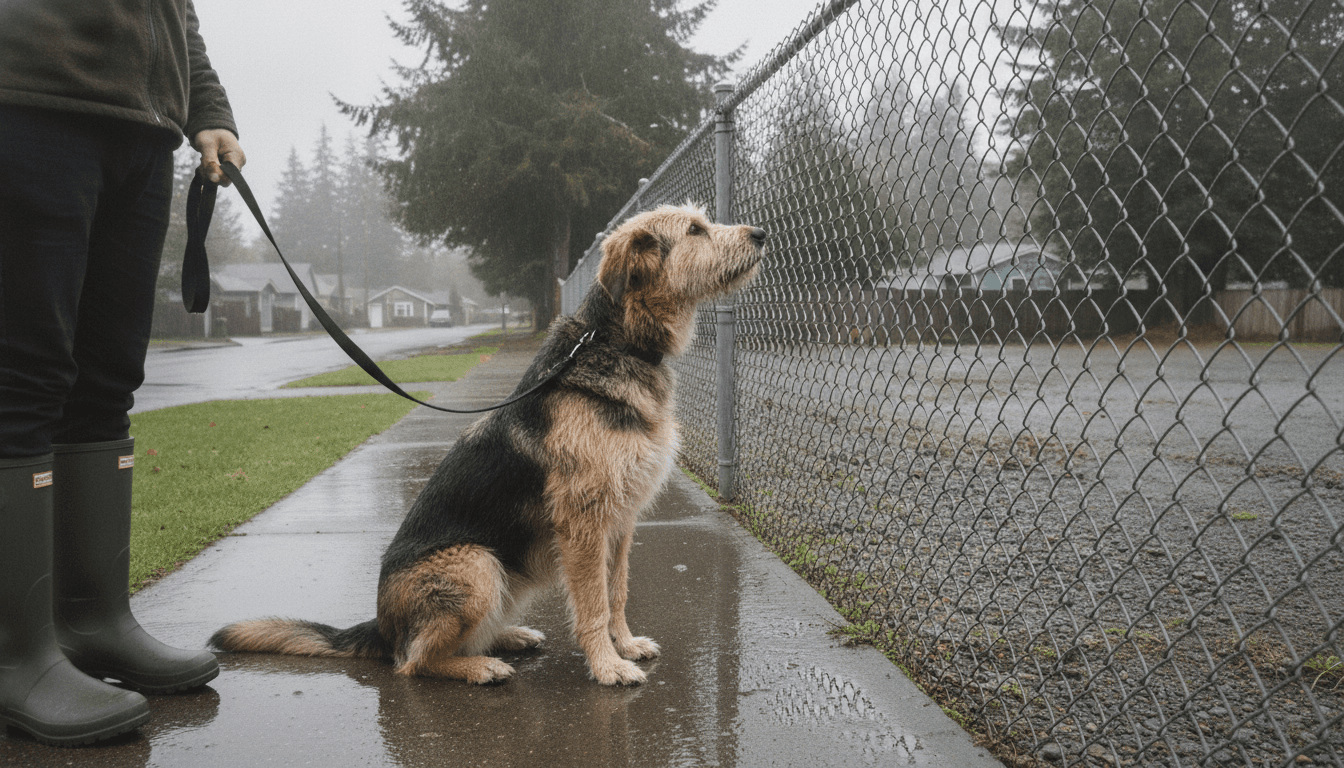
Policies vary wildly from farm to farm, and showing up to find a "no dogs" sign at the ticket booth is a rough way to start a family outing. Call ahead or read the farm's website, and assume most orchards land somewhere around the same common rules: leashed, well-behaved dogs are welcome in the fields, waste bags are mandatory and often required before you even enter, and dogs are usually barred from indoor markets, bakeries, and petting-zoo areas — with service dogs the standard exception.
It is the same homework that pays off at any outing with your pup, from breweries to big-box stores. (If you are curious how national chains handle it, we broke down one popular one in our guide to Home Depot's dog policy.) When in doubt, err toward the more restrictive read and keep your dog leashed and close — crowds, tractors, and hay rides are a lot for even a mellow dog.
The fall hazards that send dogs to the vet
Most autumn emergencies trace back to something eaten off the ground. A farm, an orchard, and your own backyard all share the same seasonal menu of things dogs should not swallow. Here are the big ones.
Wild mushrooms
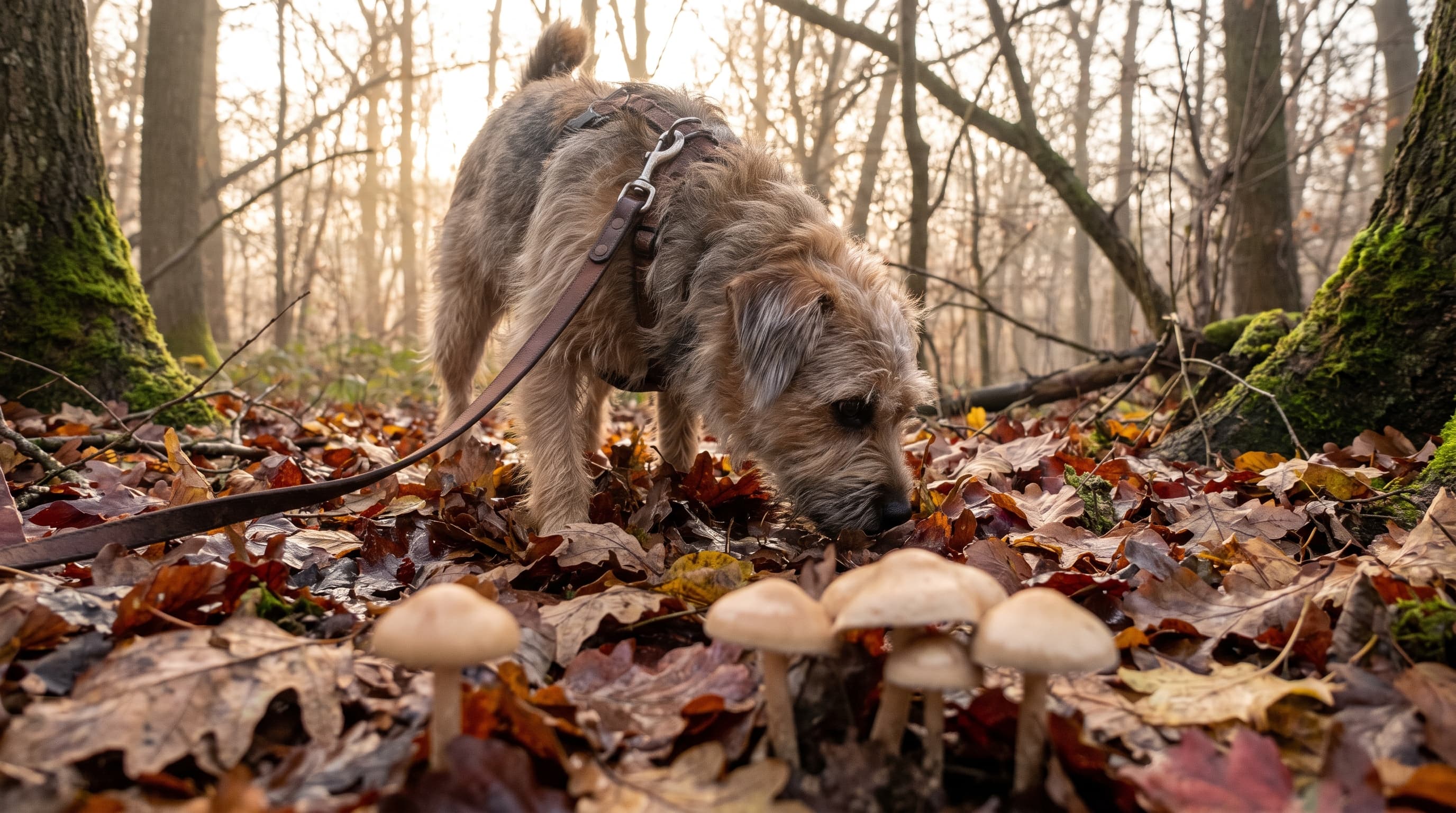
Fall is mushroom season, and the timing is unlucky. The American Kennel Club notes that while grocery-store mushrooms are fine, "many wild species pose a significant risk to your pets, and others can be deadly," and warns that unless you are a trained mycologist, the safest move is to treat every wild mushroom as suspect. Since toxic and harmless species can look nearly identical, the rule at the patch is simple: don't let your dog nose through damp, shaded ground where mushrooms sprout, and interrupt any snout-down foraging fast.
Cocoa mulch and compost
That rich, chocolatey smell in landscaped areas can be cocoa-bean mulch, and the AKC flags it as "the worst offender" because it contains theobromine and caffeine — the same compounds that make chocolate dangerous — and can trigger a racing heart, arrhythmia, hyperactivity, and seizures. Molding compost and rotting produce piles are their own hazard: they can grow tremorgenic mycotoxins that cause tremors, difficulty walking, and seizures. Keep your dog well clear of mulch beds and any pile of decaying scraps.
Fallen, fermenting fruit
An apple orchard's ground is carpeted with drops, and windfall fruit that has sat in the sun starts to ferment — which means alcohol. A dog that hoovers up rotting apples can get an ethanol dose on top of a stomachache. The seeds are a lesser worry: they contain a cyanide-releasing compound, but as PetMD explains, a dog would have to chew a large quantity to get a toxic dose, and whole swallowed seeds usually pass through intact. Still, the smart play is to keep your pup from grazing the orchard floor and to offer fresh apple slices from your own hand instead.
Ticks hiding in the leaf litter
Ticks do not clock out when summer ends. Adult ticks stay active through the cool months, and piles of fallen leaves are prime hiding spots — which is why the AKC recommends keeping dogs on tick preventatives and advises owners to "regularly inspect your dog for bugs" and keep grass short and clear of leaf litter. After a romp through an orchard or a leafy trail, run your hands over your dog — ears, armpits, between the toes, under the collar — and pull any hitchhikers before you drive home.
Rodenticides, antifreeze, and other cold-weather poisons
As temperatures drop, more households and farms put out rodent bait and top off engine coolant — and both are potent poisons. The ASPCA warns that rodenticides, "if ingested, the results could be fatal," and urges owners who must use them to place baits where pets cannot reach. Ethylene glycol antifreeze is famously sweet and deadly in tiny amounts; the ASPCA suggests switching to less-toxic propylene glycol-based coolants and wiping up spills immediately.
Snakes, standing water, and rotting jack-o'-lanterns
Cooler weather sends snakes looking for shelter, and the ASPCA notes some species become "more active in the fall," so keep dogs out of woodpiles and tall brush. Back home, a carved pumpkin left on the porch too long grows the same molds that make compost dangerous — toss jack-o'-lanterns once they soften rather than letting the dog "help" with cleanup. And skip the corn cobs at the hay-ride snack stand; they are a classic cause of intestinal blockages.
What to pack for a dog-friendly fall outing
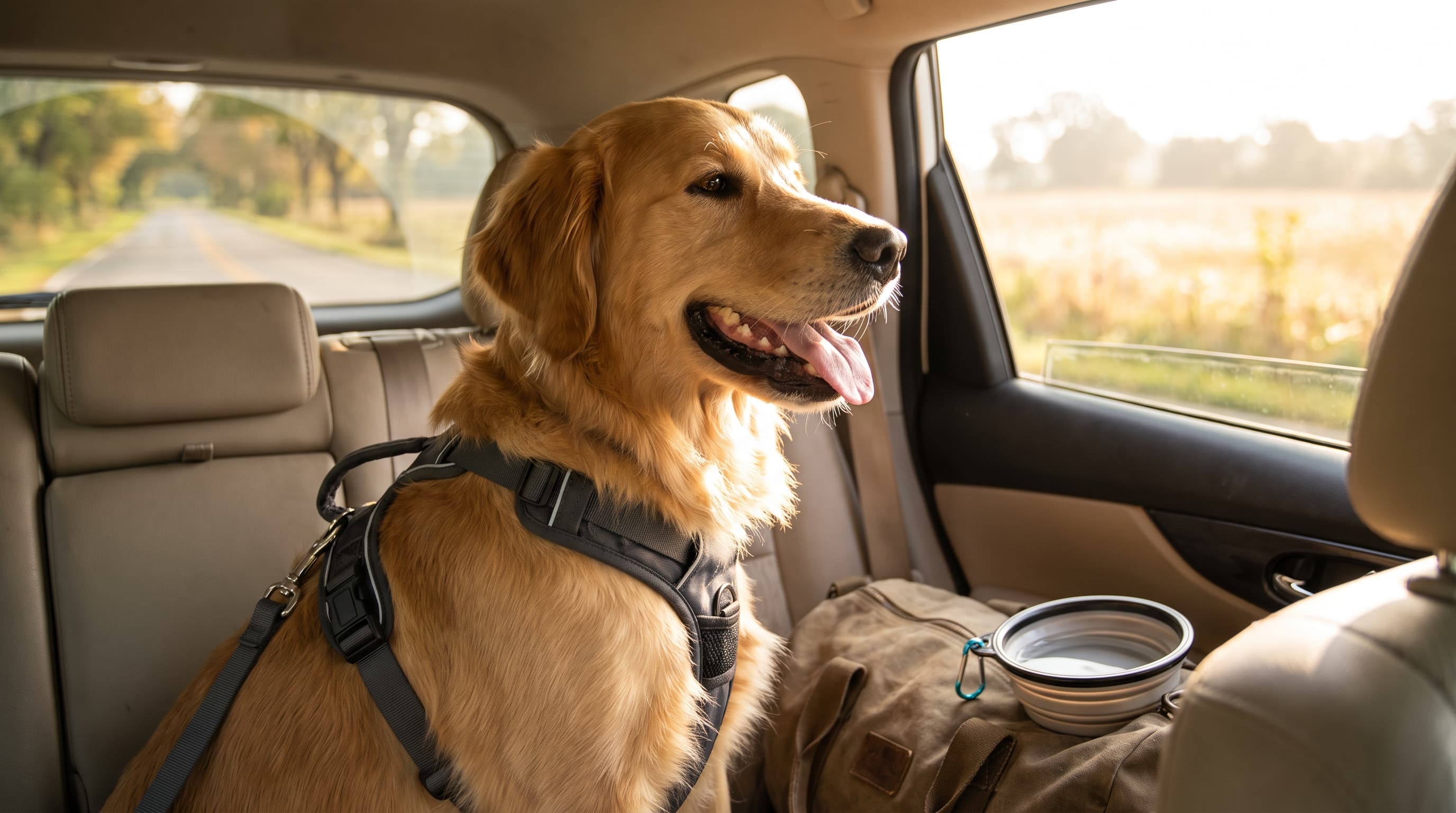
A five-minute pack makes the whole day smoother. Bring more waste bags than you think you need, a collapsible water bowl and fresh water, a well-fitted harness and a standard (not retractable) leash for crowds, and a small stash of your dog's own treats so you are not tempted to share farm-stand snacks. Photos-with-the-pumpkins are the whole point for a lot of us, so a favorite toy or a squeaker in your pocket buys you the half-second of ears-up attention that makes the shot. If your dog is anxious in crowds, go early on a weekday when the patch is quiet.
Weather matters too. Early fall afternoons can still be warm, so watch a heavy-coated dog for overheating, and as the season turns, remember that thin-coated and senior dogs feel the chill. A dog that is shivering or lagging has had enough.
When to call the vet
If you see your dog eat a mushroom, a mouthful of mulch, or something you can't identify — or if they develop vomiting, tremors, stumbling, drooling, or unusual lethargy after an outing — don't wait to "see how it goes." Call your veterinarian or an emergency clinic, and program the ASPCA Animal Poison Control Center number, (888) 426-4435, into your phone before you leave the house. With poisonings, minutes matter, and the staff can tell you whether a given exposure is an emergency or a wait-and-watch.
None of this should scare you off the outing — the point is the opposite. A little planning turns the pumpkin patch back into what it should be: a golden-hour walk, a great photo, and a tired, happy dog asleep in the back seat on the way home. For more seasonal safety guides and dog-friendly outing ideas, keep it locked to Sidewalk Dog all fall long.