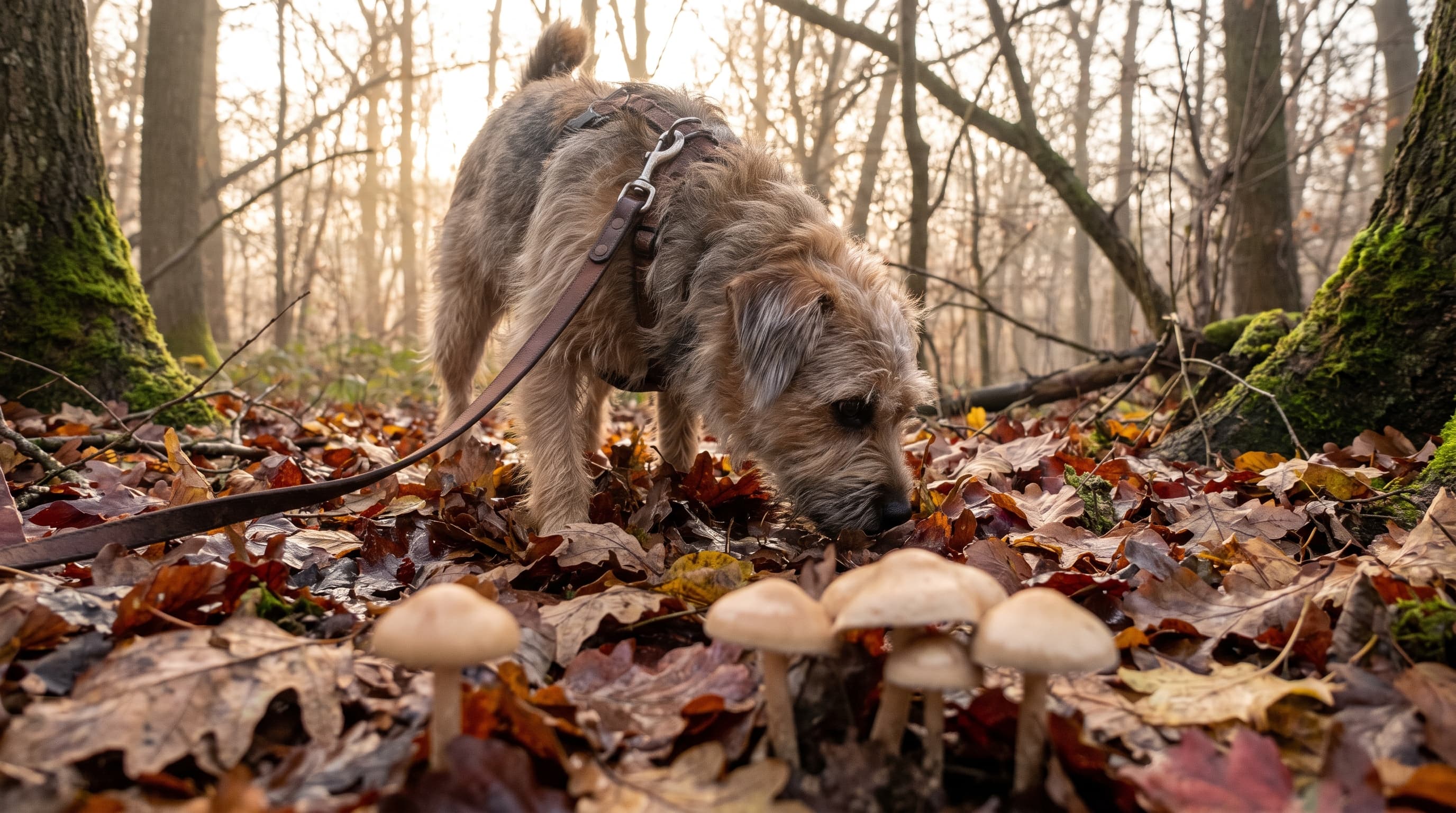

The same cool, damp weather that makes fall walks feel so good is also throwing open the door to one of the season's deadliest backyard threats — and most dog owners never see it coming. Wild mushrooms are erupting across U.S. lawns, leaf piles, and trailheads right now, and among them is the aptly named death cap, a single specimen of which can be enough to kill a dog. If your pup is a sniffer, a grazer, or a "vacuum on four legs," the next few weeks are the riskiest stretch of the year.
Here's the hard truth up front: veterinary toxicologists say to treat every wild mushroom your dog eats as a poisoning until proven otherwise. Below is what's happening this fall, how to recognize trouble, and exactly what to do in the minutes that matter most.
Why fall is peak mushroom-poisoning season for dogs
Mushrooms are the fruiting bodies of fungi, and they pop up when conditions are cool and wet — which is precisely what autumn delivers across most of the country. As rain returns and overnight temperatures drop, mushrooms bloom overnight in yards, mulch beds, and the soft, decaying leaf litter that dogs love to root through.
That timing collides with our habits. Fall is when we're outside more with our dogs — longer walks, hikes on damp trails, weekends at the park — and when fallen leaves conveniently hide whatever is growing underneath. A curious nose in a leaf pile is the perfect setup for an accidental bite before you can say "leave it."
The scale of the risk is easy to underestimate. There are more than 100 toxic mushroom species in North America, and even seasoned foragers can struggle to tell a harmless mushroom from a lethal one. For a dog crunching first and asking questions never, the odds are not in their favor.
Meet the "death cap" — the mushroom behind most fatal poisonings
If there's one mushroom to fear this season, it's Amanita phalloides, the death cap. It is responsible for roughly 90 percent of the world's mushroom-related deaths, and it's not a distant problem — it's an American one, and it's spreading.
The death cap isn't native to North America. Scientists believe it hitchhiked here in the soil of imported ornamental trees, was first documented in California in the 1930s, and has since marched up the West Coast into the Pacific Northwest, British Columbia, Idaho, and beyond, with established populations in the Northeast as well. It thrives in exactly the cool, damp conditions that define fall and early winter, and it often grows near oaks and other hardwoods — the same trees shading many neighborhood sidewalks.
What makes it so dangerous is chemistry. Death caps contain amatoxins that block cells from making the proteins they need to survive, quietly destroying the liver and kidneys. Those toxins don't break down when heated, and a domed cap that can look yellowish or greenish with white gills is easy to mistake for something harmless. A dog doesn't need to eat a plateful — a small body weight means a small dose can be lethal.
The cruel trap: the "false recovery" phase
The most dangerous thing about serious mushroom poisoning isn't just how toxic it is — it's how sneaky it is. With the deadliest species, dogs often go through a "false recovery" window: early stomach upset eases, the dog seems to bounce back, and owners breathe a sigh of relief. Behind the scenes, the toxins are still attacking the organs.
According to PetMD's veterinary guidance, early signs can appear within 15 to 20 minutes but may also be delayed up to 24 hours, and liver or kidney damage from the most toxic varieties can develop 24 to 48 hours after ingestion. That's why waiting to "see how it goes" is a gamble no dog owner should make. By the time a dog looks obviously sick again, the damage may already be advanced.
Other toxic mushrooms worth knowing
Death caps get the headlines, but they're not the only threat in the yard. Different mushrooms carry different toxins and produce different symptoms:
- Cyclopeptide mushrooms (including death caps and their relatives) cause vomiting and diarrhea that can progress to liver and kidney failure.
- Hydrazine-containing mushrooms can trigger vomiting, diarrhea, seizures, and liver damage within hours.
- Muscarinic and hallucinogenic species may cause drooling, tearing, tremors, disorientation, wobbliness, and agitation.
Because the symptoms overlap and the deadliest cases can look mild at first, the species matters enormously — and that's exactly why identification is a job for professionals, not a guessing game in your backyard.
Symptoms and the clock: what to watch for
Signs of mushroom poisoning vary by species, but the ones to take seriously include:
- Vomiting and diarrhea (sometimes bloody)
- Excessive drooling
- Lethargy or weakness
- Abdominal pain
- Wobbliness, tremors, or seizures
- Yellowing of the gums, eyes, or skin (a sign of liver trouble)
The critical takeaway: the absence of symptoms does not mean your dog is safe. Given how many mushrooms have delayed effects and false-recovery windows, timing your response to symptoms is the wrong strategy. If you know or suspect your dog ate a wild mushroom, act immediately — even if they seem completely fine.
What to do if your dog eats a wild mushroom
Minutes count. Here's the vet-backed playbook, drawn from PetMD and the Pet Poison Helpline:
- Call for help right away. Contact your veterinarian, an emergency animal hospital, or the Pet Poison Helpline at (855) 764-7661 (available 24/7). The ASPCA Animal Poison Control Center is also available at (888) 426-4435.
- Do NOT induce vomiting on your own. Experts are clear that inducing vomiting at home can cause more harm and should only be done under a professional's direction.
- Collect a sample. Save any mushroom pieces — from your dog's mouth, from the vomit, or from where they were eaten. Wrap them in a damp paper towel (not a plastic bag), place them in a paper bag, and note the location. Identification can shape treatment.
- Note the time. Tell your vet exactly when ingestion happened and describe any symptoms you've seen.
- Go in. Don't wait for symptoms to appear. Early, aggressive treatment gives your dog the best possible outcome.
How to protect your dog this fall
The best cure is never needing one. A few habits dramatically lower the odds:
- Patrol your yard daily. The ASPCA recommends removing mushrooms from your lawn each day during the spring-through-fall growing season. Pluck them (wear gloves) and toss them where your dog can't reach.
- Rethink the leaf piles. Rake and clear damp leaf litter where mushrooms hide, and steer your dog away from mulch beds and rotting logs on walks.
- Master "leave it" and "drop it." A rock-solid recall and a reliable "leave it" are your best off-leash insurance on the trail. If your dog is an incurable grazer, a basket muzzle for hikes is a smart, humane tool.
- Leash up in mushroom hotspots. Wooded, shaded, recently rainy areas — especially near oaks — deserve a shorter leash and closer eyes.
- Assume the worst. As the Pet Poison Helpline puts it, it's safest to treat every wild mushroom as toxic. You'll never regret being overly cautious.
Fall is one of the best times of the year to be a dog — crisp air, crunchy leaves, and endless new smells. A little vigilance about what's sprouting underfoot keeps the season joyful instead of terrifying. For more seasonal safety know-how, check out our guide to dog-friendly pumpkin patches and fall outings, and brush up on other backyard hazards like common toxic plants before your next adventure.
Want more vet-informed tips to keep your dog happy and safe through every season? Explore the latest guides and news at Sidewalk Dog — your daily companion for dog-loving life.