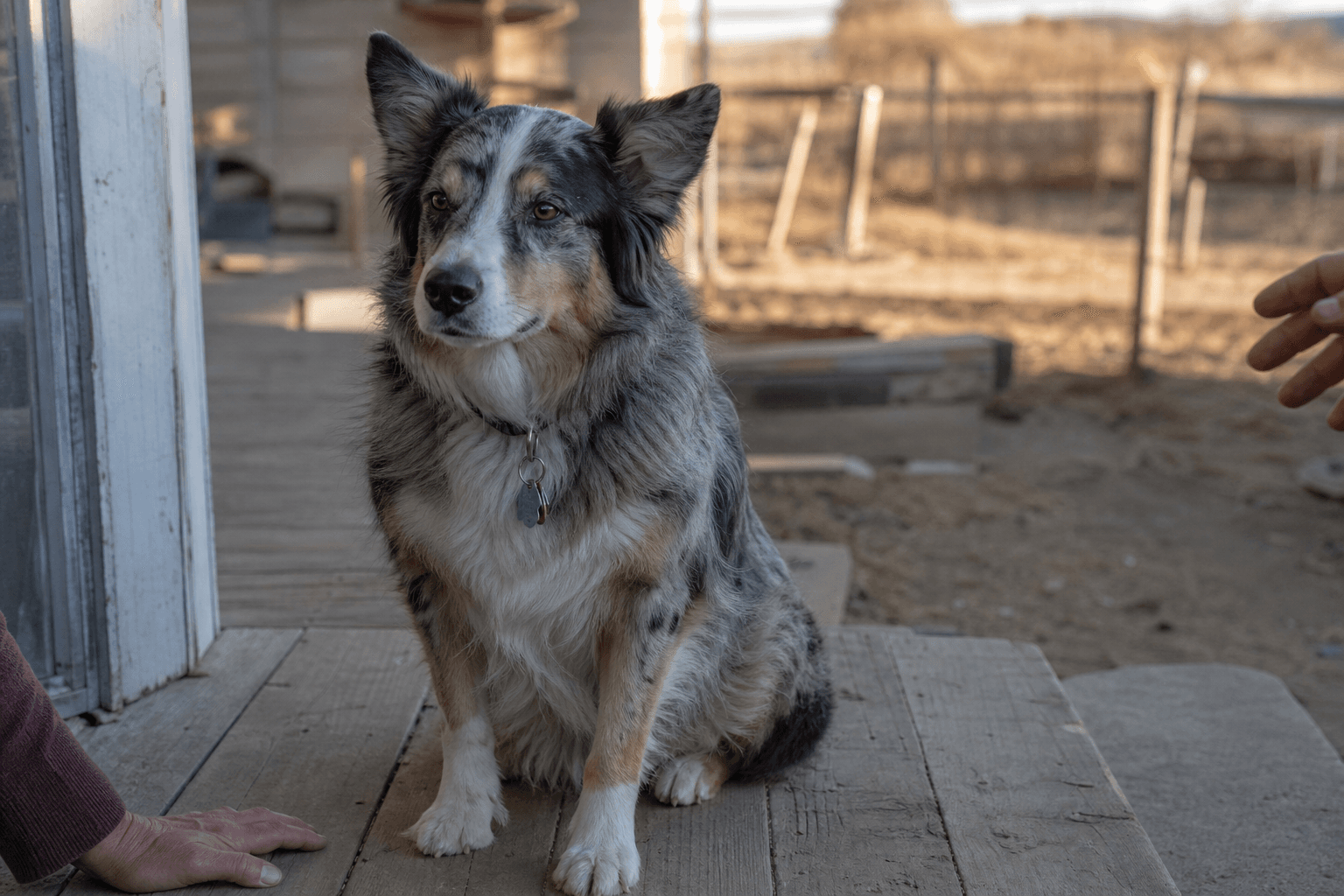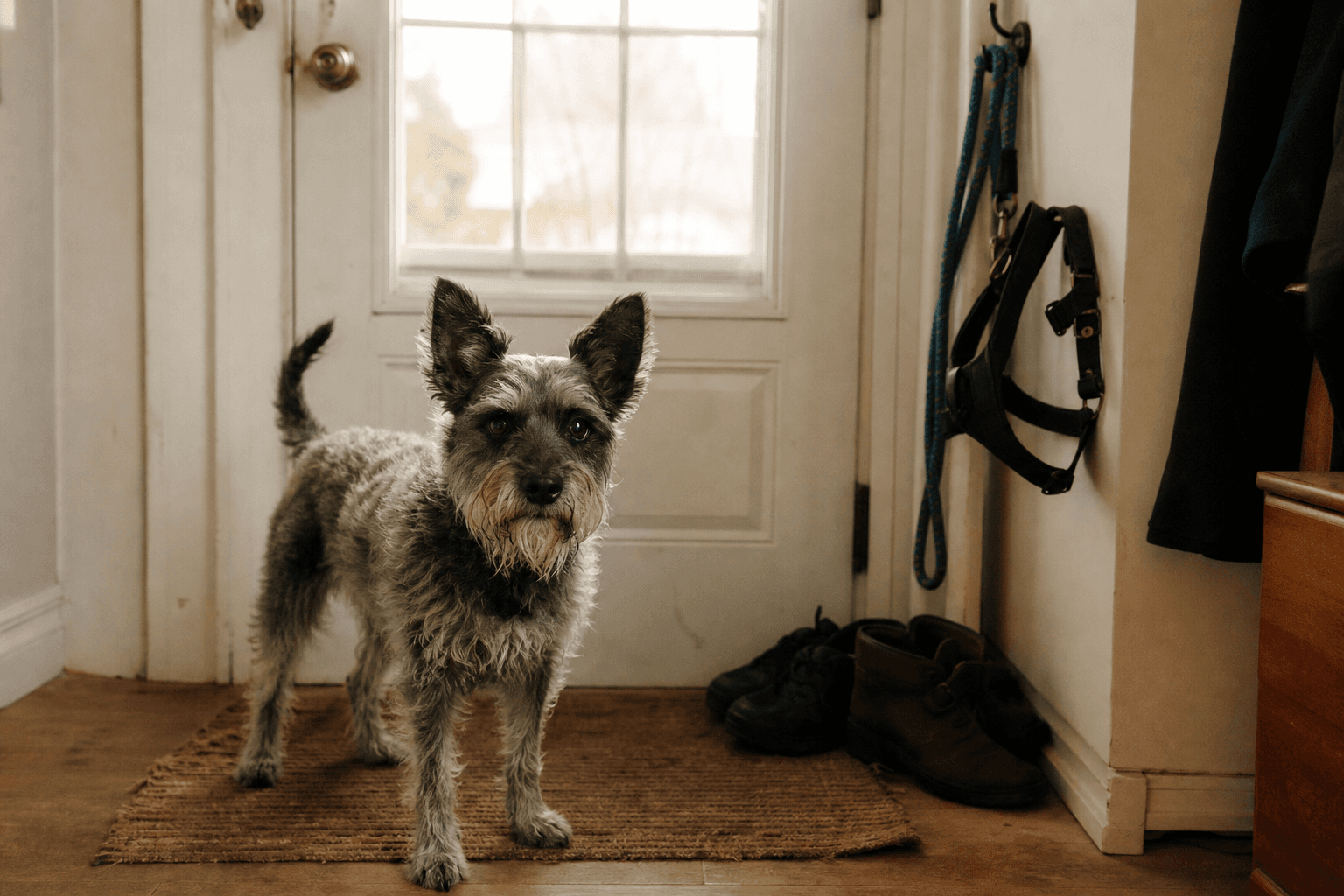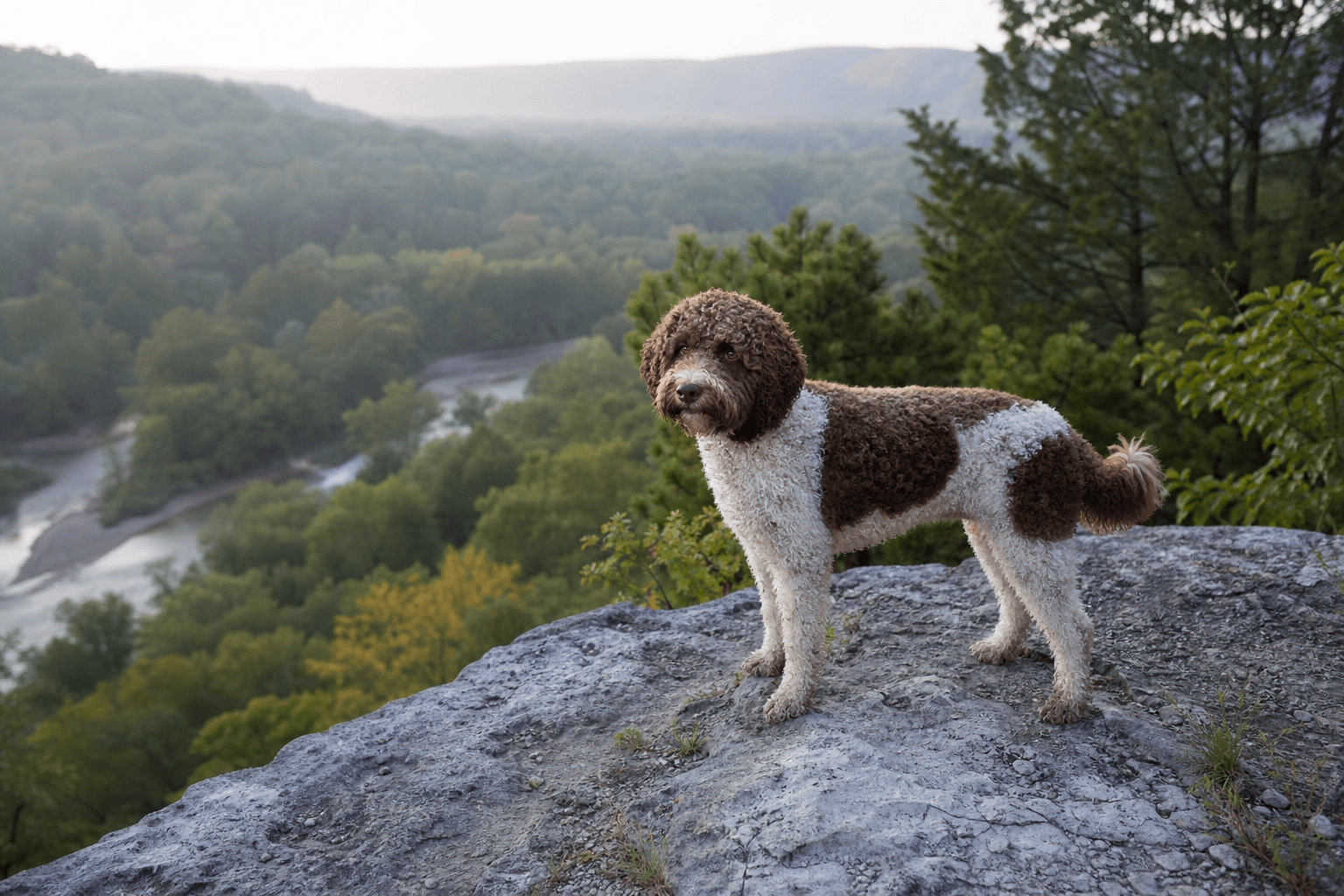

A 30-pound truffle dog named Carl spent a night on a narrow ledge 120 feet down a Tennessee bluff — and then trotted away from it to drink out of a firefighter's cooler.
Carl, a 5-year-old Lagotto Romagnolo, was off leash at a friend's farm outside Dickson, Tennessee, when his owner, 65-year-old Scott Grissom, called for him near a lookout point and got no answer. Then he heard barking coming from below. The bluff, fire officials estimated, drops roughly 200 feet to Jones Creek. Carl had fallen about 120 of them.
What happened next is the reason the story went national. A neighbor, Bert Echols, flew a drone over the cliff face from around 9 p.m. until 2 a.m. and finally spotted Carl near a small cave on the wall. The next morning, four fire departments — City of Dickson, Ashland City, Charlotte and Harpeth Ridge — showed up. Dickson's Special Operations Response Team used a high-angle rope rescue system to put rescuers over the edge. Nine first responders worked the operation. They loaded Carl into a duffel bag and hauled him back up. Total time stranded: about 17 hours.
"I was scared to death," Grissom told Storyful. A bystander who filmed the haul-up called it "a miracle that that dog lived." Grissom's vet found only minor injuries; after a couple of days of stiffness and pain medication, Carl was back to normal.
Here's the part the wire coverage skipped: almost everything that saved Carl was a decision made by humans in the first few hours — and one of the most dangerous things Grissom could have done was climb down after him.
The instinct that gets owners killed
Forensic researchers have a name for this. In a 2020 paper in Medicine, Science and the Law, pathologists reviewing 16 years of South Australian autopsy records described the "canine rescue" phenomenon: people who died sharing a hazard their dog had gotten into. Two women were struck by vehicles after running onto busy roads after loose dogs. A 53-year-old man drowned in a river going in after his.
A companion study in the International Journal of Aquatic Research and Education catalogued eight drowning deaths over 14 years in Australia alone in which an adult died attempting to rescue an animal — seven of them pet dogs. The researchers named it AVIR-A: Aquatic Victim Instead of Rescuer–Animal.
The finding that should stick with every dog owner is this: in a quarter of the drowning cases, the animal that triggered the rescue survived. The authors wrote that would-be rescuers routinely "misjudge the capacity of dogs to survive/self-rescue." Carl is the textbook version. He held a ledge overnight and walked off with bruises. A person free-climbing a limestone cliff face in the dark would not have.
What to actually do in the first hour
If your dog goes over an edge, into fast water, into a storm drain, or onto ice, the sequence below is what technical rescue teams want from you.
1. Fix the location before you do anything else
Drop a pin on your phone at the exact spot you last heard or saw your dog. In Carl's case, drone footage let Fire Marshal Mike Osman pinpoint the ledge and plan the rescuers' route before anyone went over the side. If you or a neighbor has a drone, that is the single highest-value tool you own — but fly it only where it is legal to do so, and never over an active rescue scene once crews arrive.
2. Call 911 and say the words "technical rescue"
Do not assume a stranded pet isn't a fire-department problem. Nationally, only about 4% of fire department runs involve fire; roughly two-thirds are EMS and rescue, according to U.S. Fire Administration data from the National Fire Incident Reporting System. Rope rescue, water rescue, and confined-space teams train for exactly this geometry, and departments would overwhelmingly rather run a planned animal rescue than a body recovery. Tell dispatch the terrain, the height, the access road, and whether the animal is visible and moving.
3. Stay where the dog can hear you — and stop yelling commands
A frightened, cornered dog that starts moving toward your voice on a ledge can fall further. Speak calmly, sit down, and avoid the excited "come!" tone that asks for movement. What you want is a dog that stays put.
4. Don't feed a rescue attempt from above
Tossing food down a cliff or across ice encourages exactly the movement you're trying to prevent, and can also draw wildlife. Water, food, and a warm car come after the dog is on solid ground.
5. Assume a vet visit even if your dog looks fine
This is the point vets make loudest. The American Red Cross's pet first-aid guidance on falls is blunt: internal injuries "can occur and can take hours to become evident." A 2022 review of high-rise syndrome in Veterinary Clinics of North America describes falls producing a cluster of chest, abdominal, orthopedic and facial injuries, with pneumothorax, lung contusions, and abdominal bleeding among the findings that need radiographs, ultrasound or CT to catch. Veterinarians at NYC's Animal Medical Center — where the syndrome was first described in the 1980s — note that forelimb fractures, especially of the radius and ulna, and skull, jaw and hard-palate fractures are common in falling pets.
The encouraging news: in the largest retrospective canine series, more than 90% of dogs survived to discharge. The odds are good — but only for the dogs who actually get examined. Carl went to the vet the same day.
Two more field notes from that guidance: muzzle an injured dog before handling it (a dog in pain bites people it loves), unless doing so would interfere with breathing, and support the spine and chest as one unit when you lift.
The honest off-leash question
Carl was off leash on private farmland with a creek, other dogs, and a bluff — a normal, pleasant afternoon that turned on ten seconds of prey drive. It isn't a scolding story. It's a calibration story.
Professional trainers use a rough standard for wilderness-grade recall: your dog responds to a single cue, within two to three seconds, more than 95% of the time, including when prey is moving. A dog who comes back "usually," or "eventually," or who needs the cue repeated, has a park recall, not a cliff recall. Age matters too — impulse control is still under construction in most dogs under 12 to 18 months, no matter how good the training looks in the yard.
Do: use a 20- to 30-foot biothane long line in unfenced terrain; pay every single recall with something better than what your dog left behind; run recall drills at the trailhead before you unclip; keep a GPS tracker on the collar in country with no cell service; and know where the nearest 24-hour emergency vet is before you park.
Don't: unclip near cliff edges, fast water, or roads "just for a minute"; repeat a recall cue three times (that teaches your dog the first two are optional); assume swimming ability equals current-handling ability; or let a rented-farm or vacation-rental setting fool you into thinking unfamiliar land is as safe as your own.
The takeaway
Carl's rescue worked because a neighbor found him with a drone, four departments brought rope gear instead of good intentions, and no one tried to be a hero on a 200-foot wall at midnight. That's a repeatable plan, not a miracle: mark the spot, call for a technical rescue, keep your dog still, and get a vet exam even when your dog looks fine.
Planning your own late-summer adventures? Our city guides are full of dog-friendly trails, patios, and swimming holes worth the drive — and Sidewalk Dog exists to help you get out there with your dog and come home with the same number of dogs you left with.