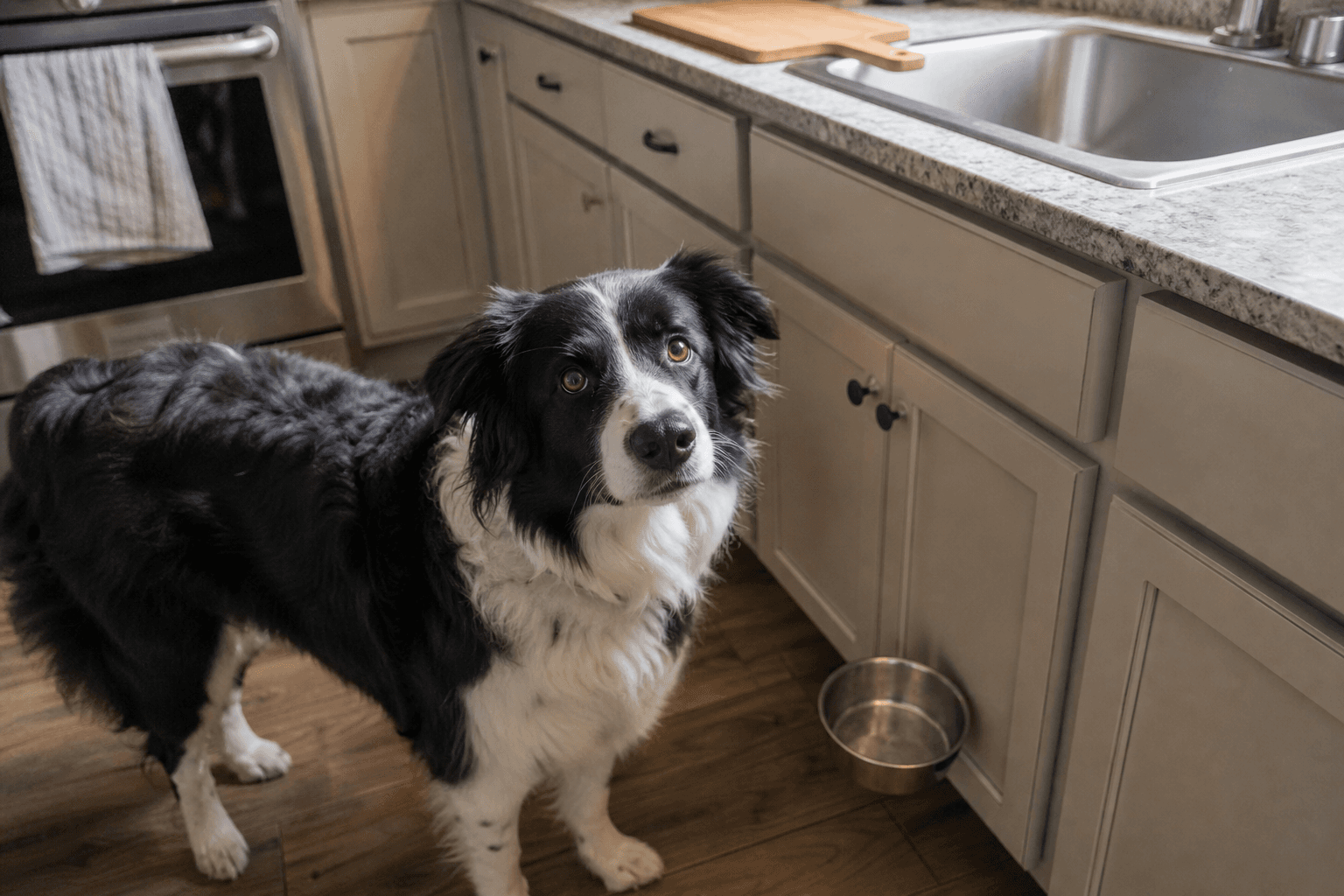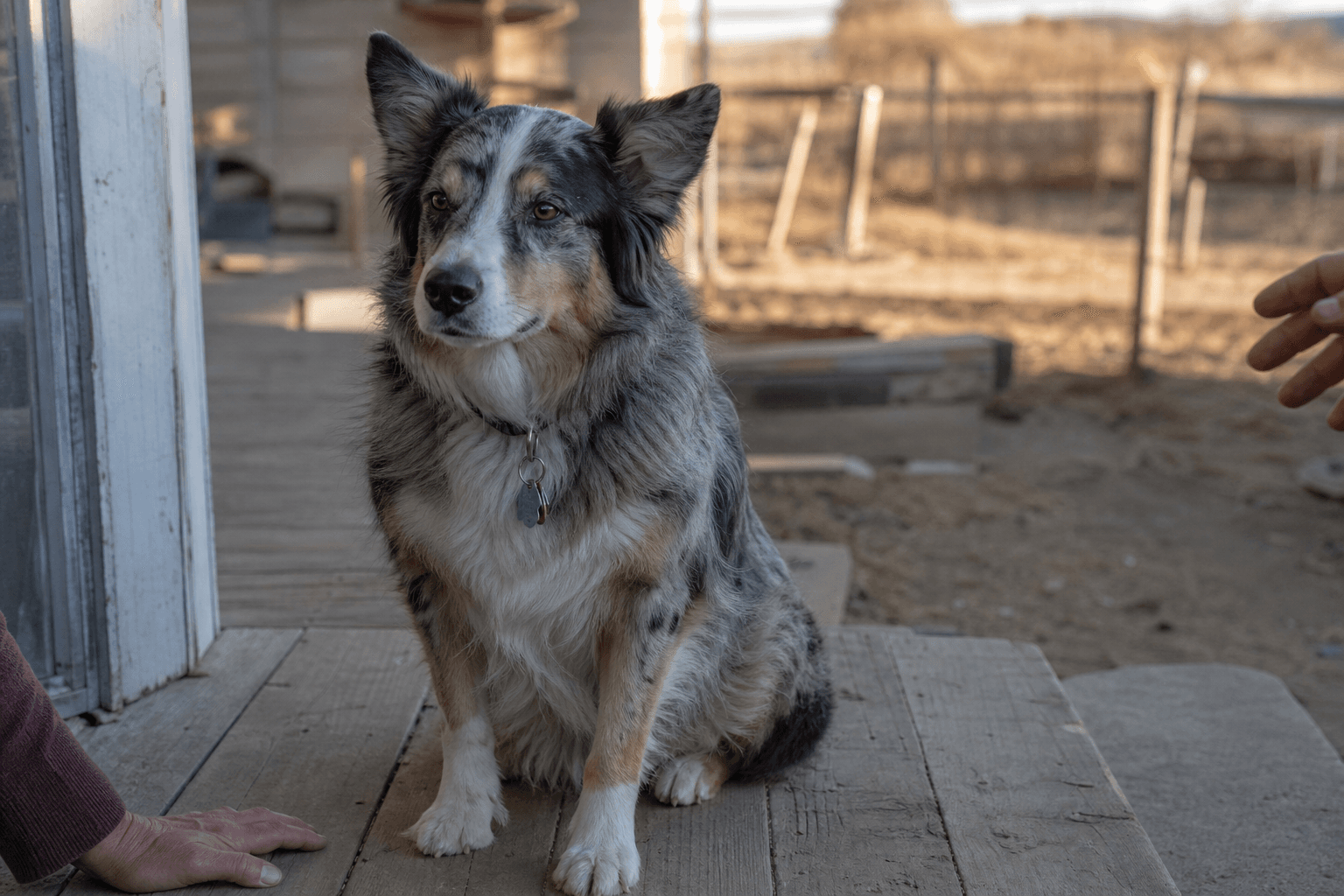

Melissa Burris had spent two weeks doing what every owner of a missing dog does: calling, driving, posting, hoping. Rio, her 10-year-old Australian shepherd, had slipped out of the yard near Tulsa, Oklahoma on July 30. He was, as she put it, an "escape artist" who liked to "go shopping" around the neighborhood — but he always came back.
This time the call came from Greensboro, North Carolina. About 1,100 miles away.
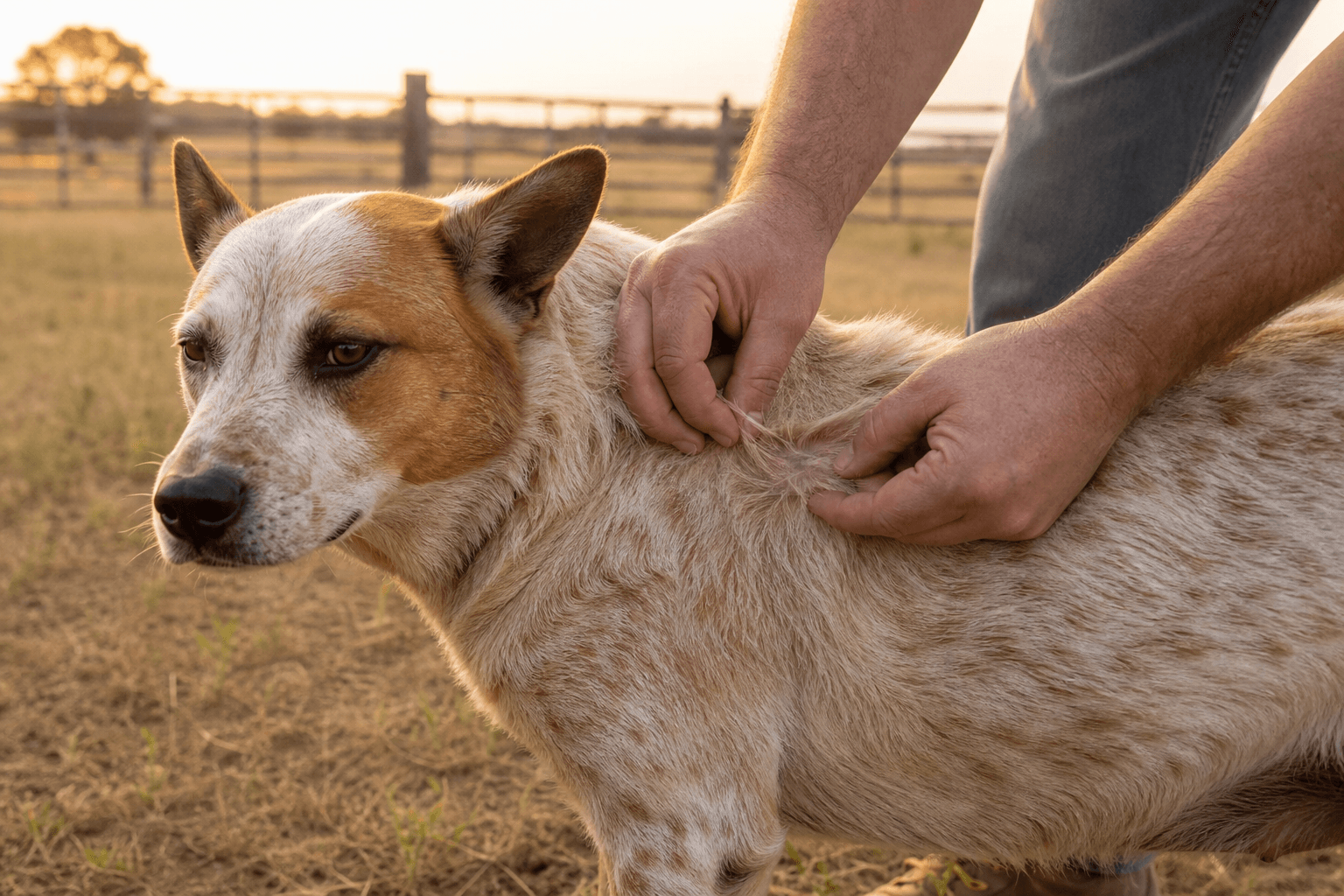
A Good Samaritan had picked Rio up and brought him to Guilford County Animal Services. Staff did the first thing any well-run shelter does with a stray: they ran a scanner over his shoulder blades. "That's when we scanned him for a microchip and then realized that the microchip was registered, and then we started doing our detective work on trying to find the owner," shelter director Jorge Ortega told ABC News. "It's a huge mystery on how Rio ended up [getting] from Oklahoma to Greensboro."
"When I got that call that he had been found, I was just floored," Burris said. Rio made the long trip home. "He's been all smiles since he got home."
It's a lovely story, and it went viral this week for the obvious reason. But buried in Ortega's quote is the part that actually saved Rio, and the part most coverage glides right past: the microchip was registered. Not just implanted. Registered, with a phone number someone answered.
The gap between "microchipped" and "findable"
A microchip is not a GPS tracker. It's a rice-grain-sized passive transponder that does exactly one thing: when a scanner passes over it, it emits a 9-, 10-, or 15-digit number. That number is useless unless it's connected to your current contact information in a registry database.
The landmark study on this remains Lord et al. in the Journal of the American Veterinary Medical Association, which tracked 7,704 microchipped animals entering 53 U.S. shelters. The good news: of stray dogs whose owners could be found, the reunion rate was 74.1%, and microchipped dogs were reclaimed at roughly 52% versus 22% for the shelters' overall dog population.
The bad news is in the failures. For 876 animals, the shelter could not reach anyone. Why?
- 35.4% — incorrect or disconnected phone number
- 24.3% — owner never returned the calls or the letter
- 17.2% — chip registered to another group (a rescue or breeder, not the owner)
- and a further slice registered to a previous owner, or never entered in any database at all
And of the animals for which a shelter contacted a registry at all, only 58.1% were actually found registered. A parallel Australian study of RSPCA Queensland shelters (Lancaster et al., Animals) found the same pattern, and quantified what the paperwork is worth: animals with clean microchip data had 11.5 times higher odds of being reclaimed than unchipped dogs, while dogs whose chip data had problems had only 3.8 times the odds. A bad record throws away roughly two-thirds of the benefit.
The researchers' conclusion was blunt: the high reunion rate "supported microchipping as a valuable permanent pet identification modality; however, issues related to registration undermined its overall potential."
Why this matters more in 2026
Reunions are getting harder, not easier. Shelter Animals Count, the national sheltering database, reported in its 2025 Annual Data Report that return-to-owner outcomes fell 3% year over year — 638,000 animals reunited, about 21,000 fewer than the year before. Stray dogs remain roughly six times more likely than stray cats to go home, but the trend line for adult stray dogs is sliding.
Age matters, too, in a way that flatters Rio's odds. Government and contracted shelters report return-to-owner rates of 50–60% or higher for senior dogs, compared with roughly 25–35% for adult dogs and just 5–9% for juveniles — largely because older dogs are more likely to carry a chip with a real owner attached.
City-level data tells the same story. An analysis of Dallas Animal Services intake published in Frontiers in Veterinary Science found that at-large adult strays with a microchip had a 71% return-to-owner rate versus 39% without one. The same analysis found something worth remembering during the panic of hour one: 70% of reunited strays were picked up within a mile of home, and 42% within about a block.
The 15-minute microchip audit
Do this today, from your couch. It is the single highest-return chore in dog ownership.
1. Find your dog's chip number
It's on your adoption paperwork, your vet's records, or the registration card in a drawer somewhere. If you can't find it, your vet or a local shelter will scan your dog for free — most will do it at the front desk in two minutes. Do this at least once a year anyway; chips occasionally fail or migrate down a shoulder.
2. Look it up in the AAHA Universal Pet Microchip Lookup
There is no single national microchip database in the United States — chips from any brand can be registered with any registry, which is exactly why found dogs fall through cracks. The AAHA Universal Pet Microchip Lookup Tool searches participating registries and tells you which one holds your dog's record. Enter the number with no spaces or punctuation.
Read the result carefully:
- A registry is listed — good. Note the "last updated" date. Go to step 3.
- Only a manufacturer or distributor is listed — that usually means the chip has never been registered. This is the failure mode that leaves a scanned dog stranded at a shelter. Fix it today.
- The chip starts with 900 — it may not trace to a single provider; you'll get a list of companies to call.
3. Verify what the record actually says
Call or log in to the registry and confirm, line by line: your current cell number, a second phone number for a partner or family member, your current email, your current street address, and your dog's description. The AVMA's microchipping FAQ emphasizes phone and email above all — those are what a shelter uses at 9 p.m. on a Saturday.
If you adopted your dog, check whether the chip is still registered to the rescue or the breeder rather than to you. That's the 17% failure bucket in the JAVMA data, and it's extremely common.
4. Answer unknown numbers for the rest of your dog's life
Nearly a quarter of failed reunions were owners who simply never picked up or wrote back. If your dog is missing, screen nothing.
5. Don't retire the collar tag
A chip requires a scanner. A tag requires a neighbor with a phone. In the ASPCA's national survey of 1,015 pet-owning households, 15% had lost a dog or cat in the previous five years, 93% of lost dogs were recovered — and only 6% of owners found their dog at a shelter. Most reunions happen on the street, where a tag does the work.
If your dog goes missing tonight
Speed and calm beat everything. Adapted from the AKC's first-48-hours guidance and shelter-intake research:
- Search the house first. Closets, under decks, behind appliances, the garage. Dogs hide in plain sight.
- Then search close. Remember: most reunited strays are found within a mile. Walk the usual routes with high-value treats, a leash, and a squeaky toy.
- Do not chase. If you spot your dog and he looks frightened, stop moving, turn sideways, avoid eye contact, crouch, and toss treats. Chasing triggers flight and can push a dog miles farther out.
- Leave a scent anchor. A worn T-shirt and their bed at the spot they went missing from. Many dogs circle back.
- Call every shelter within 60 miles on day one — and file a found/lost report in person if you can. Rio's case is a reminder that "within 60 miles" is a floor, not a ceiling; if days pass, widen it and post the chip number in regional lost-pet groups.
- Report the chip as lost with your registry. Most flag the number so any scan triggers an alert.
- Ask neighbors for doorbell camera footage, and post to local Facebook lost-pet groups and neighborhood apps with a clear, recent, full-body photo.
The unglamorous part is the part that works
Nobody knows how Rio covered 1,100 miles in two weeks. He may have been picked up by someone traveling, or passed along a chain of well-meaning strangers. Ortega called it a mystery, and it will probably stay one. "We'll never probably know what he went through over those two weeks," Burris said.
What isn't a mystery is why the story has a happy ending. Someone implanted a chip. Someone registered it. Someone kept the phone number current. And a shelter scanned a stray dog before doing anything else.
Four small acts of paperwork, and a 10-year-old Aussie got to sleep in his own bed again.
At Sidewalk Dog, we spend most of our time on the fun stuff — patios, trails, and the best dog-friendly spots in your city. But the fun only works if your dog always finds the way back to you. Go check that chip. It takes fifteen minutes, and it's the cheapest insurance you'll ever buy.