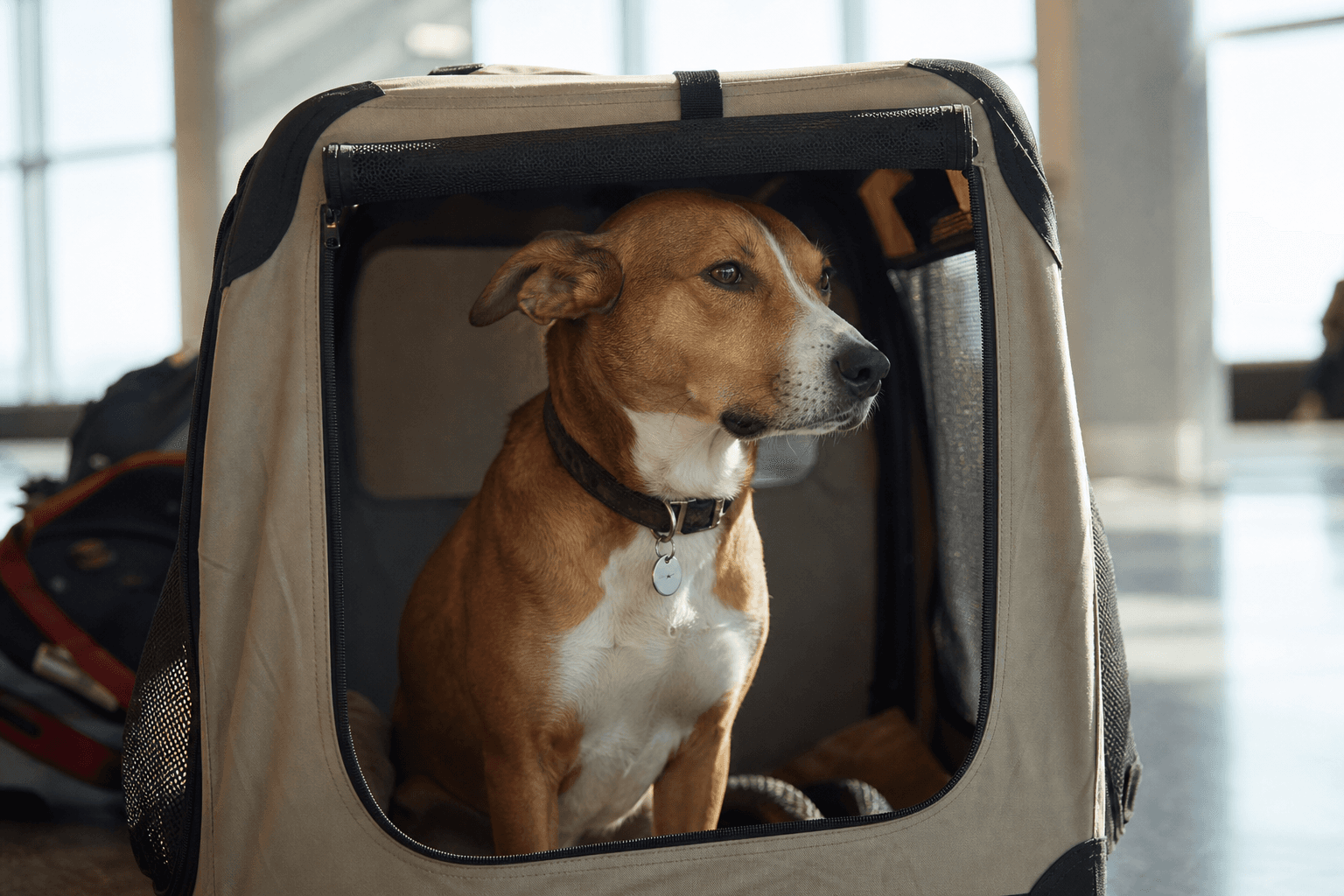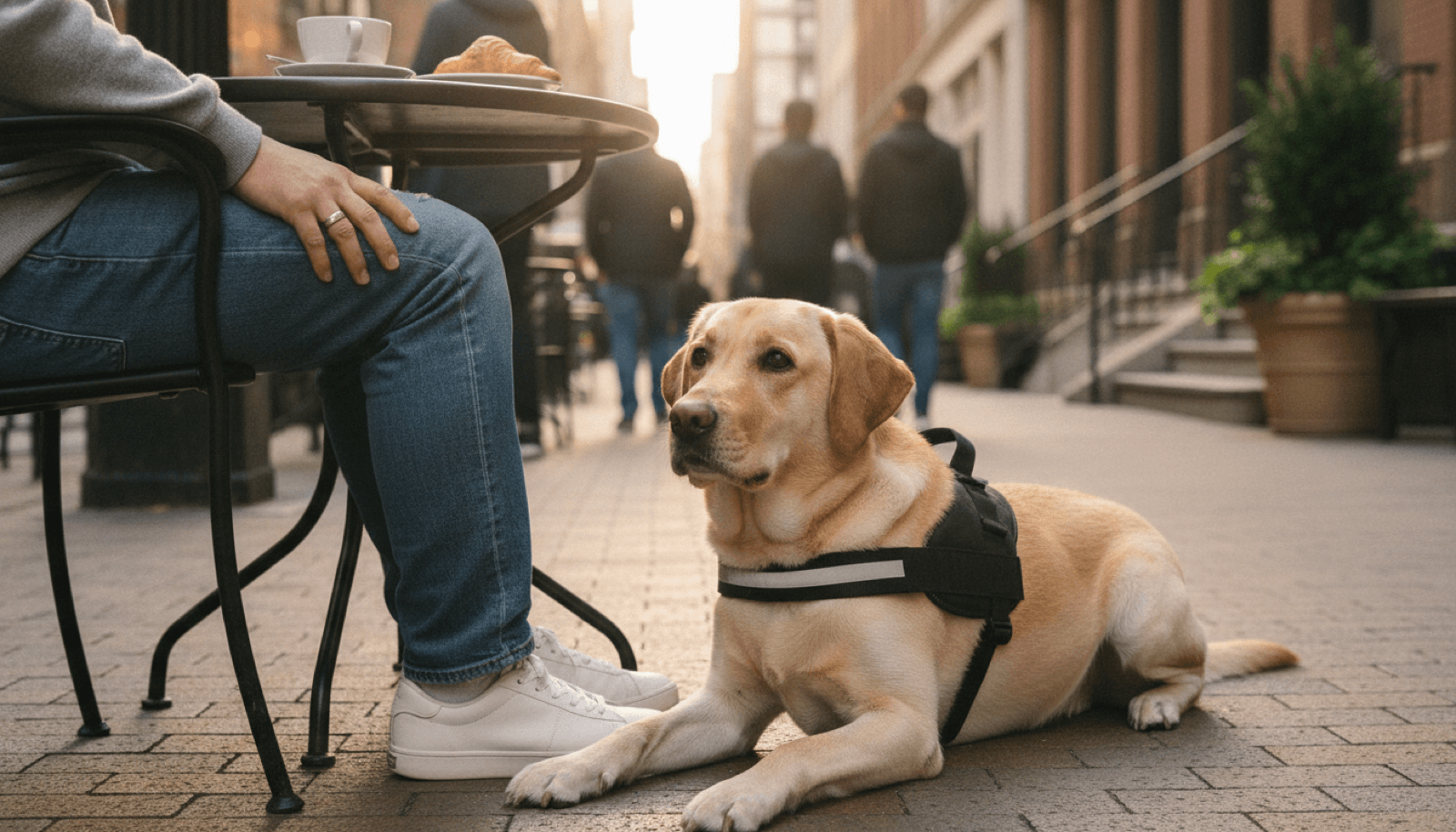

International Assistance Dog Week is underway — it runs August 2 through August 8, with Assistance Dog Day landing tomorrow, Tuesday, August 4. It's a week built to celebrate the dogs who open doors, brace a wobbly step, interrupt a panic attack, or alert to a blood sugar crash before their person feels a thing.
But if you ask the handlers themselves what's making their lives hardest, they don't lead with the training or the vet bills. They lead with the front door — and the person standing in it asking for paperwork that doesn't exist.
In a 2025 review published in PLOS ONE, researchers led by Sarah Leighton at the University of Arizona synthesized 43 studies on the social experiences of service dog partners in the United States. Across ten of those studies, 37% of participants reported being refused service or denied access somewhere they had a legal right to be. And when handlers were asked why they thought it kept happening, 84% pointed at the same culprit: other people passing pets off as service dogs.
That's the uncomfortable part of Assistance Dog Week for the rest of us. The biggest barrier facing working dog teams isn't a policy problem in Washington. It's a leash problem in the grocery store.
The numbers behind the door-slam
The PLOS ONE review is the most complete picture we have of what daily life looks like for American service dog handlers, and it is not a gentle read. More than half of the empirical studies documented handlers reporting increased stigma after they got their dog — strangers challenging whether they were disabled enough, demanding to know their diagnosis, or simply telling them to leave.
Handlers with non-visible disabilities get hit hardest. In the studies reviewed, 53% of handlers with invisible conditions said they avoid public places because of the unwanted attention, compared with 29% of handlers with visible disabilities. If your wheelchair explains your dog, people mostly leave you alone. If nothing about you looks "disabled," you get interrogated.
There's also a brutal expectation gap. Among people still waiting for a service dog, 22% expected to run into public problems. Among people who actually had one, 44% had already experienced them — double the rate. Nobody warns you that the dog who gives you your independence back also makes you a target.
The pattern isn't just American. A global survey called Paws for Access, run jointly by Assistance Dogs International and the International Guide Dog Federation, gathered responses from more than 1,200 handlers across 24 countries. It found that 56% had been refused at a restaurant or café, 56% had been refused a taxi or rideshare, and 50% had been challenged to prove their dog was legitimate. For guide dog handlers, the rideshare number climbed to 63%.
"Uber and Lyft are the most difficult," one visually impaired respondent told researchers. "I've been refused, driven away from, almost run over."
The United States landed at 35% for repeat refusals — better than the UK and Netherlands at 79%, but that figure covers handlers who were turned away more than once in a single year. That's not a rounding error. That's a routine.
There are only two questions — and no such thing as a service dog ID
Here's the piece almost nobody gets right, including a lot of well-meaning business owners.
Under the ADA, a service animal is defined by the Department of Justice as a dog individually trained to perform a task directly related to a person's disability. That's it. The dog does not need to be certified. It does not need to wear a vest. It does not need to have gone through a professional program.
When a dog's job isn't obvious, staff are allowed to ask exactly two questions:
- Is the dog a service animal required because of a disability?
- What work or task has the dog been trained to perform?
And that's the whole list. Businesses may not ask about the person's disability, may not require the dog to demonstrate its task, and may not request documentation showing the dog is "registered, licensed, or certified."
Which brings us to the registries. Those online services selling service dog certificates, ID cards, vests, and numbered "registrations" for $60 to $200? They confer exactly zero legal rights. There is no federal service dog registry. There never has been. Those sites are selling a laminated card that means nothing — except that it makes the next real handler's life harder, because it teaches business owners to expect paperwork that legitimate teams have no obligation to carry.
It's also worth knowing the distinction the ADA draws between service dogs and emotional support animals. A dog whose comfort comes from simply being present is not a service animal under the law. But a dog trained to sense an oncoming anxiety attack and take a specific action is a psychiatric service dog, and has full access rights. Psychiatric service dogs are real, trained, and legally protected — and they're also the teams most likely to get challenged, precisely because their work is invisible. We've written before about how psychiatric service dogs support veterans with PTSD.
Why an untrained dog in a vest is a safety issue, not just an etiquette one
The strongest argument against faking it isn't legal. It's physical.
A working dog is doing a job that requires total focus, and a badly behaved dog nearby can end that dog's career. UK researchers Moxon, Whiteside, and England tracked dog attacks on guide dogs over a 56-month period and counted 629 incidents — roughly 11 attacks every month. Of the guide dogs attacked, 43% needed veterinary care, 42% had their working ability affected, 22% had to take time off the job, and 20 dogs were withdrawn from the program permanently.
The attacking dogs weren't strays. In 77% of cases the aggressor's owner was right there — 46% off leash, 31% on leash.
Now consider what those dogs cost to replace. Assistance Dogs International's accredited members placed 4,498 new assistance dogs in 2024, supporting a worldwide total of just 28,308 active assistance dog teams across 167 accredited programs. A single fully trained dog is commonly cited at $20,000 to $50,000 and up to two years of work, with wait lists at accredited programs often running one to three years. Ending one of those partnerships early because your dog lunged in a checkout line isn't a small thing. It's someone's independence.
Six things pet owners can actually do this week
You don't need to be an advocate to help. You mostly need to be boring.
- Don't interact with a working dog. At all. No petting, no eye contact, no kissy noises, no letting your dog "just say hi." A vested dog mid-task is at work. Talk to the human if you need something.
- Give the team room to pass. Shorten your leash, step aside, and move through. Our guide to dog walking etiquette covers the basics of yielding space well.
- Keep your own dog under real control. If your dog can't hold a sit while another dog walks past, that's worth working on — start with reducing leash reactivity on walks.
- Never buy a fake vest or registration. Not to fly, not to rent, not to get into a store. Every fake makes the next real team's day harder.
- Know where your pet is actually welcome. Plenty of places genuinely want your dog — patios, breweries, shops. Check the 2026 rules for dog-friendly restaurant patios instead of forcing a "service dog" claim indoors.
- If you own a business, train your staff on the two questions. Most access denials come from employees who genuinely don't know the rule and default to "no."
The part where you do nothing, beautifully
International Assistance Dog Week was founded in 2009 by Marcie Davis, a service dog partner who has used one since a spinal cord injury, to honor assistance dogs, their trainers, and the volunteer puppy raisers who start them. Davis built the week around recognition — of the dogs, and of the people who make them possible.
The best way most of us can honor that is quieter than a parade. It's walking past a golden in a harness without breaking stride. It's holding your dog's attention on you for the ten seconds it takes a team to get through a door. It's not buying the vest.
Assistance dogs already have a job. The kindest thing we can do is let them do it.
At Sidewalk Dog, we're all about getting out into the world with your dog — the right way, in the right places. If you want more on sharing public space gracefully, start with our service dog guide for owners and the public.