
As of June 1, the 2026 Atlantic hurricane season is officially open. NOAA is calling for a below-normal year — 8 to 14 named storms, 3 to 6 hurricanes, and 1 to 3 majors. AccuWeather is running hotter, with 11 to 16 named storms and 3 to 5 direct U.S. impacts expected before November.
"Below average" can be misleading. It only takes one hurricane to wreck a coastline, flood a kennel, or shut down the highway you'd planned to evacuate on. And the storms that do form this season are likely to favor the Gulf Coast and Southeast U.S., where a developing super El Niño is expected to shear the Caribbean and shift activity closer to land.
Most dog owners we talk to think of hurricane prep as a human problem — tarps, plywood, bottled water, batteries. But your dog needs his own kit, his own paperwork, and his own evacuation plan. If you build it this week, you won't be the family scrambling for a leash at midnight when the storm shifts west.
Here's how to do it before the first storm forms.
The 2026 forecast, in plain English
NOAA's Climate Prediction Center pegs the odds of a below-normal Atlantic season at 55%, with a 35% chance of near-normal and just a 10% chance of an above-normal year. That sounds reassuring until you remember the comparison: a "normal" season averages 14 named storms, 7 hurricanes, and 3 majors. Below normal still means storms.
The biggest variable this year is El Niño. Strong upper-level winds across the Atlantic typically rip apart developing tropical systems, which is why El Niño years tend to produce fewer Atlantic storms overall. But that wind shear is uneven. Forecasters note that the Gulf and Southeast coasts can still see direct impacts even in quiet years, and a single landfall — Hurricane Andrew in 1992, Hurricane Michael in 2018 — can do more damage than an entire busy season elsewhere.
If you live anywhere from Brownsville to Boston, treat this like a season you're going to use, not one you'll watch on TV.
The 14-item dog go-bag
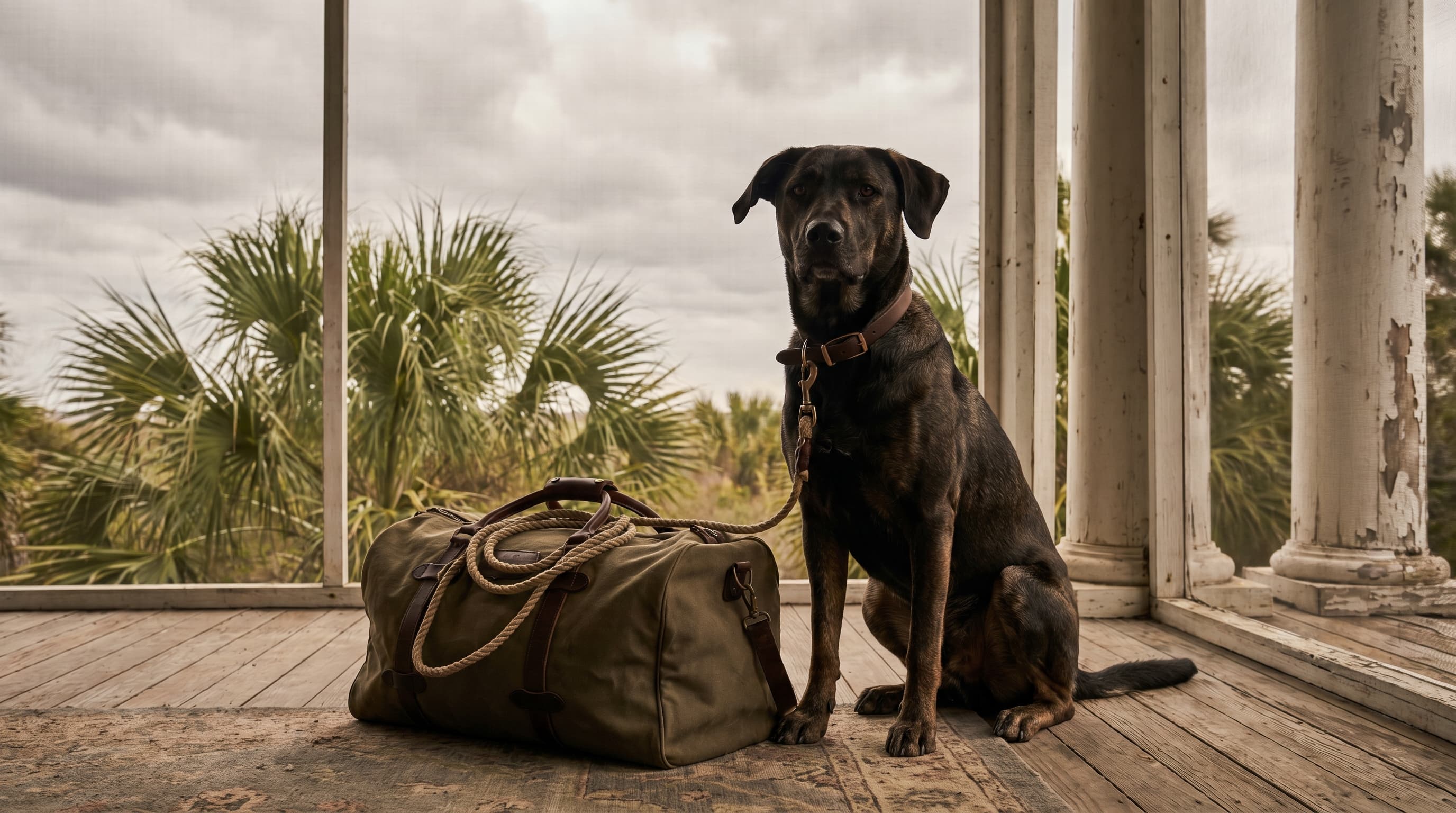
Veterinarians, the American Kennel Club, and disaster-response groups largely agree on what belongs in a dog's emergency bag. Pack everything into one waterproof tote or duffel that lives near your human go-bag, and rotate the food and medications every few months so they don't expire on you.
- Three days of dog food — minimum. Five is better. Use a sealed, watertight container so floodwater can't contaminate kibble.
- Bottled water — a gallon per dog per day. Don't count on tap water staying drinkable post-storm.
- Collapsible food and water bowls. Silicone ones pack flat.
- Two-week supply of medications in original packaging, plus written dosing instructions. If your dog is on heart, seizure, or diabetes meds, ask your vet for an extra refill now.
- A copy of vaccination records and your vet's contact info, sealed in a zip-top bag. Most boarding facilities and emergency shelters require proof of current vaccinations before they'll take a dog in.
- A recent photo of you with your dog — printed, not just on your phone. If you get separated and a shelter staffer asks for proof of ownership, a paper photo doesn't need a charged battery.
- Microchip number and registration info, written down. (More on the chip below.)
- Sturdy leash and a back-up collar with ID tags. Tags should list your name, your dog's name, and a cell number that works even when local towers are down — a relative outside the storm zone is ideal.
- A muzzle, even if your dog has never needed one. Scared, hurt, displaced dogs bite. Shelters often require muzzles for intake.
- Pet first-aid kit — gauze, vet wrap, blunt scissors, tweezers, antiseptic wipes, styptic powder, and a digital thermometer.
- Pee pads, paper towels, and trash bags. Flooded streets and packed shelters mean no normal potty breaks for days.
- One familiar toy and a worn t-shirt that smells like you. Both reduce stress when your dog is sleeping somewhere strange.
- A printed list of pet-friendly hotels and shelters on your evacuation route. Save the same list to your phone, but assume Wi-Fi goes down.
- Calming supplements or anxiety meds if your dog already takes them — and a conversation with your vet about whether to add them temporarily.
Pack the bag once. Pack it now. Trying to assemble this list while a Cat 3 is bearing down on your county is how dogs get left behind.
The microchip is the only thing that comes home with your dog
In the chaos of a storm, collars slip off. ID tags get ripped on fences. The microchip — that rice-sized RFID tag your vet implants between the shoulder blades — is the only piece of ID that doesn't fall off. The AKC and the AVMA both consider it the single most important step in disaster prep.
Two things to do this week:
- Confirm the chip is registered and your contact info is current. A chip that scans to a phone number you used in 2019 is worse than no chip at all — it sends a finder to a dead end. Most chip manufacturers let you update contact info online for free.
- If your dog isn't microchipped, schedule it before the first named storm. Vets can do it during a routine visit; many shelters and rescues offer low-cost or free chipping events in coastal states throughout June.
Where you'll actually go
"If it isn't safe for you to stay, it isn't safe for your pets either," the AKC writes, and it's the line every hurricane veteran repeats. The catch: a lot of evacuation shelters don't take dogs. Federal law requires some pet-friendly options in declared disasters, but capacity is tight and they fill fast.
Build your evacuation plan around three layers:
- Layer one — friends and family inland. Call now and ask: if a Cat 2 lines up on us, can we land at your place with the dog? Confirm before you need it.
- Layer two — pet-friendly hotels along your route. Chains like Best Western, La Quinta, Red Roof, and Kimpton accept dogs at most properties, but check each property's policy and pet fee. Pre-book if a storm is in the cone — they sell out fast.
- Layer three — emergency pet shelters. Your county emergency management office maintains a list of co-location shelters that take owners and pets together. Find it before the season heats up; many require pre-registration.
The 90-minute prep plan
If you do nothing else with this article, block 90 minutes this week and knock these out:
- 0–15 min: Log into your microchip registry and confirm the contact info is current.
- 15–45 min: Pull together the go-bag from the list above. Use what you already have; buy what you don't.
- 45–60 min: Print a paper copy of vaccination records, your vet's number, and the photo of you with your dog. Seal it in a zip-top bag inside the go-bag.
- 60–75 min: Call your vet and ask about an extra refill of any chronic medications. Most will do it without an appointment if you ask in June; many won't if you ask the day a storm forms.
- 75–90 min: Make your three-layer evacuation list. Save it to your phone and print it.
Ninety minutes. One week. Then your dog is set for the entire 2026 season, and you can go back to the much harder problem of finding plywood.
While you're already thinking about summer dog safety, our guide to when pavement is too hot for paws covers the other June-through-September threat that catches most owners off guard. And if you're traveling with your dog this summer — hurricane or not — our guide to dog-first hotels and pet concierges is a good place to start.
The forecast says "below normal." The whole point of preparing is so the forecast doesn't matter.