
If you have ever adopted a rescue dog from Mexico, brought a puppy home from a beach vacation, or flown internationally with your dog in the cabin, a bill moving through the U.S. Senate this week could change your paperwork forever.
Senate Agriculture Committee Chairman John Boozman released updated text for the Agricultural Act of 2026 — the long-delayed "Farm Bill 2.0" — on August 1, and set a committee markup for Thursday, August 6. Buried in Title XII, past the pages on grain standards and king crab labeling, sits Section 12502: Importation of live dogs.
It is the kind of provision that never makes the evening news and yet touches roughly a million dogs a year. Here is what is actually in it, who is fighting about it, and what it means for your dog.
What Section 12502 Would Actually Do
The dog language in Farm Bill 2.0 mirrors the Healthy Dog Importation Act (S. 1725 in the Senate, H.R. 3349 in the House), a bipartisan bill introduced in May 2025 that has been waiting for a legislative vehicle ever since. The committee's own title-by-title summary describes the goal plainly: it "bolsters USDA efforts to prevent foreign animal diseases from entering the U.S. by requiring robust electronic documentation for the importation of dogs."
In practice, that means that before a dog is transported to the United States, USDA would have to receive electronic documentation showing the dog:
- Is in good health, certified by a licensed veterinarian accredited by a recognized veterinary authority in the country of origin;
- Has received all required vaccinations and internal and external parasite treatments, with negative test results where USDA requires them;
- Is permanently identified by a USDA-approved method — in practice, a microchip; and
- Is at least six months old and carries a USDA import permit, if the dog is coming in for "transfer" — sale, adoption, exchange, or donation.
The bill also directs USDA to write regulations denying entry to non-compliant dogs, to maintain a centralized database of imported dogs, and to charge fees for verifying documents and issuing transfer permits.
There are carve-outs. Personal pets of U.S. origin returning home, U.S. military and contracted working dogs, research dogs, dogs entering for veterinary treatment under quarantine conditions, and certain young dogs entering Hawaii from the British Isles, Australia, Guam, or New Zealand are all excepted.
Why a farm bill is where this lands
Dog imports sit in agriculture law because the underlying statute is the Animal Health Protection Act — the same framework USDA uses to keep livestock diseases out of the country. The committee summary explicitly ties the new animal-health money to threats like highly pathogenic avian influenza, the Asian longhorned tick, and New World screwworm, a flesh-eating parasite that has been marching north through Central America and that veterinarians have been warning can infest dogs, not just cattle.
The Numbers Behind the Fight
The scale here surprises most owners. CDC estimates that roughly 1.06 million dogs enter the United States every year — about 700,000 by air and 300,000-plus across land borders with Canada and Mexico. A 2019 USDA report to Congress found that in 2018, USDA issued import permits for just 2,917 dogs under the Animal Welfare Act's resale rules, and that no single federal agency actually tracks the total number of dogs coming in. CDC does not count dogs from rabies-free countries. USDA counts only resale imports. Customs and Border Protection does not track shipments below its thresholds.
That gap is the whole argument for the bill: a million dogs a year moving into the country through a system with no unified ledger. The United States was declared free of canine rabies in 2007, and federal agencies have spent the years since chasing individual scares — a rabid rescue dog from Azerbaijan placed with a Pennsylvania family in 2021 that triggered a temporary suspension of imports from 113 high-risk countries, and a rabid dog imported from Egypt to Kansas in 2019. CDC has estimated that about 107,100 of those million-plus dogs come from countries considered high risk for canine rabies.
Where the Disagreement Is — and It's Not Where You'd Expect
This is not a simple pro-dog versus anti-dog fight, and any article that tells you it is, is selling you something.
The American Kennel Club has asked its members to contact senators in support of Title XII "as introduced" — and to oppose amendments. AKC Government Relations specifically supports the import language and additional USDA enforcement resources for the Animal Welfare Act, while opposing Amendment #135, a version of Goldie's Act, which would rewrite how USDA inspects and penalizes licensed commercial breeders. AKC argues the amendment erases the distinction between paperwork errors and genuine animal-care violations and strips due-process protections from licensees.
Goldie's Act is backed by the ASPCA, the Humane Society Legislative Fund, the National Sheriffs' Association, and nearly 150 other organizations. It is named for a golden retriever who died in a USDA-licensed Iowa facility in July 2021 after inspectors photographed her deteriorating for months without intervening. Its supporters want mandatory intervention for suffering animals, meaningful penalties, and 24-hour notification of local law enforcement in cruelty cases.
Meanwhile, some international rescue groups have spent years fighting the six-month minimum age from the other direction. When CDC's own import rule imposed a total puppy ban in August 2024, Caribbean rescue organizations including Potcake Place K9 Rescue sued in federal court, arguing that healthy, vaccinated puppies from countries the U.S. itself classifies as rabies-free were being blocked for no epidemiological reason. Even the Humane World Action Fund, which campaigned for stricter import rules, called the final rule "not what we'd hoped for."
So: three groups that all say they are protecting dogs, pulling in three directions. That tension is the honest story of Section 12502.
What This Means for You and Your Dog
If you are adopting an international rescue: ask the organization directly how they handle CDC and USDA documentation today, whether the dog is microchipped before departure, and what happens if the dog is denied entry. Reputable groups already do this. The ones that cannot answer are the reason the bill exists.
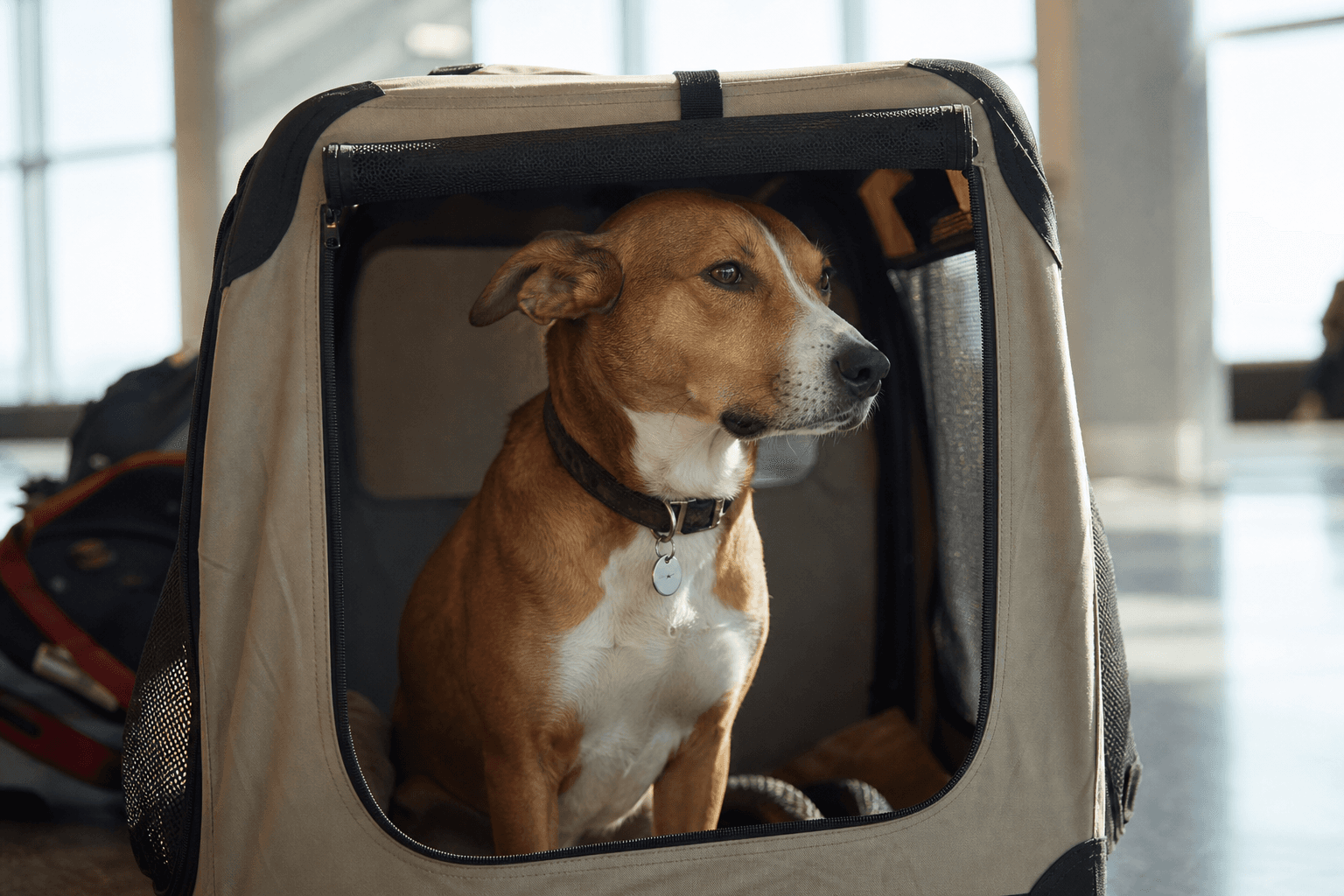
If you travel internationally with your dog: the returning-personal-pet exception should cover you, but the practical requirements are already real. Every dog entering or returning to the U.S. needs a CDC Dog Import Form receipt, a scannable microchip, and — for dogs that have been in a high-risk country — additional rabies documentation. Confirm your microchip reads on a universal scanner before you fly, not at the counter.
If you are buying a puppy from overseas: a six-month age floor plus a USDA permit for any dog imported for sale would end the "puppy flown in next week" pipeline. Plan on adopting locally or buying from a breeder you can physically visit.
If you want a say: the markup is Thursday, August 6. Calls to your senators' offices before then land while amendments are still being drafted. Say you are a constituent, name Title XII and the dog-import provisions, and be specific about whether you support or oppose the Goldie's Act amendment. Both AKC and ASPCA run action forms; both are advocacy tools, so read the underlying bill text before you sign anything.
The Bigger Picture
Farm bills are enormous and they stall constantly — the last one became law in 2018, and Congress has been patching it ever since. Section 12502 may pass Thursday, get amended past recognition, or vanish if the whole package collapses. But the direction of travel has been consistent for a decade: more documentation, more permanent ID, older minimum ages, and a real federal count of the dogs crossing the border.
For the overwhelming majority of American dog owners, that means very little day to day. For the roughly one million dogs a year who make the trip, it could mean the difference between a vet exam and a vaccination record — or a crate, a long flight, and nobody checking.
At Sidewalk Dog, we track the policy and health news that actually changes life with your dog — and then we tell you where to take them. Find dog-friendly patios, parks, and breweries in your city at sidewalkdog.com/cities.