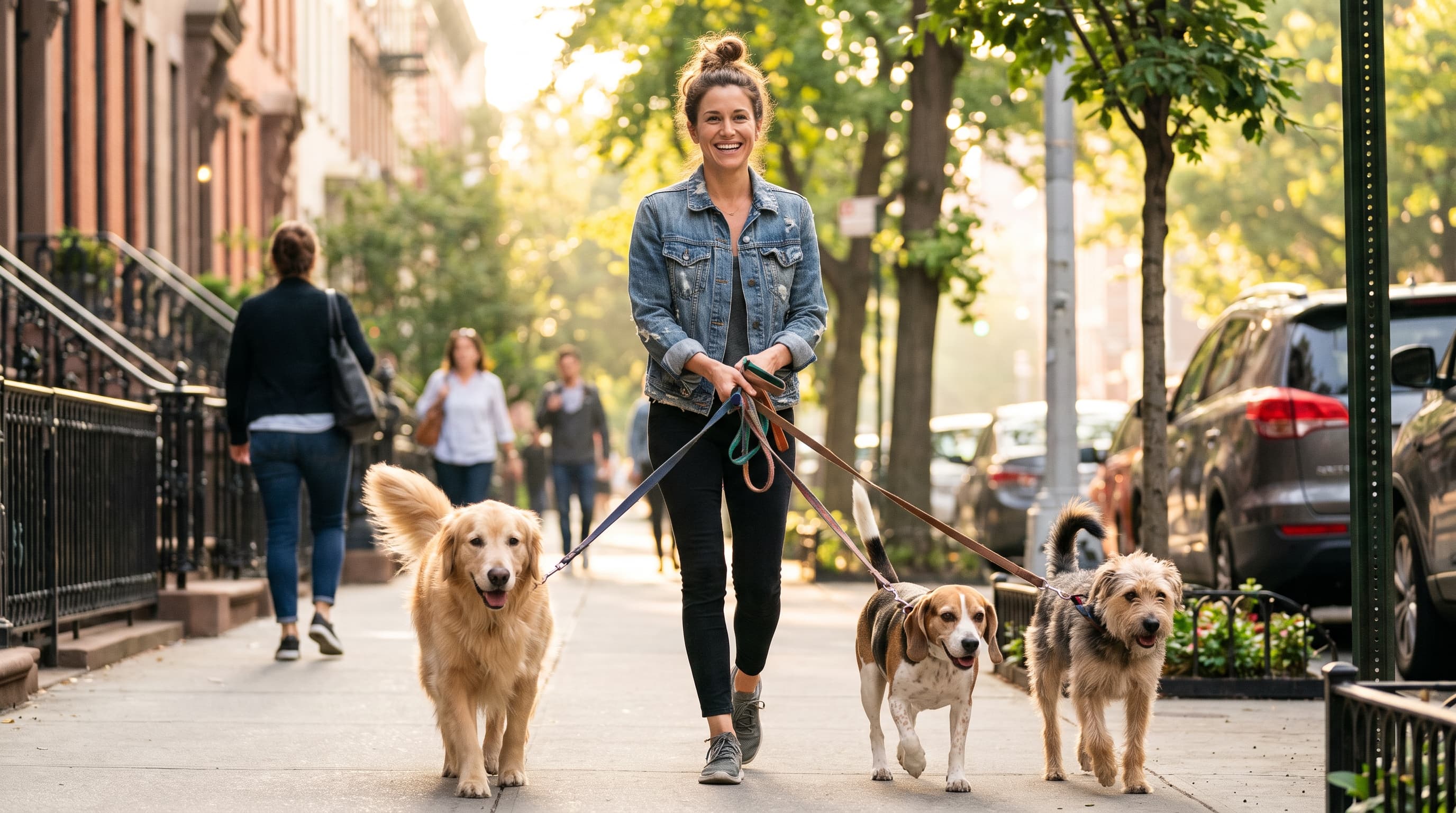

How Much Do Dog Walkers Make? A 2026 Pay Guide
Most dog walkers in the U.S. earn roughly $30,000–$36,000 a year, or about $15–$20 per hour, as of 2026. Independent walkers who set their own per-walk rates ($15–$30 per 30-minute walk) and build a full client roster can earn considerably more — established solo pros and small business owners sometimes clear $50,000 to well over $100,000 annually.
The Average Dog Walker Salary in 2026
Dog walking sits within the broader category of animal care and service workers, and the government's own data gives a useful baseline: the U.S. Bureau of Labor Statistics reports a median annual wage of about $35,360 for animal caretakers. Industry sources land in a similar range — Jobber's dog-walking data pegs the typical U.S. dog walker at around $2,980 per month, or roughly $35,770 per year, while Dogster reports an average closer to $31,000.
Averages hide a wide spread, though. A weekend hobby walker and a full-time entrepreneur running a team of walkers are both "dog walkers," and their incomes look nothing alike. The number that actually matters is your effective hourly rate multiplied by how many walks you can realistically fit into a day.
It also helps to understand why the reported figures vary so much between sources. Salary aggregators that pull from job postings capture mostly employees earning an hourly wage, so their averages skew lower. Industry and small-business sources factor in independent operators who set premium rates and stack services, which pulls the top end higher. Neither is "wrong" — they're measuring different slices of the same profession. When you read a dog-walking salary number, ask whether it describes an employee clocking hours for a company or an independent pro running their own book of clients, because that single distinction explains most of the gap.
Dog Walker Hourly Rates and Per-Walk Pricing
Hourly figures cluster in the mid-teens to low-$20s. Pet Care Insurance reports an average around $14.85 per hour with a median yearly salary near $30,893 — but that reflects employees, not independent walkers who set their own prices. Solo walkers typically charge per walk:
- 20-minute walk: ~$15–$20
- 30-minute walk: ~$20–$30
- 60-minute walk: ~$30–$45
- Group walks: Lower per-dog rate, but multiple dogs at once dramatically raises effective hourly pay
Because a skilled walker can safely handle several dogs on a single group outing, per-walk pricing is where the real earning leverage lives. Two group walks a day at $20 per dog with four dogs each is $160 for a couple hours of work.
What Affects How Much a Dog Walker Earns
Several factors push a dog walker's income up or down:
- Location: Dense, higher-cost cities support higher rates and more clients within a short radius. Rural areas mean more driving between fewer clients.
- Employee vs. self-employed: Working through an app or company is steadier but takes a cut; going independent means higher rates and more overhead.
- Client density and routing: Ten clients in one neighborhood beats ten spread across a metro area.
- Add-on services: Pet sitting, overnight boarding, medication administration, and puppy visits stack additional revenue.
- Reviews and reliability: A strong reputation lets you raise prices and keeps your calendar full.
Employee vs. Independent Dog Walker Income
If you walk for an established company or platform, you trade some earning potential for convenience: the company handles marketing, scheduling, insurance, and payments, and you take home an hourly wage or a per-walk split. It's a low-risk way to start and to learn the ropes — much like weighing the tradeoffs we cover in the dos and don'ts of dog walking.
Going independent flips the equation. You keep the full rate, but you also cover your own expenses — transportation, liability insurance, bonding, a scheduling app, and marketing. Those costs are real, and they're part of the broader trend of the rising cost of pet ownership that shapes what clients will pay. The upside is uncapped: your income grows with every client and every service you add.
How to Earn More as a Dog Walker
Turning dog walking from a side gig into a real income usually comes down to a handful of moves:
- Offer group walks to multiply your hourly earnings.
- Add high-value services like pet sitting and overnight care — the kind of coverage clients scramble for when they need a last-minute dog sitter.
- Tighten your routes so you spend time walking, not driving.
- Build recurring clients with weekly standing appointments for predictable income.
- Treat it like a business. Guides on starting a dog-walking business stress that registration, insurance, and clear pricing separate hobbyists from pros.
- Make walks better, not just longer — enrichment like our favorite dog walking games keeps clients (and their dogs) loyal.
Dog Walker Pay by Location
Where you walk dogs may be the single biggest factor in what you earn. Big, dense, high-cost-of-living cities support both higher per-walk rates and enough nearby clients to keep your day full, while rural and suburban areas mean more windshield time between fewer, lower-priced jobs. Reporting on top-paying markets consistently highlights cities like Seattle, Alexandria (VA), and other coastal metros where hourly rates run well above the national average.
Cost of living cuts both ways, though. A $30 walk in a pricey city doesn't stretch as far as a $20 walk in a modest metro, so the highest nominal rate isn't automatically the best living. The sweet spot for many walkers is a walkable, dog-heavy neighborhood where clients cluster within a short radius — that density lets you complete more paid walks per hour and slashes the unpaid driving time that quietly eats into independent walkers' real wages.
Startup Costs and Real Take-Home Pay
Gross income and take-home pay are two very different numbers for a self-employed walker. Before you pocket a dollar, budget for the ordinary costs of running the operation:
- Liability insurance and bonding — essential for protecting yourself and reassuring clients.
- Business registration and taxes — self-employment tax and quarterly estimates catch many first-year walkers off guard.
- Scheduling and payment software — a monthly subscription that saves hours of admin.
- Transportation — gas, mileage, and vehicle wear if you drive between clients.
- Gear and marketing — leashes, waste bags, a simple website, and business cards.
These overheads are exactly why walking through an established platform appeals to beginners: the company absorbs much of that cost in exchange for its cut. Independents keep more per walk but shoulder the expenses themselves. Factoring all of it in, a realistic independent walker's take-home often lands meaningfully below the headline per-walk math — which is why efficient routing and add-on services matter so much to profitability.
Is Dog Walking Worth It?
For the right person, absolutely. Dog walking offers flexible hours, outdoor exercise, low startup costs, and plenty of canine companionship. The pay ceiling for an employee is modest, but the ceiling for a motivated independent operator — especially one who scales into a multi-walker business — is high. Like most self-employment, what you earn tracks closely with how you price your time, how efficiently you route your day, and how many services you're willing to offer.
It's also one of the few side hustles that doubles as free exercise and stress relief. Many walkers start part-time to test the waters, keep a day job for stability, and scale up only once they've proven they can fill a calendar and retain happy clients. That low-risk on-ramp is a big part of the appeal: you can find out whether the work suits you without betting your livelihood on it.
Frequently Asked Questions
How much do dog walkers make per hour?
Employed dog walkers typically earn about $15–$20 per hour. Independent walkers who set per-walk rates and take on group walks can earn an effective hourly rate well above that.
Can you make a living as a dog walker?
Yes. While the average full-time wage is modest (around $30,000–$36,000), independent walkers who build a full client base, offer group walks, and add services like pet sitting can earn a comfortable living, and business owners can exceed six figures.
How much do dog walkers charge per walk?
Common rates are about $15–$20 for a 20-minute walk, $20–$30 for 30 minutes, and $30–$45 for an hour. Rates run higher in dense, high-cost cities.
Do dog walkers make more than pet sitters?
It depends on services and volume. Many professionals do both — walking during the day and offering overnight pet sitting or boarding, which often commands higher per-night rates and boosts total income.
What do I need to start a dog-walking business?
At minimum: liability insurance, a simple business registration, a scheduling and payment system, and clear pricing. Bonding and pet first-aid knowledge build trust and let you charge more.
The Bottom Line
Dog walking pays around $30,000–$36,000 a year on average, but that figure undersells the opportunity. Your rate, your routing, your service menu, and your willingness to run it like a business determine whether dog walking is pocket money or a full-time career.
Thinking about turning your love of dogs into income? Subscribe to the Daily Wag newsletter for practical guides on dog care, dog-walking best practices, and everything that keeps tails wagging.