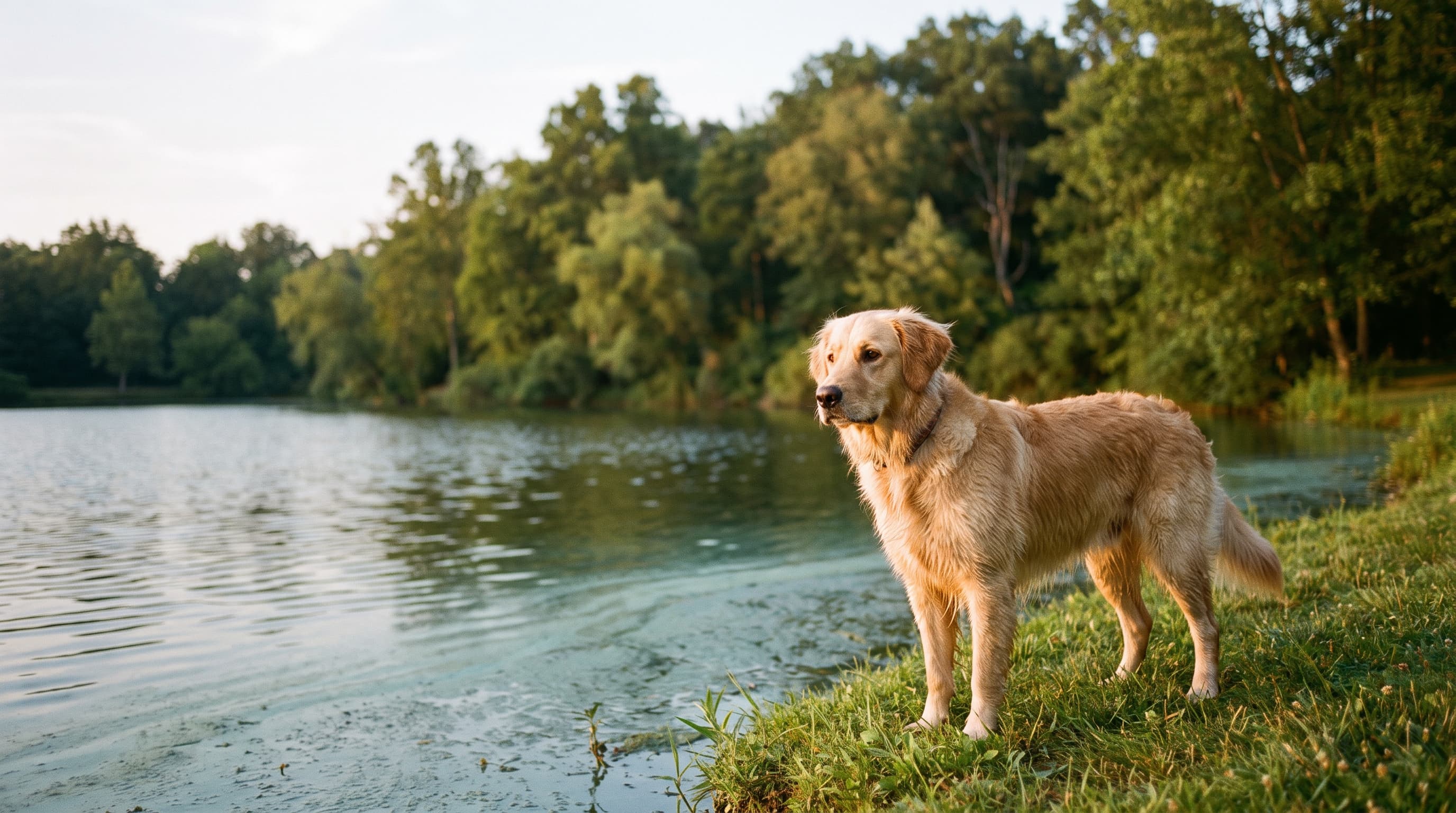

A healthy dog can bound into a green-tinged lake on a hot afternoon and be gone before the drive home is over. That is the brutal math of cyanobacteria — the so-called blue-green algae now blooming across American waterways — and in the record-hot summer of 2026, it is playing out at an alarming clip. In late July alone, dogs died after swimming in the Charles River outside Boston and the Eel River in Northern California, while state agencies from Kansas to Minnesota posted fresh advisories on lakes that looked, to any thirsty retriever, perfectly inviting.
Here at Sidewalk Dog, we love a summer swim as much as your pup does. But this is the one summer hazard where "wait and see" can be a fatal mistake. Here is what is happening in 2026, why vets are so worried, and exactly how to keep your dog out of danger.
Why 2026 Is Shaping Up to Be a Record Bloom Year
Harmful algal blooms are not new, but they thrive on precisely the conditions this summer has delivered: warm, slow-moving or stagnant water, sunlight, and nutrient runoff. With much of the U.S. running hotter than normal and many regions dry, lakes and river backwaters have turned into ideal cyanobacteria incubators. Health departments have responded with a wave of advisories — the Kansas Department of Health and Environment placed several Kansas lakes under public health advisories in the last week of July as bloom counts climbed.
The danger is that a toxic bloom does not announce itself. As Cornell University's Riney Canine Health Center bluntly puts it, "there is no way to tell the difference visually if a particular bloom is toxic or non-toxic." A pea-soup surface, a paint-like blue-green streak, or a brown scum along the shoreline are all warning signs — but clear-looking water can carry toxins too.
What the Toxins Actually Do to a Dog's Body
"Blue-green algae" is a misnomer. Cyanobacteria are bacteria, not algae, and the threat comes from the toxins some strains release. According to Cornell's veterinarians, the two most serious cyanotoxins are microcystin and anatoxin. They attack in very different ways:
- Microcystin targets the liver. It can trigger catastrophic liver failure, and dogs that survive an exposure may be left with chronic liver disease.
- Anatoxin — grimly nicknamed "very fast death factor" by researchers — hits the nervous system, causing tremors, seizures, respiratory paralysis, and death that can arrive within minutes.
There is no antidote. Cornell's team notes that treatment is entirely supportive — IV fluids, oxygen, anti-seizure medication, and blood products — and that "many patients exposed to cyanotoxins affecting the liver or brain may not survive before arriving at a veterinary hospital." That is why the emphasis from every expert is the same: prevention beats treatment, because treatment often does not get a chance.
Dogs Are Uniquely at Risk
Your dog is far more likely than you are to be poisoned, and it comes down to behavior. The American Kennel Club points out that dogs "tend to play in the water" — they gulp mouthfuls while fetching, wade through scum-covered shallows, then lick the toxins off their fur and paws for hours afterward. A dog does not need to drink deeply to get a lethal dose. A few minutes of splashing and one good self-grooming session can be enough.
Smaller dogs are at even greater risk simply because the toxic dose scales with body weight. And it is not only lakes: the AKC warns that cyanobacteria can also grow in untreated backyard pools and decorative ponds, so the water hazard may be closer to home than you think.
The Symptoms to Watch — and How Fast They Come
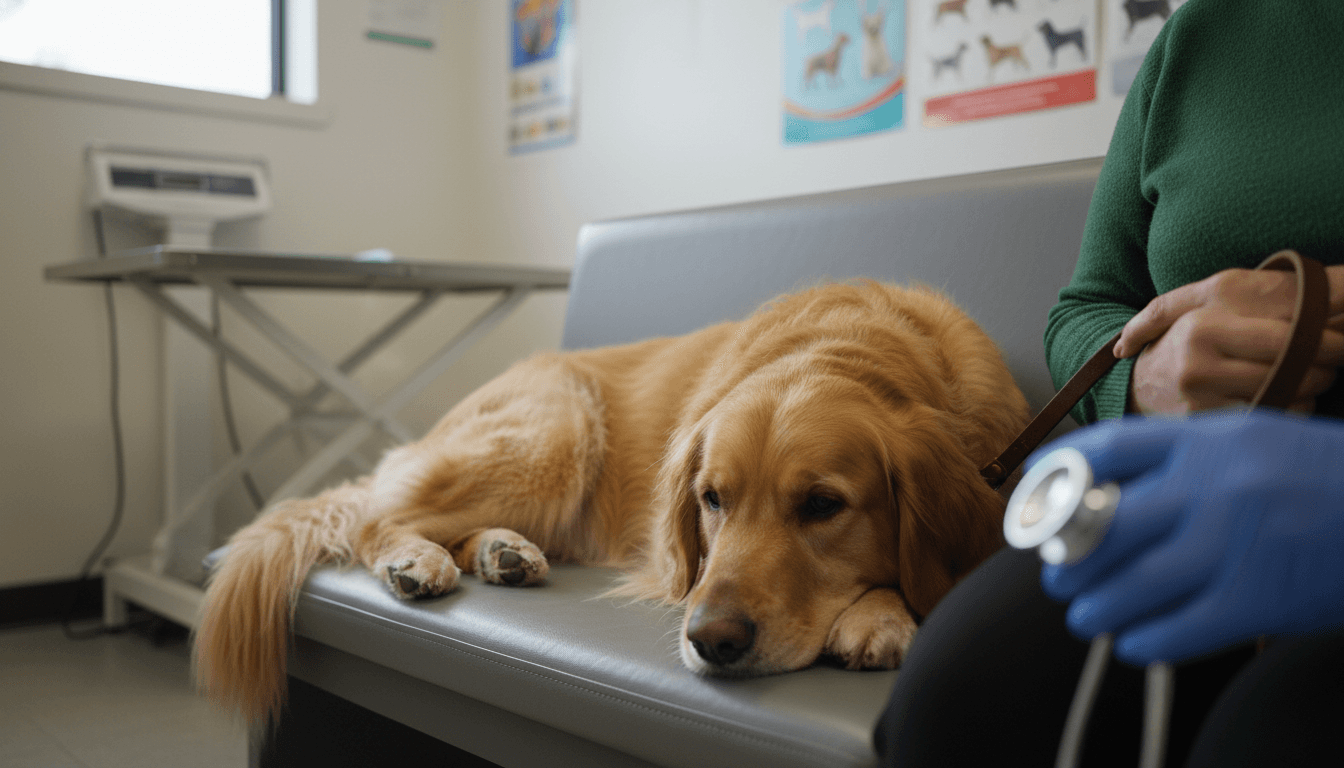
Signs of poisoning can appear within 15 minutes to several hours of exposure. When Massachusetts officials warned residents after the Charles River death, they told pet owners to watch for vomiting, excessive drooling, loss of coordination, staggering, or seizures. The full picture to watch for includes:
- Vomiting or diarrhea
- Heavy drooling
- Weakness, stumbling, or disorientation
- Difficulty breathing
- Seizures or collapse
If your dog shows any of these after being near questionable water, treat it as a genuine emergency. Do not wait to see if it passes.
If You Think Your Dog Was Exposed
The AKC's guidance is clear and worth committing to memory: rinse your dog with clean, fresh water immediately to remove toxins from their coat before they can lick more off, and call your veterinarian or an emergency clinic at once. Early intervention gives vets a chance to flush toxins before the worst effects set in.
Tell the clinic that cyanobacteria exposure is possible — Humboldt County officials specifically urged owners to inform the veterinarian about potential contact with algal toxins so treatment can start immediately. Minutes matter more here than in almost any other poisoning.
How to Keep Your Dog Safe This Summer
The good news: this is a highly preventable tragedy. A few simple habits close off nearly all the risk.
- Check advisories before you go. Many states post real-time HAB advisory maps and bloom reports. A 30-second search for your lake plus "algae advisory" can settle it.
- Trust your eyes — and then some. Skip any water that looks like spilled paint, pea soup, or has foam, scum, or mats along the edge. Because toxins can be invisible, be conservative: as Minnesota's environmental agency likes to say, "if in doubt, stay out."
- Leash up near suspect water. Keeping your dog leashed near ponds and lake edges lets you steer them away before they wade in or drink.
- Bring your own water. A dog with a full belly of fresh water and a portable bowl is far less tempted to lap from a stagnant shoreline. (Freezing a few cubes into the bowl helps on hot days — see our take on whether dogs can safely eat ice cubes.)
- Rinse after every swim. Even in water you trust, a quick freshwater rinse removes whatever your dog picked up.
It is also worth remembering that dogs are naturally drawn to exactly the wrong water. Blooms often carry a foul, musty smell that repels people but can attract animals — one more reason not to rely on your pup's judgment at the water's edge.
A Hazard Worth Taking Seriously
Cyanobacteria poisoning is rare enough that it is easy to dismiss, but the local numbers are sobering. Along California's Eel River, health officials have documented 14 suspected dog deaths from cyanobacteria since 2001 — and blooms there reliably peak between late July and early August, exactly the stretch we are in now. Multiply that pattern across every warm, slow-moving waterway in a record-hot summer, and 2026 has all the makings of an especially deadly season.
None of this means your dog has to sit out the summer. It means being the one who checks the advisory, keeps the leash on near the sketchy shallows, and carries a bottle of clean water. Toxins are just one of the warm-weather dangers worth knowing — the same caution that keeps a curious nose away from a toxic bloom is the caution that keeps it away from a poisonous plant in the yard.
For more seasonal safety guides, gear reviews, and the occasional good dog story, keep it locked to Sidewalk Dog — because the best summer is the one your whole pack gets to finish together.