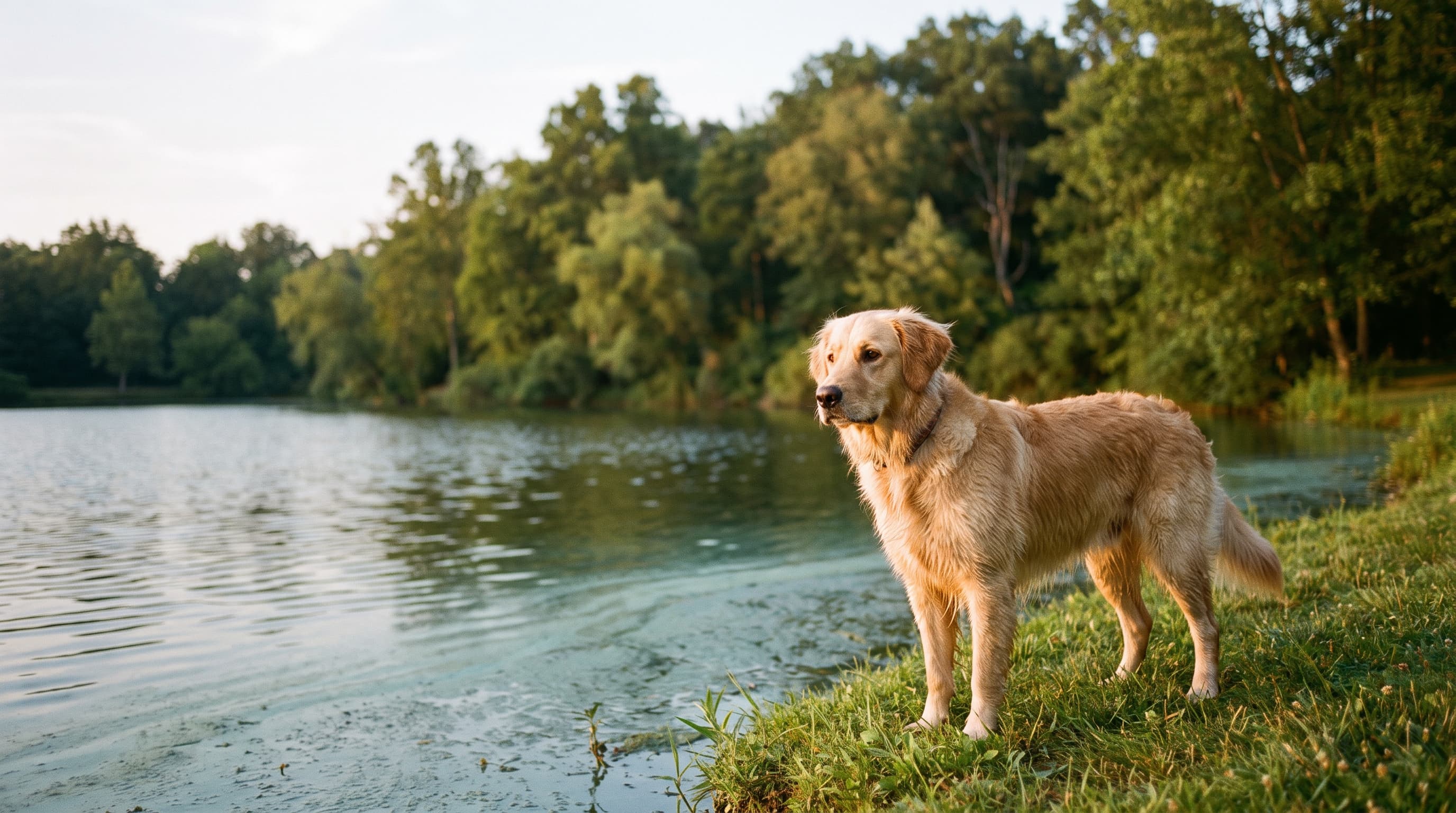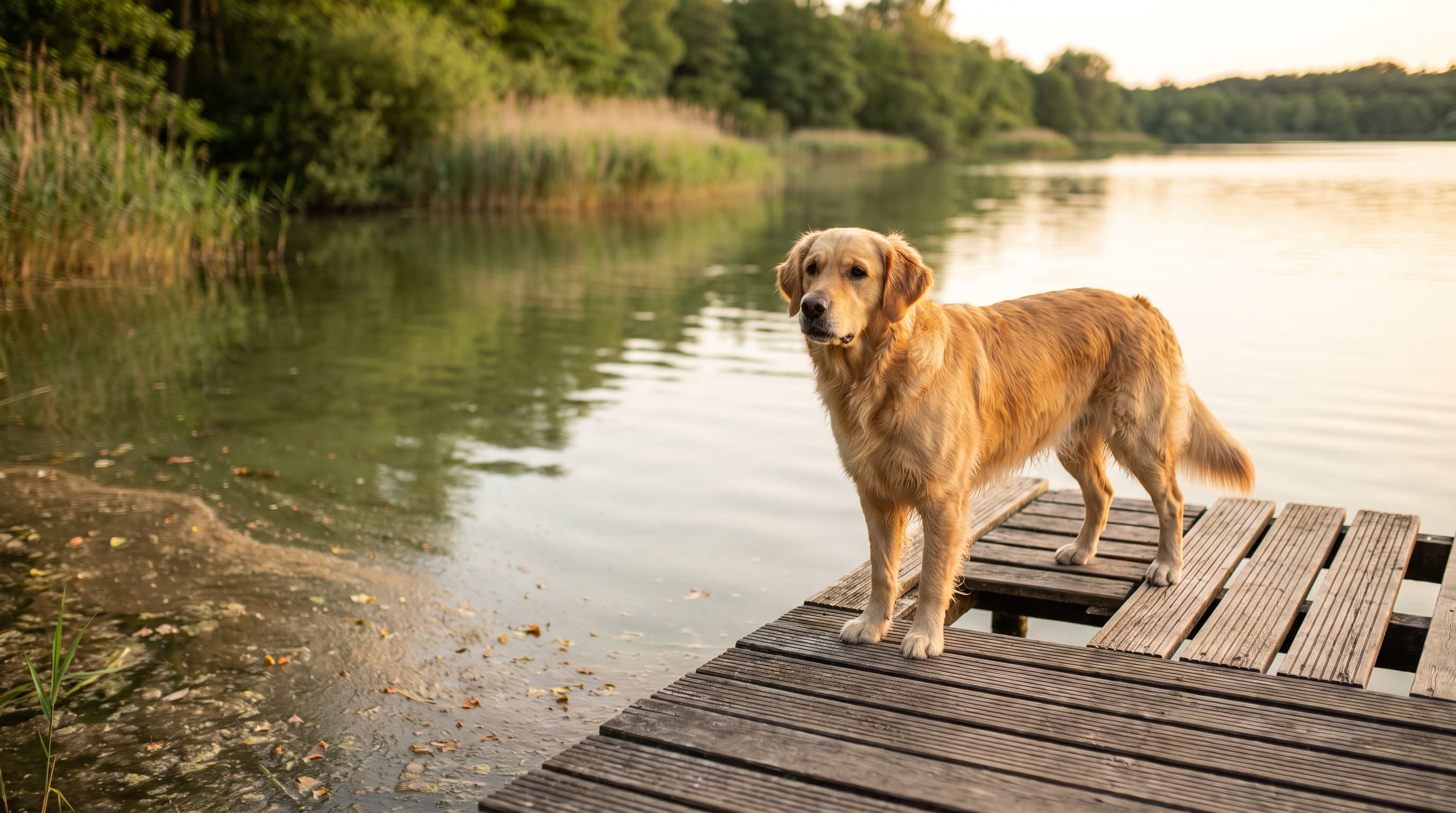

When Elivia Saviour Sagov took her 16-year-old dog Dobby for a swim at a Boston pond this July, she did what a lot of us do on a hot afternoon: she let her dog cool off in the water. Within hours, Dobby was gone. "She began sort of having little spasms and shakes," Sagov told NBC Boston. The likely culprit was blue-green algae — and her heartbreak is becoming a far too common story in the summer of 2026.
Record heat has turned this into one of the most dangerous seasons for harmful algal blooms in recent memory. Warm, stagnant, nutrient-rich water is exactly what cyanobacteria need to explode across lakes, ponds, and slow-moving rivers — and for dogs, the consequences can be fatal in a matter of minutes. Here's what every dog owner needs to know before the next lake day, and how to keep your pup safe through the rest of the season.
What Is Blue-Green Algae — and Why 2026 Is So Dangerous
"Blue-green algae" isn't really algae at all. It's cyanobacteria, a group of microorganisms that live in fresh water and, under the right conditions, multiply into dense blooms that can look like spilled paint, pea soup, or a foamy scum along the shoreline. Not every bloom is toxic, but the ones that are can produce two especially nasty families of cyanotoxins. As Cornell University's veterinary experts put it, "the two most dangerous toxins affect the nervous system and the liver" — and there is "no specific antidote for cyanotoxins."
What makes 2026 stand out is the weather. Blooms thrive in heat and sunlight, and this summer's persistent high temperatures have kept water warm and blooms surging well into late August across the country. Blooms can also appear and vanish quickly, which means a lake that looked clear last weekend can be hazardous today. Because official testing usually happens only after a problem is reported, a beach or shoreline can be dangerous before any warning sign goes up.
How Fast Can Blue-Green Algae Kill a Dog?
Frighteningly fast. According to the Centers for Disease Control and Prevention, "animals can get sick and die within hours after swallowing toxins made by harmful algae." Dogs are uniquely at risk: they wade in, gulp lake water, retrieve toys from scummy shallows, and lick the toxins off their wet fur afterward. They can even be poisoned by eating dried, crusty algae mats along the bank — no swimming required.
The veterinarian who spoke with Dobby's family put the danger bluntly. "Once the symptoms come on, it's almost always fatal," Dr. Emily Boches warned, adding that "prevention is the best way for this particular problem." That's the hard truth of cyanotoxin poisoning: by the time a dog is clearly sick, treatment options are limited to supportive care — IV fluids, oxygen, and anti-seizure medication — with a poor prognosis and the possibility of lasting liver damage even in dogs that survive.
Symptoms to Watch For
Signs can appear anywhere from 15 minutes to several days after exposure, though neurological cases often move within minutes. The CDC lists warning signs including:
- Vomiting, diarrhea, or excessive drooling and foaming at the mouth
- Loss of energy and loss of appetite
- Stumbling, falling, or disorientation
- Tremors, convulsions, or seizures
- Any unexplained sickness within a day or so of being near water
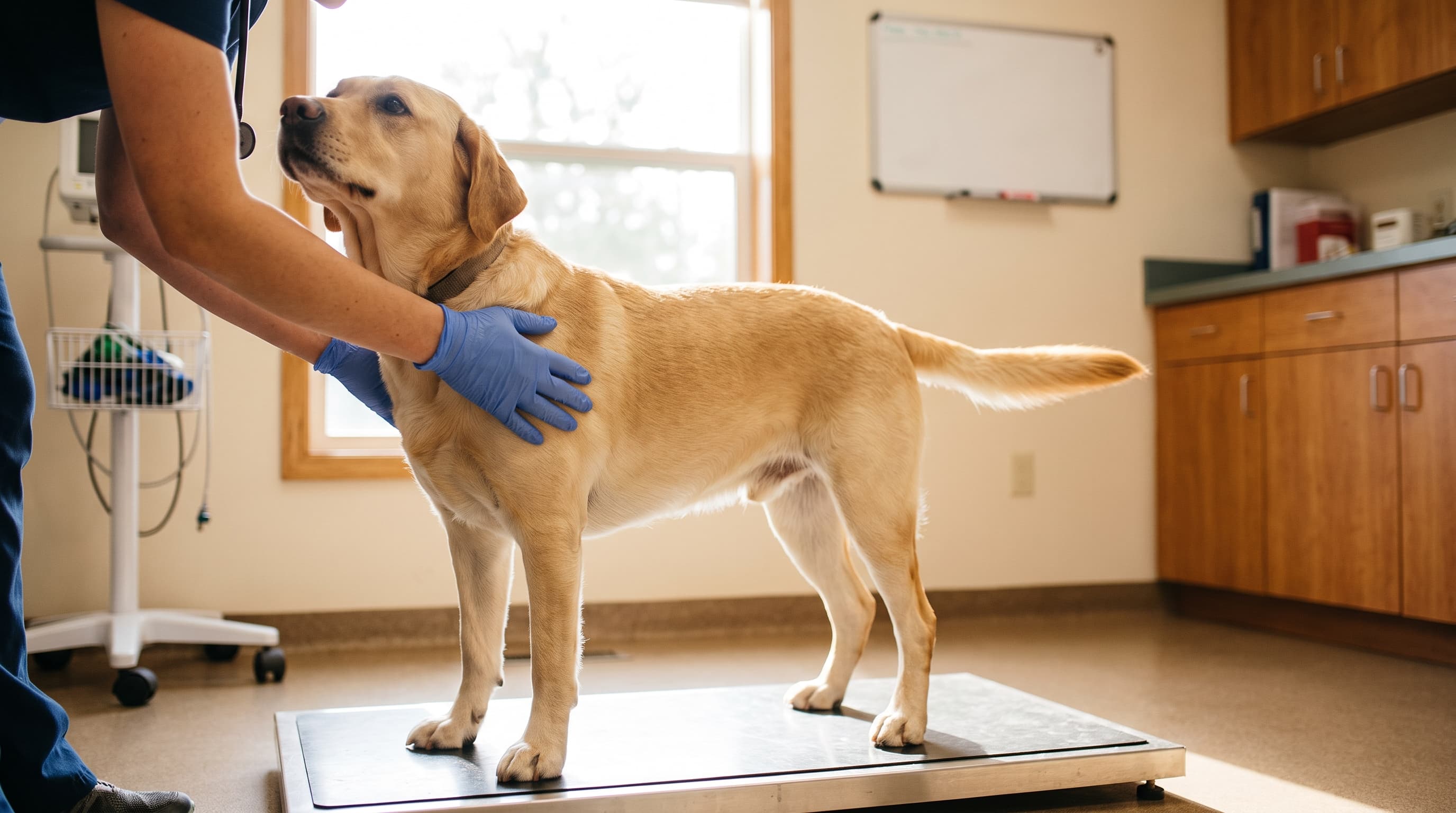
If you notice any of these after a water outing, treat it as a life-threatening emergency. Rinse your dog thoroughly with clean water to keep them from licking off more toxin, and get to a veterinarian or emergency animal hospital immediately — call ahead so the team is ready when you arrive.
Where Blooms Are Showing Up Right Now
This isn't a fringe worry confined to one corner of the map. In Kansas alone, state officials had seven lakes under a Warning advisory and twelve more under a Watch advisory as of August 7, with popular Lake Shawnee added to the Watch list that same day. The Kansas Department of Health and Environment cautions that "animals that swim in or drink water affected by a harmful algal bloom or eat dried algae along the shore may become seriously ill or die."
In Massachusetts, health officials spent late July investigating a possible bloom in the Charles River after a dog's death, warning residents to keep pets out of the water. Similar advisories have rolled out from Oregon to Indiana this summer. The takeaway: blooms can happen on almost any warm, slow, or standing fresh water — a neighborhood pond is not automatically safer than a big-name lake.
How to Protect Your Dog This Summer
Because there's no reliable cure, prevention is everything. Build these habits into every warm-weather outing near fresh water.
Before You Go
- Check for current advisories. Most state environmental or health departments post active bloom advisories online. A quick search for your state plus "harmful algae bloom map" before you leave can save your dog's life.
- Know the look — and the limits. Toxic blooms may appear blue, green, brown, or red, and can look like paint, foam, or floating mats. But toxins aren't always visible, so "it looks fine" is never a guarantee.
At the Water
- Keep your dog leashed near suspect water. If the water looks dirty, foamy, scummy, or has a strong musty smell, don't let your dog swim, wade, or drink.
- Bring your own water. A thirsty dog will drink from the nearest puddle. Pack fresh water and a bowl so lake water never becomes the backup — the same rule that keeps dogs safely hydrated in the heat.
- Steer clear of the shoreline crust. Dried algae along the bank is still toxic. Don't let your dog sniff, lick, or eat it.
If You Suspect Exposure
- Rinse immediately with clean water to remove toxin from the coat before your dog can groom it off.
- Go to the vet right away — don't wait for symptoms. Early intervention gives your dog the best chance.
- Report it. Notify your local health department so they can test the water and warn other families before another dog is hurt.
It's worth remembering that blue-green algae is only one of several summer hazards worth respecting — from hot pavement to plants and foods that turn out to be more dangerous than they look, like the surprisingly common backyard blooms in our guide to whether roses are toxic to dogs. A little awareness goes a long way.
The Bottom Line
Dobby's story is devastating precisely because it was preventable. As Sagov urged other owners, "July and August are really times to stay out of the water." You don't have to cancel summer to protect your dog — you just have to treat unfamiliar fresh water with the caution it deserves this record-hot season. Check the advisories, pack your own water, keep your pup out of scum and foam, and when in doubt, find a sprinkler or a shaded trail instead.
For more seasonal safety guides and the daily dog news that actually helps you take better care of your pup, keep it locked to Sidewalk Dog — because the best day at the lake is the one you both come home from.