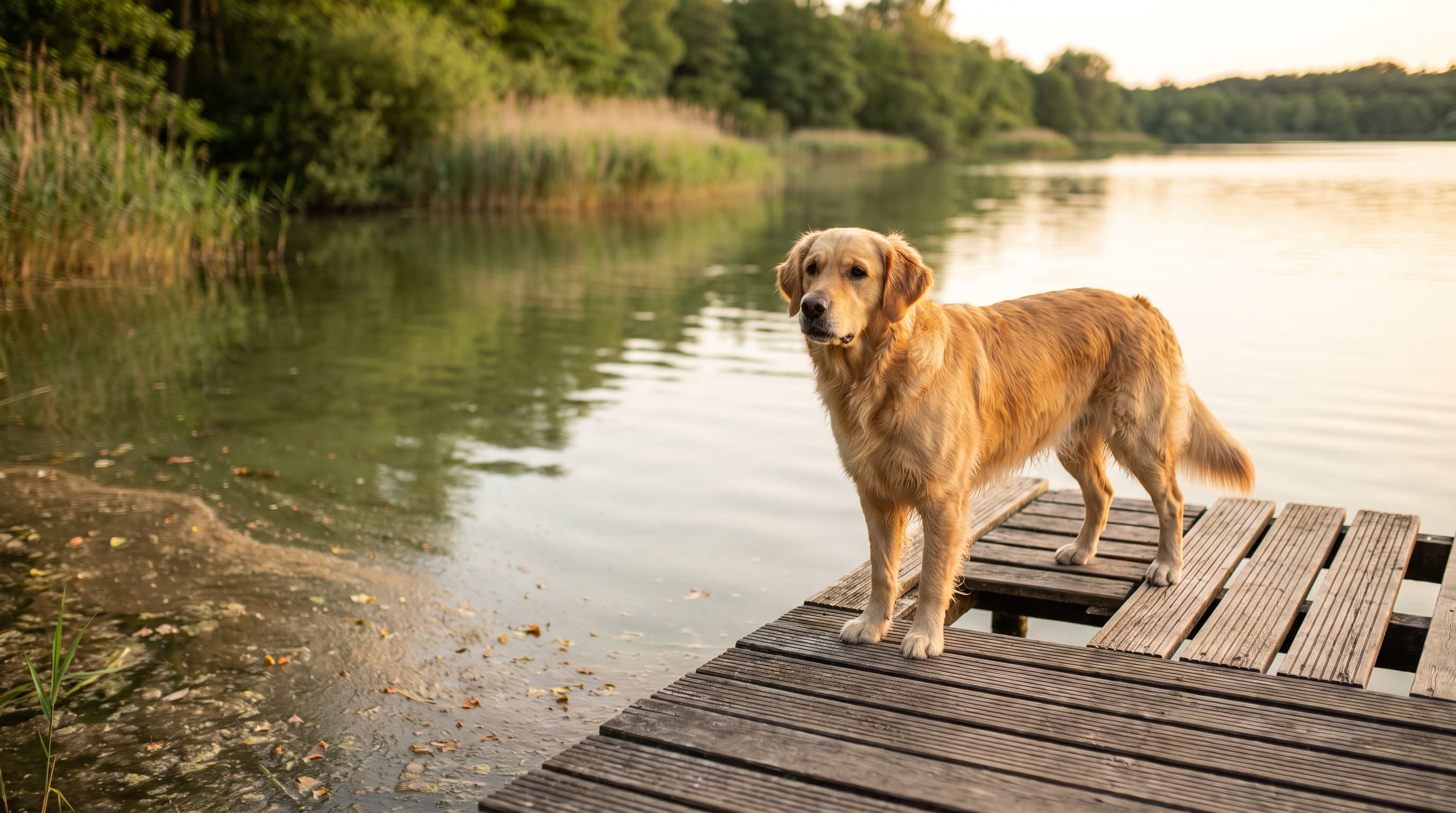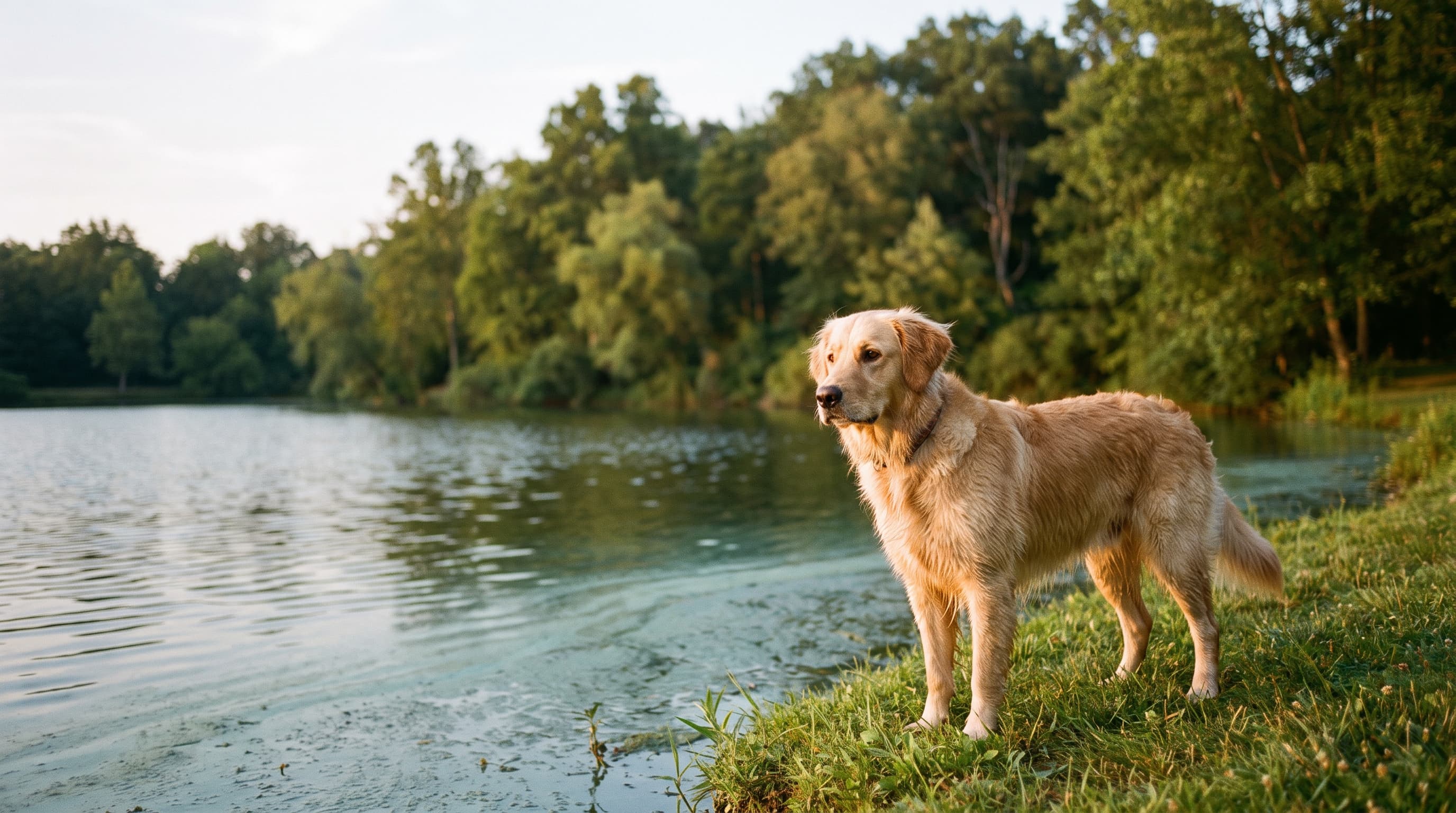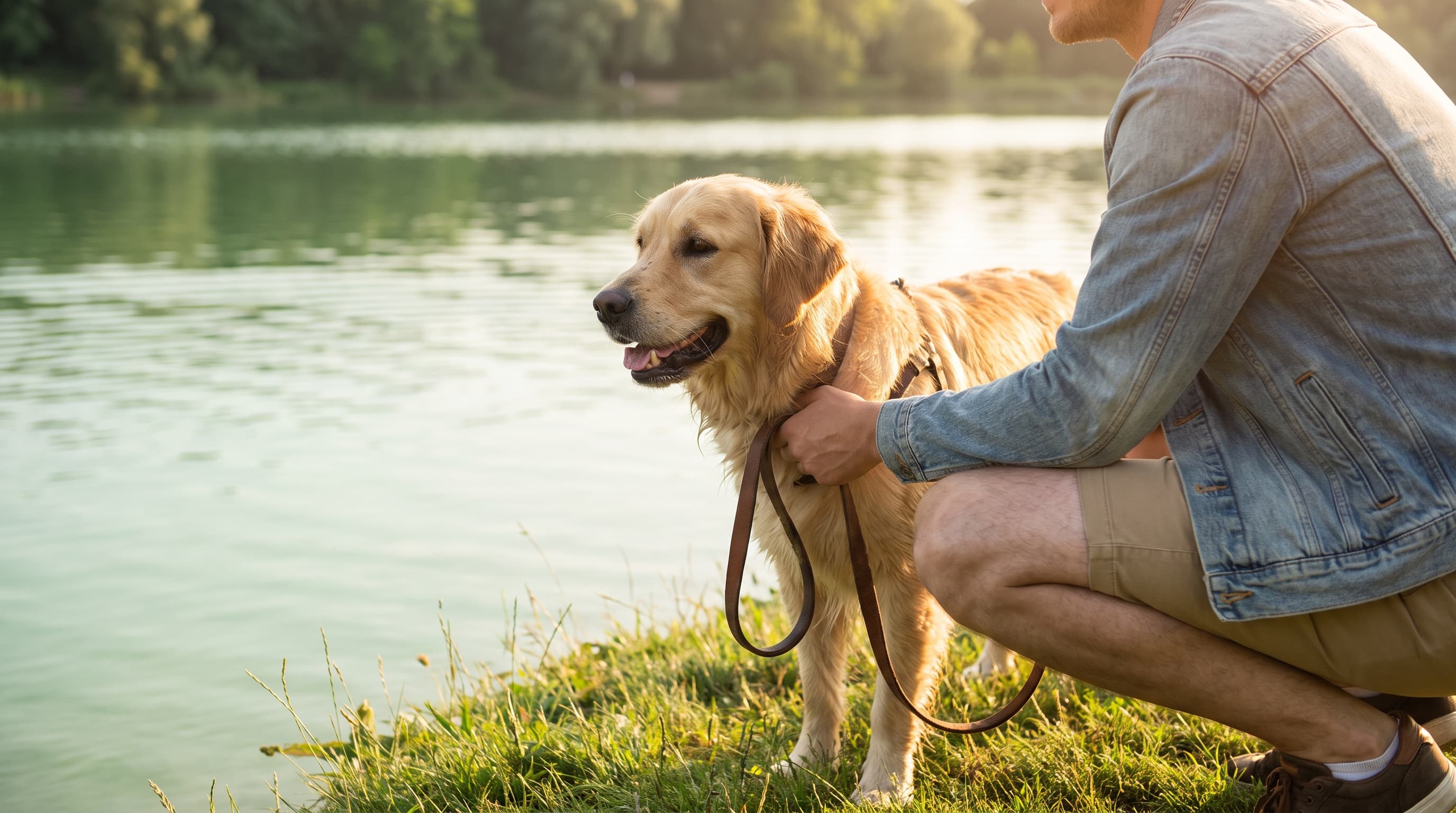

On July 2, the Kansas Department of Health and Environment flagged 10 lakes and ponds for blue-green algae — four under an active warning and six under a watch — just as families and their dogs headed to the water for the holiday weekend. Kansas is not an outlier. From Oregon to Indiana, state agencies are posting advisories at a pace that has water-quality scientists calling 2026 one of the worst harmful-algal-bloom seasons in recent memory, driven by the same record-breaking heat that has filled emergency rooms across the South and Midwest this summer.
For dog owners, this is not background noise. A quick swim or a few laps of lake water can turn deadly faster than almost any other summer hazard your dog will face — sometimes in a matter of minutes. Here's what's happening, why 2026 is so dangerous, and exactly what to do to keep your dog off the growing list of casualties.
What blue-green algae actually is (and why the name is misleading)
Despite the name, blue-green algae isn't really algae at all. It's cyanobacteria — ancient, photosynthetic bacteria that live in almost every freshwater lake, pond, and slow-moving river in the country. Most of the time they're harmless. But when the water is warm, sunny, and rich in nutrients from fertilizer or stormwater runoff, cyanobacteria can multiply explosively into a "bloom." Some of those blooms produce potent toxins called cyanotoxins.
The catch is that you often can't tell a toxic bloom from a harmless one by looking at it. The American Kennel Club warns that blooms may show up as blue, green, brown, or even red discoloration, sometimes with a foul smell and sometimes with none at all. Classic warning signs are pea-soup-colored water, surface scum that looks like spilled paint, and foam collecting along the shoreline. But cyanotoxins can be present even when the water looks reasonably clear, which is why "it looked fine" is cold comfort at the emergency vet.
Why it can kill a dog in minutes
Cyanobacteria produce two broad families of toxins, and both are bad news for dogs. Neurotoxins attack the nervous system; liver toxins destroy the liver. According to the Pet Poison Helpline's veterinary team, reviewed by board-certified toxicologist Dr. Renee Schmid, DVM, DABT, DABVT, a dog exposed to neurologic cyanotoxins can show signs within an hour, while liver toxins can cause liver failure within just a few hours. In the worst cases involving fast-acting neurotoxins, dogs have collapsed within minutes of leaving the water.
Dogs are uniquely vulnerable for reasons that have nothing to do with breed or size. They drink directly from the lake. They wade into the exact shallow, stagnant edges where scum concentrates. And they groom themselves afterward, licking any toxin-coated fur and swallowing a second dose. Relative to their body weight, a dog can ingest a startling amount of contaminated water in a single afternoon.
The Centers for Disease Control and Prevention notes that pets can get sick and die within hours to days of exposure, and it specifically warns owners to keep dogs from eating algae mats, drinking bloom water, or even nibbling grass along a contaminated shoreline. There is no widely available antidote. Treatment is supportive — and it only works if it starts fast.
Why 2026 is shaping up to be one of the worst years
Cyanobacteria love heat. The ASPCA notes blooms are most likely to thrive when water is warm — over 75 degrees — and sunny, which is a fair description of nearly every lake in America right now. Summer 2026's record temperatures have created near-perfect bloom conditions: warmer water holds less oxygen, evaporation concentrates nutrients, and long stretches of still, hot weather let colonies build unchecked for weeks.
The result is a patchwork of advisories spreading across the map. Kansas's July 2 list alone put Gathering Pond, King Lake, Kirwin Lake, and Lake Afton under active warnings, with popular spots like Clinton Lake and Marion Reservoir under watch. States including Oregon and Indiana maintain their own running advisory pages, and the U.S. Environmental Protection Agency tracks harmful algal blooms nationwide. The bottom line for owners: this is not a problem confined to one region or one bad lake. If your dog swims in fresh water this summer, the odds you'll encounter a bloom are higher than they've been in years.
The symptoms every owner should memorize
Time is the enemy, so know the warning signs before you ever leave the house. The CDC and AKC list the following symptoms, which can appear anywhere from 15 minutes to several days after exposure:
- Vomiting or diarrhea
- Excessive drooling or foaming at the mouth
- Weakness, lethargy, or sudden loss of appetite
- Stumbling, falling, or loss of coordination
- Muscle tremors, rigidity, or seizures
- Difficulty breathing
- Collapse or unconsciousness
Any unexplained illness within 24 hours of a swim should be treated as a possible poisoning until a vet says otherwise. When it comes to cyanotoxins, "let's wait and see" can be a fatal decision.
What to do if your dog was exposed
If you even suspect your dog got into a suspicious bloom, act immediately — don't wait for symptoms:
- Rinse thoroughly with clean water. Both the CDC and ASPCA stress washing your dog off right away with fresh, clean water so they can't lick toxins from their coat.
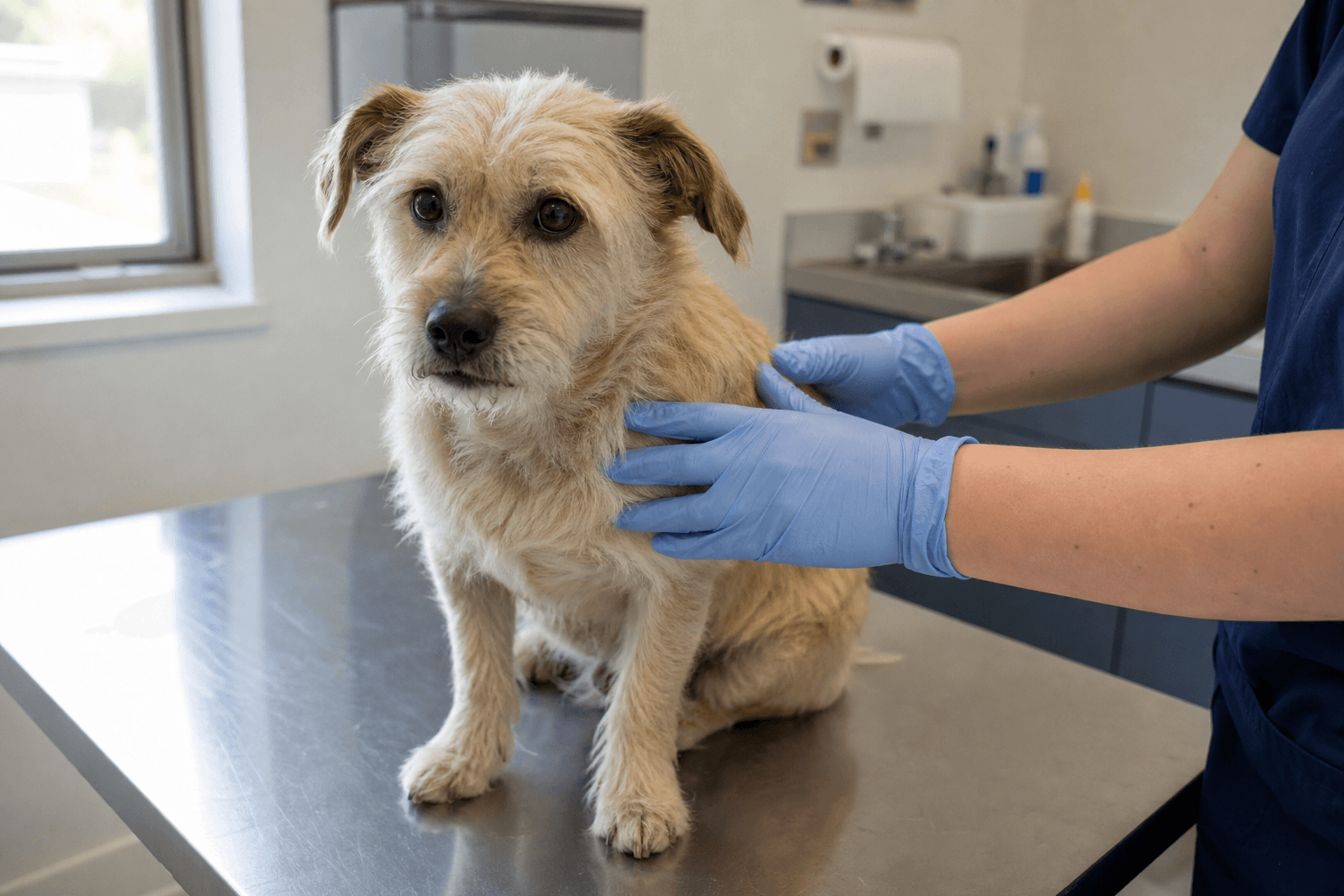
- Call your veterinarian or an emergency clinic on the way there. Early treatment — including flushing the system before toxins take full hold — dramatically improves the odds.
- Have a poison hotline ready. The ASPCA Animal Poison Control Center (1-888-426-4435) and the Pet Poison Helpline (1-855-764-7661) are staffed around the clock. Save both numbers in your phone before your next lake trip.
- Note the location. If you can, snap a photo of the water and the shoreline. It helps your vet and lets you report the bloom to your state health department so the next dog is spared.
How to keep your dog safe this summer
The good news is that cyanotoxin poisoning is almost entirely preventable. A few habits go a long way:
- Check advisories before you go. Most states post current blooms by lake name. A 30-second search of your state health department's website can rule out the worst spots before you load the car.
- When in doubt, stay out. If the water is discolored, scummy, foamy, or smells off, keep your dog out entirely — swimming, wading, and drinking. Assume the visible bloom is the tip of the iceberg.
- Bring your own water. Pack fresh drinking water and a bowl so your dog is never tempted to gulp from the lake.
- Keep the leash on near questionable water. A leash is the difference between a dog you can call back and a dog already swimming through a scum line.
- Rinse after every swim. Even at clean beaches, a freshwater rinse washes off whatever your dog picked up — a cheap insurance policy.
Toxic algae is only one of the season's hidden hazards. If you're mapping out summer adventures, it's worth brushing up on the other big one — pavement hot enough to burn paw pads — in our guide to free tools that tell you when pavement is too hot for your dog, and planning water days around genuinely dog-friendly spots like these dog-friendly beaches where conditions are monitored.
Summer is short, and most of it will be wonderful — long hikes, lake swims, and tired, happy dogs. A little vigilance about what's growing in the water is all it takes to make sure your dog is around for every summer to come. For more seasonal safety guides and the latest dog news, keep it locked to Sidewalk Dog — we fetch this stuff so you don't have to.