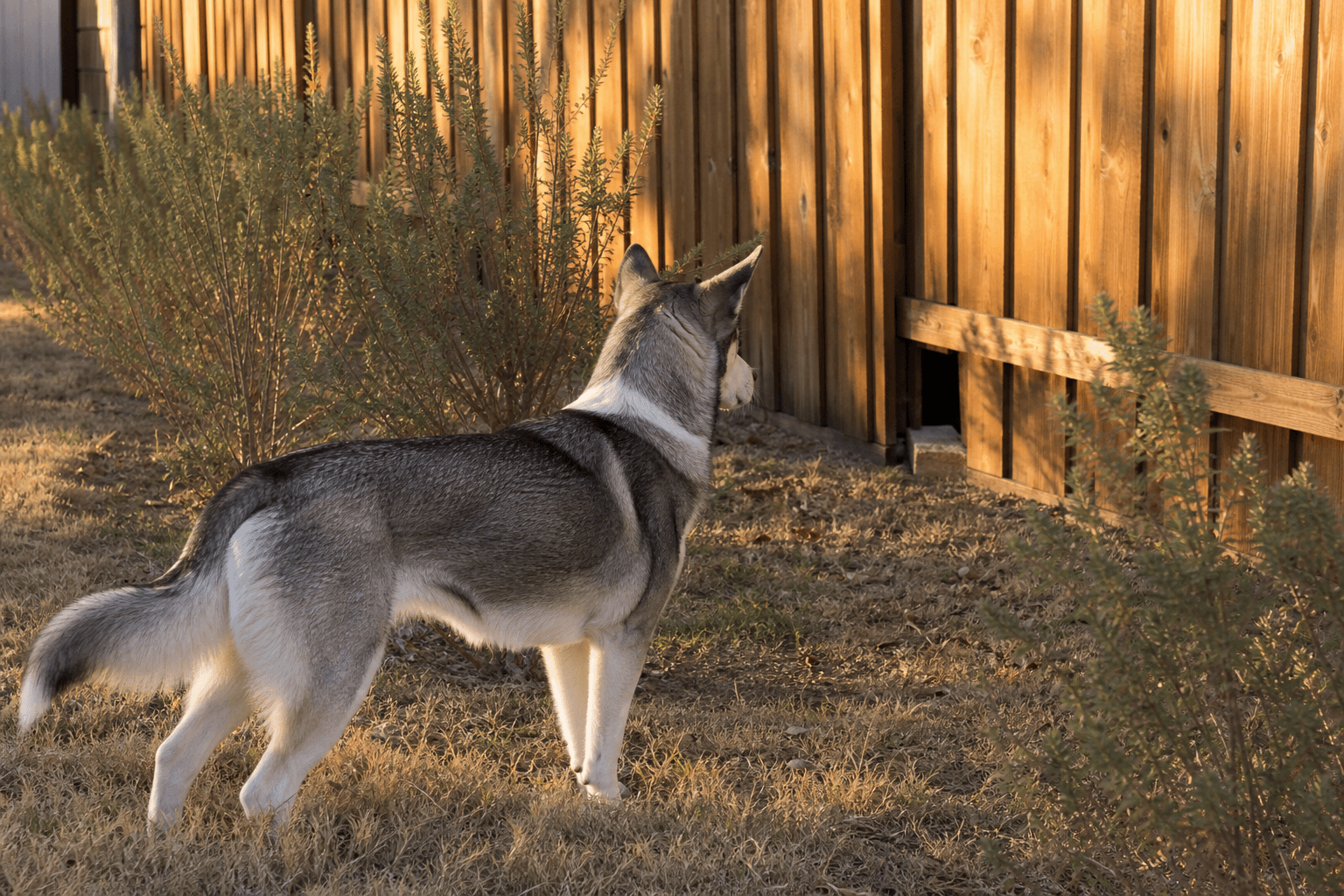

On August 18, a lab in San Antonio confirmed something Bexar County hasn't seen in more than ten years: a pet dog with rabies.
According to San Antonio Animal Care Services (ACS) and Metro Health, the dog was a male Husky mix living with his family on the far West Side, inside Loop 1604. In late July, he killed a baby skunk near the house. It seemed like an ordinary backyard scuffle, and no one reported it. Several weeks later, the dog began showing what officials described as "concerning behavioral and neurological symptoms." The Metro Health Laboratory confirmed rabies on August 18. People and pets who may have been exposed have been offered rabies prophylaxis.
The case landed in the middle of a wildlife rabies surge. Bexar County recorded 22 rabies cases in wild animals during June and July 2026 — compared with just two to three cases during the same two months in 2024 and 2025.
If you live anywhere with skunks, raccoons, foxes, or bats — which is nearly everywhere in the continental U.S. — this story is worth five minutes of your attention. Not because rabies is common in dogs. Because the one thing that went wrong here is the exact thing that goes wrong everywhere.
The Real Mistake Wasn't the Skunk. It Was the Silence.
A dog killing a skunk in the yard is not a rare event. What made this case fatal was that the encounter was never reported to anyone — not to Animal Care Services, not (as far as the public record shows) in a way that triggered a veterinary rabies risk assessment.
That matters enormously, because rabies exposure in a pet is not a wait-and-see situation. It's a clock. And it is a short one.
Under the national framework that most states and counties build their rules on — the Compendium of Animal Rabies Prevention and Control, published by the National Association of State Public Health Veterinarians — the response to a possible rabies exposure depends almost entirely on your dog's vaccination status at the moment of the incident:
- Currently vaccinated dog: booster vaccination within 96 hours of exposure, then a period of owner observation (commonly 45 days, depending on jurisdiction).
- Overdue for a booster, with documentation of prior vaccination: booster within 96 hours, then observation — typically 45 days.
- Never vaccinated: the recommendation is immediate euthanasia or vaccination within 96 hours followed by strict quarantine for four months. (That four-month figure is itself a reduction from the six months recommended before 2016.)
- Overdue with no vaccination records at all: may be handled as unvaccinated, or managed with serologic monitoring to document an immune response to a booster.
Read that list again and notice what's doing the work. It isn't heroic medicine. It's a piece of paper — proof of a rabies shot — and a phone call made inside four days.
Why Skunks Are a Worst-Case Wildlife Encounter
Rabies in the United States is overwhelmingly a wildlife disease now. The CDC reports roughly 4,000 animal rabies cases annually, with more than 90% in wildlife. In the most recent full surveillance year published (2023), 3,760 animal rabies cases were reported nationally — 91.8% wildlife, 8.2% domestic animals.
Among the animals that expose people and pets, bats account for about 35% of cases, raccoons 29%, skunks 17%, and foxes 8%. But raw case counts undersell the risk from skunks specifically. As the CDC notes, exposures to rabid skunks are relatively uncommon — yet when a skunk does bite or scratch a person or pet, more than 20% of those skunks turn out to be rabid. The same is true of foxes.
In other words: a skunk that lets your dog get close enough to kill it is already behaving abnormally. Healthy skunks are nocturnal, avoidant, and armed with a defense that works. A skunk that is slow, disoriented, out in daylight, or oddly unbothered by a large barking dog belongs in the high-risk column until proven otherwise.
The wildlife species that should trigger a call, every time
- Bats — including a bat found indoors with no obvious contact. Bat bites can be too small to see.
- Skunks
- Raccoons
- Foxes
- Coyotes and bobcats, and any stray or unknown-status dog or cat
Rodents — squirrels, mice, rats, chipmunks — and rabbits are almost never found rabid in the U.S. and rarely require post-exposure management, though your vet or health department should still make that call.
What To Do in the First 24 Hours After a Wildlife Encounter
Veterinary rabies decision guides, including Ontario's widely used risk assessment decision tree and state post-exposure flowcharts, follow a consistent sequence. Here's the owner's version.
Do this
- Protect yourself first. Put on gloves before touching your dog. Fresh saliva from a rabid animal on your dog's coat is a theoretical human exposure route. If you were bitten or scratched, wash the wound with soap and running water for a full 15 minutes and call your doctor or health department.
- Separate your dog from other pets and from kids until you've spoken to a vet.
- Do not throw the carcass away. If your dog killed the animal, the body — undamaged, ideally refrigerated, not frozen if you can avoid it — is the single most valuable piece of evidence you have. A negative test result ends the entire ordeal. Ask animal control how they want it handled and transported.
- Call your veterinarian and your local animal control or health department the same day. In San Antonio, ACS takes wildlife encounter reports at 311; Bexar County animal control is at 210-335-9000. Every county has an equivalent line.
- Find your dog's rabies certificate before you call. Date of last vaccine and whether it was a 1-year or 3-year product will shape everything that follows.
- Get the booster inside 96 hours if your vet or health department recommends one. This window is not a suggestion; it is written into the protocols.
- Watch for behavior changes during the observation period: unexplained aggression or unusual affection, hiding, disorientation, staggering, trouble swallowing, drooling, or a change in the sound of the bark.
Don't do this
- Don't decide it was "just a skunk" and move on. That is precisely the decision at the center of the Bexar County case.
- Don't wait for symptoms. Once neurological signs appear, rabies is effectively 100% fatal in animals. There is no treatment at that point — only confirmation.
- Don't try to catch or handle a live wild animal that's acting strangely. Call animal control.
- Don't bathe your dog bare-handed right after the fight, however much you want to deal with the skunk smell.
- Don't assume a titer test substitutes for a rabies vaccine. Antibody titers are not accepted as proof of legal vaccination status in most jurisdictions.
The Boring Thing That Would Have Prevented All of This
Rabid dogs are uncommon in the U.S. precisely because vaccination works. Veterinarians vaccinate more than 90 million pets a year, and wildlife managers drop more than 5 million oral rabies vaccine baits annually to control the disease in its reservoir hosts. That infrastructure is why the U.S. sees fewer than 10 human rabies deaths a year while dogs drive more than 95% of the roughly 70,000 human rabies deaths worldwide.
The 2022 AAHA Canine Vaccination Guidelines classify rabies as a core vaccine and note that all licensed canine rabies vaccines in the U.S. are inactivated, available in 1-year and 3-year formulations, and labeled for puppies from three months of age. A booster is recommended one year after the first dose regardless of which product was used — that second shot exists to catch dogs who didn't respond to the first. AAHA also states plainly that vaccine failures are rarely reported.
A few practical notes owners routinely get wrong:
- "Indoor dog" is not a rabies exemption. Bats get into houses. Backyards have skunks. The Bexar County dog was at home.
- Your dog can be legally out of date without you realizing it. A 3-year vaccine given before your dog's 1-year booster may still be recorded as a 1-year vaccine. Check the certificate, not your memory.
- Medical exemptions are narrow. Per the Animal Legal & Historical Center, only about 16 states have laws or regulations permitting owners to seek a medical exemption from canine rabies vaccination, and most cities and counties layer on their own requirements.
- Cost is rarely the barrier people assume. A rabies vaccine at a private clinic typically runs $15-$35. Municipal shelters and animal services departments run low-cost and free clinics constantly — ACS is offering free rabies shots and other vaccines to the first 100 pets on Saturday, August 22, from 9-11 a.m. at Monterrey Park, 5919 W. Commerce St. Compare that to a four-month strict quarantine, or to the cost and anxiety of human post-exposure prophylaxis for your whole household.
If You Live in a Rabies Hot Spot Right Now
Wildlife rabies moves in local waves, which is exactly what Bexar County is seeing — a roughly tenfold jump over the same two months in each of the previous two years. Skunk-variant rabies is a persistent feature of Central and South Texas, and Texas DSHS publishes monthly rabies maps and county-level reports. Most states publish something similar. It's worth knowing what your county's numbers look like this summer.
Then make your yard less interesting to wildlife: secure trash and compost, bring pet food bowls in at night, seal gaps under decks and sheds, close crawl spaces, pick up fallen fruit, and skip the overnight backyard access if you're in a surge area. Leash walks after dusk in neighborhoods with active wildlife are not paranoia; they're the cheapest risk reduction available.
And if your dog does tangle with something out there, remember the actual lesson of the San Antonio case. The dog didn't die because a skunk got into the yard. He died because the encounter was treated as a story to tell rather than a call to make.
Check your dog's rabies certificate this week. Put the renewal date in your phone. Save your local animal control number next to your vet's. It's ten minutes of admin against a disease with no second chances.
At Sidewalk Dog, we cover the news dog owners actually need — plus the dog-friendly patios, trails, and weekend plans that make it all worth it. Find what's open to your dog in your city, and come back for the next thing worth knowing.