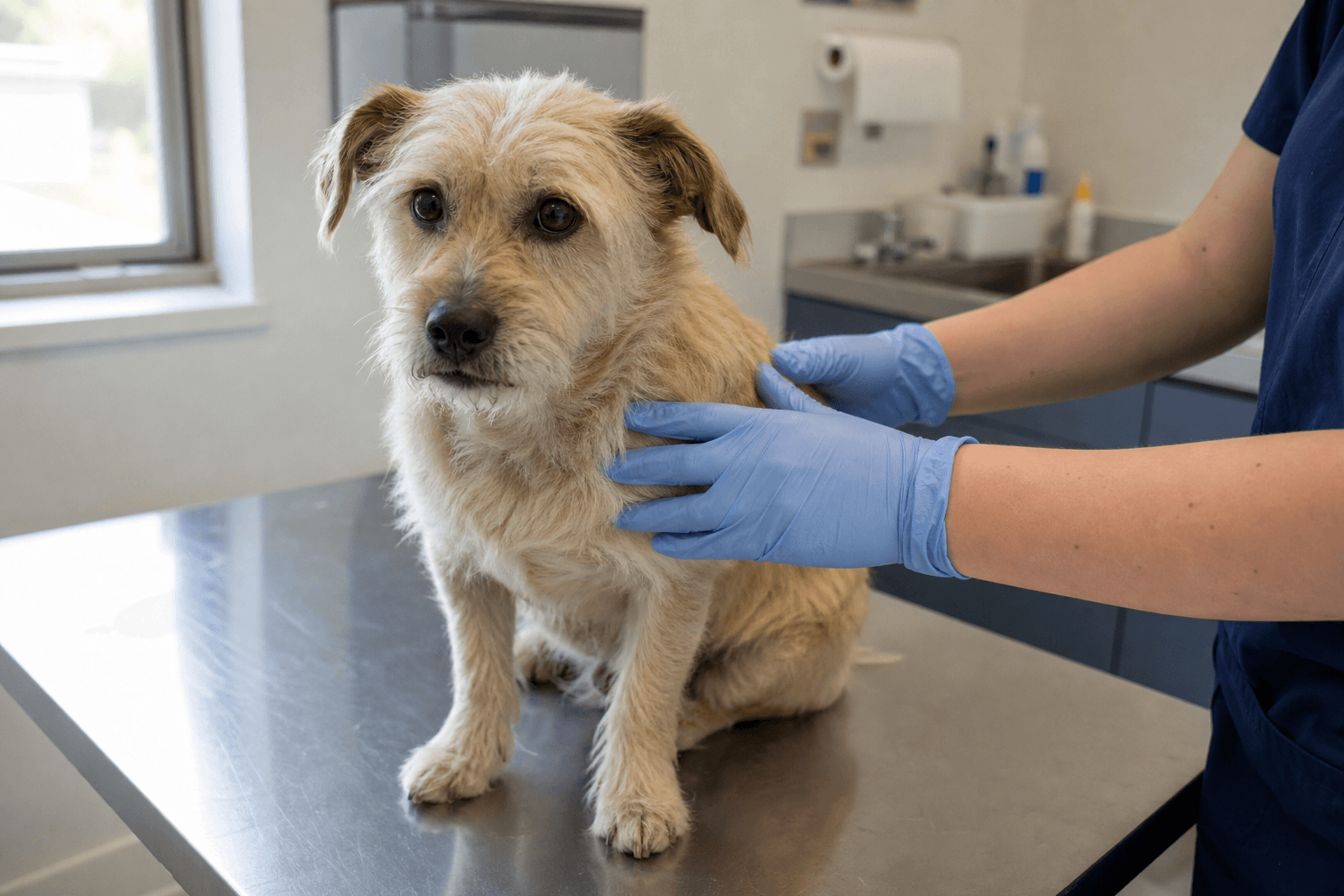

If you follow dog news, you have probably seen the headlines out of Russia this month: dog owners in Yaroslavl, Kaliningrad, Tyumen, Saratov, and the Moscow and Leningrad regions say their dogs got sick and died days after a routine combination vaccine. As of August 28, owners tracking cases in shared spreadsheets told the outlet Takie Dela that 169 dogs had died, with four more still being treated. Some Telegram channels put the number closer to 300.
It is an awful story, and it is the kind of story that lands in your feed right before your own dog's annual appointment. So let's answer the question you actually have: how risky are dog vaccines, and what should you be watching for?
What actually happened in Russia
The vaccine at the center of the reports is Multikan-8, a Russian-made combination product that covers distemper, adenovirus, parvovirus and coronavirus enteritis, leptospirosis, and rabies in a single injection. It ships as a dry live component and a liquid inactivated component that are mixed right before the shot. It is made by Vetbiokhim, a Moscow company that had not, by most veterinarians' accounts, been the subject of complaints before.
Reports first clustered in mid-August in the Yaroslavl region, where local outlet Yarcube counted 20 to 25 deaths by August 17, all attributed by owners to a single batch — series No. 20. Owners describe dogs falling ill three to five days after vaccination, then developing seizures, limb paralysis, and intense self-trauma at the injection site.
Owners say testing pointed to the virus that causes Aujeszky's disease (pseudorabies), which produces exactly that picture in dogs — frantic itching and death within days. Russia's veterinary regulator and a regional prosecutor's office opened inspections. Vetbiokhim asked vets to stop using four batches during the investigation, and has published its own testing that it says did not find pseudorabies virus in archived samples. That is where things stand: an active investigation, no confirmed cause, and two sides publishing contradictory lab results.
One thing worth saying plainly: Multikan-8 is not sold in the United States, Canada, the UK, or the EU. If your dog was vaccinated at a North American clinic, your dog did not receive this product.
So what is the real risk of a vaccine reaction?
This is where good data helps more than headlines. Two very large studies have measured this in ordinary pet dogs:
- A 2005 JAVMA study of 1,226,159 dogs at 360 hospitals found adverse events in 38.2 per 10,000 dogs vaccinated — about 0.38%.
- A larger 2023 JAVMA follow-up covering 4.65 million dogs across 16 million office visits at 1,119 hospitals found adverse events recorded after 0.19% of vaccination visits (19.4 per 10,000).
The overwhelming majority of those events are the mild kind: a sore spot, a day of low energy, a skipped meal, some facial puffiness. Anaphylaxis — the sudden, collapse-level allergic reaction — is a small fraction of a fraction. For scale, parvovirus still kills unvaccinated puppies at rates in the tens of percent once they're infected.
The risk is not evenly distributed
Both studies found the same pattern, and it is genuinely useful to know where your dog falls:
- Small dogs react more. Reaction rates rose steadily as body weight fell, with the highest rates in dogs under 5 kg (about 11 lb). Dose volume does not scale with body size the way a drug dose does.
- Breed matters. In the 2023 data, French Bulldogs and Dachshunds had odds of a reaction more than four times that of mixed-breed dogs.
- Stacking shots matters. Reaction rates climbed with each additional vaccine given in the same visit, from one to four. In the 2005 data, each extra vaccine raised risk by 27% in dogs under 10 kg and 12% in bigger dogs.
- Young adults react more than puppies. Dogs roughly 1 to 3 years old had 35–64% higher risk than dogs 2–9 months.
- Rabies vaccine had the highest reaction rate of any individual vaccine in the 2023 cohort.
Read those together and a real, practical takeaway falls out: an 8-pound, two-year-old Dachshund getting four vaccines in one appointment is a meaningfully different risk profile than a 70-pound Lab getting one. That is a conversation to have with your vet, not a reason to skip vaccines.
The 72-hour watch list
The USDA's Center for Veterinary Biologics, which regulates animal vaccines in the U.S. under the Virus-Serum-Toxin Act, publishes a clear list of what can show up and when.
Normal and self-limiting (usually 24–48 hours)
- Mild lethargy or "off" behavior the day of the shot
- Low-grade fever
- Reduced appetite for a meal or two
- A tender, slightly swollen lump at the injection site
Call your vet today
- Hives or facial and muzzle swelling
- Persistent vomiting or diarrhea
- Nasal or eye discharge
- A lump that is still there after three weeks, or that is growing
- Lethargy or fever that has not lifted after 48 hours
Emergency — go now
- Collapse, weakness, or pale gums
- Labored breathing or noisy breathing
- Rapid swelling of the face or throat
- Seizures, disorientation, or loss of coordination
- Frantic chewing or self-mutilation at the injection site
USDA's guidance is blunt on timing: acute anaphylaxis usually happens within minutes to an hour, which is why the agency recommends observing your dog for at least an hour after vaccination. Reactions from one day to two weeks out are usually stiffness, local inflammation, or general malaise.
Five things you can actually do at your next appointment
- Book morning appointments. If your dog reacts, you want it happening while the clinic is open, not at 9 p.m. This costs nothing and is the single easiest change to make.
- Ask about splitting the visit. If your dog is small, brachycephalic, or has reacted before, ask whether the core combination shot and the rabies vaccine can be given two to three weeks apart. Many vets will say yes without hesitation. Expect a second exam fee — typically $50–$70.
- Hang around for 20–30 minutes. Sit in the parking lot and answer emails. Most severe reactions declare themselves fast.
- Report anything real. If your dog has a reaction, tell your vet and file a report. In the U.S., animal vaccines go through the USDA APHIS Adverse Event Reporting system — there is a public form any owner can submit. The Russian case was surfaced by owners comparing notes in a spreadsheet because no functional reporting channel existed; the U.S. version of that spreadsheet is a government database, and it only works if people use it.
- Ask which vaccines your dog actually needs. The 2022 AAHA Canine Vaccination Guidelines divide vaccines into core (distemper, adenovirus, parvovirus, leptospirosis, rabies — for every dog) and lifestyle-based (Lyme, Bordetella, canine influenza, rattlesnake toxoid). A dog who never boards, never hikes, and never visits daycare has a shorter list than one who does all three. Fewer unnecessary shots per visit is itself a risk reduction.
What this story is — and what it isn't
A cluster of deaths traced to specific batches of one manufacturer's product is a manufacturing and oversight failure story. It is not evidence that vaccination is dangerous, and treating it that way would be the most expensive possible lesson to learn: distemper, parvo, and rabies are all still out there, and all three are far more lethal than a shot.
What it is good for is a reminder that "routine" does not mean "ignore." Your dog's vaccine appointment deserves the same attention as any other medical procedure — a few minutes of observation, a conversation about what's necessary, and knowing which symptoms mean "wait it out" versus "get in the car."
Ask the questions. Watch the 72 hours. Then go enjoy a very long walk with a very protected dog.
At Sidewalk Dog, we cover the news that actually changes what you do with your dog on a Tuesday. For dog-friendly patios, parks, and adventures near you, browse our city guides — and subscribe to the newsletter for the good stuff, weekly.