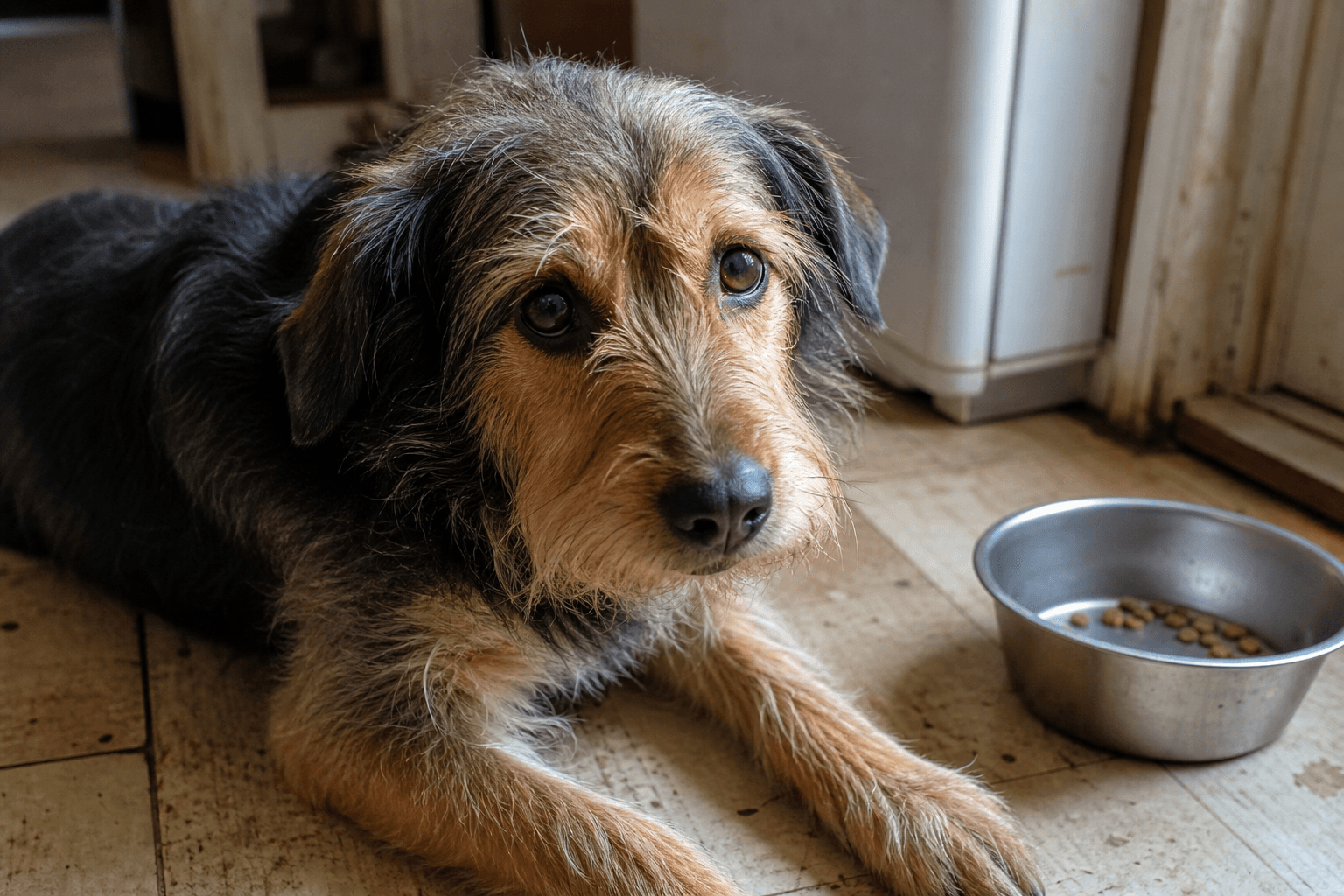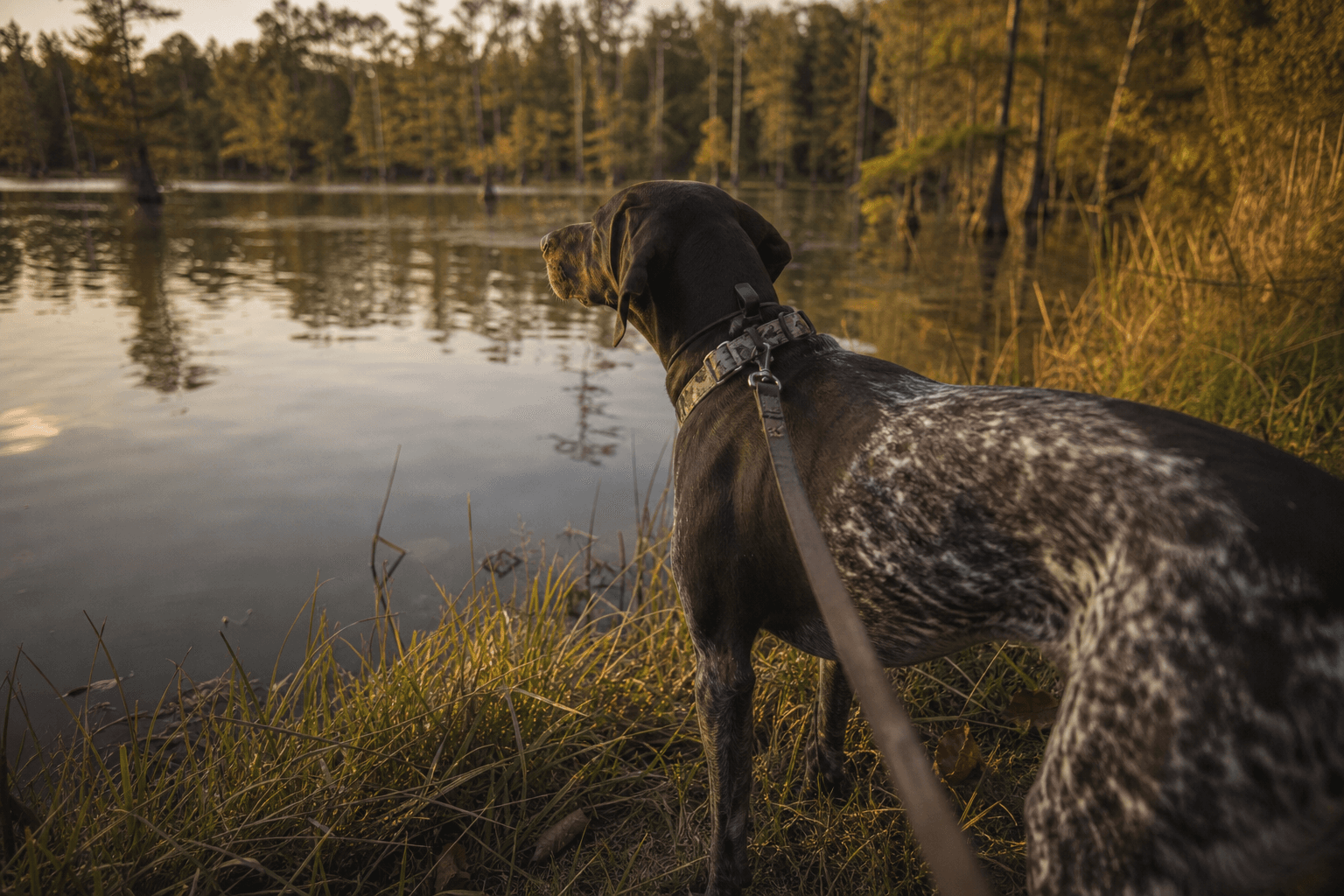

A rescue dog pulled from the banks of Jacksonville’s Trout River is doing something most dogs with his diagnosis don’t do: he’s alive.
The Golden Retriever — fittingly named Trout — was found emaciated near the river in December and adopted by Shayna Rogers. Weeks later he stopped keeping food down. Exploratory surgery on his stomach, blood transfusions, immunotherapy and weeks of hospitalization later, his veterinary team landed on a diagnosis most dog owners have never heard of: pythiosis, better known by its grim nickname, “swamp cancer.” His survival, reported by News4Jax on August 17, is exactly the kind of story that sends thousands of owners to Google in the middle of lake season.
Here’s the part worth your attention: pythiosis is rare, but the water that carries it is not. And late summer is peak season for the behavior that causes it — dogs drinking from, wading in and swimming through warm, still, shallow water.
What “swamp cancer” actually is (and why the name is misleading)
Despite the nickname, pythiosis is not cancer at all. It’s an infection caused by Pythium insidiosum, an oomycete — a water mold, biologically closer to algae than to a true fungus. It lives in warm, stagnant or slow-moving fresh water: swamps, bayous, retention ponds, drainage ditches, flooded fields and the shallow edges of lakes.
The organism releases motile zoospores that seek out plant and animal tissue. According to the Merck Veterinary Manual, dogs are infected in two main ways: by swallowing contaminated water, which seeds the gastrointestinal tract, or by entering the water with an open wound or cut, which produces the skin form.
It earns the “cancer” comparison because of what it does next. In the GI form, the organism drives severe granulomatous inflammation that thickens the stomach or intestinal wall into a firm, invasive mass — on an ultrasound it looks and behaves like a tumor. Merck notes the stomach, upper small intestine and the ileocolic junction are hit most often, and that lymph nodes can become embedded in the mass. The skin form shows up as ulcerating nodules that drain and simply will not heal.
The part that makes it dangerous: dogs look fine for a long time
Merck’s clinicians put it bluntly: affected dogs “usually do not appear systemically ill until late in the disease.” The most common early sign is weight loss — often dramatic, in a dog still eating — alongside intermittent vomiting or diarrhea. By the time an owner decides something is truly wrong, the lesion may be too extensive to remove.
Where it happens, and where it’s spreading
A 2022 JAVMA study of two decades of confirmed cases — 1,150 horses, 467 dogs and 59 other animals — mapped the U.S. distribution: the overwhelming majority of infections were in the Southeast and Gulf Coast states. Interestingly, in Texas, not a single case was found west of longitude 100°W, and west-coast cases were rare.
But a 2024 clinical review in Veterinary Clinics of North America flags an expanding distribution, and cases have now been documented well outside the classic Gulf belt. Two other patterns are worth knowing:
- Season lags the swimming. The JAVMA data found canine cases are most often diagnosed between September and February — which fits a disease acquired in summer water and diagnosed months later, after the weight loss finally becomes impossible to ignore.
- Young, athletic, water-loving dogs. In a University of Florida case series of 41 treated dogs, the median age was two to three years, and the two most-represented breeds were German Shepherds (39%) and Labrador Retrievers (15%).
Treatment is hard, expensive, and increasingly survivable
Standard antifungals struggle here for a specific biological reason: most target ergosterol in fungal cell membranes, and oomycetes like Pythium largely don’t make it — they scavenge sterols from their environment instead. That’s why the disease historically carried a median survival of about 26.5 days when surgery wasn’t possible.
What’s changed:
- Wide surgical excision remains the treatment of choice — Merck specifies 5 cm margins plus two fascial planes, and amputation for lesions confined to one limb.
- Combination medical therapy (itraconazole + terbinafine + a tapering course of prednisone) has produced complete resolution in dogs whose masses could not be removed — documented in a 2019 Journal of Veterinary Internal Medicine report on three dogs with colonic pythiosis.
- Immunotherapy using P. insidiosum antigen has resolved both cutaneous and post-surgical GI cases in published reports.
- Mefenoxam, an anti-oomycete agricultural compound, was associated with roughly 51% survival in the University of Florida retrospective — better than most historical figures.
The 2024 review’s conclusion is the one to hold onto: pythiosis “should no longer be considered uniformly fatal.” Trout is proof. But treatment can mean major abdominal surgery, transfusions, months of medication and specialty hospitalization — easily a five-figure course of care.
The owner’s water-safety framework
You do not need to keep your dog out of water. You need to be choosy about which water, and that same judgment protects against far more common threats — blue-green algae, leptospirosis, giardia.
Skip the water entirely if…
- It’s warm, shallow, still or slow-moving — retention ponds, drainage ditches, marsh edges, stock ponds, flooded fields.
- There’s visible scum, paint-like sheen, or a blue-green tint (that’s a cyanobacteria call, and it can kill within hours).
- Your dog has any open cut, hot spot, surgical incision or raw paw pad.
- It’s stagnant water after flooding, which concentrates both leptospires and rodent urine.
Lower-risk water
- Moving water — rivers with current, spring-fed swimming holes, cold northern lakes.
- Deep, open, wind-mixed lakes away from the mucky, weedy shallows.
- Chlorinated dog pools and splash pads — the safest option by a wide margin.
Three habits that cut nearly all the risk
- Bring the water your dog drinks. Most GI pythiosis, leptospirosis and giardia exposure comes from drinking, not swimming. A collapsible bowl and a full bottle in the car eliminates the temptation on hot walks.
- Rinse after every swim. Fresh water and a towel, with attention to paws, armpits and any nick in the skin. Then actually run your hands over your dog and check for new scrapes.
- Vaccinate for leptospirosis. The AAHA Canine Vaccination Guidelines moved lepto to core status for most dogs, and UC Davis researchers analyzing a Los Angeles outbreak that sickened more than 200 dogs found the culprit serovar was one the standard four-way vaccine covers. There is no vaccine for pythiosis — but there is one for the water-borne disease your dog is far more likely to catch.
Call your vet if your dog has any of these after water exposure
- Steady weight loss over weeks, especially with a normal appetite
- Repeated vomiting or chronic, sometimes bloody, diarrhea
- A skin nodule or wound that drains and won’t close
- Sudden lethargy, fever, vomiting, increased thirst or yellowing gums (possible leptospirosis — this is an emergency)
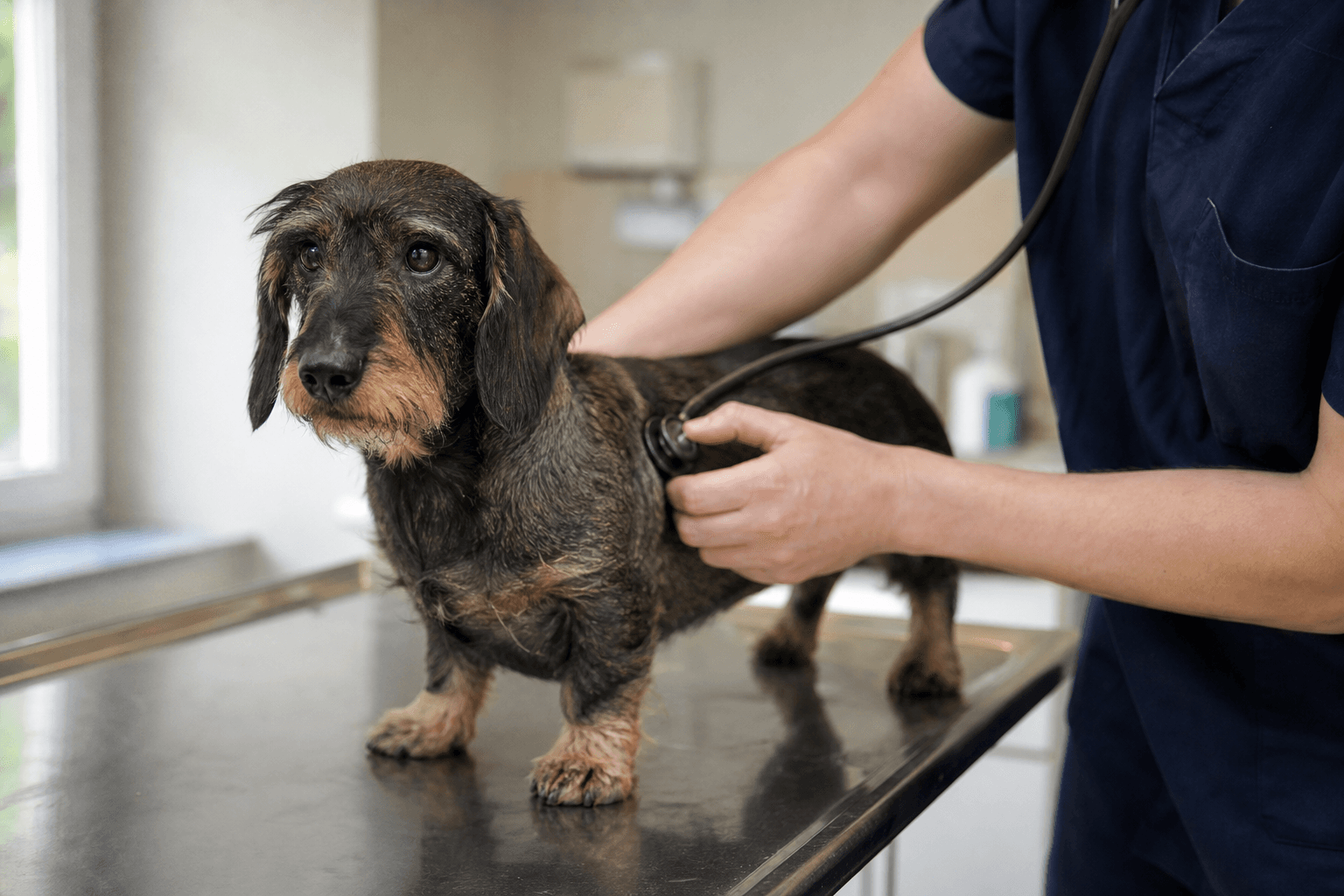
And say the words out loud: “He swims in ponds.” Exposure history is what moves a rare diagnosis onto a veterinarian’s list. A serum ELISA for P. insidiosum antibodies exists, and catching the disease before the mass is unresectable is the single biggest factor in survival.
The takeaway
Pythiosis is rare enough that most dogs will never encounter it, and it should not be the reason you cancel the last lake weekend of the summer. But Trout’s story is a useful reminder that a dog who looks completely fine can be weeks into something serious — and that the difference between a great swim and a terrible one is usually just picking moving water over a warm, mucky pond, and bringing your own drinking water along.
Looking for places where the water — and the patio — is actually built for dogs? Browse our city guides for dog-friendly swimming spots, parks and trails near you, and find more seasonal health coverage at Sidewalk Dog.