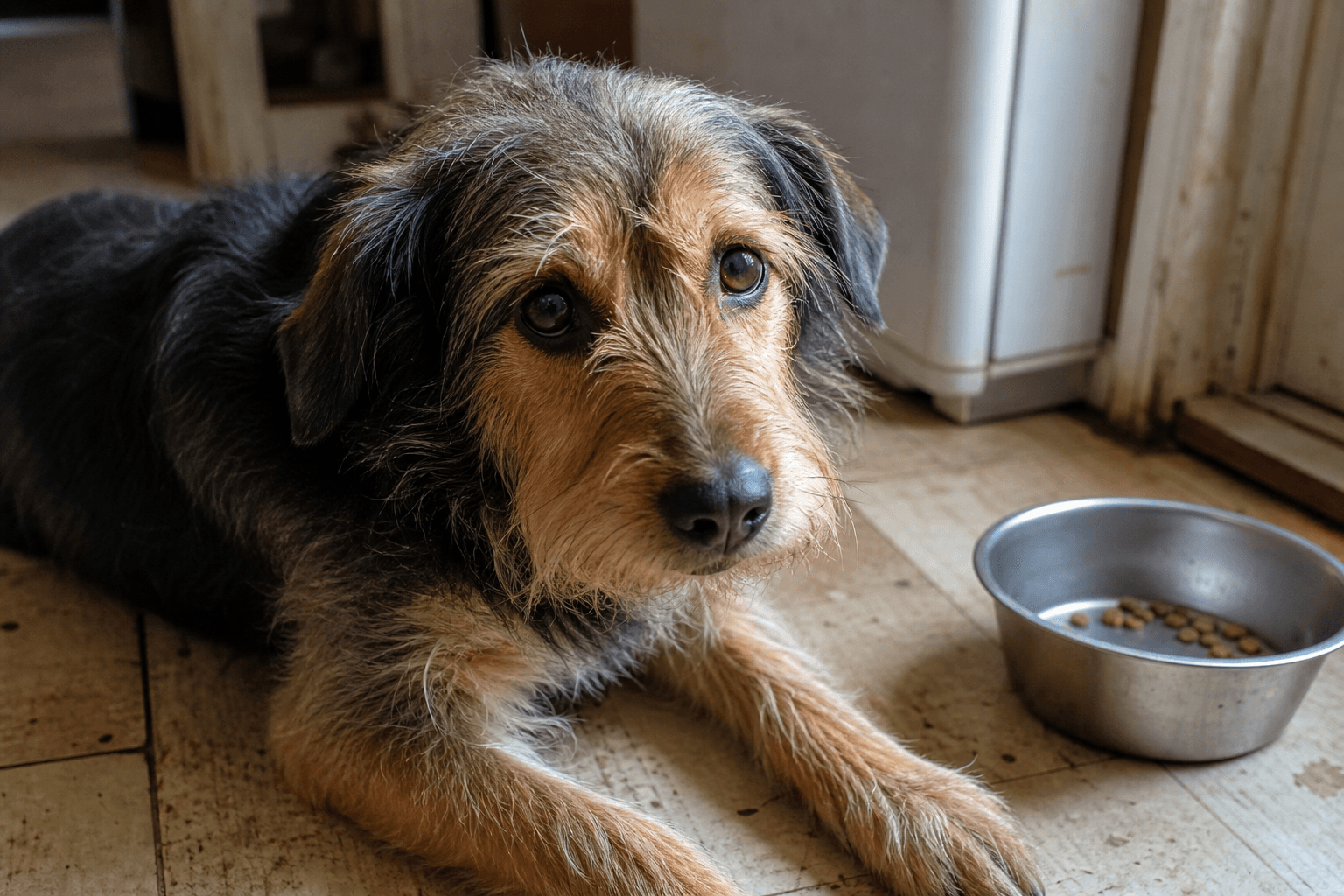

If your dog's eyes suddenly look dull, red, or gummed up with thick discharge, that is not a wait-and-see symptom. It is one of the fastest-moving emergencies in veterinary ophthalmology — and right now it is in the news.
On August 20, 2026, the UK subscription dog food company Years voluntarily recalled every one of its fresh meals — puppy, adult, and senior recipes, excluding only its limited-edition Chef's Collection — while it investigates reports of dogs developing sudden bilateral dry eye. As of 9 p.m. on August 18, the company said 192 customers out of roughly 40,000 served in 2026 had reported potential, still-unverified eye problems. Some UK veterinarians have described cases severe enough and unresponsive enough to treatment that the affected eye had to be removed.
The brand is not sold in the United States, so most American readers have nothing in their freezer to throw out. But the story is worth every dog owner's attention for a different reason: it is a live case study in how quickly dry eye can steal a dog's sight, how easy it is to mistake for a minor irritation, and how much depends on an owner noticing in the first week.
What actually happened
According to Years' own account and reporting from dvm360 and The Independent, the timeline moved fast:
- Late July 2026 — the company begins receiving multiple reports of dogs with sudden dry eye in both eyes at once.
- August 1 — an independent vet and Royal College of Veterinary Surgeons specialist in small animal clinical nutrition advises that a link to the food looks unlikely on the data available, but recommends further investigation.
- August 16 — 57 suspected cases identified, about 0.1% of customers served year-to-date, with most reported after August 12.
- August 17 — after rising case numbers and input from ophthalmologists, Years decides on a full recall of its fresh meals.
- August 18–20 — reported cases reach 192; the recall is announced publicly, with the Food Standards Agency and Trading Standards notified first.
The investigation is currently focused on possible contamination in a portion of the company's buckwheat supply — not buckwheat itself, which is a common, approved pet food ingredient and makes up roughly 6.3% to 7.2% of the affected recipes. Independent UKAS-accredited laboratories are testing meals and supplements for heavy metals, mycotoxins, alkaloids, pesticides, and veterinary drug residues, with a root-cause specialist and a toxicologist appointed separately.
No causal link has been established. That is worth repeating, because the internet has already decided otherwise. What the company has said is that all confirmed cases so far emerged after buckwheat was introduced, with none before — a pattern, not a proof. Subscriptions are paused for an initial six weeks while recipes are reformulated with quinoa.
What "dry eye" actually is — and why it blinds dogs
The clinical name is keratoconjunctivitis sicca (KCS). In plain terms, the tear glands stop producing enough of the watery portion of tears. Tears are not just lubrication; they carry oxygen and immune proteins to the cornea, which has no blood vessels of its own. Take them away and the corneal surface dries, inflames, ulcerates, scars, and pigments over.
The Cornell Riney Canine Health Center lists the signs owners should know:
- Thick yellow-green discharge
- A dull, dry, or lusterless look to the eye surface
- Redness
- Squinting or excessive blinking
- Pawing or rubbing at the face
- In chronic cases, visible blood vessels or dark pigment creeping across the cornea
Cornell is blunt about the stakes: untreated KCS leads to scarring, corneal blood vessel growth, and secondary infection, "potentially resulting in permanent vision loss." And there is a cruel detail in the prognosis — dogs with very low or absent tear production at the time of diagnosis respond worse to treatment. In other words, the dogs who wait the longest are the dogs least likely to recover. Even with correct treatment, improvement can take up to twelve weeks.
Most owners' first instinct — wipe the goop away, assume allergies, give it a few days — is exactly the wrong instinct.
Why the discharge fools people
Here is the counterintuitive part. Because the watery layer of tears vanishes but the mucus layer keeps being produced, a dry eye often looks wet and gooey. Owners see discharge and conclude the eye is producing plenty of tears. It isn't. That thick, ropy, yellow-green mucus is the hallmark of dryness, not moisture.
The one test that settles it
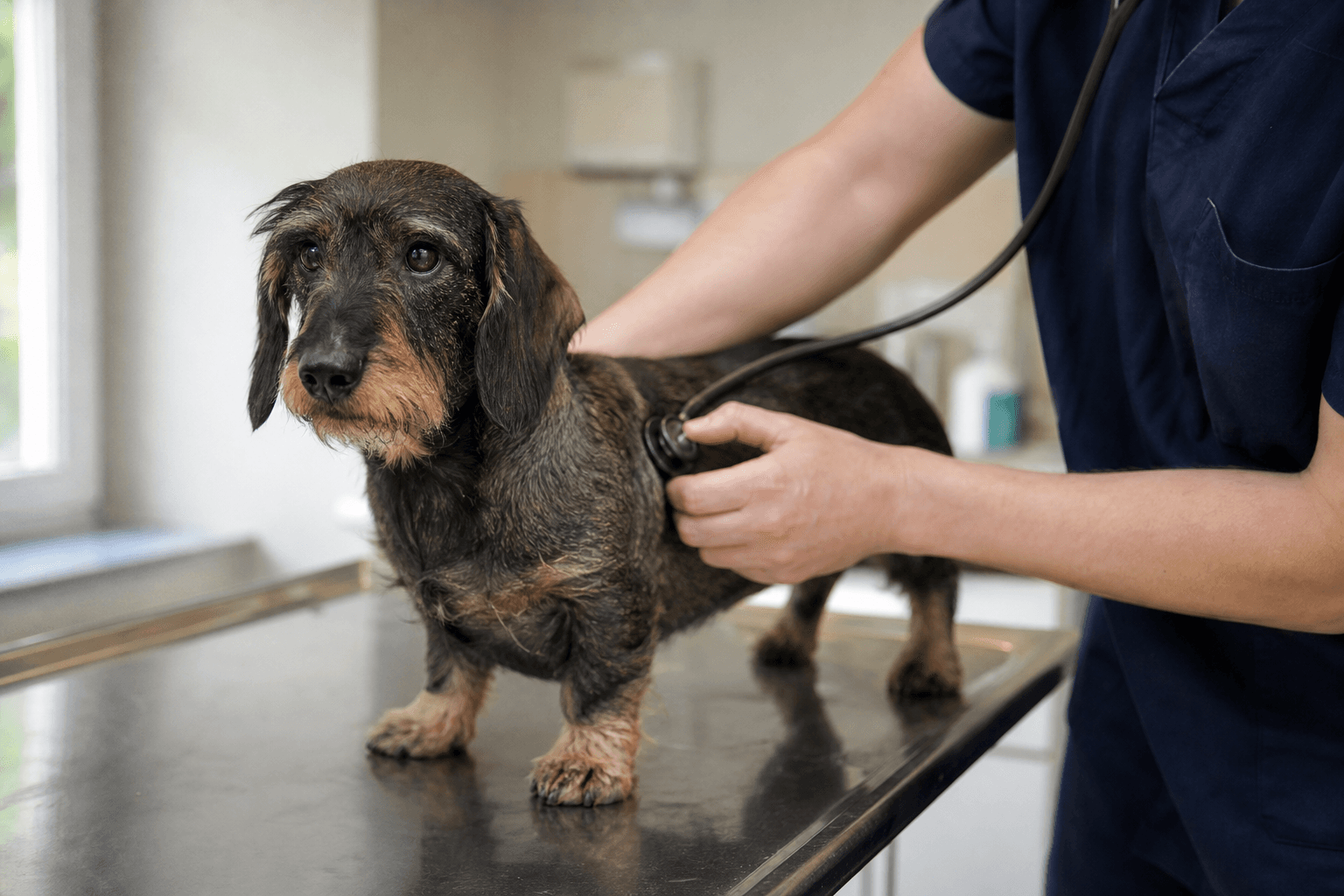
Dry eye is diagnosed with a Schirmer tear test: a calibrated paper strip tucked into the lower lid for sixty seconds to measure how far tears wick up. It is fast, costs very little, and requires no sedation. Normal is generally above 15 mm per minute; 11–14 mm is early or borderline, 6–10 mm moderate, and 0–5 mm severe. Your vet will usually pair it with a fluorescein stain, a dye that lights up any corneal ulcer hiding under the inflammation.
Ask for it by name. If your dog has bilateral discharge, redness, or squinting and no one has run a Schirmer tear test, that is a reasonable, polite question to raise in the exam room: "Could we do a Schirmer tear test today?"
What treatment looks like
Per the Merck Veterinary Manual, immune-mediated KCS — the most common form — is treated primarily with topical cyclosporine (0.2% ointment, or compounded 1–2% for stubborn cases) or tacrolimus (0.02–0.03%, roughly 100 times more potent). These are calcineurin inhibitors: they calm the immune attack on the tear glands and let surviving tissue produce tears again. Artificial tears provide comfort in the meantime; topical antibiotics are added if there is secondary infection. Neurogenic KCS, a rarer form, is treated with pilocarpine instead.
Two things owners should understand up front. First, KCS is usually a lifelong condition — stopping drops when the eye looks better is how dogs relapse. Second, treatment is not a guarantee. In one clinical series of 50 dogs, 20% already had vision loss at presentation and 38% had ulcerative keratitis.
The bigger lesson: food isn't the only thing that causes this
Diet-associated dry eye is the headline this month, but it is not the most common preventable cause. That distinction belongs to drugs — specifically potentiated sulfonamide antibiotics (like trimethoprim/sulfamethoxazole and sulfasalazine), which are associated with KCS in roughly 15% of treated dogs. The reaction is idiosyncratic, typically appearing between five days and four weeks into treatment, and it does not respond to lowering the dose. It is often reversible if the drug is stopped at the first sign.
Case reports going back to 1982 in JAVMA describe dogs whose tear production never recovered because the connection was made too late. If your dog is ever prescribed a sulfa-class antibiotic or sulfasalazine for colitis, ask your vet directly: "Should I be watching this dog's eyes?"
Other common causes include immune-mediated destruction of the tear glands (by far the leading cause overall), hypothyroidism, canine distemper, trauma or surgery near the tear gland, and breed predisposition — Cocker Spaniels, Shih Tzus, Yorkshire Terriers, Bulldogs, Lhasa Apsos, West Highland White Terriers, and Pugs are all overrepresented. Flat-faced breeds carry extra risk because a shallow orbit and incomplete blink leave more corneal surface exposed.
Your action plan
This week, if your dog's eyes look off
- Do book a vet visit within 24–48 hours if you see thick discharge, squinting, redness, or dullness in both eyes.
- Do mention any food, supplement, or medication started in the past 60 days — and bring the packaging or a photo of the lot code.
- Do ask for a Schirmer tear test and a fluorescein stain.
- Don't use leftover eye drops from another pet or a human medicine cabinet. Steroid drops on an ulcerated cornea can be catastrophic.
- Don't assume "it's just allergies" because the eye is producing goop. Discharge is compatible with severe dryness.
- Don't stop prescribed drops because things improved. Improvement is the medication working.
If you suspect a food or drug caused it
In the US, report it to the FDA's Safety Reporting Portal and tell the manufacturer directly. Adverse-event databases only work if owners actually file — the Years case only surfaced because a few dozen customers took the trouble to write in during a single fortnight. Keep the packaging, the lot number, and any remaining product; do not throw it out, and do not donate it or pass it to another animal.
If you feed fresh, raw, or subscription food
None of this is an argument against fresh food. It is an argument for keeping receipts: photograph lot codes when a box arrives, note the date you start any new recipe, and sign up for your brand's recall notifications. A dated feeding record is the single most useful thing you can hand a vet who is trying to work out what changed.
The bottom line
Nearly 200 owners in the UK noticed something wrong with their dogs' eyes and said something. That is why a recall happened in under three weeks instead of three months. The investigation may yet clear the food entirely — that outcome is genuinely possible and the company has been careful to say so.
But for the rest of us, the transferable lesson has nothing to do with buckwheat. It is that bilateral eye changes in a dog are a same-week veterinary problem, that a sixty-second paper strip can tell you whether your dog's sight is at risk, and that the window where dry eye is still reversible is measured in days.
Look at your dog's eyes tonight. Really look. If they're bright, wet, and clear — good. If they're dull and gummy, you now know what to ask for.
For more practical dog health reporting, dog-friendly guides, and city-by-city recommendations, explore Sidewalk Dog and our city guides. We dig into the stories that change how you care for your dog — so you can spend less time worrying and more time walking.